
Rozex Cream
Brand Information
| Brand name | Rozex Cream |
| Active ingredient | Metronidazole |
| Schedule | S4 |
Consumer Medicine Information (CMI) leaflet
Please read this leaflet carefully before you start using the Rozex Cream.
Summary CMI
ROZEX® CREAM
Consumer Medicine Information (CMI) summary
The full CMI on the next page has more details. If you are worried about using this medicine, speak to your doctor or pharmacist.
1. Why am I using Rozex cream?
ROZEX CREAM contains the active ingredient metronidazole. ROZEX CREAM is used to treat the inflammatory papules and pustules of rosacea.
For more information, see Section 1. Why am I using ROZEX CREAM? in the full CMI.
2. What should I know before I use ROZEX CREAM?
Do not use if you have ever had an allergic reaction to ROZEX CREAM or any of the ingredients listed at the end of the CMI.
Talk to your doctor if you have any other medical conditions including Cockayne Syndrome, take any other medicines, or are pregnant or plan to become pregnant or are breastfeeding.
For more information, see Section 2. What should I know before I use ROZEX CREAM? in the full CMI.
3. What if I am taking other medicines?
Some medicines may interfere with ROZEX CREAM and affect how it works.
A list of these medicines is in Section 3. What if I am taking other medicines? in the full CMI.
4. How do I use ROZEX CREAM?
- Apply morning and evening to clean dry skin.
More instructions can be found in Section 4. How do I use ROZEX CREAM? in the full CMI.
5. What should I know while using ROZEX CREAM?
| Things you should do |
|
| Things you should not do |
|
| Driving or using machines |
|
| Drinking alcohol |
|
| Looking after your medicine |
|
For more information, see Section 5. What should I know while using ROZEX CREAM? in the full CMI.
6. Are there any side effects?
Dry skin, reddening of the skin, severe itching, skin discomfort, skin irritation, worsening of rosacea, hyperpigmentation and other pigmentation disorders, contact dermatitis, reduced sense of touch or sensation, tingling or pricking sensation (pins and needles), numbness in the extremities, metallic taste, seborrhoea (red, itchy rash and white scales), sunburn, skin infection, hives, gastritis, bronchitis, stuffy runny nose, skin exfoliation, swelling face, nausea, excess watery fluid collection on the face or eyelids, hypothyroidism, Bursitis (inflammation or irritation of the bursa), Myalgia (muscle pain), osteoporosis, conjunctivitis, abscesses.
For more information, including what to do if you have any side effects, see Section 6. Are there any side effects? in the full CMI.
Full CMI
ROZEX® CREAM
Active ingredient: metronidazole
Consumer Medicine Information (CMI)
This leaflet provides important information about using ROZEX CREAM. You should also speak to your doctor or pharmacist if you would like further information or if you have any concerns or questions about using ROZEX CREAM.
Where to find information in this leaflet:
1. Why am I using ROZEX CREAM?
2. What should I know before I use ROZEX CREAM?
3. What if I am taking other medicines?
4. How do I use ROZEX CREAM?
5. What should I know while using ROZEX CREAM?
6. Are there any side effects?
7. Product details
1. Why am I using ROZEX CREAM?
ROZEX CREAM contains the active ingredient metronidazole. ROZEX CREAM is an antiprotozoal and antibacterial medicine.
ROZEX CREAM is used for the treatment of inflammatory papules and pustules of rosacea.
2. What should I know before I use ROZEX CREAM?
Warnings
Do not use ROZEX CREAM if:
- You are allergic to metronidazole, or any of the ingredients listed at the end of this leaflet.
- Always check the ingredients to make sure you can use this medicine.
- You have Cockayne Syndrome.
- You are pregnant.
Check with your doctor if you:
- have any other medical conditions
- take any medicines for any other condition
- are breastfeeding
- are planning to become pregnant
During treatment, you may be at risk of developing certain side effects. It is important you understand these risks and how to monitor for them. See additional information under Section 6. Are there any side effects?
Pregnancy and breastfeeding
Check with your doctor if you are pregnant or intend to become pregnant.
Talk to your doctor if you are breastfeeding or intend to breastfeed.
With not enough information available on the effect of ROZEX CREAM on pregnant women, ROZEX CREAM is not recommended during pregnancy.
3. What if I am taking other medicines?
Tell your doctor or pharmacist if you are taking any other medicines, including any medicines, vitamins or supplements that you buy without a prescription from your pharmacy, supermarket or health food shop.
Oral metronidazole has been shown to boost the effect of warfarin and other coumarin anticoagulants. It is unknown how ROZEX CREAM may interact with these products.
Some medicines may interfere with ROZEX CREAM and affect how it works.
Check with your doctor or pharmacist if you are not sure about what medicines, vitamins or supplements you are taking and if these affect ROZEX CREAM.
4. How do I use ROZEX CREAM?
How much to use
- Wash and dry your hands before applying the cream.
- Squeeze a small quantity of ROZEX CREAM on to your fingertips and rub a thin film onto the affected areas.
- Avoid getting ROZEX CREAM in your eyes.
- Use a sunscreen when exposure to the sun cannot be avoided.
- ROZEX CREAM is only for use on the skin.
- Follow the instructions provided and use ROZEX CREAM until your doctor tells you to stop.
When to use ROZEX CREAM
- ROZEX CREAM should be used morning and evening on a clean dry face.
- Continue to use it even though there may not be an immediate effect. Medicines can take several weeks to show an effect. The average period of treatment is usually three to four months. The recommended duration should not be exceeded.
If you forget to use ROZEX CREAM
ROZEX CREAM should be used regularly at the same times each day. If you miss your dose at the usual time, use it again as directed, as soon as you remember.
If it is almost time for your next dose, skip the dose you missed and apply your next dose when you are meant to.
Do not apply a double dose to make up for forgotten individual doses.
- If you have trouble remembering to use your medicine, ask your pharmacist for some hints.
If you use too much ROZEX CREAM
If you think that you have used too much ROZEX CREAM, you may need urgent medical attention.
You should immediately:
- phone the Poisons Information Centre
(by calling 13 11 26), or - contact your doctor, or
- go to the Emergency Department at your nearest hospital.
You should do this even if there are no signs of discomfort or poisoning.
5. What should I know while using ROZEX CREAM?
Things you should do
Call your doctor straight away if you:
- Think you have an allergy.
- Symptoms of an allergic reaction may include:
- swelling of the face, lips, tongue, or other parts of the body
- rash, itching, or hives of the skin, especially on the areas where the cream was applied. - if the condition worsens / does not improve, go to the emergency department at your nearest hospital.
Remind any doctor, dentist or pharmacist you visit that you are using ROZEX CREAM.
Things you should not do
- Avoid ROZEX CREAM coming into contact with eyes or mucous membranes. If accidental contact occurs, rinse thoroughly with water and pat dry.
- Do not use cosmetic products that contain alcohol or are abrasive.
- Do not use medicated soaps. These may have an extra drying or irritant effect.
- Unnecessary or prolonged use of ROZEX CREAM should be avoided as the long-term safety is unknown.
- Do not use ROZEX CREAM after the expiry date (EXP) printed on the pack has passed, or if the packaging is torn or shows signs of tampering.
- If it has expired or is damaged, return it to your pharmacist for disposal.
Driving or using machines
Be careful before you drive or use any machines or tools until you know how ROZEX CREAM affects you.
Drinking alcohol
Tell your doctor if you drink alcohol.
Alcohol has been shown to interact with metronidazole when taken orally.
Looking after your medicine
- Keep the medicine in a cool dry place where the temperature stays below 25°C.
Follow the instructions in the carton on how to take care of your medicine properly.
Store it in a cool dry place away from moisture, heat or sunlight; for example, do not store it:
- in the bathroom or near a sink, or
- in the car or on window sills.
Keep it where young children cannot reach it.
When to discard your medicine
Getting rid of any unwanted medicine
If you no longer need to use this medicine or it is out of date, take it to any pharmacy for safe disposal.
6. Are there any side effects?
All medicines can have side effects. If you do experience any side effects, most of them are minor and temporary. However, some side effects may need medical attention.
See the information below and, if you need to, ask your doctor or pharmacist if you have any further questions about side effects.
Less serious side effects
| Less serious side effects | What to do |
| Speak to your doctor if you have any of these less serious side effects and they worry you. |
Rare side effects
| Rare side effects | What to do |
| Speak to your doctor, if you notice any of these rare side effects. |
Tell your doctor or pharmacist if you notice anything else that may be making you feel unwell.
Other side effects not listed here may occur in some people.
Reporting side effects
After you have received medical advice for any side effects you experience, you can report side effects to the Therapeutic Goods Administration online at www.tga.gov.au/reporting-problems. By reporting side effects, you can help provide more information on the safety of this medicine.
Always make sure you speak to your doctor or pharmacist before you decide to stop taking any of your medicines.
7. Product details
This medicine is only available with a doctor's prescription.
What ROZEX CREAM contains
| Active ingredient (main ingredient) | 7.5 mg per gram metronidazole |
| Other ingredients (inactive ingredients) |
|
Do not take this medicine if you are allergic to any of these ingredients.
What ROZEX CREAM looks like
ROZEX CREAM is a smooth white cream in a plastic tube with a screw cap containing 3g, 5g, 15g, 30g and 50g of cream. Not all pack sizes may be available.
(Aust R 72393).
Who distributes ROZEX CREAM
Galderma Australia Pty Ltd
Level 18, 1 Denison Street,
North Sydney, NSW 2060
Telephone 1800 800 765
Distributed in New Zealand by:
Healthcare Logicstics
58 Richard Pearse Drive
Airport Oaks
Auckland
Telephone 0800 174 104
Made in France
® Registered trademark
This leaflet was prepared in January 2026.
Brand Information
| Brand name | Rozex Cream |
| Active ingredient | Metronidazole |
| Schedule | S4 |
MIMS Revision Date: 01 March 2026
1 Name of Medicine
Metronidazole.
2 Qualitative and Quantitative Composition
Rozex Cream contains 0.75% w/w metronidazole as the active ingredient in an oil-in-water cream base.
For the full list of excipients, see Section 6.1 List of Excipients.
3 Pharmaceutical Form
White to beige shiny cream.
4 Clinical Particulars
4.1 Therapeutic Indications
Rozex Cream is indicated for the treatment of inflammatory papules and pustules of rosacea.
4.2 Dose and Method of Administration
Rozex Cream should be applied in a thin layer to the affected areas of the skin twice daily, morning and evening. Areas to be treated should be washed with a mild cleanser before application. Patients may use non-comedogenic and non-astringent cosmetics after application of Rozex Cream. The dosage does not need to be adjusted for elderly patients. Safety and effectiveness in paediatric patients have not been established. Rozex Cream is not recommended for use in children.
The average period of treatment is three to four months. The recommended duration of treatment should not be exceeded. If a clear benefit has been demonstrated continued therapy for a further three to four months period may be considered by the prescribing physician depending upon the severity of the condition. Clinical experience with Rozex Cream over prolonged periods is limited at present. Patients should be monitored to ensure that clinical benefit continues and that no local or systemic events occur. In the absence of a clear clinical improvement therapy should be stopped.
Rozex Cream should not be used in or close to the eyes.
The use of a sunscreen is recommended when exposure to sunlight cannot be avoided.
4.3 Contraindications
Rozex Cream is contraindicated in individuals with a history of hypersensitivity to metronidazole or other ingredients of the formulation.
Metronidazole must not be used in patients with Cockayne syndrome. Cases of severe hepatotoxicity/acute hepatic failure, including cases with a fatal outcome with very rapid onset after treatment initiation in patients with Cockayne syndrome have been reported with products containing metronidazole for systemic use.
4.4 Special Warnings and Precautions for Use
Rozex has been reported to irritate the eyes (watering), therefore contact with the eyes should be avoided, as well as with mucous membranes. If a reaction suggesting local irritation occurs, patients should be directed to use the medication less frequently, discontinue use temporarily or discontinue use until further instructions.
Metronidazole transforms into inactive metabolite due to UV exposure, therefore its efficacy decreases significantly. Phototoxic side effects haven't been reported in clinical trials in relation to metronidazole.
Metronidazole is a nitroimidazole compound and should be used with care in patients with evidence or a history of blood dyscrasia.
Patients should be advised to avoid or minimise exposure of areas treated with topical metronidazole to sunlight or other sources of UV light (see Section 5.3 Preclinical Safety Data, Genotoxicity, Carcinogenicity; Section 4.6 Fertility, Pregnancy and Lactation, Effects on fertility). Unnecessary or prolonged use of this medication should be avoided as the long-term safety of topical metronidazole is unknown.
Use in the elderly. No data available.
Paediatric use. Rozex Cream has not been studied in children. Rosacea is a skin disorder which principally affects adults.
Rozex Cream is not recommended for use in children due to a lack of data on safety and efficacy.
Effects on laboratory tests. No data available.
4.5 Interactions with Other Medicines and Other Forms of Interactions
Interaction with systemic medication is unlikely because absorption of metronidazole following cutaneous application of Rozex Cream is low. Nevertheless it should be mentioned that a disulfiram-like reaction has been reported in a small number of patients taking oral metronidazole and alcohol concomitantly. Oral metronidazole has also been reported to potentiate the effect of warfarin and other coumarin anticoagulants resulting in a prolongation of prothrombin time. However the effect of topical metronidazole on prothrombin is not known.
4.6 Fertility, Pregnancy and Lactation
Effects on fertility. Oral metronidazole caused hypospermatogenesis, infertility and abnormal spermatozoa in mice and rats with a NOEL in rats being about 200 times the estimated human metronidazole dose contained in the Rozex Cream, based on body surface area.
Use in pregnancy. (Category B2)
The potential adverse effects of Rozex Cream on pregnancy have not been determined however oral metronidazole is known to cross the placental barrier and enter the foetal circulation rapidly. There is no conclusive evidence of fetotoxicity or teratogenicity in animal studies with metronidazole nor has clinical experience to date with the use of metronidazole in pregnant women revealed evidence of a fetotoxic or teratogenic effect of the drug. Because there are no well controlled studies of therapy with Rozex Cream in pregnant women, Rozex Cream should not be used during pregnancy.
Use in lactation. After oral administration metronidazole is excreted in breast milk in concentrations similar to those found in the plasma. Metronidazole blood levels from topical application are significantly lower than those achieved after oral metronidazole. A decision should be made to discontinue nursing or to discontinue the drug, taking into account the importance of the drug to the mother.
4.7 Effects on Ability to Drive and Use Machines
The effects of this medicine on a person's ability to drive and use machines were not assessed as part of its registration.
4.8 Adverse Effects (Undesirable Effects)
(See Table 1.)
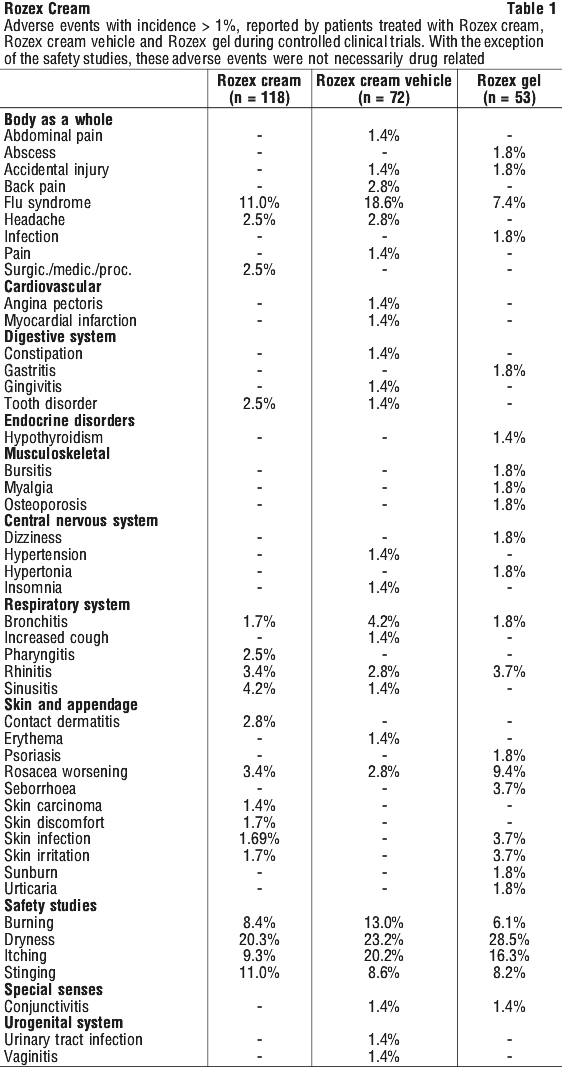
Postmarketing experience. The following nonserious adverse experiences have been reported since Rozex Cream was first marketed in 1995: contact dermatitis/ allergic reaction; skin exfoliation, swelling face, local irritation, erythema, pruritus, burning, dryness, tightness, discomfort, rash, hyperpigmentation, pigmentation disorders, hypertrichosis, facial oedema, eyelid oedema, treatment failure (worsening of rosacea), watery eyes, metallic taste, tingling or numbness in the extremities, nausea, other (zoster lesion, pustules on the nose and vesicular bullous eruptions). The causal relationship with topical metronidazole has not been unequivocally established for these adverse experiences.
Reporting suspected adverse effects. Reporting suspected adverse reactions after registration of the medicinal product is important. It allows continued monitoring of the benefit-risk balance of the medicinal product. Healthcare professionals are asked to report any suspected adverse reactions at www.tga.gov.au/reporting-problems.
4.9 Overdose
There is no human experience with overdosage of Rozex Cream.
For information on the management of overdose, contact the Poisons Information Centre on 13 11 26 (Australia).
5 Pharmacological Properties
5.1 Pharmacodynamic Properties
Mechanism of action. Metronidazole is an antiprotozoal (trichomoniasis, amoebiasis, giardiasis) and anaerobic antibacterial agent. However, the mechanisms by which Rozex acts in reducing inflammatory lesions of rosacea are unknown.
Clinical trials. One multicentre randomised, double-blind, placebo-controlled clinical study was conducted to evaluate Rozex Cream for the treatment of rosacea. All the patients included in the trial had moderate to severe (stage 2) rosacea. The prescribed therapy was applied daily for 12 weeks with follow up at weeks 3, 6, 9 and 12. The results are tabulated in Table 2.
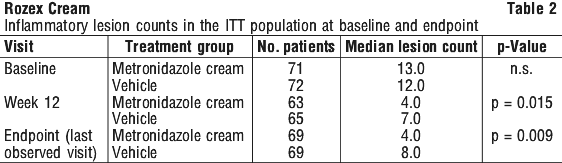
In another randomised single-blind multicentre study (n=100) in which the gel and cream formulations were compared, there were no significant differences in lesion counts or global assessment of improvement at weeks 4, 8 and 12. All patients recruited to the study had moderate to severe stage 2 rosacea. The percent reduction in mean lesion count from baseline to week 12 was 61.3% (MZ cream) vs 63.5% (MZ gel), p= n.s.
5.2 Pharmacokinetic Properties
Absorption. Following a single topical 1 gram application of Rozex Cream to the face of twelve normal human subjects, a mean maximum serum metronidazole concentration of 32.9 nanogram.mL-1 was reported (range: 14.8 to 54.4 nanogram.mL-1). This is less than 0.5% of the mean maximum metronidazole concentration reported in the same subjects administered a single oral 250 mg tablet of metronidazole (mean Cmax = 7248 nanogram.mL-1, range: 4270 to 13,970 nanogram.mL-1). The Tlag and Tmax for metronidazole after topical administration of the cream formulation were significantly (p < 0.05) prolonged when compared with oral administration. In comparison to the oral tablet the mean Tmax for the topical formulation occurred 7.0 hours later (95% confidence interval: 2.7 to 11.3 hours).
Distribution. The extent of exposure (area under the curve (AUC)) from a 1 gram application of metronidazole administered topically was 1.2% of the AUC of a single oral 250 mg metronidazole dose (mean = 912.7 nanogram.hr mL-1 and approximately 67,207 nanogram.hr mL-1 and respectively).
Metabolism. The hydroxymetabolite (2-hydroxymethylmetronidazole) Cmax after the 250 mg oral dose ranged from 626 to 1788 nanogram.mL-1 and peaked between 4 and 12 hours. Following topical application of Rozex Cream the hydroxymetabolite serum concentrations were below the quantifiable limit of the assay (< 9.6 nanogram.mL-1) at the majority of time points. The hydroxymetabolite Cmax after topical administration of the cream ranged from below the quantifiable limit to 17.6 nanogram.mL-1.
5.3 Preclinical Safety Data
Genotoxicity. Metronidazole has shown evidence of mutagenic activity in several bacterial systems. In addition, a dose response increase in the frequency of micronuclei was observed in mice after intraperitoneal injection and an increase in chromosome aberrations has been found in human lymphocyte cultures. The benefit/risk ratio should therefore be carefully assessed in each case particularly in relation to the severity of the disease and the age of the patient.
Carcinogenicity. Animal studies with oral metronidazole showed increased incidences of tumour in the lung, liver, testes, reticulum, mammary gland, and pituitary gland in certain rodent species. Evidence of photocarcinogenicity of metronidazole has also been reported in mice. Although there is no evidence to date of a carcinogenic effect in humans it is prudent to avoid unnecessary and prolonged use of Rozex Cream and to avoid or to minimise exposure of sites treated with Rozex Cream to the sun.
6 Pharmaceutical Particulars
6.1 List of Excipients
Benzyl alcohol, isopropyl palmitate, glycerol, sorbitol 70% (non-crystallising), emulsifying wax, lactic acid or sodium hydroxide solutions to adjust pH and purified water.
6.2 Incompatibilities
Incompatibilities were either not assessed or not identified as part of the registration of this medicine.
6.3 Shelf Life
In Australia, information on the shelf life can be found on the public summary of the Australian Register of Therapeutic Goods (ARTG). The expiry date can be found on the packaging.
6.4 Special Precautions for Storage
Store below 25°C. Do not refrigerate.
6.5 Nature and Contents of Container
3 g, 5 g, 15 g, 30 g and 50 g tubes. Not all pack sizes may be marketed.
AUST R 72393.
6.6 Special Precautions for Disposal
In Australia, any unused medicine or waste material should be disposed of in accordance with local requirements.
6.7 Physicochemical Properties
Chemical name: 2-methyl-5-nitroimidazole-1-ethanol.
Chemical structure.
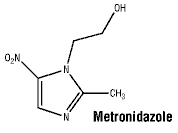
Molecular weight: 171.16.
CAS number. 443-48-1.
7 Medicine Schedule (Poisons Standard)
Schedule 4 - Prescription Only Medicine.
Date of First Approval
27 February 2002
Date of Revision
07 January 2026
Summary Table of Changes

Reasonable care is taken to provide accurate information at the time of creation. This information is not intended as a substitute for medical advice and should not be exclusively relied on to manage or diagnose a medical condition. The Australian Commission on Safety and Quality in Health Care disclaims all liability (including for negligence) for any loss, damage, injury or any other negative effects resulting from reliance on or use of this information. Read our full disclaimer. This website uses cookies. Read our privacy policy.