
Scheriproct Ointment and Suppository
Brand Information
| Brand name | Scheriproct Ointment and Suppository |
| Active ingredient | Prednisolone hexanoate + Cinchocaine hydrochloride |
| Schedule | S4 |
Consumer Medicine Information (CMI) leaflet
Please read this leaflet carefully before you start using the Scheriproct Ointment and Suppository.
Summary CMI
SCHERIPROCT® OINTMENT AND SUPPOSITORIES
Consumer Medicine Information (CMI) summary
The full CMI on the next page has more details. If you are worried about using this medicine, speak to your doctor or pharmacist.
1. Why am I using Scheriproct®?
Scheriproct® is the brand name for agents containing the substances prednisolone hexanoate and cinchocaine hydrochloride. Scheriproct® is used in the treatment of haemorrhoids (piles), tears of the anal tissue, and similar conditions. The active ingredients reduce the inflammation and pain associated with such problems. For more information, see Section 1. Why am I using Scheriproct®? in the full CMI.
2. What should I know before I use Scheriproct®?
Do not use if you have ever had an allergic reaction to Scheriproct® or any of the ingredients listed at the end of the CMI.
Talk to your doctor if you have any other medical conditions, take any other medicines, or are pregnant or plan to become pregnant or are breastfeeding.
For more information, see Section 2. What should I know before I use Scheriproct®? in the full CMI.
3. What if I am taking other medicines?
Some medicines may interfere with Scheriproct® and affect how it works.
A list of these medicines is in Section 3. What if I am taking other medicines? in the full CMI.
4. How do I use Scheriproct®?
Unless otherwise prescribed by your doctor, Scheriproct® ointment should be applied twice daily. Application up to four times on the first day may provide faster initial relief.
Unless otherwise advised by your doctor, one suppository should be unwrapped and inserted high into the back passage daily. For severe symptoms, one suppository may be inserted two to three times on the first day.
Treatment should continue for one week, less frequently (ointment once a day or one suppository every other day) after symptoms have cleared.
More instructions can be found in Section 4. How do I use Scheriproct®? in the full CMI.
5. What should I know while using Scheriproct®?
| Things you should do |
|
| Things you should not do |
|
| Driving or using machines |
|
| Looking after your medicine |
|
For more information, see Section 5. What should I know while using Scheriproct®? in the full CMI.
6. Are there any side effects?
Scheriproct® may cause allergic skin reactions (e.g. rash) and blurred vision. If Scheriproct® is used for more than 4 weeks, wasting of the skin in the treated area can occur. For more information, including what to do if you have any side effects, see Section 6. Are there any side effects? in the full CMI.
Full CMI
SCHERIPROCT® OINTMENT AND SUPPOSITORIES
Active ingredient(s): prednisolone hexanoate and cinchocaine hydrochloride
Consumer Medicine Information (CMI)
This leaflet provides important information about using Scheriproct® ointment and Suppositories. You should also speak to your doctor or pharmacist if you would like further information or if you have any concerns or questions about using Scheriproct®.
Where to find information in this leaflet:
1. Why am I using Scheriproct?
2. What should I know before I use Scheriproct®?
3. What if I am taking other medicines?
4. How do I use Scheriproct®?
5. What should I know while using Scheriproct®?
6. Are there any side effects?
7. Product details
1. Why am I using Scheriproct®?
Scheriproct® is a type of cortisone and belongs to the group of medicines called corticosteroids.
Scheriproct® is the brand name for agents containing the substances prednisolone hexanoate and cinchocaine hydrochloride.
Scheriproct® is used in the treatment of haemorrhoids (piles), tears of the anal tissue, and similar conditions. The active ingredients reduce the inflammation and pain associated with such problems.
Your doctor, however, may have prescribed Scheriproct® for another purpose.
Ask your doctor if you have any questions about why Scheriproct® has been prescribed for you.
A doctor's prescription is required for Scheriproct®.
2. What should I know before I use Scheriproct®?
Warnings
Do not use Scheriproct® if:
- you are allergic to prednisolone hexanoate or cinchocaine hydrochloride, or any of the ingredients listed at the end of this leaflet. Always check the ingredients to make sure you can use this medicine
- you have tuberculosis or syphilis in the area to be treated
- you have a viral disease (e.g. chickenpox)
- you have a traumatised skin
- you have a bacterial or fungal skin infection (such as thrush) unless you are also being treated for this or unless your doctor tells you
Ask your doctor to be sure you do not have any of these conditions.
Do not use Scheriproct® after the expiry date printed on the pack. If you use it after the expiry date has passed, it may not work as well.
Do not use Scheriproct® if the packaging shows signs of tampering or the seal on the tube is broken.
Some of the ingredients in Scheriproct® may interact with latex products, such as condoms. Therefore, if condoms are used in the same area of treatment with Scheriproct®, these may no longer be effective as contraception or as protection against sexually transmitted infections such as HIV infection. Talk to your doctor or pharmacist, if you require more information.
Check with your doctor if you:
- have any other medical conditions
- take any medicines for any other condition
- are allergic to any other medicines, foods, dyes or preservatives
- are pregnant or breastfeeding. Your doctor will tell you if you can use Scheriproct® during pregnancy or while you are breastfeeding
During treatment, you may be at risk of developing certain side effects. It is important you understand these risks and how to monitor them. See additional information under Section 6. Are there any side effects?
Pregnancy and breastfeeding
Do not use Scheriproct® if you are in the first trimester of pregnancy. Check with your doctor if you are pregnant or intend to become pregnant.
Talk to your doctor if you are breastfeeding or intend to breastfeed.
3. What if I am taking other medicines?
Tell your doctor or pharmacist if you are taking any other medicines, including any medicines, vitamins or supplements that you buy without a prescription from your pharmacy, supermarket or health food shop.
Some medicines and Scheriproct® may interfere with each other. These include:
- medicines used to treat Human Immunodeficiency Virus (HIV), such as ritonavir or cobicistat.
Your doctor may wish to monitor you carefully if you are taking these medicines.
Check with your doctor or pharmacist if you are not sure about what medicines, vitamins or supplements you are taking and if these affect Scheriproct®.
Your doctor and pharmacist have more information on medicines to be careful with or avoid while taking this medicine.
4. How do I use Scheriproct®?
Follow carefully all directions given to you by your doctor or pharmacist.
They may differ from the information contained in this leaflet.
If you do not understand the instructions in this leaflet, ask your doctor or pharmacist for help.
How to use Scheriproct®
The area around the anus should be carefully and thoroughly cleaned before using Scheriproct®, which is best applied after the bowels have been emptied.
Ointment
Unless otherwise prescribed by your doctor, Scheriproct® ointment should be applied twice daily. Application up to four times on the first day may provide faster initial relief.
Smear a small amount of ointment (about the size of a pea) around the anus and just inside the anus using your finger. The applicator supplied with the tube should be screwed on to the tube and used to apply the ointment internally. If the anus is very inflamed and painful, it is advisable to gently apply the ointment internally with your finger. Protruding lumps should be thickly smeared and carefully pressed back with your finger.
After each use, clean the applicator with a paper towel, remove the remaining product in the applicator with a cotton swab and clean it again with a paper towel. Rinse the applicator under warm water well and dry the applicator with a paper towel. Do not use the applicator if damaged.
Suppositories
Check the hardness of the suppository before unwrapping it. If it is soft, place the wrapped suppository in cold water before use. This will ensure that the suppository maintains its shape when it is used.
Unless otherwise advised by your doctor, one suppository should be unwrapped and inserted high into the back passage daily. For severe symptoms, one suppository may be inserted two to three times on the first day.
How long to use Scheriproct®
Treatment should continue for one week and less frequently (ointment once a day or one suppository every other day) after symptoms have cleared. The length of treatment should, however, not exceed four weeks.
If you forget to use Scheriproct®
Scheriproct® should be used regularly at the same time each day. If you forget to use Scheriproct® use it as soon as you remember and then go back to your normal times for applying Scheriproct®.
If it is almost time for your next dose, skip the dose you missed and take your next dose when you are meant to.
Do not take a double dose to make up for the dose you missed.
If you are not sure what to do, ask your doctor or pharmacist. If you have trouble remembering to use your medicine, ask your doctor or pharmacist for some hints.
If you use too much Scheriproct® or if you swallow it
If you think that you have used too much Scheriproct® you may need urgent medical attention.
Urgent medical attention may also be required if you or anyone else swallows Scheriproct®.
You should immediately:
- phone the Poisons Information Centre
(by calling 13 11 26), or - contact your doctor, or
- go to the Emergency Department at your nearest hospital.
You should do this even if there are no signs of discomfort or poisoning.
5. What should I know while using Scheriproct®?
Things you should do
Remind any doctor, dentist or pharmacist you visit that you are using Scheriproct®.
If you feel that Scheriproct® is not helping your condition, tell your doctor (or pharmacist).
Tell your doctor if for any reason you have not used Scheriproct® as prescribed. Otherwise, your doctor may think that it was not effective and change your treatment unnecessarily.
If you become pregnant while using Scheriproct® tell your doctor.
Contact your doctor if you experience blurred vision or other visual disturbances.
Things you should not do
Do not give Scheriproct® to anyone else even if their symptoms seem similar to yours.
Do not use Scheriproct® to treat other conditions unless your doctor tells you.
Avoid contact with the eyes. Careful handwashing after use is recommended.
Do not use large amounts of Scheriproct® for a long time. If you use large amounts for a long time, the chance of absorption through the skin and the chance of side effects increases.
Driving or using machines
Be careful before you drive or use any machines or tools until you know how Scheriproct® affects you.
Looking after your medicine
Follow the instructions in the carton on how to take care of your medicine properly.
Ointment
Store below 25°C in a cool dry place away from moisture, heat or sunlight; for example, do not store it:
- in the bathroom or near a sink, or
- in the car or on windowsills.
Discard 4 weeks after opening.
Suppositories
Store in the fridge (at 2°C to 8°C). Do not freeze.
Keep Scheriproct® where young children cannot reach it.
Getting rid of any unwanted medicine
If you no longer need to use this medicine or it is out of date, take it to any pharmacy for safe disposal.
Do not use this medicine after the expiry date.
6. Are there any side effects?
All medicines can have side effects. If you do experience any side effects, most of them are minor and temporary. However, some side effects may need medical attention.
See the information below and, if you need to, ask your doctor or pharmacist if you have any further questions about side effects.
Side effects
| Side effects | What to do |
| Speak to your doctor if you have any of these less serious side effects and they worry you. |
Do not be alarmed by this list of side effects. You may not experience any of them.
Tell your doctor or pharmacist if you notice anything else that may be making you feel unwell.
Other side effects not listed here may occur in some people.
Reporting side effects
After you have received medical advice for any side affects you experience, you can report side effects to the Therapeutic Goods Administration online at www.tga.gov.au/reporting-problems. By reporting side effects, you can help provide more information on the safety of this medicine.
Always make sure you speak to your doctor or pharmacist before you decide to stop taking any of your medicines.
7. Product details
This medicine is only available with a doctor's prescription.
What Scheriproct® contains
Ointment
| Active ingredient (main ingredient) |
|
| Other ingredients (inactive ingredients) |
|
| Potential allergens | Benzoates |
Suppositories
| Active ingredient (main ingredient) |
|
| Other ingredients (inactive ingredients) |
|
Do not take this medicine if you are allergic to any of these ingredients.
What Scheriproct® looks like
Scheriproct® ointment is colorless to faintly yellowish translucent ointment (AUST R 70062).
Scheriproct® suppository is white to yellowish white (AUST R 70063).
Who distributes Scheriproct®
AFT Pharmaceuticals Pty Ltd
113 Wicks Road
North Ryde, NSW 2113
Australia
This leaflet was prepared in June 2025
Brand Information
| Brand name | Scheriproct Ointment and Suppository |
| Active ingredient | Prednisolone hexanoate + Cinchocaine hydrochloride |
| Schedule | S4 |
MIMS Revision Date: 01 February 2026
1 Name of Medicine
Prednisolone hexanoate and cinchocaine hydrochloride.
2 Qualitative and Quantitative Composition
The active ingredients of Scheriproct are synthetic corticosteroids, prednisolone hexanoate and cinchocaine hydrochloride.
Scheriproct 1 g ointment contains 1.9 mg prednisolone hexanoate (equivalent to 1.5 mg of prednisolone) and 5 mg cinchocaine hydrochloride in an ointment base.
Scheriproct suppository, 1 suppository contains 1.3 mg prednisolone hexanoate (equivalent to 1 mg of prednisolone) and 1 mg cinchocaine hydrochloride in a hard fat base.
Excipients with known effect. Contains benzoates. For the full list of excipients, see Section 6.1 List of Excipients.
3 Pharmaceutical Form
Scheriproct ointment. Colourless to slightly yellow translucent ointment.
Scheriproct suppositories. Yellowish-white suppositories.
4 Clinical Particulars
4.1 Therapeutic Indications
Symptomatic relief of pain and irritation associated with haemorrhoids, superficial anal fissures and proctitis.
4.2 Dose and Method of Administration
The anal region should be cleaned thoroughly before using Scheriproct, which is best applied after defecation. There is usually a rapid improvement, but this should not mislead one into stopping treatment too soon. To avoid relapses, Scheriproct should be continued for at least one week, though less frequently (ointment once a day or one suppository every other day), even when the symptoms have completely disappeared. However, duration of treatment should, as far as possible, not exceed 4 weeks.
Scheriproct ointment. Unless otherwise prescribed by the doctor, generally, apply twice daily, on the first day, for faster symptomatic relief, up to four times.
Smear a little ointment (about the size of a pea) around the anus and in the anal ring with a finger and use the fingertip to overcome the resistance of the sphincter. Before applying within the rectum, the enclosed nozzle should be screwed on to the tube (for use and cleaning of the applicator, see Use of the applicator). However, for very inflamed and hence painful lesions, it is advisable initially to apply the ointment internally with the finger.
Protruding lumps should be thickly smeared and carefully pressed back with the finger.
Use of the applicator. Do not use the applicator if damaged. Screw the applicator completely on the tube. After each use, clean externally the applicator with a paper towel, then remove the remaining product in the applicator with a cotton swab and clean it again with a paper towel. Rinse the applicator under warm water well and dry externally the applicator with towel paper.
Scheriproct suppositories. In general, insert one suppository daily high into the rectum. If symptoms are severe, insert one suppository two to three times on the first day.
The consistency of suppositories that have become soft due to warmth should be restored by placing them in cold water before the covering is removed.
4.3 Contraindications
Tuberculous or syphilitic processes in the area to be treated.
Virus diseases (e.g. vaccinia, chickenpox).
Hypersensitivity to individual components.
Traumatised skin.
Local infections where concomitant therapy is not in place (see Section 4.4 Special Warnings and Precautions for Use).
4.4 Special Warnings and Precautions for Use
Additional specific therapy is required in fungal, bacterial, virus infections.
Inadvertent contact of the preparation with the eyes should be avoided.
Careful hand washing after use is recommended.
Prolonged use leads to atrophy.
Systemic absorption may be increased when there is local trauma or prolonged use.
The excipient(s) in Scheriproct ointment and suppository may reduce the effectiveness of latex products such as condoms.
Scheriproct contains castor oil, which can cause skin reactions.
Visual disturbance. Visual disturbance may be reported with systemic and topical corticosteroid use. If a patient presents with symptoms such as blurred vision or other visual disturbances, the patient should be considered for referral to an ophthalmologist for evaluation of possible causes which may include cataract, glaucoma or rare diseases such as central serous chorioretinopathy (CSCR) which have been reported after use of systemic and topical corticosteroids.
Use in the elderly. No data available.
Paediatric use. No data available.
Effects on laboratory tests. No data available.
4.5 Interactions with Other Medicines and Other Forms of Interactions
No interaction studies have been performed.
Co-treatment with CYP3A inhibitors, including cobicistat-containing products, is expected to increase the risk of systemic side-effects, including adrenal suppression. The combination should be avoided unless the benefit outweighs the increased risk of systemic corticosteroid side-effects, and patients should be monitored accordingly.
4.6 Fertility, Pregnancy and Lactation
Effects on fertility. No animal studies have investigated the potential of prednisolone hexanoate or cinchocaine hydrochloride to impair fertility. However, a study in which rats were administered the related anaesthetic prilocaine hydrochloride or lignocaine hydrochloride at up to 30 mg/kg/day SC for 8 months, showed no effects on reproduction.
Use in pregnancy. (Category A)
Epidemiological studies suggest that there could possibly be an increased risk of oral clefts among newborns of women who were treated with glucocorticosteroids during the first trimester of pregnancy.
No animal studies have investigated the teratogenic potential of any of the active substances in Scheriproct. However, teratology studies with prednisolone administered to mice on gestation days 11-14 showed dose related increases in cleft palate at SC doses of 3 mg/kg/day and above, and at oral doses of 15 mg/kg/day and above, typical of high exposures to other glucocorticoids. Since epidemiological studies have as yet given no indications of teratogenicity due to systemic glucocorticoid therapy, no teratogenic effects are to be expected from the glucocorticoids in Scheriproct under therapeutic conditions. However, taking animal experimental results into consideration, particular care should be taken when prescribing Scheriproct during pregnancy.
As a general rule, topical preparations containing glucocorticoids should not be applied during the first trimester of pregnancy.
The clinical indication for treatment with Scheriproct must be carefully reviewed and the benefits weighed against the risks in pregnant women. In particular, prolonged use must be avoided.
Use in lactation. There is insufficient information on the excretion of prednisolone hexanoate and cinchocaine hydrochloride in human milk.
The clinical indication for treatment with Scheriproct must be carefully reviewed and the benefits weighed against the risks in lactating women. In particular, prolonged use must be avoided.
4.7 Effects on Ability to Drive and Use Machines
The effects of this medicine on a person's ability to drive and use machines were not assessed as part of its registration.
4.8 Adverse Effects (Undesirable Effects)
If Scheriproct is applied for long periods of time (more than 4 weeks), local concomitant symptoms, such as atrophy of the skin, cannot be excluded. Allergic skin reactions may occur in rare cases.
Post marketing. Eye disorders. Vision blurred.
Reporting suspected adverse effects. Reporting suspected adverse reactions after registration of the medicinal product is important. It allows continued monitoring of the benefit-risk balance of the medicinal product. Healthcare professionals are asked to report any suspected adverse reactions at www.tga.gov.au/reporting-problems.
4.9 Overdose
In the case of accidental oral intake of the preparation (e.g. by swallowing a few grams of the ointment or several suppositories) mainly systemic effects of the local anaesthetic cinchocaine hydrochloride are to be expected, which, according to the dose, may manifest themselves as severe cardiovascular (depression to cessation of cardiac function) and CNS symptoms (convulsions; inhibition to arrest of respiratory function).
For information on the management of overdose, contact the Poisons Information Centre on 131 126 (Australia).
5 Pharmacological Properties
5.1 Pharmacodynamic Properties
Mechanism of action. Prednisolone exerts an anti-inflammatory, anti-allergic and anti-pruritic effect. Capillary dilatation, intercellular oedema and tissue infiltration regress; capillary proliferation is suppressed.
As a local anaesthetic, cinchocaine eases the pain.
The Scheriproct haemorrhoidals are topical preparations, which display their anti-inflammatory and analgesic effects at the site of application.
Clinical trials. No data available.
5.2 Pharmacokinetic Properties
Absorption. The active ingredients diffuse out of the preparations into the inflamed tissue, are partly absorbed, distributed by the circulatory system, metabolised and finally excreted. In order to obtain a local therapeutic effect, pharmacologically effective plasma levels are not required.
Cinchocaine exerts its analgesic effect locally. Since no absorption studies are available, risk assessment was performed under the assumption of a complete absorption. If complete absorption takes place the plasma concentration is too low to elicit adverse effects.
Distribution. The active ingredients diffuse out of the preparations into the inflamed tissue, are partly absorbed and distributed by the circulatory system.
Metabolism. Following absorption cinchocaine is biotransformed into a number of metabolites. Of special importance here are the oxidative de-ethylation of the di-ethylamino function, hydroxylation and oxidative degradation of the butyloxy-chain and the additional formation of unidentified polar metabolites.
Excretion. The active ingredients diffuse out of the preparations into the inflamed tissue, are partly absorbed, distributed by the circulatory system, metabolised and finally excreted.
5.3 Preclinical Safety Data
Genotoxicity. In mouse lymphoma L5178Y cells, prednisolone induced DNA strand breaks, without metabolic activation, but was not mutagenic. In mutagenicity tests in Salmonella typhimurium strains TA98, 100, 1535, 1537 and 1538, prednisone was weakly mutagenic in strain TA 100 only, with metabolic activation, but was not mutagenic in Chinese hamster V79 cells.
Carcinogenicity. In male rats, administration of prednisolone in the drinking water at a daily dose of 0.4 mg/kg for 2 years caused an increased incidence of hepatocellular tumours. Similar results were obtained with triamcinolone acetonide and budesonide, indicating a class effect of glucocorticosteroids. However, mice given dietary prednisone at daily levels up to 5 mg/kg for 18 months showed no increases in tumour incidences, and some decreases, and an epidemiology study in rheumatoid arthritis patients showed a trend towards lower malignancy in patients treated with prednisone. The carcinogenic potential of cinchocaine hydrochloride has not been investigated.
6 Pharmaceutical Particulars
6.1 List of Excipients
Scheriproct ointment contains an ointment base consisting of the excipients castor oil, octyldodecanol, hydrogenated castor oil and PEG-8 ricinoleate.
Scheriproct suppository contains the excipient hard fat.
6.2 Incompatibilities
Incompatibilities were either not assessed or not identified as part of the registration of this medicine.
6.3 Shelf Life
In Australia, information on the shelf life can be found on the public summary of the Australian Register of Therapeutic Goods (ARTG). The expiry date can be found on the packaging.
6.4 Special Precautions for Storage
Scheriproct ointment. Store below 25°C.
Discard 4 weeks after opening.
Scheriproct suppositories. Store at 2°C to 8°C. Refrigerate. Do not freeze.
Store all medicines properly and keep them out of reach of children.
6.5 Nature and Contents of Container
Scheriproct ointment. Aluminium tubes containing 10 g and 30 g of colourless to slightly yellow translucent ointment.
Scheriproct suppositories. Boxes containing an aluminium laminated strip pack of 6 or 12 yellowish-white suppositories.
6.6 Special Precautions for Disposal
In Australia, any unused medicine or waste material should be disposed of in accordance with local requirements.
6.7 Physicochemical Properties
Chemical structure. Prednisolone-21-hexanoate is a corticosteroid. The chemical name for prednisolone-21-hexanoate is 11β, 17, 21-trihydroxypregna-1,4-diene-3,20-dione 21-hexanoate and has the following structural formula:
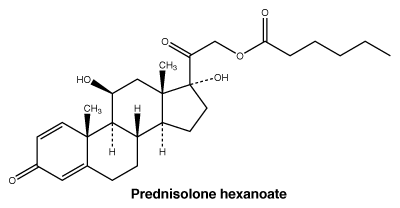
Molecular weight: 458.6.
Prednisolone hexanoate is an odourless, white or almost white, crystalline, hygroscopic powder.
M.P. 230°C. Very slightly soluble in water, soluble 1 in 27 of dehydrated alcohol, 1 in 30 of alcohol.
Cinchocaine hydrochloride is a corticosteroid. The chemical name for cinchocaine hydrochloride is 2-butoxy-N- [2-(diethylamino)ethyl] quinoline-4-carboxamide hydrochloride and has the following structural formula:
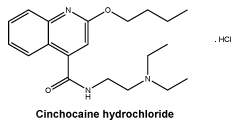
Molecular weight: 379.9.
Cinchocaine hydrochloride is a fine, colourless or white; odourless or almost odourless hygroscopic crystals or white to off white crystalline powder. M.P. 96°-100°C. Soluble in 1 in 0.5 of water; freely soluble in alcohol and acetone; soluble in chloroform.
CAS number. Prednisolone hexanoate: 69164-69-8.
Cinchocaine hydrochloride: 61-12-1.
7 Medicine Schedule (Poisons Standard)
S4 - Prescription Only Medicine.
Date of First Approval
08 May 2000
Date of Revision
18 November 2025
Summary Table of Changes

Reasonable care is taken to provide accurate information at the time of creation. This information is not intended as a substitute for medical advice and should not be exclusively relied on to manage or diagnose a medical condition. The Australian Commission on Safety and Quality in Health Care disclaims all liability (including for negligence) for any loss, damage, injury or any other negative effects resulting from reliance on or use of this information. Read our full disclaimer. This website uses cookies. Read our privacy policy.