
Sodium Bicarbonate 8.4% Injection
Brand Information
| Brand name | Sodium Bicarbonate 8.4% Injection |
| Active ingredient | Sodium bicarbonate |
| Schedule | Unscheduled |
Consumer Medicine Information (CMI) leaflet
Please read this leaflet carefully before you start using the Sodium Bicarbonate 8.4% Injection.
Summary CMI
Sodium Bicarbonate 8.4% Injection
Consumer Medicine Information (CMI) summary
The full CMI on the next page has more details. If you are worried about using this medicine, speak to your doctor or pharmacist.
1. Why is Sodium Bicarbonate Injection being given?
Sodium Bicarbonate Injection contains the active ingredient sodium bicarbonate. Sodium Bicarbonate Injection is used to reduce the amount of acid in the blood.
For more information, see Section 1. Why is Sodium Bicarbonate Injection being given? in the full CMI.
2. What should I know before Sodium Bicarbonate Injection is given?
Do not use if you have ever had an allergic reaction to Sodium Bicarbonate Injection or any of the ingredients listed at the end of the CMI.
Talk to your doctor if you have any other medical conditions, take any other medicines, or are pregnant or plan to become pregnant or are breastfeeding.
For more information, see Section 2. What should I know before Sodium Bicarbonate Injection is given? in the full CMI.
3. What if I am using other medicines?
Some medicines may interfere with Sodium Bicarbonate Injection and affect how it works.
A list of these medicines is in Section 3. What if I am using other medicines? in the full CMI.
4. How is Sodium Bicarbonate Injection given?
Sodium Bicarbonate Injection must only be given by a doctor or nurse. They will decide what dose and how long you will receive it for. This depends on your medical condition and other factors.
More instructions can be found in Section 4. How is Sodium Bicarbonate Injection given? in the full CMI.
5. What should I know while using Sodium Bicarbonate Injection?
| Things you should do |
|
| Things you should not do |
|
| Looking after the medicine |
|
For more information, see Section 5. What should I know while using Sodium Bicarbonate Injection? in the full CMI.
6. Are there any side effects?
Sodium Bicarbonate Injection may cause injection site discomfort, nausea or vomiting, muscle cramps, breathing difficulties and more.
For more information, including what to do if you have any side effects, see Section 6. Are there any side effects? in the full CMI.
Full CMI
Sodium Bicarbonate 8.4% Injection
Active ingredient: sodium bicarbonate
Consumer Medicine Information (CMI)
This leaflet provides important information about using Sodium Bicarbonate Injection. You should also speak to your doctor or pharmacist if you would like further information or if you have any concerns or questions about using Sodium Bicarbonate Injection.
Where to find information in this leaflet:
1. Why is Sodium Bicarbonate Injection being given?
2. What should I know before Sodium Bicarbonate Injection is given?
3. What if I am using other medicines?
4. How is Sodium Bicarbonate Injection given?
5. What should I know while using Sodium Bicarbonate Injection?
6. Are there any side effects?
7. Product details
1. Why is Sodium Bicarbonate Injection being given?
Sodium Bicarbonate Injection contains the active ingredient sodium bicarbonate.
Sodium Bicarbonate Injection is used to reduce the amount of acid in the blood.
Signs of high acid levels include headaches, weakness, tiredness, fast breathing and abnormal heart rate.
High levels of acid in the blood can be caused by diabetes, hepatitis, heart and kidney problems, shock, severe dehydration or diarrhoea, Addison's disease and malnutrition.
Sodium Bicarbonate 8.4% Injection also reduces the amount of acid in the urine. It is used to speed up the removal of certain substances from the body in the case of some types of poisoning.
Ask your doctor if you have any questions about why Sodium Bicarbonate Injection has been prescribed for you.
Your doctor may have prescribed it for another reason.
2. What should I know before Sodium Bicarbonate Injection is given?
Warnings
You should not be given Sodium Bicarbonate Injection if:
- you are allergic to any medicine containing sodium bicarbonate, or any of the ingredients listed at the end of this leaflet.
Always check the ingredients to make sure you can use this medicine. - you have any of the following medical conditions:
- kidney disease or kidney stones
- excess sodium in the blood
- high blood pressure and high blood pressure due to pregnancy
- swelling due to excess fluid
- heart disease
- low levels of potassium in the blood
- low levels of chloride in the blood
Check with your doctor if you:
- have or have had liver disease
- have allergies to any other medicines, foods, preservatives or dyes
During treatment, you may be at risk of developing certain side effects. It is important you understand these risks and how to monitor for them. See additional information under Section 6. Are there any side effects?
Pregnancy and breastfeeding
Check with your doctor if you are pregnant or intend to become pregnant.
Talk to your doctor if you are breastfeeding or intend to breastfeed.
Your doctor will discuss the risks and benefits involved.
3. What if I am using other medicines?
Tell your doctor or pharmacist if you are taking any other medicines, including any medicines, vitamins or supplements that you buy without a prescription from your pharmacy, supermarket or health food shop.
Some medicines may interfere with Sodium Bicarbonate Injection. These include:
- diuretics or fluid tablets
- corticosteroids such as prednisone
- potassium supplements
- the heart drugs quinidine and flecainide
- amphetamines
- ephedrine and pseudoephedrine found in cold medicines
- aspirin
- barbiturates, medicines used to treat epilepsy
These medicines may be affected by Sodium Bicarbonate Injection or may affect how well it works. You may need different amounts of your medicine, or you may need to take different medicines.
Your doctor or pharmacist has more information on medicines to be careful with or avoid while being given this medicine.
Check with your doctor or pharmacist if you are not sure about what medicines, vitamins or supplements you are taking and if these affect Sodium Bicarbonate Injection.
4. How is Sodium Bicarbonate Injection given?
How much to be given
- Your doctor will decide what dose of Sodium Bicarbonate Injection you will receive and for how long you will receive it. This depends on your medical condition and other factors, such as your weight.
The medicine is given by an injection into a vein or it is added to an intravenous (IV) solution.
If too much Sodium Bicarbonate Injection is given
As Sodium Bicarbonate Injection is always given to you in a hospital under the supervision of a doctor, it is unlikely that you will receive an overdose.
Symptoms of an overdose may include:
- spasms in the muscles, hands or feet
- muscle cramps
- extreme irritability
- breathing difficulties.
If you think you have been given too much Sodium Bicarbonate Injection, you may need urgent medical attention.
You should immediately:
- phone the Poisons Information Centre
(by calling 13 11 26), or - contact your doctor, or
- go to the Emergency Department at your nearest hospital.
You should do this even if there are no signs of discomfort or poisoning.
5. What should I know while using Sodium Bicarbonate Injection?
Things you should do
If you are about to start on any new medicine, remind your doctor and pharmacist that you have been given Sodium Bicarbonate Injection.
Tell any other doctors, dentists, and pharmacists who treat you that you have been given this medicine.
If you are going to have surgery, tell the surgeon or anaesthetist that you have been given this medicine. It may affect other medicines used during surgery.
Keep all of your doctor's appointments so that your progress can be checked.
Your doctor may do some tests from time to time to make sure the medicine is working and to prevent unwanted side effects.
Looking after your medicine
- Sodium Bicarbonate Injection will be stored in the surgery, pharmacy or ward of a hospital. The injection is kept in a cool dry place where the temperature stays below 30°C.
- Sodium Bicarbonate Injection will only be opened when it is time for you to have the injection.
6. Are there any side effects?
All medicines can have side effects. If you do experience any side effects, most of them are minor and temporary. However, some side effects may need medical attention.
Tell your doctor or pharmacist as soon as possible if you do not feel well while you are being given Sodium Bicarbonate Injection.
Sodium Bicarbonate Injection may have unwanted side effects in a few people. All medicines can have side effects. Sometimes they are serious, most of the time they are not. You may need medical treatment if you get some of the side effects.
Do not be alarmed by the following list of side effects. You may not experience any of them.
See the information below and, if you need to, ask your doctor or pharmacist if you have any further questions about side effects.
Side effects
| Side effects | What to do |
Skin-related:
| Speak to your doctor if you have any of these less serious side effects and they worry you. |
Tell your doctor or pharmacist if you notice anything else that may be making you feel unwell.
Other side effects not listed here may occur in some people.
Reporting side effects
After you have received medical advice for any side effects you experience, you can report side effects to the Therapeutic Goods Administration online at www.tga.gov.au/reporting-problems. By reporting side effects, you can help provide more information on the safety of this medicine.
Always make sure you speak to your doctor or pharmacist before you decide to stop taking any of your medicines.
7. Product details
This medicine is only available with a doctor's prescription.
What Sodium Bicarbonate Injection contains
| Active ingredient (main ingredient) | sodium bicarbonate |
| Other ingredients (inactive ingredients) | disodium edetate water for injections |
This medicine does not contain gluten, lactose, sucrose, tartrazine, alcohol or any dyes or preservatives.
Do not take this medicine if you are allergic to any of these ingredients.
What Sodium Bicarbonate Injection looks like
Sodium Bicarbonate Injection is a clear, colourless solution in a clear glass vial.
Sodium Bicarbonate Injection is available in two quantities:
- 840 mg/10 mL vial in a pack of 10 (Aust R 131067)
- 8.4 g/100 mL vial in pack of 1, 5 and 10 (Aust R 48376)
Who distributes Sodium Bicarbonate Injection
Phebra Pty Ltd
17-19 Orion Road
Lane Cove West, NSW 2066
Australia
Telephone: 1800 720 020

This leaflet was prepared in November 2025.
Phebra and the Phi symbol are registered trademarks of Phebra Pty Ltd.
Brand Information
| Brand name | Sodium Bicarbonate 8.4% Injection |
| Active ingredient | Sodium bicarbonate |
| Schedule | Unscheduled |
MIMS Revision Date: 01 April 2021
1 Name of Medicine
Sodium bicarbonate.
2 Qualitative and Quantitative Composition
8.4 g/100 mL (8.4%). Sodium Bicarbonate Injection contains 8.4 g sodium bicarbonate in 100 mL water for injections.
840 mg/10 mL (8.4%). Sodium Bicarbonate Injection contains 0.84 g sodium bicarbonate in 10 mL water for injections.
Sodium Bicarbonate Injection is a sterile solution. Each mL of solution contains 84.0 mg of sodium bicarbonate which gives 23.0 mg (or 1 mmol or 1 mEq) of sodium and 61.0 mg (or 1 mmol or 1 mEq) of bicarbonate.
For the full list of excipients, see Section 6.1 List of Excipients.
3 Pharmaceutical Form
Clear, colourless solution for injection.
4 Clinical Particulars
4.1 Therapeutic Indications
Sodium Bicarbonate Injection is indicated as an alkalinising agent in the treatment of metabolic acidosis which may occur in many conditions including diabetes, starvation, hepatitis, cardiac arrest, shock, severe dehydration, renal insufficiency, severe diarrhoea, Addison's disease or administration of acidifying salts (e.g. excessive sodium chloride, calcium chloride, ammonium chloride).
Sodium Bicarbonate Injection is also used to increase urinary pH in order to increase the solubility of certain weak acids (e.g. cystine, sulphonamides, uric acid) and in the treatment of certain intoxications (e.g. methanol, phenobarbitone, salicylates, lithium) to decrease renal absorption of the drug or to correct acidosis.
4.2 Dose and Method of Administration
Dosage of Sodium Bicarbonate Injection is determined by the severity of the acidosis, appropriate laboratory determinations, and the patient's age, weight and clinical condition.
Sodium Bicarbonate Injection is administered by the intravenous route preferably via a central line. Extravasation must be avoided; the solution is hypertonic and irritant to veins resulting in extensive skin necrosis if the solution leaks from the vein in the tissues. Intramuscular injection is not recommended.
Contains no antimicrobial agent and is for single use in one patient on one occasion only.
Cardiac arrest or severe metabolic acidosis. Administration is based on the results of arterial blood pH, PaCO2 and calculation of base deficit.
In cardiac arrest, an initial direct intravenous dose of 1 mmol/kg (1 mL/kg of an 8.4% sodium bicarbonate solution) may be given, followed by 0.5 mmol/kg (0.5 mL/kg of an 8.4% sodium bicarbonate solution) at ten minute intervals depending on arterial blood gases and according to the appropriate treatment protocol and guidelines.
Adequate alveolar ventilation should be ensured during cardiac arrest and administration of sodium bicarbonate, since adequate ventilation contributes to the correction of acidosis and since administration of sodium bicarbonate is followed by release of carbon dioxide.
Children. The usual dose is 1 mmol/kg (1 mL/kg of an 8.4% Sodium Bicarbonate Injection) given by slow intravenous injection.
Infants (up to 2 years of age). In infants (up to 2 years of age) the solution should be diluted with an equal amount (1:1 ratio) of 5% glucose or water for injections (to make 4.2% sodium bicarbonate solution) for slow intravenous administration and at a dose not to exceed 8 mmol/kg/day, and according to the appropriate treatment protocol and guidelines. This diluted solution is hypertonic. Slow administration rates and a 4.2% solution are recommended in neonates to minimise the possibility of producing hypernatraemia, decreasing cerebrospinal fluid pressure and inducing intracranial haemorrhage. (See Section 4.4 Special Warnings and Precautions for Use; Section 4.8 Adverse Effects (Undesirable Effects)).
Sodium bicarbonate should only be given if the child is being effectively ventilated as any carbon dioxide that is released by the process of acid neutralisation must be removed from the body via the lungs or paradoxical intracellular acidosis will result.
Intravenous infusion. In less urgent forms of metabolic acidosis, Sodium Bicarbonate Injection may be added to 5% glucose for intravenous infusion. (See Section 4.5 Interactions with Other Medicines and Other Forms of Interactions).
Sodium Bicarbonate 8.4% Injection can be diluted with 5% glucose injection or 0.9% sodium chloride injection. To reduce microbiological hazard, use as soon as practicable after dilution. If storage is necessary, hold at 2°C-8°C for not more than 24 hours.
Sodium Bicarbonate Injection for intravenous infusion is preferably administered in a large vein, over 4 to 8 hours in mild conditions of metabolic acidosis.
The amount of bicarbonate to be given as intravenous infusion to older children and adults over a 4 to 8 hour period is approximately 2 to 5 mmol/kg of bodyweight, depending upon the severity of the acidosis as judged by the lowering of the total CO2 content, blood pH and clinical condition of the patient. Standard texts and institutional protocols specific to the underlying disorder should be consulted for calculation of individual dosage.
Bicarbonate therapy should always be planned in a stepwise fashion since the degree of response from a given dose is not precisely predictable.
In general, it is unwise to attempt full correction of a low total CO2 content during the first 24 hours of therapy, since this may be accompanied by an unrecognised alkalosis because of a delay in the readjustment of ventilation to normal.
4.3 Contraindications
Sodium Bicarbonate Injection is contraindicated in patients with renal failure, respiratory or metabolic alkalosis, hypoventilation or chloride depletion, hypernatraemia, hypertension, oedema, congestive heart failure, eclampsia, aldosteronism, a history of urinary calculi and consistent potassium depletion or hypocalcaemia.
It is also generally contraindicated in patients with excessive chloride loss from vomiting or continuous gastrointestinal suctioning and in patients at risk of developing diuretic induced hypochloraemic alkalosis.
4.4 Special Warnings and Precautions for Use
Treatment strategies for metabolic acidosis are primarily directed towards the underlying cause. Bicarbonate therapy is a temporary measure used for severe acidosis.
Specialised texts and protocols should be consulted to guide use. Note that sodium bicarbonate 8.4% is a hypertonic solution.
Whenever respiratory acidosis is present with metabolic acidosis, both pulmonary ventilation and perfusion must be adequately supported to get rid of excess carbon dioxide.
Laboratory determination of the patient's acid base status is recommended before and during treatment to minimise the possibility of overdosage and resultant metabolic alkalosis. Frequent monitoring of serum electrolyte concentrations is essential.
To minimise the risks of pre-existing hypokalaemia and/or hypocalcaemia, these electrolyte disturbances should be corrected prior to initiation of, or concomitantly with, sodium bicarbonate therapy.
Solutions containing sodium may cause fluid overload when given in excess, resulting in dilution of serum electrolytes, overhydration, congestive conditions or pulmonary oedema.
Excessively elevated plasma sodium concentrations may cause dehydration of the brain, resulting in somnolence and confusion, which may progress to convulsions, coma, respiratory failure and ultimately death.
Bicarbonate should be given with caution to patients with 'type A' lactic acidosis (tissue hypoxia). Administration of bicarbonate will tend to limit the available oxygen, increase lactate production and thus worsen the acidosis.
Data from the literature are not in favour of the use of bicarbonate in the treatment of diabetic ketoacidosis with pH values between 6.90 and 7.10.
Accidental extravascular injection of hypertonic solutions may cause vascular irritation, chemical cellulitis (because of their alkalinity), subsequently resulting in tissue necrosis, ulceration and/or sloughing at the site of injection.
The use of scalp veins should be avoided.
Do not use the injection if it contains precipitate. Do not use unless the solution is clear and the container and seal are intact. Discard any unused portion.
Use in patients with congestive heart failure or renal insufficiency. Sodium retention and oedema may occur during sodium bicarbonate therapy, especially when the drug is given in large doses or to patients with renal insufficiency, congestive heart failure or those predisposed to sodium retention and oedema. Sodium and water overload may result in hypernatraemia and hyperosmolality. Severe hyperosmolal states may develop during cardiopulmonary resuscitation when excessive doses of sodium bicarbonate are administered. Serum potassium may decrease during sodium bicarbonate therapy leading to hypokalaemia.
Sodium bicarbonate should be used with extreme caution in patients with congestive heart failure or other oedematous or sodium-retaining conditions; in patients with renal insufficiency, especially those with severe insufficiency such as oliguria or anuria; and in patients receiving corticosteroids or corticotropin, since each gram of sodium bicarbonate contains 12 mEq of sodium.
Use in hepatic impairment. Sodium bicarbonate should be used with caution in patients with cirrhosis.
Use in renal impairment. Sodium bicarbonate should be used with extreme caution in patients with renal insufficiency, especially those with severe insufficiency such as oliguria or anuria; and in patients receiving corticosteroids or corticotropin, since each gram of sodium bicarbonate contains 12 mEq of sodium.
Use in the elderly. No data available.
Paediatric use. Rapid injection (10 mL/min) of hypertonic Sodium Bicarbonate Injection solutions into neonates and children under 2 years of age may produce hypernatraemia, a decrease in cerebrospinal fluid pressure and possible intracranial haemorrhage. In emergency situations, such as cardiac arrest, the risk of rapid infusion of the drug must be weighed against the potential for death from acidosis. It should also be noted that administration of sodium bicarbonate to children undergoing cardiopulmonary resuscitation may worsen respiratory acidosis. Do not administer more than 8 mmol/kg/day (see Section 4.2 Dose and Method of Administration).
Effects on laboratory tests. False positive Labstix for urine protein may result due to the high urinary alkalinity produced by sodium bicarbonate.
4.5 Interactions with Other Medicines and Other Forms of Interactions
Alkalinisation of the urine leads to increased renal clearance of acidic drugs such as salicylates, tetracyclines, (especially doxycycline), barbiturates and tricyclic antidepressants. Conversely, it prolongs the half-life and duration of basic drugs such as quinidine, amphetamines, ephedrine and pseudoephedrine and may result in toxicity.
Sodium bicarbonate enhances lithium excretion.
Solutions containing sodium ions should be used with great care, if at all, in patients receiving corticosteroids or corticotropin.
Hypochloraemic alkalosis may occur if sodium bicarbonate is used in conjunction with potassium depleting diuretics such as bumetanide, ethacrynic acid, frusemide and thiazides. Concurrent use in patients taking potassium supplements may reduce serum potassium concentration by promoting an intracellular ion shift.
The following drug may have enhanced or prolonged effects due to concomitant administration with sodium bicarbonate: flecainide.
The following drugs may have decreased effectiveness due to concomitant administration with sodium bicarbonate: aspirin and other salicylates, barbiturates and lithium.
The following drugs have been reported to be susceptible to inactivation on mixing with sodium bicarbonate solution: adrenaline HCl, benzylpenicillin potassium, carmustine, glycopyrrolate, isoprenaline HCl and suxamethonium chloride.
Compatibility/ incompatibility. Sodium Bicarbonate Injection 8.4% can be diluted with 5% glucose injection or 0.9% sodium chloride injection. To reduce microbiological hazard, use as soon as practicable after dilution. If storage is necessary, hold at 2°C-8°C for not more than 24 hours. (See Section 4.2 Dose and Method of Administration).
Sodium bicarbonate is incompatible with certain substances in solution and specialised literature should be consulted.
See Section 6.2 Incompatibilities.
4.6 Fertility, Pregnancy and Lactation
Effects on fertility. No data available.
Use in pregnancy. Animal reproduction studies have not been conducted with sodium bicarbonate. Safety in pregnancy has not been established.
The use of Sodium Bicarbonate Injection, as with any drug, in pregnant women should only be undertaken if the expected benefit outweighs the possible risk to the mother and fetus.
Use in lactation. Safety in lactation has not been established.
The use of Sodium Bicarbonate Injection, as with any drug, in lactating women should only be undertaken if the expected benefit outweighs the possible risk to the mother and child.
4.7 Effects on Ability to Drive and Use Machines
The effects of this medicine on a person's ability to drive and use machines were not assessed as part of its registration.
4.8 Adverse Effects (Undesirable Effects)
Metabolic alkalosis and/or hypokalaemia may ensue as a result of prolonged use or over correction of the bicarbonate deficit, especially in patients with impaired renal function (see Section 4.9 Overdose). Metabolic alkalosis may be accompanied by compensatory hyperventilation, paradoxical acidosis of the cerebrospinal fluid, severe hypokalaemia, hyperirritability or tetany.
Hypernatraemia has been reported with sodium bicarbonate use, especially in patients with renal disease.
Hyperosmolality has also been associated with sodium bicarbonate use.
Accidental extravasation of intravenous hypertonic solutions of sodium bicarbonate has been reported to cause chemical cellulitis, with tissue necrosis, tissue calcification, ulceration or sloughing at the site of infiltration. Prompt elevation of the part, warmth and local injection of lignocaine or hyaluronidase are recommended to prevent sloughing of extravasated intravenous infusions. Hyperirritability or tetany may occur, caused by rapid shifts of free ionised calcium or due to serum protein alterations arising from the pH changes.
Cerebral oedema has occurred with sodium bicarbonate use and a possibility of intracranial haemorrhage exists.
Hypercapnia has occurred in patients receiving sodium bicarbonate and with fixed ventilation.
Reporting suspected adverse reactions. Reporting suspected adverse reactions after registration of the medicinal product is important. It allows continued monitoring of the benefit-risk balance of the medicinal product. Healthcare professionals are asked to report any suspected adverse reactions at www.tga.gov.au/reporting-problems.
4.9 Overdose
Alkalosis is a result of overdosage.
Symptoms of overdosage. Symptoms include mood changes, tiredness, slow breathing, muscle weakness and irregular heartbeat. Muscle hypertonicity, twitching and tetany may develop, especially in hypocalcaemic patients.
Metabolic alkalosis, which may be accompanied by compensatory hyperventilation, paradoxical acidosis of the cerebrospinal fluid, severe hypokalaemia, hyperirritability or tetany.
Treatment of overdosage. Treatment of metabolic alkalosis associated with bicarbonate overdose consists mainly of appropriate correction of fluid and electrolyte balance. Replacement of calcium, chloride and potassium ions may be of particular importance.
The bicarbonate should be stopped and the patient managed according to the degree of alkalosis present. To control the symptoms of alkalosis the patient should rebreathe expired air. Sodium chloride injection 0.9% may be given intravenously; potassium chloride also may be indicated if there is hypokalaemia.
Calcium gluconate may be used to control hyperirritability and tetany which can occur in severe alkalosis. Ammonium chloride may also be indicated as an acidifying agent in severe cases (except in patients with pre-existing hepatic disease).
Treatment of hypernatraemia usually requires water replacement; restricted sodium intake and oral water may be sufficient. If more severe, glucose 5% may be administered by slow intravenous infusion. If total body sodium is too high, loop diuretics combined with an infusion of glucose 5% and potassium supplementation may be necessary.
For information on the management of overdose, contact the Poisons Information Centre on 131 126 (Australia).
5 Pharmacological Properties
5.1 Pharmacodynamic Properties
Mechanism of action. Sodium bicarbonate is a systemic alkalinizing agent which, when given intravenously, will increase plasma bicarbonate, buffer excess hydrogen ion concentration, raise blood pH and reverse the clinical manifestations of acidosis.
Sodium bicarbonate dissociates in water to provide sodium and bicarbonate ions (HCO3-). Sodium is the principal cation of the extracellular fluid and plays a large part in the therapy of fluid and electrolyte disturbances. Bicarbonate is a normal constituent of body fluids and the normal plasma level ranges from 24 to 31 mmol/L.
Acid-base homeostasis exerts a major influence on protein function, thereby critically affecting tissue and organ performance. Systemic arterial pH is maintained by extracellular and intracellular chemical buffering together with respiratory and renal regulatory mechanism. The control of arterial carbon dioxide (CO2) tension (PaCO2) by the central nervous system and respiratory systems and the control of the plasma bicarbonate by the kidneys stabilize the arterial pH by excretion or retention of acid or alkali. Under most circumstances, CO2 production and excretion are matched, and the usual steady-state PaCO2 is maintained at 40 mmHg. The kidneys regulate plasma HCO3- through three main processes: (1) "reabsorption" of filtered HCO3-, (2) formation of titratable acid, and (3) excretion of NH4+ in the urine. The kidney filters approximately 4000 mmol of HCO3- per day. To reabsorb the filtered load of HCO3-, the renal tubules must therefore secrete 4000 mmol of hydrogen ions. Between 80 and 90% of HCO3- is reabsorbed in the proximal tubule. The distal nephron reabsorbs the remainder and secretes protons, as generated from metabolism, to defend systemic pH. While this quantity of protons, 40 to 60 mmol/d, is small, it must be secreted to prevent chronic positive H+ balance and metabolic acidosis. This quantity of secreted protons is represented in the urine as titratable acid and NH4+. Metabolic acidosis in the face of normal renal function increases NH4+ production and excretion. NH4+ production and excretion are impaired in chronic renal failure, hyperkalaemia, and renal tubular acidosis.
The management of serious acid-base disorders always demands precise diagnosis and treatment of the underlying disease, and in certain circumstances, it requires steps to combat the deviation in systemic acidity itself. Administration of sodium bicarbonate will increase the plasma HCO3- concentration and help restore the plasma pH within the normal range (pH 7.35-7.45). Changes in acid base balance also stimulate compensatory ion exchange mechanisms. When the extracellular hydrogen ion concentration increases, as in acidosis, there is a redistribution of potassium ions from intracellular to extracellular fluid. Administration of sodium bicarbonate can cause a redistribution of potassium ions into cells in patients with acidosis, by increasing the plasma pH.
The urinary pH will be increased by sodium bicarbonate in patients with normal renal function. Alkalinising the urine can increase the solubility of certain weak acids, and can increase the ionisation and urinary excretion of lipid soluble organic acids (e.g. phenobarbitone, salicylates).
Metabolic acidosis. Metabolic acidosis is characterised by a primary decrease in serum bicarbonate (HCO3-) concentration to below 24 mmol/L and a compensatory decrease in the CO2 concentration. It occurs from either loss of bicarbonate (HCO3-) or addition of hydrogen ion (H+). Bicarbonate loss generally occurs through the kidneys or the bowel. Acidosis from decreased acid renal excretion generally is slow to develop. In contrast, acidosis from increased acid production, as in lactic acidosis or ketoacidosis, can exceed maximal renal excretion and cause a rapidly developing, severe acidosis.
Standard texts and institutional protocols should be consulted on the aetiology and management of metabolic acidosis.
Clinical trials. No data available.
5.2 Pharmacokinetic Properties
Distribution. No data available.
Metabolism. No data available.
Excretion. No data available.
5.3 Preclinical Safety Data
Genotoxicity. No data available.
Carcinogenicity. No data available.
6 Pharmaceutical Particulars
6.1 List of Excipients
The excipients are disodium edetate and water for injections.
6.2 Incompatibilities
Sodium bicarbonate is incompatible with certain substances in solution and specialised literature should be consulted.
Incompatible fluids/ medicines. Sodium bicarbonate is incompatible with acids, acidic salts and many alkaloidal salts. Sodium bicarbonate solutions should not be mixed with calcium or magnesium salts, cisplatin, dobutamine hydrochloride, labetalol hydrochloride or oxytetracycline hydrochloride as this may result in formation of insoluble precipitates. Sodium bicarbonate is also incompatible with corticotropin, hydromorphone hydrochloride, insulin, magnesium sulfate, methicillin sodium, narcotic salts, noradrenaline acid tartrate, pentobarbitone sodium, procaine hydrochloride, promazine hydrochloride (in glucose injection), streptomycin sulfate, tetracycline hydrochloride, thiopentone sodium, vancomycin hydrochloride, lactated Ringer's injection, sodium lactate injection or Ringer's injection.
The co-administration with other drugs is not recommended; medicines should not be added to, or run through the same giving set as sodium bicarbonate. Before the administration of other drugs, the cannula and intravenous tubing must be carefully irrigated with a 5 to 10 mL bolus of 0.9% sodium chloride injection following administration of sodium bicarbonate to avoid inactivation and precipitation.
The addition of sodium bicarbonate to solutions containing calcium should be avoided except where compatibility has been shown. Solutions turning hazy as a result of sodium bicarbonate/calcium admixtures should be discarded.
6.3 Shelf Life
In Australia, information on the shelf life can be found on the public summary of the Australian Register of Therapeutic Goods (ARTG)1. The expiry date can be found on the packaging.
1 AUST R 48376; AUST R 131067.
6.4 Special Precautions for Storage
Store below 30°C. Do not freeze.
6.5 Nature and Contents of Container
8.4 g/100 mL (8.4%). 100 mL glass vial in packs of 1, 5 and 10. Not all pack sizes may be marketed.
Phebra product code - INJ127.
840 mg/10 mL (8.4%). 10 mL glass vial as a pack of 10.
Phebra product code - INJ099.
6.6 Special Precautions for Disposal
In Australia, any unused medicine or waste material should be disposed of in accordance with local requirements.
6.7 Physicochemical Properties
The pH is approximately 7.0-8.5.
Chemical structure. The molecular weight of sodium bicarbonate is 84.01. The molecular formula is NaHCO3.
CAS number. 144-55-8.
7 Medicine Schedule (Poisons Standard)
Unscheduled.
Date of First Approval
23 May 1994
Date of Revision
19 February 2021
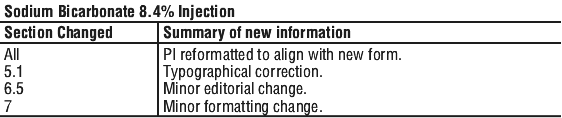
Summary Table of Changes
Reasonable care is taken to provide accurate information at the time of creation. This information is not intended as a substitute for medical advice and should not be exclusively relied on to manage or diagnose a medical condition. The Australian Commission on Safety and Quality in Health Care disclaims all liability (including for negligence) for any loss, damage, injury or any other negative effects resulting from reliance on or use of this information. Read our full disclaimer. This website uses cookies. Read our privacy policy.