
Sodium Chloride 0.9% Intravenous Infusion
Brand Information
| Brand name | Sodium Chloride 0.9% Intravenous Infusion |
| Active ingredient | Sodium chloride |
| Schedule | Unscheduled |
Consumer Medicine Information (CMI) leaflet
Please read this leaflet carefully before you start using the Sodium Chloride 0.9% Intravenous Infusion.
Summary CMI
Sodium Chloride 0.9% Intravenous Infusion
Consumer Medicine Information (CMI) summary
The full CMI on the next page has more details. If you are worried about using this medicine, speak to your doctor or pharmacist.
1. Why am I receiving Sodium Chloride 0.9%?
Sodium Chloride 0.9% Intravenous Infusion (Sodium Chloride 0.9%) contains the active ingredient Sodium Chloride. Sodium Chloride 0.9% is used to help replace and replenish water, fluid and electrolyte balance in the body.
For more information, see Section 1. Why am I receiving Sodium Chloride 0.9%? in the full CMI.
2. What should I know before I receive Sodium Chloride 0.9%?
Do not use if you have ever had an allergic reaction to Sodium Chloride 0.9% or any of the ingredients listed at the end of the CMI. Talk to your doctor if you have any other medical conditions, take any other medicines, or are pregnant or plan to become pregnant or are breastfeeding.
For more information, see Section 2. What should I know before I receive Sodium Chloride 0.9%? in the full CMI.
3. What if I am taking other medicines?
Some medicines may interfere with Sodium Chloride 0.9% and affect how it works.
A list of these medicines is in Section 3. What if I am taking other medicines? in the full CMI.
4. How is Sodium Chloride 0.9% given?
- Usually, your doctor or trained nurse will give Sodium Chloride 0.9% by an infusion (drip) into a vein (intravenously).
- Your doctor will decide how much Sodium Chloride 0.9% to give. The amount depends on your need and condition.
More instructions can be found in Section 4. How is Sodium Chloride 0.9% given? in the full CMI.
5. What should I know while receiving Sodium Chloride 0.9%?
| Things you should do |
|
| Things you should not do |
|
| Driving or using machines |
|
| Drinking alcohol |
|
| Looking after your medicine |
|
For more information, see Section 5. What should I know while receiving Sodium Chloride 0.9%? in the full CMI.
6. Are there any side effects?
For more information on what to do if you have any side effects, see Section 6. Are there any side effects? in the full CMI.
Full CMI
Sodium Chloride 0.9% Intravenous Infusion
Active ingredient: Sodium Chloride
Consumer Medicine Information (CMI)
This leaflet provides important information about using Sodium Chloride 0.9% Intravenous Infusion (Sodium Chloride 0.9%). You should also speak to your doctor, nurse or pharmacist if you would like further information or if you have any concerns or questions about using Sodium Chloride 0.9%.
Where to find information in this leaflet:
1. Why am I receiving Sodium Chloride 0.9%?
2. What should I know before I receive Sodium Chloride 0.9%?
3. What if I am taking other medicines?
4. How is Sodium Chloride 0.9% given?
5. What should I know while receiving Sodium Chloride 0.9%?
6. Are there any side effects?
7. Product details
1. Why am I receiving Sodium Chloride 0.9%?
Sodium Chloride 0.9% contains the active ingredient sodium chloride. Sometimes called ‘normal saline’, a doctor or nurse gives it as an infusion into your vein. It helps replace and replenish water, fluid and electrolyte balance in the body.
Sodium Chloride 0.9% can also be used:
- to mix and deliver certain medicines
- as a sterile liquid to wash or rinse body parts during medical procedures.
2. What should I know before I receive Sodium Chloride 0.9%?
Warnings
Do not use Sodium Chloride 0.9% if:
- you are allergic to sodium chloride injections or infusion, or any of the ingredients listed at the end of this leaflet.
- Always check the ingredients to make sure you can use this medicine.
- you have congestive heart failure, a condition where the heart does not pump properly, causing fluid to build up in your lungs or body
- you have severe kidney problems
- you have severe liver disease
- if you have swelling in your body due to too much salt.
Check with your doctor if you:
- have heart problems
- have kidney or liver problems
- have fluid retention, including swelling in your brain, lungs or body
- have breathlessness
- have high blood pressure
- have any other medical conditions
- take any medicines for any other condition.
During treatment, you may be at risk of developing certain side effects. It is important you understand these risks and how to monitor for them. See additional information under Section 6. Are there any side effects?
Pregnancy and breastfeeding
Check with your doctor if you are pregnant or intend to become pregnant.
Talk to your doctor if you are breastfeeding or intend to breastfeed. A small amount of Sodium Chloride may enter the breast milk but is unlikely to affect the baby.
3. What if I am taking other medicines?
Tell your doctor or pharmacist if you are taking any other medicines, including any medicines, vitamins or supplements that you buy without a prescription from your pharmacy, supermarket or health food shop.
Some medicines may interfere with Sodium Chloride 0.9% and affect how it works.
Medicines that may lead to very low sodium levels when given with Sodium Chloride 0.9% include:
- clofibrate, a medicine to lower cholesterol
- antiepileptics (anti-seizure medicines) such as carbamazepine
- chemotherapy medicines for cancer such as chlorpropamide, vincristine, ifosfamide, cyclophosphamide
- medicines to treat depression and anxiety
- antipsychotics, that help manage psychosis
- pain relievers such as opioids and NSAIDS
- medicines to treat diabetes such as desmopressin and vasopressin
- terlipressin, a medicine to control bleeding from the food pipe
- oxytocin, a medicine used to induce labour and control postpartum bleeding
- diuretics, medicines to remove excess salt and water
Other medicines that may interact with Sodium Chloride 0.9% include:
- corticosteroids, medicines used to reduce inflammation and suppress immune response.
- corticotrophin, a medicine used to stimulate adrenal glands
- lithium, a medicine to treat bipolar disorder
Check with your doctor or pharmacist if you are not sure about what medicines, vitamins or supplements you are taking and if these affect Sodium Chloride 0.9%.
4. How is Sodium Chloride 0.9% given?
How it is given
- Your doctor or trained nurse will give Sodium Chloride 0.9% by an infusion (drip) into a vein (intravenously). A cannula (administration needle) is placed in a vein prior to the infusion.
- It is usually given in a hospital, clinic or nursing home. The infusion requires special equipment and medical training. You may receive it at home if your doctor has arranged for it.
How much is given
- Your doctor will decide how much Sodium Chloride 0.9% to give. The amount depends on your need and condition.
- Your doctor will decide how long you need to be given Sodium Chloride 0.9%.
If you are given too much Sodium Chloride 0.9%
The doctor or nurse giving you Sodium Chloride 0.9% is highly trained and qualified, so it is unlikely that you will be given an overdose.
If you think that you have been given too much, you may need urgent medical attention.
You should immediately:
- phone the Poisons Information Centre
(by calling 13 11 26), or - contact your doctor, or
- go to the Emergency Department at your nearest hospital.
You should do this even if there are no signs of discomfort or poisoning.
5. What should I know while receiving Sodium Chloride 0.9%?
Things you should do
During and after treatment, discuss your progress with your doctor. Tell them if you've had any side effects or concerns, especially during the first few days of therapy.
Your doctor and nurse will closely monitor you during treatment, and may use laboratory tests to make sure you are safely receiving the right amount of Sodium Chloride 0.9%.
Call your doctor straight away if you:
- develop fever, persistent vomiting, diarrhoea, signs of dehydration, cough or breathing difficulties
- have signs of an allergic reaction (see ‘Are there any side effects?’)
Remind any doctor, nurse, dentist or pharmacist you visit that you have received Sodium Chloride 0.9%.
Things you should not do
- Do not stop using this medicine suddenly.
- Use this medicine to treat any other complaints unless your doctor tells you to.
Driving or using machines
Be careful before you drive or use any machines or tools until you know how Sodium Chloride 0.9% affects you.
Sodium Chloride 0.9% may cause dizziness in some people.
Drinking alcohol
Tell your doctor if you drink alcohol.
Drinking alcohol may affect your treatment.
Looking after your medicine
Sodium Chloride 0.9% will be stored in the pharmacy or in the ward, kept below 25°C.
If for any reason you need to keep this product at home, it should be stored in a locked cupboard.
- Store below 25°C.
- Do not freeze.
Follow the instructions in the carton on how to take care of your medicine properly.
Store it in a cool, dry place away from moisture, heat or sunlight; for example, do not store it:
- in the bathroom or near a sink, or
- in the car or on window sills.
Keep it where young children cannot reach it.
Getting rid of any unwanted medicine
If you no longer need to use this medicine or it is out of date, take it to any pharmacy for safe disposal.
Do not use this medicine after the expiry date.
6. Are there any side effects?
All medicines can have side effects. If you do experience any side effects, most of them are minor and temporary. However, some side effects may need medical attention.
See the information below and, if you need to, ask your doctor or pharmacist if you have any further questions about side effects.
Less serious side effects
| Less serious side effects | What to do |
Heart-related:
| Speak to your doctor if you have any of these less serious side effects and they worry you. |
Serious side effects
| Serious side effects | What to do |
Allergic-reaction related:
| Call your doctor straight away, or go straight to the Emergency Department at your nearest hospital if you notice any of these serious side effects. |
Tell your doctor or pharmacist if you notice anything else that may be making you feel unwell.
Other side effects not listed here may occur in some people.
Reporting side effects
After you have received medical advice for any side effects you experience, you can report side effects to the Therapeutic Goods Administration online at www.tga.gov.au/reporting-problems. By reporting side effects, you can help provide more information on the safety of this medicine.
Always make sure you speak to your doctor or pharmacist before you decide to stop taking any of your medicines.
7. Product details
This medicine is only available with a doctor's prescription.
What Sodium Chloride 0.9% contains
| Active ingredient (main ingredient) | Sodium Chloride |
| Other ingredients (inactive ingredients) | Water for Injections |
| Potential allergens | Sodium, Chloride |
Do not take this medicine if you are allergic to any of these ingredients.
What Sodium Chloride 0.9% looks like
Sodium Chloride 0.9% Intravenous Infusion in VIAFLO plastic container is a clear sterile solution available as the following products:
- VIAFLO 0.9% Sodium Chloride 450 mg/50 mL injection intravenous infusion bag (Aust R 298309)
- VIAFLO 0.9% Sodium Chloride 900 mg/100 mL injection intravenous infusion bag (Aust R 298310)
- 0.9% Sodium Chloride intravenous infusion 2.25g/250mL bag (Aust R 168509)
- 0.9% Sodium Chloride intravenous infusion 4.5g/500mL (Aust R 168510)
- 0.9% Sodium Chloride intravenous infusion 9g/1000mL bag (Aust R 168511)
Not all products may be marketed.
Who distributes Sodium Chloride 0.9%
Baxter Healthcare Pty Ltd
1 Baxter Drive
Old Toongabbie
NSW 2146
Australia
This leaflet was prepared in August 2025
Brand Information
| Brand name | Sodium Chloride 0.9% Intravenous Infusion |
| Active ingredient | Sodium chloride |
| Schedule | Unscheduled |
MIMS Revision Date: 01 December 2019
1 Name of Medicine
Sodium chloride.
2 Qualitative and Quantitative Composition
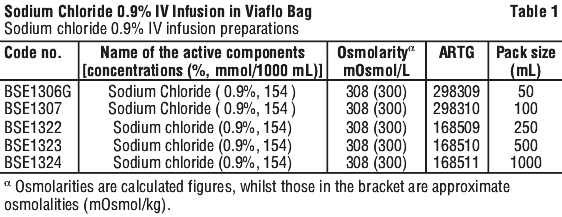
Sodium Chloride 0.9% Intravenous (IV) Infusion preparations are clear, colourless, practically free from visible particles, sterile and non-pyrogenic solutions of sodium chloride (0.9%) in water for injections. They do not contain an antimicrobial agent or added buffer, and have a pH of 4.5 - 7.0. Sodium chloride 0.9% solutions are isotonic as indicated by their osmolarity shown in Table 1 (see Section 6.5 Nature and Contents of Container). In a dilute condition, osmolarity/L is approximately the same as osmolality/kg.
For the full list of excipients, see Section 6.1 List of Excipients.
3 Pharmaceutical Form
Solution for Intravenous Infusion.
4 Clinical Particulars
4.1 Therapeutic Indications
Sodium Chloride 0.9% IV Infusion can be used as the vehicle for many parenteral drugs and as an electrolyte replenisher for maintenance or replacement of deficits in extracellular fluid.
It can also be used as a sterile irrigation medium.
4.2 Dose and Method of Administration
General directive. Sodium Chloride 0.9% IV Infusion is for intravenous infusion.
To be used as directed by the doctor.
Dosage, rate, and duration of administration are to be individualised and depend upon the indication for use, the patient's age, weight, clinical condition, and concomitant treatment, and on the patient's clinical and laboratory response to treatment.
Parenteral drug products should be inspected visually for particulate matter and discolouration prior to administration whenever solution and container permit. The solution should be clear and free from particles. Do not administer unless solution is clear and seal is intact.
Additives may be incompatible. Suitability of potential additives has not been demonstrated. Complete information is not available. Those additives known to be incompatible should not be used. Before adding a substance or medication, verify that it is soluble and/or stable in water and that the pH range of Sodium Chloride 0.9% IV Infusion is appropriate. The instructions for use of the medication to be added and other relevant literature must be consulted. Consult with a pharmacist, if available.
If in the informed judgment of the doctor, it is deemed advisable to introduce additives, use aseptic technique. Mix thoroughly when additives have been introduced. After addition, check for a possible colour change and/or the appearance of precipitates, insoluble complexes or crystals. Do not store solutions containing additives. The stability of this product when mixed with additive has not been demonstrated (see Section 4.4 Special Warnings and Precautions for Use; Section 4.5 Interactions with Other Medicines and Other Forms of Interactions).
When other electrolytes or medicines are added to this solution, the dosage and the infusion rate will also be dictated by the dose regimen of the additions.
The product should be used for one patient on one occasion only. Any unused portion should be discarded.
Direction for use of Viaflo plastic container. Warning. Do not connect flexible plastic containers in series in order to avoid air embolism due to possible residual air contained in the primary container.
Pressurising intravenous solutions contained in flexible plastic containers to increase flow rates can result in air embolism if the residual air in the container is not fully evacuated prior to administration.
Use of a vented intravenous administration set with the vent in the open position could result in air embolism. Vented intravenous administration sets with the vent in the open position should not be used with flexible plastic containers.
To open. Tear overwrap down side at slit and remove solution container. Some opacity of the plastic due to moisture absorption during the sterilisation process may be observed. This is normal and does not affect the solution quality or safety. The opacity will diminish gradually. Check for minute leaks by squeezing inner bag firmly. If leaks are found, discard the product as sterility may be impaired. If supplemental medication is desired, follow directions below.
Preparation for administration. Sodium Chloride 0.9% IV Infusion is a sterile preparation. Thus, aseptic technique must be applied throughout the administration.
(1) Suspend container from eyelet support.
(2) Remove plastic protector from outlet port at the bottom of container.
(3) Attach administration set.
To add medications. Warning. Additives may be incompatible (see Section 4.4 Special Warnings and Precautions for Use; Section 4.5 Interactions with Other Medicines and Other Forms of Interactions).
To add medication before solution administration. Supplemental medication may be added with needle through the medication injection port. To proceed, swab medication site (port) with alcohol swab. Using syringe with 0.63 to 0.80 mm needle, puncture resealable medication port and inject. Mix solution and medication thoroughly. For high density medication such as potassium chloride, squeeze ports while ports are upright and mix thoroughly.
To add medication during solution administration. Close clamp on the set. Prepare medication port. Using syringe with 0.63 to 0.80 mm needle, puncture resealable medication port and inject. Remove container from IV pole and/or turn to upright position. Evaluate both ports by squeezing them while container is in the upright position. Mix solution and medication thoroughly. Return container to in use position and continue administration.
The solutions contain no antimicrobial agents, and are for single use in only one patient.
Unused portions must be discarded.
4.3 Contraindications
The use of Sodium Chloride 0.9% IV Infusion requires careful evaluation of risks and benefits by the attending physician. It must not be used in the following conditions unless the physician has determined that potential benefits outweigh risks:
congestive heart failure;
severe impairment of renal function;
clinical states in which there exists oedema with sodium retention;
liver cirrhosis;
irrigation during electrosurgical procedures.
See Section 4.4 Special Warnings and Precautions for Use.
4.4 Special Warnings and Precautions for Use
The safety of the Viaflo plastic bag container has been shown in tests with animals according to the USP biological tests for plastic container, as well by tissue culture toxicity studies.
Hypersensitivity reactions. Hypersensitivity/infusion reactions, including hypotension, pyrexia, tremor, chills, urticaria, rash, and pruritus, have been reported.
Stop the infusion immediately if signs or symptoms of hypersensitivity/infusion reactions develop. Appropriate therapeutic countermeasures must be instituted as clinically indicated.
Hyponatraemia. Monitoring of serum sodium is important for all fluids. High volume infusion must be used under specific monitoring in patients with cardiac or pulmonary failure, and in patients with non-osmotic vasopressin release (including SIADH), due to the risk of hospital-acquired hyponatraemia.
Acute hyponatraemia can lead to acute hyponatraemic encephalopathy (brain oedema) characterised by headache, nausea, seizures, lethargy and vomiting. Patients with brain oedema are at particular risk of severe, irreversible and life-threatening brain injury.
Fluid and/or solute overload and electrolyte disturbances. Clinical evaluation and appropriate laboratory determinations are essential to monitor renal function, changes in fluid balance, electrolyte concentration and acid-base balance.
Depending on the volume and rate of infusion, intravenous administration of Sodium Chloride 0.9% IV Infusion can cause:
fluid and/or solute overload resulting in overhydration/hypervolaemia and, for example, congested states, including central and peripheral oedema;
clinically relevant electrolyte disturbances and acid-base imbalance.
The risk of dilutional states is inversely proportional to the electrolyte concentrations of the injections. The risk of solute overload causing congested states with peripheral and pulmonary oedema is directly proportional to the electrolyte concentration administered.
Clinical evaluation and periodic laboratory determinations may be necessary to monitor changes in fluid balance, electrolyte concentrations, and acid-base balance during prolonged parenteral therapy or whenever the condition of the patient or the rate of administration warrants such evaluation. Thus, caution should be exercised in patients with hypertension, heart failure, cerebral oedema, renal disease, pulmonary or peripheral oedema, pre-eclampsia, liver cirrhosis, conditions associated with sodium retention, and in geriatric patients, and infants.
Sodium Chloride 0.9% IV Infusion should be used with caution in patients receiving corticosteroids or corticotropin, because of potential sodium retention. Given that there is a possibility of systematic absorption of irrigation solutions, the same precautions apply. Displaced catheters or drainage tubes can lead to irrigation or infiltration of unintended structures or cavities. Excessive volume or pressure during irrigation of closed cavities may result in distention of tissues.
Sodium Chloride 0.9% IV Infusion should be used with particular caution, if at all, in patients with or at risk for: hypernatraemia, hyperchloraemia, metabolic acidosis, hypervolaemia, conditions that may cause sodium retention, fluid overload and oedema (central and peripheral).
Its use may result in electrolyte abnormalities, including hypokalaemia and hyperkalaemia. See Section 4.8 Adverse Effects (Undesirable Effects); Section 4.9 Overdose.
Rapid correction of hyponatraemia or hypernatraemia is potentially dangerous. Dosage, rate, and duration of administration should be determined by a physician experienced in intravenous fluid therapy.
Use in the elderly. There are no adequate or well-controlled studies of Sodium Chloride 0.9% IV Infusion in subjects aged 65 and over to determine whether they respond differently from younger subjects.
When selecting the type of infusion solution and the volume/rate of infusion for a elderly patient, consider that elderly patients are generally more likely to have cardiac, renal, hepatic, and other diseases or concomitant drug therapy.
In general, dose selection for an elderly patient should be cautious as it is known that sodium chloride is substantially excreted by the kidney, and the risk of toxic reactions to this drug, may be greater in patients with impaired renal function. Because elderly patients are more likely to have decreased renal function, care should be taken in dose selection and thus renal function may be monitored.
Paediatric use. Safety and effectiveness of sodium chloride (0.9%) in paediatric patients have not been established by adequate or controlled trials. In paediatric use, doses are calculated for each patient based on clinical condition, including body weight, and laboratory data.
Plasma electrolyte concentrations should be closely monitored in the paediatric population because of their impaired ability to regulate fluids and electrolytes.
Effects on laboratory tests. The effect of this medicine on laboratory tests has not been established.
4.5 Interactions with Other Medicines and Other Forms of Interactions
Sodium Chloride 0.9% IV Infusion should not be administered simultaneously with blood products through the same administration set, because of the possibility of pseudoagglutination or haemolysis. The container label for this product bears the statement: do not administer simultaneously with blood.
If Sodium Chloride 0.9% IV Infusion is used as a vehicle for a drug delivery, a thorough review of the Product Information document(s) of such drug(s) should be made to ensure that no incompatibility might occur. Salting out, i.e. a precipitation of organic base drug may occur in the presence of salt.
Caution is advised in patients treated with lithium. Renal sodium and lithium clearance may be increased during administration of Sodium Chloride 0.9% IV Infusion resulting in decreased lithium levels.
Caution is advised when administering Sodium Chloride 0.9% IV Infusion to patients treated with drugs leading to an increased vasopressin effect. The below listed drugs increase the vasopressin effect, leading to reduced renal electrolyte free water excretion and may increase the risk of hyponatraemia following treatment with intravenous fluids. (See Section 4.4 Special Warnings and Precautions for Use; Section 4.8 Adverse Effects (Undesirable Effects)).
Drugs stimulating vasopressin release such as chlorpropamide, clofibrate, carbamazepine, vincristine, selective serotonin reuptake inhibitors (SSRIs), 3,4-methylenedioxy-N-methamphetamine, ifosfamide, antipsychotics, opioids.
Drugs potentiating vasopressin action such as chlorpropamide, non-steroidal anti-inflammatories (NSAIDS), cyclophosphamide.
Vasopressin analogues such as desmopressin, oxytocin, vasopressin, terlipressin.
Caution is advised when administering Sodium Chloride 0.9% IV Infusion to patients treated with drugs that may increase the risk of hyponatraemia, such as diuretics and antiepileptics (e.g. oxcarbazepine).
Sodium Chloride 0.9% IV Infusion should be used with caution in patients receiving corticosteroids or corticotropin, because of potential sodium and fluid retention.
4.6 Fertility, Pregnancy and Lactation
Effects on fertility. No data available.
Use in pregnancy. (Category A)
There are no adequate and well-controlled studies of Sodium Chloride 0.9% IV Infusion in animals or in pregnant women. However, Sodium Chloride 0.9% IV Infusion contains no components known to have adverse effects on the foetus at physiological concentrations.
Physicians should carefully consider the potential risks and benefits for each specific patient before administering sodium chloride.
Use in lactation. There are no adequate data from the use of Sodium Chloride 0.9% IV Infusion in lactating women. Following intravenous administration, a fraction of sodium and chloride ions is expected to be excreted into human milk. However, at physiological concentrations, neither of these ions is known to have adverse effects on a breastfeeding baby.
Physicians should carefully consider the potential risks and benefits for each specific patient before administering sodium chloride.
4.7 Effects on Ability to Drive and Use Machines
There is no information on the effects of sodium chloride (0.9%) on the ability to operate an automobile or other heavy machinery.
4.8 Adverse Effects (Undesirable Effects)
Adverse effects, which may occur because of the solution or the technique of administration include febrile response, infection at the site of injection, venous thrombosis or phlebitis extending from the site of injection and extravasation. Excessive administration of sodium chloride causes hypernatraemia, resulting in dehydration of internal organs, hypokalaemia and acidosis (see Section 4.9 Overdose).
If an adverse reaction does occur, discontinue the infusion, evaluate the patient, institute appropriate therapeutic countermeasures and save the remainder of the fluid for examination if deemed necessary.
Inappropriate use of Sodium Chloride 0.9% IV Infusion may cause fluid or solute overload resulting in electrolyte abnormalities, overhydration, congestive conditions including central, peripheral or pulmonary oedema electrolyte imbalances and acid-base imbalance.
Post-marketing adverse reactions. The following adverse reactions have been reported in the post-marketing experience, listed by MedDRA System Organ Class (SOC), then, where feasible, by Preferred Term in order of severity:
Immune system disorders. Hypersensitivity/infusion reactions, including hypotension, pyrexia, tremor, chills, urticaria, rash, pruritus.
General disorders and administration site conditions. Infusion site reactions, such as infusion site erythema, injection site streaking, burning sensation, infusion site urticaria.
Other adverse reactions/ class reactions. The following adverse reactions have been reported with other similar products: hypernatraemia, hyperchloraemic metabolic acidosis, hyponatreamia, which may be symptomatic, hyponatraemic encephalopathy.
Reporting suspected adverse effects. Reporting suspected adverse reactions after registration of the medicinal product is important. It allows continued monitoring of the benefit-risk balance of the medicinal product. Healthcare professionals are asked to report any suspected adverse reactions at www.tga.gov.au/reporting-problems.
4.9 Overdose
Infusion of excess Sodium Chloride 0.9% IV Infusion preparations may cause fluid overload, sodium overload (which can lead to central and/or peripheral oedema), hypernatraemia, hyponatraemia, other electrolyte abnormalities.
No specific antidotes to this preparation are known.
Should overdose occur, prompt and careful clinical assessment is essential. Treat the symptoms and institute appropriate supportive measures as required.
When assessing an overdose, any additives in the solution must also be considered.
Symptoms of hypernatraemia. Hypernatraemia may cause nausea, vomiting, diarrhoea and cramps, reduced salivation and lacrimation, increased thirst, hypotension, and tachycardia. CNS effects include headache, dizziness, restlessness, weakness, muscle twitching or rigidity, respiratory paralysis, seizures, coma, and death.
Treatment of hypernatraemia. Treatment usually requires free water replacement. Plasma sodium concentrations should be corrected slowly. If hypernatraemia is severe, IV hypotonic or isotonic saline or 5% glucose may be used to restore normal plasma sodium concentrations at a rate of no more than 10 to 12 mmol/L daily (0.5 mmol/L per hour). If plasma sodium levels are greater than 200 mmol/L or if the patient has renal impairment or is moribund, dialysis may be needed. Diazepam or other appropriate treatment may be required to treat convulsions.
Symptoms of hyponatraemia. Symptoms may include headache, confusion, nausea, vomiting, somnolence weakness, cerebral oedema, seizures, coma, respiratory arrest, and death.
Treatment of hyponatraemia. Acute hyponatraemia requires immediate assessment. Symptomatic hyponatraemia associated with plasma sodium concentrations below 120 mmol/L may require the administration of IV isotonic or hypertonic sodium chloride. A loop diuretic may be required if there is fluid overload. The aim is to render the patient asymptomatic, usually by restoring plasma sodium concentration to between 120 mmol/L and 130 mmol/L, at a rate of 10 to 12 mmol/L in each 24 hour period.
Careful monitoring of plasma sodium concentrations and total body water is essential.
As in hypernatraemia, rapid correction of hyponatraemia is potentially dangerous. If neurological deterioration occurs, further investigation by MRI imaging of brain, including brain stem, is indicated.
For information on the management of overdose, contact the Poisons Information Centre on 13 11 26 (Australia).
5 Pharmacological Properties
5.1 Pharmacodynamic Properties
Mechanism of action. Sodium is the major cation of extracellular fluid and functions principally in the control of water distribution, fluid and electrolyte balance and osmotic pressure of body fluids. Chloride, the major extracellular anion, closely follows the physiological disposition of sodium cation in maintenance of acid-base balance, isotonicity and electrodynamic characteristic of the cells.
Thus, Sodium Chloride 0.9% IV Infusion has a value as a source of water and electrolytes.
Clinical trials. No data available.
5.2 Pharmacokinetic Properties
As Sodium Chloride 0.9% IV Infusion is directly administered to the systemic circulation by intravenous infusion, the bioavailability (absorption) of the active components is complete (100 per cent).
5.3 Preclinical Safety Data
Genotoxicity. Studies with sodium chloride have not been performed to evaluate carcinogenic or mutagenic potential.
Carcinogenicity. Studies with sodium chloride have not been performed to evaluate carcinogenic or mutagenic potential.
6 Pharmaceutical Particulars
6.1 List of Excipients
Water for injections.
6.2 Incompatibilities
Additives may be incompatible. Suitability of potential additives has not been demonstrated. Complete information is not available. Those additives known to be incompatible should not be used (see Section 4.2 Dose and Method of Administration).
Sodium Chloride 0.9% IV Infusion should not be administered simultaneously with blood products through the same administration set, because of the possibility of pseudoagglutination or haemolysis (see Section 4.5 Interactions with Other Medicines and Other Forms of Interactions).
6.3 Shelf Life
In Australia, information on the shelf life can be found on the public summary of the Australian Register of Therapeutic Goods (ARTG). The expiry date can be found on the packaging.
6.4 Special Precautions for Storage
Store below 25°C.
6.5 Nature and Contents of Container
Sodium Chloride 0.9% IV Infusion is supplied in Viaflo plastic containers. See Table 1.
6.6 Special Precautions for Disposal
Any unused product or waste material should be disposed of in accordance with local requirements.
6.7 Physicochemical Properties
Sodium chloride. Molecular formula: NaCl.
Molecular Weight: 58.44.
Appearance: colourless or white crystal.
Solubility: freely soluble in water and practically insoluble in anhydrous ethanol.
CAS number. Sodium chloride CAS No.: 7647-14-5.
7 Medicine Schedule (Poisons Standard)
Unscheduled.
Date of Revision
18 October 2019
Summary Table of Changes

Reasonable care is taken to provide accurate information at the time of creation. This information is not intended as a substitute for medical advice and should not be exclusively relied on to manage or diagnose a medical condition. The Australian Commission on Safety and Quality in Health Care disclaims all liability (including for negligence) for any loss, damage, injury or any other negative effects resulting from reliance on or use of this information. Read our full disclaimer. This website uses cookies. Read our privacy policy.