
Baxter Water for Injections
Brand Information
| Brand name | Baxter Water for Injections |
| Active ingredient | Water for injections |
| Schedule | Unscheduled |
Consumer Medicine Information (CMI) leaflet
Please read this leaflet carefully before you start using the Baxter Water for Injections.
Summary CMI
Baxter Water for Injections
Consumer Medicine Information (CMI) summary
The full CMI on the next page has more details. If you are worried about using this medicine, speak to your doctor or pharmacist.
1. Why am I receiving Baxter Water for Injections?
Baxter Water for Injections contains sterile water only. It is used to dilute or dissolve another medicine intended for an injection or infusion (drip).
For more information, see Section 1. Why am I receiving Baxter Water for Injections? in the full CMI.
2. What should I know before I receive Baxter Water for Injections?
Do not use Baxter Water for Injections if it has not been mixed with another medicine. Your doctor, nurse or pharmacist will add the prescribed medicine to the correct concentration so that it can be given safely.
Talk to your doctor if you have any other medical conditions, take any other medicines, or are pregnant or plan to become pregnant or are breastfeeding.
For more information, see Section 2. What should I know before I receive Baxter Water for Injections? in the full CMI.
3. What if I am taking other medicines?
Tell your doctor if you are taking any other medicines, including any medicines, vitamins or supplements. See Section 3. What if I am taking other medicines? in the full CMI.
4. How is Baxter Water for Injections given?
- Your doctor or nurse will add a prescribed medicine to Baxter Water for Injections in the correct concentration and give it either as a slow “drip” into a vein (infusion) or a smaller injection into a muscle.
- Your doctor will decide how much to give.
More instructions can be found in Section 4. How is Baxter Water for Injections given? in the full CMI.
5. What should I know while receiving Baxter Water for Injections?
| Things you should do |
|
| Things you should not do |
|
| Driving or using machines |
|
| Drinking alcohol |
|
| Looking after your medicine |
|
For more information, see Section 5. What should I know while receiving Baxter Water for Injections? in the full CMI.
6. Are there any side effects?
For more information on what to do if you have any side effects, see Section 6. Are there any side effects? in the full CMI.
Full CMI
Baxter Water for Injections
Active ingredient: Water for Injections (sterile water)
Consumer Medicine Information (CMI)
This leaflet provides important information about using Baxter Water for Injections. You should also speak to your doctor, nurse or pharmacist if you would like further information or if you have any concerns or questions about using Baxter Water for Injections.
Where to find information in this leaflet:
1. Why am I receiving Baxter Water for Injections?
2. What should I know before I receive Baxter Water for Injections?
3. What if I am taking other medicines?
4. How is Baxter Water for Injections given?
5. What should I know while receiving Baxter Water for Injections?
6. Are there any side effects?
7. Product details
1. Why am I receiving Baxter Water for Injections?
Baxter Water for Injections contains sterile (germ-free) water only.
Baxter Water for Injections is used to dilute or dissolve a medicine intended for injection or infusion by slow drip into a vein.
Your doctor or trained nurse will add the prescribed medicine to the correct concentration so that it can be given safely.
2. What should I know before I receive Baxter Water for Injections?
Warnings
Do not use Baxter Water for Injections if:
- it has not been mixed with another medicine. Your doctor, nurse or pharmacist will add the prescribed medicine to the correct concentration so that it can be given safely.
Check with your doctor if you:
- are allergic to any type of medication
- have any other medical conditions
- take any medicines for any other condition.
During treatment, you may be at risk of developing certain side effects. It is important you understand these risks and how to monitor them. See additional information under Section 6. Are there any side effects?
Pregnancy and breastfeeding
Check with your doctor if you are pregnant or intend to become pregnant.
Talk to your doctor if you are breastfeeding or intend to breastfeed.
3. What if I am taking other medicines?
Tell your doctor or pharmacist if you are taking any other medicines, including any medicines, vitamins or supplements that you buy without a prescription from your pharmacy, supermarket or health food shop.
Check with your doctor or pharmacist if you are not sure about what medicines, vitamins or supplements you are taking and if these affect Baxter Water for Injections.
4. How is Baxter Water for Injections given?
How it is given
- Your doctor or nurse will add a prescribed medicine to Baxter Water for Injections in the correct concentration and give it either as:
- a slow “drip” into a vein (infusion)
- a smaller injection into a muscle. - It will not be injected by itself, as plain water can damage red blood cells and body tissues if it enters the bloodstream.
- It is usually given in a hospital, clinic or nursing home.
The infusion requires special equipment and medical training. You may receive it at home if your doctor has arranged it.
How much is given
- Your doctor will decide how much medicine to add to Baxter Water for Injections before it is given to you. The amount depends on your needs and condition.
If you are given too much Baxter Water for Injections
The doctor or nurse giving you Baxter Water for Injections is trained and experienced in its use, so it is unlikely that you will be given an overdose.
If you think that you have been given too much, you may need urgent medical attention.
You should immediately:
- phone the Poisons Information Centre
(by calling 13 11 26), or - contact your doctor, or
- go to the Emergency Department at your nearest hospital.
You should do this even if there are no signs of discomfort or poisoning.
5. What should I know while receiving Baxter Water for Injections?
Things you should do
During and after treatment, discuss your progress with your doctor. Tell them if you've had any side effects or concerns, especially during the first few days of therapy.
Your doctor and nurse will closely monitor you during treatment, and may use laboratory tests to make sure you are safely receiving the right amount of your medicine together with Baxter Water for Injections.
Remind any doctor, nurse, dentist or pharmacist you visit that you have received Baxter Water for Injections.
Things you should not do
- Do not use Baxter Water for Injection if it has not been mixed with another medicine.
Driving or using machines
Be careful before you drive or use any machines or tools until you know how Baxter Water for Injections and the included medicine affects you.
Drinking alcohol
Tell your doctor if you drink alcohol.
Alcohol may affect the medicine prepared for you with Baxter Water for Injections.
Looking after your medicine
Baxter Water for Injections will be stored in the pharmacy or in the ward, kept below 30°C.
If for any reason you need to keep this product at home, it should be stored in a locked cupboard.
- Store below 30°C.
- Do not freeze.
- Do not expose to heat.
Follow the instructions in the carton on how to take care of your medicine properly.
Store it in a cool, dry place away from moisture, heat or sunlight; for example, do not store it:
- in the bathroom or near a sink, or
- in the car or on window sills.
Keep it where young children cannot reach it.
Getting rid of any unwanted medicine
This medicine is for single use, and for one person only. Your doctor or nurse will discard any unused product. They will not save unused portions for later, either for you or anyone else.
If you no longer need to use this medicine or it is out of date, take it to any pharmacy for safe disposal.
Do not use this medicine after the expiry date.
6. Are there any side effects?
All medicines can have side effects. If you do experience any side effects, most of them are minor and temporary. However, some side effects may need medical attention.
Side effects may be related to the medicine added to the Water for Injections, rather than the Water for Injections itself.
See the information below and, if you need to, ask your doctor or pharmacist if you have any further questions about side effects.
Less serious side effects
| Less serious side effects | What to do |
At the infusion-site:
| Speak to your doctor if you have any of these less serious side effects and they worry you. |
Serious side effects
| Serious side effects | What to do |
At the infusion site:
| Call your doctor straight away, or go straight to the Emergency Department at your nearest hospital if you notice any of these serious side effects. |
Tell your doctor or pharmacist if you notice anything else that may be making you feel unwell.
Other side effects not listed here may occur in some people.
Reporting side effects
After you have received medical advice for any side effects you experience, you can report side effects to the Therapeutic Goods Administration online at www.tga.gov.au/reporting-problems. By reporting side effects, you can help provide more information on the safety of this medicine.
Always make sure you speak to your doctor or pharmacist before you decide to stop taking any of your medicines.
7. Product details
This medicine is only available with a doctor's prescription.
What Baxter Water for Injections contains
| Active ingredient (main ingredient) | Water for Injections |
| Other ingredients (inactive ingredients) | none |
Do not take this medicine if you are allergic to any of these ingredients.
What Baxter Water for Injections looks like
Baxter Water for Injections is sterile, clear, colourless water packaged in VIAFLEX plastic bags. It is available as:
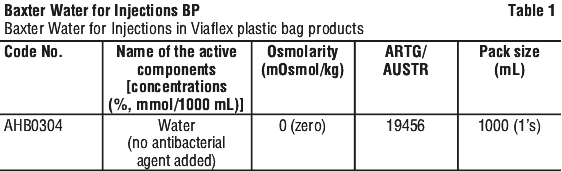
- BAXTER WATER FOR INJECTIONS 1000mL injection BP bag – Aust R 19456
Who distributes Baxter Water for Injections
Baxter Healthcare Pty Ltd
1 Baxter Drive
Old Toongabbie
NSW 2146
Australia
This leaflet was prepared in November 2025.
Brand Information
| Brand name | Baxter Water for Injections |
| Active ingredient | Water for injections |
| Schedule | Unscheduled |
MIMS Revision Date: 01 March 2021
1 Name of Medicine
Water for Injections.
2 Qualitative and Quantitative Composition
The composition of the Baxter Water for Injections is sterile water only.
Baxter Water for Injections is sterile, nonpyrogenic water, prepared from purified water by distillation and presented in Viaflex plastic bags as a single dose container. It is intended for intravenous administration after the addition of a suitable solute. It may also be used as a dispensing container, and a diluent for drugs requiring reconstitution. No antimicrobial agents or other substances have been added. Baxter Water for Injections is slightly acidic, due to a low level of HCl released from Viaflex plastic bags during sterilisation. The pH is 5.5 (4.5 - 7.0). The osmolality is 0 (zero) mOsm/kg as it does not contain any solute.
3 Pharmaceutical Form
Solution for Injection (for drug diluent use only).
4 Clinical Particulars
4.1 Therapeutic Indications
Baxter Water for Injections is employed as a vehicle for medicinal products when water is a suitable solvent for dissolving or diluting injectable therapeutic substances for parenteral administration.
4.2 Dose and Method of Administration
Dosage. As Baxter Water for Injection is indicated only as a vehicle for aseptic reconstituting and administration of drug admixture, the dosage limitations are not applicable to this product.
Do not administer Baxter Water for Injections unless it has been adjusted to an isotonic solution by using suitable solute. The medical literature, the package insert and other available sources of information for the intended therapeutic agent should be reviewed for information and incompatibility problems.
Admixtures using Baxter Water for Injections as a vehicle should be inspected visually for particulate matter and discolouration prior to the administration whenever solution and container permit. Additives may be incompatible, and complete information on all of these is not available. Those additives known to be incompatible with water or the Viaflex plastic bag should not be used. Consult with a Pharmacy Drug Information Service, if available.
Direction for use. Do not use Viaflex plastic bags in series connections. Such use could result in embolism due to residual air being drawn from the primary bag before administration of the fluid from the secondary bag container is completed.
To open. Tear the over pouch sharply downwards at the slit and remove the Viaflex plastic bag. Some opacity of the plastic bag may be observed. This is due to moisture absorption during the sterilisation process. This is normal and does not affect the solution quality or safety. The opacity will diminish gradually. Check for minute leaks by squeezing inner bag firmly. If leaks are found, discard the solution, as sterility may be impaired. If supplemental medication is desired, follow directions below.
Preparation for administration. Baxter Water for Injections is a sterile preparation. Thus, aseptic technique must be applied throughout the administration.
(1) Suspend container from eyelet support.
(2) Remove the blue plastic protector from the administration outlet port at the bottom of container.
(3) Attach administration set.
To add medication. Warning: Additives may be incompatible (see Section 6.2 Incompatibilities).
To add medication before solution administration. Hold bag with ports uppermost. Decontaminate the medication site with an agent in accordance with the institution's Infection Control Policy. Using a syringe with a 19 to 22-gauge needle (0.90 - 0.7 mm), puncture the resealable medication site and inject. Mix solution and medication thoroughly. Squeeze ports while the bags are upright and mix the solutions thoroughly.
To add medication during solution administration. Close clamp on the set. Decontaminate the medication site. Using syringe with 19 to 22-gauge needle (0.90 - 0.7 mm), puncture resealable medication site and inject. Remove container from IV pole and/or turn to upright position. Empty both ports by squeezing them while container is in the upright position. Mix solution and medication thoroughly. Return container to its in use position and continue administration.
4.3 Contraindications
Baxter Water for Injections is hypotonic causing haemolysis if it is injected alone. It is contraindicated for intravenous administration if not adjusted to isotonicity by the addition of suitable solutes.
4.4 Special Warnings and Precautions for Use
General. The safety of the Viaflex plastic bag containing Baxter Water for Injections has been confirmed in tests with animals as well as by tissue culture toxicity studies. Nevertheless, prior to addition of drugs into the bags, compatibility with the container should be ascertained (see Section 4.2 Dose and Method of Administration).
The medical literature, the package insert and other available sources of information should be reviewed for thorough understanding of possible of incompatibility problems. In particular, Baxter Water for Injections is slightly acidic resulting from a low level of HCl released from the Viaflex plastic bags during the sterilisation, pH of 5.5 (range of 4.5 - 7.0), which may cause degradation or precipitation of certain drugs.
Do not administer Baxter Water for Injections unless it has been adjusted to an approximately isotonic solution by using a suitable solute. Intravenous administration of Baxter Water for Injections without added solute is contraindicated as it causes haemolysis. Haemoglobin induced renal failure has been reported following haemolysis. Do not use Baxter Water for Injections unless the solution is clear and seal is intact.
Use in the elderly. No data available.
Paediatric use. No data available.
Effects on laboratory tests. The effect of this medicine on laboratory tests has not been established.
4.5 Interactions with Other Medicines and Other Forms of Interactions
No data available.
4.6 Fertility, Pregnancy and Lactation
Effects on fertility. No data available.
Use in pregnancy. Intravenous administration of Baxter Water for Injections without added solute to non-pregnant or pregnant women is contraindicated as it causes haemolysis.
Use in lactation. Water is the main constituent of the body fluid and moves freely into nursing mother's milk. Even though no direct effect to the infant, intravenous administration of Baxter Water for Injections without added solutes should not be attempted because it causes haemolysis, resulting in harm to the nursing mother.
4.7 Effects on Ability to Drive and Use Machines
The effects of this medicine on a person's ability to drive and use machines were not assessed as part of its registration.
4.8 Adverse Effects (Undesirable Effects)
Intravenous administration of Baxter Water for Injections without added solutes causes haemolysis. Even in the presence of added substances, they may be insufficient to render the solution isotonic. Administration of such an admixture may still be associated with adverse reactions. Other adverse reactions may include fever, infection at the site of injection, venous thrombosis or phlebitis extending from the site of injection, extravasation, and hypervolemia. These may not necessary be due to the Baxter Water for Injection itself. There is also a possibility of unintentional hospital acquired infections.
If an adverse reaction does occur, discontinue the infusion, evaluate the patient's status, institute appropriate therapeutic countermeasures, and save the remainder of the fluid for examination if deemed necessary.
Reporting suspected adverse effects. Reporting suspected adverse reactions after registration of the medicinal product is important. It allows continued monitoring of the benefit-risk balance of the medicinal product. Healthcare professionals are asked to report any suspected adverse reactions at www.tga.gov.au/reporting-problems.
4.9 Overdose
No data available.
For information on the management of overdose, contact the Poisons Information Centre on 13 11 26 (Australia).
5 Pharmacological Properties
5.1 Pharmacodynamic Properties
Mechanism of action. Water is the main constituent of the body fluids. Body weight is approximately 60% of water distributed in intracellular, interstitial and vascular compartments. The water content in the intracellular fluid, i.e. the water inside the cells, is about 40 to 45% of body weight. Water moves freely between these compartments. Thus, pharmacological action of the Baxter Water for Injection is as a vehicle for substances in maintaining the isotonicity across these compartments.
Clinical trials. No data available.
5.2 Pharmacokinetic Properties
As Baxter Water for Injections is solute-free with osmolarity of zero (a hypotonic solution), its entry into the systemic circulation will result in a dilution of the electrolytes in the extracellular fluid leading to the movement of water into the red blood cells causing haemolysis. Thus, Baxter Water for Injections should not be injected without adjusting it to isotonicity by the addition of suitable solute.
5.3 Preclinical Safety Data
Genotoxicity. Water is the main constituent of the body fluids and is not known as a mutagen.
Carcinogenicity. Water is the main constituent of the body fluids and is not known as a carcinogen.
6 Pharmaceutical Particulars
6.1 List of Excipients
There are no excipients in Baxter Water for Injections.
See Section 2 Qualitative and Quantitative Composition.
6.2 Incompatibilities
Additives may be incompatible, and complete information on all of these is not available. Those additives known to be incompatible with water or the Viaflex plastic bag should not be used. Consult with a Pharmacy Drug Information Service, if available.
6.3 Shelf Life
In Australia, information on the shelf life can be found on the public summary of the Australian Register of Therapeutic Goods (ARTG). The expiry date can be found on the packaging.
6.4 Special Precautions for Storage
Store below 30°C.
6.5 Nature and Contents of Container
Baxter Water for Injections is supplied in Viaflex plastic bags as a single unit dose. See Table 1.
6.6 Special Precautions for Disposal
Any unused product or waste material should be disposed of in accordance with local requirements.
6.7 Physicochemical Properties
Chemical structure. Water for injections. Molecular formula: H2O.
Molecular Weight: 18.02.
CAS number. Water for injections. CAS No.: 7732-18-5.
7 Medicine Schedule (Poisons Standard)
Not scheduled.
Date of First Approval
30 September 1991
Date of Revision
25 January 2021
Summary Table of Changes

Reasonable care is taken to provide accurate information at the time of creation. This information is not intended as a substitute for medical advice and should not be exclusively relied on to manage or diagnose a medical condition. The Australian Commission on Safety and Quality in Health Care disclaims all liability (including for negligence) for any loss, damage, injury or any other negative effects resulting from reliance on or use of this information. Read our full disclaimer. This website uses cookies. Read our privacy policy.