
Tetanus Immunoglobulin-VF (For Intramuscular Use)
Brand Information
| Brand name | Tetanus Immunoglobulin-VF (For Intramuscular Use) |
| Active ingredient | Immunoglobulin, tetanus |
| Schedule | S4 |
Consumer Medicine Information (CMI) leaflet
Please read this leaflet carefully before you start using the Tetanus Immunoglobulin-VF (For Intramuscular Use).
Summary CMI
Tetanus Immunoglobulin-VF (For Intramuscular Use)
Consumer Medicine Information (CMI) summary
The full CMI on the next page has more details. If you are worried about using this medicine, speak to your doctor or pharmacist.
1. Why am I being given Tetanus Immunoglobulin-VF?
Tetanus Immunoglobulin-VF contains the active ingredient human tetanus immunoglobulin. Tetanus Immunoglobulin-VF is used to prevent tetanus in a person who has not recently been immunised against tetanus and who has suffered an injury which could expose them to the tetanus bacteria.
For more information, see Section 1. Why am I being given Tetanus Immunoglobulin-VF? in the full CMI.
2. What should I know before I am given Tetanus Immunoglobulin-VF?
Do not use if you have ever had an allergic reaction to Tetanus Immunoglobulin-VF or any of the ingredients listed at the end of the CMI.
Talk to your doctor if you have any other medical conditions, take any other medicines, or are pregnant or plan to become pregnant or are breastfeeding.
For more information, see Section 2. What should I know before I am given Tetanus Immunoglobulin-VF? in the full CMI.
3. What if I am taking other medicines?
Some medicines may interfere with Tetanus Immunoglobulin-VF and affect how it works.
For more information, see Section 3. What if I am taking other medicines? in the full CMI.
4. How will I be given Tetanus Immunoglobulin-VF?
- Your doctor will determine the dose(s) of Tetanus Immunoglobulin-VF that you are to receive. Your doctor will give you the injection. It will be injected into the muscle.
More instructions can be found in Section 4. How will I be given Tetanus Immunoglobulin-VF? in the full CMI.
5. What should I know after I am given Tetanus Immunoglobulin-VF?
| Things you should do |
|
| Driving or using machines |
|
| Looking after your medicine |
|
For more information, see Section 5. What should I know after I am given Tetanus Immunoglobulin-VF? in the full CMI.
6. Are there any side effects?
All medicines can have side effects. If you do experience any side effects, most of them are minor and temporary. However, some side effects may need medical attention. Reactions are very uncommon after injection with Tetanus Immunoglobulin-VF. However, some pain, redness and stiffness may be apparent at the injection site. This may occur after any large injection into a muscle. Occasionally mild fever, chills, drowsiness or discomfort may be felt and an itchy rash may develop.
For more information, including what to do if you have any side effects, see Section 6. Are there any side effects? in the full CMI.
Full CMI
Tetanus Immunoglobulin-VF (For Intramuscular Use)
Active ingredient: Human tetanus immunoglobulin
Consumer Medicine Information (CMI)
This leaflet provides important information about using Tetanus Immunoglobulin-VF. You should also speak to your doctor or pharmacist if you would like further information or if you have any concerns or questions about using Tetanus Immunoglobulin-VF.
Where to find information in this leaflet:
1. Why am I being given Tetanus Immunoglobulin-VF?
2. What should I know before I am given Tetanus Immunoglobulin-VF?
3. What if I am taking other medicines?
4. How will I be given Tetanus Immunoglobulin-VF?
5. What should I know after I am given Tetanus Immunoglobulin-VF?
6. Are there any side effects?
7. Product details
1. Why am I being given Tetanus Immunoglobulin-VF?
Tetanus Immunoglobulin-VF contains the active ingredient human tetanus immunoglobulin. Tetanus Immunoglobulin-VF is made from human plasma (the liquid component of blood) collected by Australian Red Cross Lifeblood. Tetanus Immunoglobulin-VF contains protein substances called antibodies which can provide protection against tetanus infection.
Tetanus Immunoglobulin-VF is used to prevent tetanus in a person who has not recently been immunised against tetanus and who has suffered an injury which could expose them to the tetanus bacteria.
2. What should I know before I am given Tetanus Immunoglobulin-VF?
Warnings
Do not use Tetanus Immunoglobulin-VF if:
- you are allergic to human tetanus immunoglobulin, or any of the ingredients listed at the end of this leaflet.
Always check the ingredients to make sure you can use this medicine. - you have a history of allergy to human immunoglobulin products (allergic reactions may include skin rash, face swelling, wheezing or breathing difficulties).
- you have been told you have antibodies to immunoglobulin A (IgA).
Check with your doctor if you:
- have ever had a tetanus vaccine injection
- have previously been advised that you have immunoglobulin A (IgA) deficiency
- suffer from a blood disorder or blood clotting problem
- have any other medical conditions.
Vaccinations:
Please inform your doctor if you have had any vaccinations within the last two weeks or are planning to have a vaccination. Tetanus Immunoglobulin-VF may impair the effect of some virus vaccines such as measles, mumps, rubella and chickenpox for a period of at least 6 weeks, and up to 3 months. After receiving this medicine, a period of 3 months should be allowed before vaccination with some virus vaccines. In the case of measles vaccine, this effect may last for up to 1 year. Therefore, your vaccinating doctor should check the effectiveness of the measles vaccination.
During treatment, you may be at risk of developing certain side effects. It is important you understand these risks and how to monitor for them. See additional information under Section 6. Are there any side effects?
Pregnancy and breastfeeding
Check with your doctor if you are pregnant or intend to become pregnant.
Talk to your doctor if you are breastfeeding or intend to breastfeed.
Virus safety
When products are made from human blood and injected into you, it is possible that viruses or other substances could be present in the product and cause an illness. These could be viruses such as hepatitis, human immunodeficiency virus (HIV), or human parvovirus B19 and theoretically the Creutzfeldt-Jakob Disease (CJD) agent. There could also be other infectious agents some of which may not as yet have been discovered.
To reduce the risk of this happening, extra steps are taken when manufacturing this product. Strict controls are applied when selecting blood donors and donations. The product is specially treated to remove and kill certain viruses. These special treatments are considered effective against viruses known as enveloped viruses such as HIV, hepatitis B virus and hepatitis C virus, and non-enveloped viruses, such as hepatitis A virus and human parvovirus B19. Additionally, the product contains specific antibodies which can provide some protection against human parvovirus B19. Despite these measures, the risk of viral and other agent's infectivity cannot be totally eliminated.
Vaccines are available against some of these viruses and your doctor will be able to help you decide whether it is worthwhile having any of those vaccines.
3. What if I am taking other medicines?
Tell your doctor or pharmacist if you are taking any other medicines, including any medicines, vitamins or supplements that you buy without a prescription from your pharmacy, supermarket or health food shop.
Some medicines may interfere with Tetanus Immunoglobulin-VF and affect how it works.
Check with your doctor or pharmacist if you are not sure about what medicines, vitamins or supplements you are taking and if these affect Tetanus Immunoglobulin-VF.
4. How will I be given Tetanus Immunoglobulin-VF?
How much will I be given
Your doctor will determine the dose(s) of Tetanus Immunoglobulin-VF that you are to receive. Your doctor will give you the injection. It will be injected into the muscle. If a large volume of product is required, you may receive more than one injection.
When will Tetanus Immunoglobulin-VF be given
Tetanus Immunoglobulin-VF is given to you under the supervision of your doctor or trained medical professional.
Tetanus Immunoglobulin-VF should be used if you have not recently been immunised against tetanus and have suffered an injury that could expose you to the tetanus bacteria.
If too much Tetanus Immunoglobulin-VF is given
Tetanus Immunoglobulin-VF is administered under medical supervision only. An overdosage is therefore very unlikely to occur.
The consequences of overdosage are not known.
5. What should I know after I am given Tetanus Immunoglobulin-VF?
Things you should do
Call your doctor straight away if you:
- have any concerns about being given this medicine.
Remind any doctor, dentist or pharmacist you visit that you are using Tetanus Immunoglobulin-VF.
Driving or using machines
Be careful before you drive or use any machines or tools until you know how Tetanus Immunoglobulin-VF affects you.
No effects on ability to drive and use machines have been observed.
Looking after your medicine
- You will probably not need to keep any vials of Tetanus Immunoglobulin-VF at home. However, if you have to keep this medicine at home:
- Store at 2°C to 8°C (Refrigerate. Do not freeze).
- Keep the vial in the outer carton in order to protect from light.
Keep it where young children cannot reach it.
Getting rid of any unwanted medicine
If you no longer need to use this medicine or it is out of date, take it to any pharmacy for safe disposal.
Do not use this medicine after the expiry date.
6. Are there any side effects?
All medicines can have side effects. If you do experience any side effects, most of them are minor and temporary. However, some side effects may need medical attention.
See the information below and, if you need to, ask your doctor or pharmacist if you have any further questions about side effects.
Side effects
| Side effects | What to do |
| Speak to your doctor if you have any of these side effects and they worry you. |
If any of these effects are severe, or if you are worried about any other symptoms after the injection, consult your doctor.
Tell your doctor or pharmacist if you notice anything else that may be making you feel unwell.
Other side effects not listed here may occur in some people.
Reporting side effects
After you have received medical advice for any side effects you experience, you can report side effects to the Therapeutic Goods Administration online at www.tga.gov.au/reporting-problems. By reporting side effects, you can help provide more information on the safety of this medicine.
Always make sure you speak to your doctor or pharmacist before you decide to stop taking any of your medicines.
7. Product details
This medicine is only available with a doctor's prescription.
What Tetanus Immunoglobulin-VF contains
| Active ingredient (main ingredient) | Human tetanus immunoglobulin |
| Other ingredients (inactive ingredients) | Glycine |
Do not take this medicine if you are allergic to any of these ingredients.
What Tetanus Immunoglobulin-VF looks like
Tetanus Immunoglobulin-VF is a clear, colourless, viscous (thick) solution. It is available in glass vials.
Each vial of Tetanus Immunoglobulin-VF is a sterile solution containing 160 mg/mL blood proteins of which at least 98% is immunoglobulins. It also contains 22.5 mg/mL glycine.
AUST R 61218
Who distributes Tetanus Immunoglobulin-VF
Manufacturer
Tetanus Immunoglobulin-VF is manufactured in Australia by:
CSL Behring (Australia) Pty Ltd
ABN 48 160 734 761
189-209 Camp Road
Broadmeadows VIC 3047
Distributor
Australian Red Cross Lifeblood
This leaflet was prepared in June 2025.
Brand Information
| Brand name | Tetanus Immunoglobulin-VF (For Intramuscular Use) |
| Active ingredient | Immunoglobulin, tetanus |
| Schedule | S4 |
MIMS Revision Date: 01 September 2022
Notes
Distributed by Australian Red Cross Lifeblood
1 Name of Medicine
Human tetanus immunoglobulin.
2 Qualitative and Quantitative Composition
Tetanus Immunoglobulin-VF (for Intramuscular Use) is a sterile, preservative free solution containing 160 mg/mL human plasma protein of which at least 98% is immunoglobulin G (IgG), with a tetanus antitoxin activity of not less than 100 IU/mL.
Tetanus Immunoglobulin-VF (for Intramuscular Use) contains less than 0.5 mg/mL immunoglobulin A (IgA).
The pH value of the ready-to-use solution is 6.6.
Tetanus Immunoglobulin-VF (for Intramuscular Use) is manufactured from human plasma collected by Australian Red Cross Lifeblood.
Tetanus Immunoglobulin-VF (for Intramuscular Use) contains 22.5 mg/mL of glycine.
3 Pharmaceutical Form
Solution for intramuscular injection.
4 Clinical Particulars
4.1 Therapeutic Indications
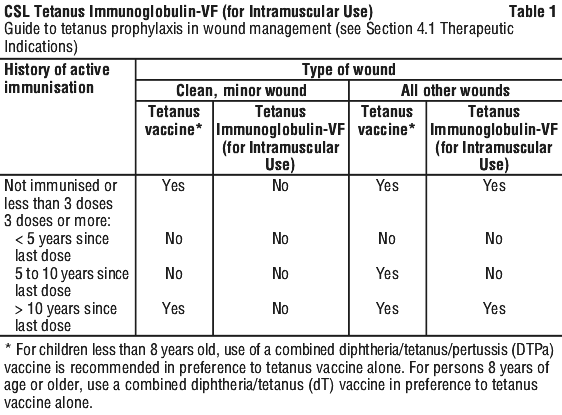
Tetanus Immunoglobulin-VF (for Intramuscular Use) is indicated for the passive protection of individuals who have sustained a tetanus prone wound and who have either not been actively immunised against tetanus or whose immunisation history is doubtful. It should also be given to the fully immunised patient with a tetanus prone wound if more than ten years have elapsed since the last vaccine dose. In all the above instances, active immunisation with a tetanus vaccine should be commenced at the same time (see Table 1) according to current recommendations. Although Tetanus Immunoglobulin-VF (for Intramuscular Use) and vaccine can be given at the same time, they should be administered in opposite limbs, using separate syringes.
4.2 Dose and Method of Administration
Dosage. Good medical care is essential in the prevention of tetanus from fresh wounds. Thorough cleansing and removal of all foreign and necrotic material from the site of injury is important.
The minimum routine prophylactic dose of Tetanus Immunoglobulin-VF (for Intramuscular Use) for adults or children is 250 IU. The dose should be doubled if the wound is grossly contaminated or if more than 24 hours have elapsed between wounding and the seeking of medical attention.
Administration. If the product appears to be turbid by transmitted light or contains any sediment it must not be used. The product does not contain an antimicrobial preservative. It must, therefore, be used immediately after opening the vial. Any unused solution must be discarded appropriately.
Tetanus Immunoglobulin-VF (for Intramuscular Use) should be brought to room temperature before use, and given slowly by deep intramuscular injection using an appropriate sized needle.
If a large dose is required, it is advisable to administer it in divided doses at different sites. This applies in the case of doses above 2 mL for children up to 20 kg body weight and doses above 5 mL for persons above 20 kg body weight.
Hyaluronidase and/or a suitable local anaesthetic may be added to the injection if desired.
An intravenous preparation of tetanus immunoglobulin (Tetanus Immunoglobulin for Intravenous Use) is available for patients where large doses are indicated (i.e. treatment of tetanus), or when the patient has a significant haemostatic defect which may cause bleeding following intramuscular injection.
4.3 Contraindications
Tetanus Immunoglobulin-VF (for Intramuscular Use) is contraindicated in patients:
who have had a true anaphylactic reaction to the active substance or to any of the components of the product;
with immunoglobulin A (IgA) deficiency, unless they have been tested and shown not to have circulating anti-IgA antibodies, since these patients may experience severe reactions to the IgA which is present in trace amounts;
who have severe thrombocytopenia or any coagulation disorder that would contraindicate intramuscular injections.
4.4 Special Warnings and Precautions for Use
Route of administration. Tetanus Immunoglobulin-VF (for Intramuscular Use) must not be administered intravenously because of the potential for anaphylactic reactions. Injections must be made intramuscularly, and care should be taken to draw back on the plunger of the syringe before injection in order to be certain that the needle is not in a blood vessel, (Tetanus Immunoglobulin for intravenous use is available when an intravenous product is required).
Hypersensitivity. Tetanus Immunoglobulin-VF (for Intramuscular Use) should be given with caution to patients with a history of prior systemic allergic reactions following the administration of human immunoglobulin preparations.
Tetanus Immunoglobulin-VF (for Intramuscular Use) contains a small quantity of IgA. Individuals who are deficient in IgA have the potential for developing IgA antibodies and may have anaphylactic reactions after administration of blood components containing IgA. The physician must therefore weigh the benefit of treatment with Tetanus Immunoglobulin-VF (for Intramuscular Use) against the potential risks of hypersensitivity reactions.
Rarely, human tetanus immunoglobulin can induce a precipitous fall in blood pressure with anaphylactic reaction, even in patients who had tolerated previous treatment with normal human immunoglobulin. In case of anaphylactic reaction, the injection should be stopped immediately.
In the case of shock, treatment should follow the guidelines of shock therapy.
Patients should be observed for at least 20 minutes after administration of Tetanus Immunoglobulin-VF (for Intramuscular Use). Particularly in cases of inadvertent intravenous injection, patients should be observed for longer term (at least 1 hour) after administration.
Pathogen safety. This product is made from human plasma. Products made from human plasma may contain infectious agents, such as viruses and theoretically Creutzfeldt-Jakob Disease (CJD) agents, that can cause disease. The risk that such products will transmit an infectious agent has been reduced by screening plasma donors for prior exposure to certain infectious agents and by testing for the presence of certain viral markers.
In addition, the manufacturing process for Tetanus Immunoglobulin-VF (for Intramuscular Use) contains specific steps to reduce the possibility of viral transmission including pasteurisation for viral inactivation and nanofiltration for virus removal. The current procedures applied in the manufacture of this product are effective against enveloped viruses such as human immunodeficiency virus (HIV), hepatitis B virus (HBV) and hepatitis C virus (HCV), and the nonenveloped viruses, such as hepatitis A virus (HAV) and human parvovirus B19.
There is reassuring clinical experience regarding the lack of parvovirus B19 transmission with immunoglobulins and the nanofiltration step of the manufacturing process has been shown to remove such viruses (or viruses of similar size). The product is known to contain antibodies to the virus.
Immunoglobulins for intramuscular injection, prepared by this process from plasma screened by current methods, have not been implicated in the transmission of viral infectious diseases including human immunodeficiency virus (HIV). Studies using plasma spiked with HIV have shown that the Cohn cold-ethanol fractionation process produces a very large reduction in virus titre with undetectable levels in the immunoglobulin fraction. Epidemiological studies have not recognised any cluster of AIDS patients or HIV seroconversion in immunoglobulin recipients.
Despite these measures, such products may still potentially transmit disease. There is also the possibility that other known or unknown infectious agents may be present in such products.
Vaccination for patients in receipt of medicinal products from human plasma should be considered where appropriate.
It is strongly recommended that every time that Tetanus Immunoglobulin-VF (for Intramuscular Use) is administered to a patient, the name and batch number of the product are recorded in order to maintain a link between the patient and the batch of the product.
Use in the elderly. The use of this product in the elderly population has not been established in appropriate studies. To date, this population is not over-represented in spontaneous reports of adverse events associated with the use of CSL's intramuscular immunoglobulin products.
Paediatric use. The use of this product in the paediatric population has not been established in appropriate studies. To date, this population is not over-represented in spontaneous reports of adverse events associated with the use of CSL's intramuscular immunoglobulin products.
Effects on laboratory tests. After injection of immunoglobulin, the transitory rise of the various passively transferred antibodies in the patient's blood may result in misleading positive results in serological testing. Passive transmission of antibodies to erythrocyte antigens (e.g. anti-A, anti-B, anti-D) may interfere with some serological tests for red cell allo-antibodies (e.g. Coombs' test).
4.5 Interactions with Other Medicines and Other Forms of Interactions
Tetanus Immunoglobulin-VF (for Intramuscular Use) should not be mixed with other pharmaceutical products, except as indicated (see Section 4.2 Dose and Method of Administration).
Live attenuated virus vaccines. Passively acquired antibody can interfere with the response to live, attenuated virus vaccines. Therefore, administration of such vaccines, e.g. poliomyelitis or measles, should be deferred until approximately three months after passive immunisation. In the case of measles, the decrease in efficacy may persist for up to one year. Therefore, patients receiving measles vaccine should have their antibody status checked.
Inactivated vaccines. Inactivated vaccines may be administered concurrently with passive antibody (although in separate syringes) to induce active immunity as is sometimes done for tetanus prone wounds.
4.6 Fertility, Pregnancy and Lactation
Effects on fertility. No reproductive toxicity studies have been conducted with Tetanus Immunoglobulin-VF (for Intramuscular Use). There have been no reports of effects on fertility associated with the use of CSL's plasma-derived therapeutic medicines.
Use in pregnancy. The safety of Tetanus Immunoglobulin-VF (for Intramuscular Use) for use in human pregnancy has not been established in controlled clinical trials and therefore it should only be given to pregnant women with caution.
Use in lactation. The safety of Tetanus Immunoglobulin-VF (for Intramuscular Use) during lactation has not been established in controlled clinical trials and therefore it should only be given to breastfeeding mothers with caution. Immunoglobulins are excreted in breast milk, however, it is not known whether this applies to passively administered Tetanus Immunoglobulin-VF (for Intramuscular Use).
4.7 Effects on Ability to Drive and Use Machines
No effects on ability to drive and use machines have been observed.
4.8 Adverse Effects (Undesirable Effects)
Local tenderness, erythema and stiffness may occur at the site of injection and may persist for several hours. This may occur after any intramuscular injection. In the clinical trial with hepatitis B immunoglobulin, the following general and local reactions were recorded in the 58 healthy subjects (total number of events, up to and including 7 days post injection; pasteurised/unpasteurised product): malaise (20/22 events), drowsiness (13/17 events), induration (10/4 events), sensation of fever (4/4 events), chills (3/3 events), sweating (3/1 events) and warmth/heat when touched (0/4 events). There was an overall higher reporting of local tolerance adverse events at the injection site for the unpasteurised product, such as pain (32/52 events), bruising (10/22 events), redness (2/8 events) and irritation (2/4 events).
Mild pyrexia, malaise, drowsiness and urticaria have been reported occasionally after injections of immunoglobulins. True allergic responses are rare. Skin lesions, headache, dizziness, nausea, generalised hypersensitivity reactions and convulsions have been reported on rare occasions.
Reporting suspected adverse effects. Reporting suspected adverse reactions after registration of the medicinal product is important. It allows continued monitoring of the benefit-risk balance of the medicinal product.
Healthcare professionals are asked to report any suspected adverse reactions at www.tga.gov.au/reporting-problems.
4.9 Overdose
The consequences of overdosage are not known.
For information on the management of overdose, contact the Poisons Information Centre on 13 11 26 (Australia).
5 Pharmacological Properties
5.1 Pharmacodynamic Properties
Mechanism of action. Tetanus Immunoglobulin-VF (for Intramuscular Use) contains high levels of antibodies (mainly IgG) against tetanus toxin. Donations are selected on the basis that they contain high levels of specific antibodies against the toxin of Clostridium tetani.
Clinical trials. A comparative clinical trial was conducted to investigate the effect of pasteurisation on the in vivo behaviour of intramuscular immunoglobulins using hepatitis B immunoglobulin (pasteurised and unpasteurised) as the representative of this group of products. Fifty eight (58) healthy subjects (28 males and 30 females) each received an intramuscular injection of pasteurised (viral inactivated) or unpasteurised hepatitis B immunoglobulin. No significant differences were observed.
Twenty eight (28) subjects received the viral inactivated product. Maximal serum concentration of IgG was reached after 8.0 ± 5.5 days (mean ± SD), and the estimated half-life of IgG was 27.2 ± 6.6 days (mean ± SD). These values are consistent with ranges observed with other intramuscular immunoglobulin products.
A clinical trial with Tetanus Immunoglobulin-VF (for Intramuscular Use) has not been conducted.
5.2 Pharmacokinetic Properties
See Section 5.1 Pharmacodynamic Properties.
5.3 Preclinical Safety Data
Genotoxicity. No genotoxicity studies have been conducted with Tetanus Immunoglobulin-VF (for Intramuscular Use). There have been no reports of such effects associated with the use of CSL's plasma-derived therapeutic medicines.
Carcinogenicity. No carcinogenicity studies have been conducted with Tetanus Immunoglobulin-VF (for Intramuscular Use). There have been no reports of such effects associated with the use of CSL's plasma-derived therapeutic medicines.
6 Pharmaceutical Particulars
6.1 List of Excipients
See Section 2 Qualitative and Quantitative Composition.
6.2 Incompatibilities
This medicinal product must not be mixed with other medicinal products, diluents or solvents, except as indicated (see Section 4.2 Dose and Method of Administration).
6.3 Shelf Life
In Australia, information on the shelf life can be found on the public summary of the Australian Register of Therapeutic Goods (ARTG). The expiry date can be found on the packaging.
6.4 Special Precautions for Storage
Store at 2°C to 8°C. (Refrigerate. Do not freeze.) Protect from light. Do not use after the expiry date shown on the label.
6.5 Nature and Contents of Container
Tetanus Immunoglobulin-VF (for Intramuscular Use) solution is available in single vials containing 250 IU human tetanus antitoxin. The actual volume in the vial is stated on the label.
6.6 Special Precautions for Disposal
In Australia, any unused medicine or waste material should be disposed of in accordance with local requirements.
6.7 Physicochemical Properties
Chemical structure. Not applicable.
CAS number. None assigned.
7 Medicine Schedule (Poisons Standard)
S4.
Date of First Approval
07 April 2005
Date of Revision
08 July 2022
Summary Table of Changes

Reasonable care is taken to provide accurate information at the time of creation. This information is not intended as a substitute for medical advice and should not be exclusively relied on to manage or diagnose a medical condition. The Australian Commission on Safety and Quality in Health Care disclaims all liability (including for negligence) for any loss, damage, injury or any other negative effects resulting from reliance on or use of this information. Read our full disclaimer. This website uses cookies. Read our privacy policy.