
Tropisetron-AFT
Brand Information
| Brand name | Tropisetron-AFT |
| Active ingredient | Tropisetron |
| Schedule | S4 |
Consumer Medicine Information (CMI) leaflet
Please read this leaflet carefully before you start using the Tropisetron-AFT.
Summary CMI
TROPISETRON-AFT
Consumer Medicine Information (CMI) summary
The full CMI on the next page has more details. If you are worried about using this medicine, speak to your doctor or pharmacist.
1. Why am I using Tropisetron-AFT?
Tropisetron-AFT contains the active ingredient Tropisetron hydrochloride. Tropisetron-AFT is used to prevent nausea (feeling sick) and vomiting caused by surgery and by cancer chemotherapy.
For more information, see Section 1. Why am I using Tropisetron-AFT? in the full CMI.
2. What should I know before I use Tropisetron-AFT?
Do not use if you have ever had an allergic reaction to Tropisetron-AFT or any of the ingredients listed at the end of the CMI.
Talk to your doctor if you have any other medical conditions, take any other medicines, or are pregnant or plan to become pregnant or are breastfeeding.
For more information, see Section 2. What should I know before I use Tropisetron-AFT? in the full CMI.
3. What if I am taking other medicines?
Some medicines may interfere with Tropisetron-AFT and affect how it works.
A list of these medicines is in Section 3. What if I am taking other medicines? in the full CMI.
4. How do I use Tropisetron-AFT?
- Tropisetron-AFT will only be given by a doctor or nurse.
- For nausea and vomiting caused by surgery, a single 2 mg/2 mL dose is usually given by injection or through an intravenous drip shortly before surgery.
- For nausea and vomiting caused by chemotherapy, a single 5 mg/5 mL dose of Tropisetron-AFT is usually given by injection or through an intravenous drip shortly before chemotherapy is started. This is followed by a 5 mg dose of tropisetron each morning for up to 5 more days, usually taken by mouth.
More instructions can be found in Section 4. How do I use Tropisetron-AFT? in the full CMI.
5. What should I know while using Tropisetron-AFT?
| Things you should do |
|
| Things you should not do |
|
| Driving or using machines |
|
| Drinking alcohol |
|
| Looking after your medicine |
|
For more information, see Section 5. What should I know while using Tropisetron-AFT? in the full CMI.
6. Are there any side effects?
Tell your doctor or pharmacist as soon as possible if you do not feel well while you are being given Tropisetron-AFT.
For more information, including what to do if you have any side effects, see Section 6. Are there any side effects? in the full CMI.
Full CMI
TROPISETRON-AFT
Active ingredient(s): Tropisetron hydrochloride equivalent to Tropisetron 2 mg/2 mg and 5 mg/5 mL, solution for injection and infusion
Consumer Medicine Information (CMI)
This leaflet provides important information about using Tropisetron-AFT. It does not contain all the available information. It does not take the place of talking to your doctor or pharmacist. You should also speak to your doctor or pharmacist if you would like further information or if you have any concerns or questions about using Tropisetron-AFT.
All medicines have risks and benefits. Your doctor has weighed the risks of you having this medicine against the benefits they expect it will provide.
If you have any concerns about this medicine, ask your doctor or pharmacist.
Keep this leaflet with the medicine. You may need to read it again.
Where to find information in this leaflet:
1. Why am I using Tropisetron-AFT?
2. What should I know before I use Tropisetron-AFT?
3. What if I am taking other medicines?
4. How do I use Tropisetron-AFT?
5. What should I know while using Tropisetron-AFT?
6. Are there any side effects?
7. Product details
1. Why am I using Tropisetron-AFT?
Tropisetron-AFT contains the active ingredient tropisetron hydrochloride. Tropisetron-AFT works by stopping the action of a substance in the body called serotonin that is thought to cause the nausea and vomiting.
Tropisetron-AFT is used to prevent nausea (feeling sick) and vomiting caused by surgery and by cancer chemotherapy.
Ask your doctor if you have any questions about why this medicine has been prescribed for you.
Your doctor may have prescribed it for another reason.
Tropisetron-AFT is only available with a doctor's prescription. It is not addictive.
There is not enough information to recommend its use in children.
2. What should I know before I use Tropisetron-AFT?
Warnings
Do not use Tropisetron-AFT if:
- you are allergic to tropisetron hydrochloride, or any of the ingredients listed at the end of this leaflet.
- you have ever had an allergy to similar medicines such as ondansetron, granisetron and dolasetron.
- Always check the ingredients to make sure you can use this medicine.
Some of the symptoms of an allergic reaction include shortness of breath, wheezing or difficulty breathing; swelling of the face, lips, tongue or other parts of the body; rash, itching or hives on the skin.
Check with your doctor if you:
- have any other medical conditions kidney problems, liver problems, heart problems, high blood pressure that is not controlled
Your doctor may want to take special precautions if you have any of the above conditions. - take any medicines for any other condition
- Tell your doctor if you have allergies to any other medicines, foods, dyes or preservatives. Your doctor will want to know if you are prone to allergies.
During treatment, you may be at risk of developing certain side effects. It is important you understand these risks and how to monitor for them. See additional information under Section 6. Are there any side effects?
Pregnancy and breastfeeding
Check with your doctor if you are pregnant or intend to become pregnant. Do not use Tropisetron-AFT if you are pregnant. There is not enough information to recommend its use during pregnancy.
Talk to your doctor if you are breastfeeding or intend to breastfeed. Do not breast-feed while you are using Tropisetron-AFT. It is not known if the active ingredient in Tropisetron-AFT passes into breast milk and could affect your baby.
If you are not sure whether you should be given Tropisetron-AFT, talk to your doctor or nurse.
3. What if I am taking other medicines?
Tell your doctor or pharmacist if you are taking any other medicines, including any medicines, vitamins or supplements that you buy without a prescription from your pharmacy, supermarket or health food shop.
Some medicines may interfere with Tropisetron-AFT and affect how it works. These include:
- rifampicin
- phenobarbital
- some medicines for your heart
- any medicine that has caused problems with your heart rhythm since this effect could be worsened
You may need to take different amounts of your medicines or to take different medicines while you are having Tropisetron-AFT. Your doctor and pharmacist have more information.
If you have not told your doctor about any of these things, tell him/her before you are given this medicine.
Check with your doctor or pharmacist if you are not sure about what medicines, vitamins or supplements you are taking and if these affect Tropisetron-AFT.
4. How do I use Tropisetron-AFT?
How much to use
Tropisetron-AFT will only be given by a doctor or nurse. The usual dose of Tropisetron-AFT is listed below. However, your doctor will decide what dose and how long you will receive Tropisetron-AFT. This depends on your condition and whether you are using other medicines.
Tropisetron-AFT is given as a slow injection or drip (infusion) directly into a vein.
For nausea and vomiting caused by surgery
A single 2 mg/2 mL dose is usually given by injection or through an intravenous drip shortly before surgery. If nausea and vomiting happen after surgery, a 2 mg/2 mL dose of Tropisetron-AFT can be given at that time.
For nausea and vomiting caused by chemotherapy
A single 5 mg/5 mL dose of Tropisetron-AFT is usually given by injection or through an intravenous drip shortly before chemotherapy is started. This is followed by a 5 mg dose of tropisetron each morning for up to 5 more days, usually taken by mouth.
Sometimes a medicine called dexamethasone is given along with Tropisetron-AFT to improve the control of nausea and vomiting.
If you forget to use Tropisetron-AFT
The injection will be given to you by a nurse or doctor; you will not be giving the injection to yourself.
If you use too much Tropisetron-AFT
Because Tropisetron-AFT will be given by a doctor or nurse it is unlikely that you will be given too large a dose. Your doctor has information on how to recognize and treat an overdose.
At very high doses, some people may have visual hallucinations (see things that are not there). People with high blood pressure may have their blood pressure raised even higher.
Ask your doctor or nurse if you have any concerns when you are receiving Tropisetron-AFT. If you think that you were given too much Tropisetron-AFT, you may need urgent medical attention.
You should immediately:
- phone the Poisons Information Centre
(by calling 13 11 26), or - contact your doctor, or
- go to the Emergency Department at your nearest hospital.
You should do this even if there are no signs of discomfort or poisoning.
5. What should I know while using Tropisetron-AFT?
Things you should do
Before having any surgery that requires general anaesthesia, tell the anaesthetist or the doctor in charge that you are having Tropisetron-AFT.
If you are about to be started on any new medicine, remind your doctor and pharmacist that you are being given Tropisetron-AFT.
Call your doctor straight away if you:
- do not feel well while you are being given Tropisetron-AFT
Remind any doctor, dentist or pharmacist you visit that you are using Tropisetron-AFT.
Things you should not do
- Do not give this medicine to anyone else, even if their condition seems similar to yours.
- Do not use it to treat any other complaints unless your doctor tells you to.
Driving or using machines
Be careful before you drive or use any machines or tools until you know how Tropisetron-AFT affects you.
Be careful doing jobs that require you to be alert until you know how Tropisetron-AFT affects you.
This medicine may cause dizziness or tiredness in some people. If you have any of these symptoms, do not drive or do anything else that could be dangerous.
Drinking alcohol
Tell your doctor if you drink alcohol.
Looking after your medicine
- Tropisetron-AFT will be stored in the pharmacy or on the ward. The solution for injection should be kept in a cool place, where the temperature stays below 30°C.
Follow the instructions in the carton on how to take care of your medicine properly.
Store it in a cool dry place away from moisture, heat or sunlight; for example, do not store it:
- in the bathroom or near a sink, or
- in the car or on window sills.
Keep it where young children cannot reach it.
Getting rid of any unwanted medicine
If you no longer need to use this medicine or it is out of date, take it to any pharmacy for safe disposal.
Do not use this medicine after the expiry date printed on the pack or if the packaging is torn or shows signs of tampering. In that case, return it to your pharmacist.
6. Are there any side effects?
All medicines can have side effects. If you do experience any side effects, most of them are minor and temporary. However, some side effects may need medical attention.
Some symptoms may be caused by your medical condition or by other treatments (e.g. surgery or chemotherapy) rather than by this medicine.
Do not be alarmed by these lists of possible side effects. You may not experience any of them.
See the information below and, if you need to, ask your doctor or pharmacist if you have any further questions about side effects.
Less serious side effects
| Less serious side effects | What to do |
| Speak to your doctor if you have any of these less serious side effects and they worry you. |
Serious side effects
| Serious side effects | What to do |
| Call your doctor straight away, or go straight to the Emergency Department at your nearest hospital if you notice any of these serious side effects. |
The above list includes serious side effects which may require medical attention. These side effects are rare.
Tell your doctor or pharmacist if you notice anything else that may be making you feel unwell.
Other side effects not listed here may occur in some people. Some people may have other side effects not yet known or mentioned in this leaflet. Some side effects will only be found by laboratory testing (e.g. changes in your heart rhythm on an electrocardiogram).
Reporting side effects
After you have received medical advice for any side effects you experience, you can report side effects to the Therapeutic Goods Administration online at www.tga.gov.au/reporting-problems. By reporting side effects, you can help provide more information on the safety of this medicine.
Always make sure you speak to your doctor or pharmacist before you decide to stop taking any of your medicines.
7. Product details
This medicine is only available with a doctor's prescription.
What Tropisetron-AFT contains
| Active ingredient (main ingredient) | 2 mg/2 mL or 5 mg/5 mL of the active ingredient tropisetron |
| Other ingredients (inactive ingredients) | acetic acid sodium acetate sodium chloride water for injections |
Do not take this medicine if you are allergic to any of these ingredients.
What Tropisetron-AFT looks like
Tropisetron-AFT ampoules are 2 mL and 5 mL glass ampoules containing a clear, colourless or faintly yellow-brown solution. It is supplied in packs of 1 or 10 ampoules.
Australian Registration Numbers:
2 mg/2 mL: AUST R 189943;
5 mg/5 mL: AUST R 189944
Who distributes Tropisetron-AFT
AFT Pharmaceuticals Pty. Ltd
113 Wicks Road, North Ryde
NSW 2113
Australia
Email: customer.service@aftpharm.com
This leaflet was prepared on 28 July 2025.
Brand Information
| Brand name | Tropisetron-AFT |
| Active ingredient | Tropisetron |
| Schedule | S4 |
MIMS Revision Date: 01 October 2019
1 Name of Medicine
Tropisetron (as hydrochloride).
2 Qualitative and Quantitative Composition
Tropisetron hydrochloride is a white or off-white crystalline powder. It is freely soluble or soluble in water, sparingly soluble in ethanol (96%) and very slightly soluble in methylene chloride. The molecular weight of the free base is 284.4 and of the hydrochloride salt is 320.8.
Tropisetron-AFT, solution for injection or infusion, contains tropisetron hydrochloride equivalent to either 2 mg or 5 mg tropisetron per ampoule.
The pH of the solution is 4.6 - 5.2. The product also contains acetic acid, sodium acetate trihydrate, sodium chloride and water for injections.
Excipients with known effect. Each 1 mL of Tropisetron-AFT solution for injection contains 3.5 mg sodium.
For the full list of excipients, see Section 6.1.
3 Pharmaceutical Form
Tropisetron-AFT, solution for injection or infusion, is a clear colourless to faintly yellow-brown aqueous solution which contains 1 mg/mL tropisetron in ampoules containing either 2 mL or 5 mL of solution.
4 Clinical Particulars
4.1 Therapeutic Indications
For the prevention of nausea and vomiting induced by cytotoxic therapy (5 mg/5 mL ampoule only).
For the treatment and prevention of postoperative nausea and vomiting in adults (2 mg/2 mL ampoule only).
4.2 Dose and Method of Administration
Dose. Prevention of nausea and vomiting induced by cytotoxic therapy. Tropisetron is recommended as six day courses of 5 mg per day, given intravenously on day 1 immediately before cancer chemotherapy, either as an infusion given over 15 minutes (see below for dilution instructions) or as a slow injection (not less than 1 minute), followed by oral administration on days 2 to 6.
If tropisetron alone produces insufficient antiemetic control, its therapeutic efficacy may be enhanced by the addition of dexamethasone.
For infusion, one ampoule may be diluted in 100 mL of sodium chloride 0.9%; glucose 5%; potassium chloride, sodium chloride and calcium chloride intravenous solution (Ringer's solution); fructose intravenous solution (levulose 5%); mannitol 10%; potassium chloride 0.3% and sodium chloride 0.9%; potassium chloride 0.3% and glucose 5%. The diluted solutions are physically and chemically stable for at least 24 hours.
Tropisetron-AFT is for single use in one patient only. Discard any residue.
Treatment and prevention of postoperative nausea and vomiting. Tropisetron is recommended as a 2 mg dose given intravenously either as an infusion or as a slow injection (not less than 30 seconds). For the prevention of postoperative nausea and vomiting, tropisetron should be administered shortly before the induction of anaesthesia.
4.3 Contraindications
Hypersensitivity to tropisetron, other 5-HT3 receptor antagonists, or any other components of the formulation.
Pregnancy and lactation (see Section 4.6 Fertility, Pregnancy and Lactation).
4.4 Special Warnings and Precautions for Use
General. Caution should be taken in patients with cardiac rhythm or conduction disturbances, or patients treated with anti-arrhythmic or beta-adrenergic blocking agents, as in these patient groups, limited experience is available with concurrent use of tropisetron and anaesthetics.
Prolongations of the QTc interval which are not clinically significant have been observed after high (up to 80 mg) I.V. doses of tropisetron. It cannot be excluded that lower doses of tropisetron have also contributed to the QTc interval prolongation seen occasionally in patients undergoing general anaesthesia.
Use in poor metabolisers of sparteine/debrisoquine. In patients belonging to this group (about 8% of the caucasian population), the elimination half-life of tropisetron is prolonged (4-5 times longer than in extensive metabolisers). However, when tropisetron was given intravenously at doses of up to 40 mg, twice daily over a period of seven days, to healthy volunteers known to be poor metabolisers, no serious adverse events occurred. These observations indicate that for six-day courses (for the prevention of cancer chemotherapy-induced nausea and vomiting) the usual daily dose of 5 mg does not need to be reduced in patients with poor metabolism.
Use in patients with uncontrolled hypertension. In patients with uncontrolled hypertension, daily doses of tropisetron above 10 mg should be avoided as they may cause a further increase in blood pressure.
Use in hepatic impairment. No change in the pharmacokinetics of tropisetron occurs in patients with acute hepatitis or fatty liver disease. In contrast, patients with liver cirrhosis or impaired kidney function may have plasma concentrations up to 50% higher than those found in healthy volunteers belonging to the group of extensive metabolisers of sparteine/debrisoquine. Nevertheless, no dosage reduction is necessary in such patients when the recommended six-day courses of 5 mg tropisetron per day are given for the prevention of cancer chemotherapy-induced nausea and vomiting.
Use in renal impairment. In patients who have renal impairment and are also poor metabolisers of sparteine/debrisoquine, there is a possibility of increased plasma tropisetron levels (also see the above section-Use in hepatic impairment).
Use in the elderly. There is no evidence that elderly patients require different dosages or experience different side-effects to younger patients.
Paediatric use. Since experience with tropisetron in children is still limited, its use cannot be recommended.
Effects on laboratory tests. No data available.
4.5 Interactions with Other Medicines and Other Forms of Interactions
Concomitant administration of tropisetron with rifampicin or other liver enzyme inducing drugs (e.g. phenobarbital) results in lower plasma concentrations of tropisetron and, therefore requires an increase in dosage in extensive metabolisers (but not in poor metabolisers). The effects on tropisetron plasma levels of cytochrome P450 enzyme inhibitors, e.g. cimetidine are negligible and do not require dose adjustment.
As a prolongation of the QTc interval has been observed in patients administered tropisetron (see Section 4.4 Special Warnings and Precautions for Use), care should be taken when other drugs that are likely to prolong the QT interval are taken concomitantly with tropisetron.
No interaction studies have been performed with tropisetron and drugs used in anaesthesia (see Section 4.4 Special Warnings and Precautions for Use).
4.6 Fertility, Pregnancy and Lactation
Effects on fertility. No data available.
Use in pregnancy. (Category B3)
Reproductive studies performed in rats, rabbits and monkeys at oral doses up to 60, 120 and 180 mg/kg/day, respectively, have revealed no evidence of a drug related teratogenic effect. In rats and rabbits, there were increased incidences of postimplantation loss and delayed development of pups at doses of greater than 20 and 60 mg/kg/day, respectively. Studies in rats also showed an increased incidence of postnatal loss at doses of 15 mg/kg/day and above.
Use in lactation. Tropisetron is excreted in the breast milk of rats. It is not known whether tropisetron is excreted into human milk therefore patients on Tropisetron-AFT should not breastfeed.
4.7 Effects on Ability to Drive and Use Machines
No data exists on the effect of tropisetron on the ability to drive or operate machinery. The occurrence of dizziness and fatigue as side effects should be taken into account.
4.8 Adverse Effects (Undesirable Effects)
In general Tropisetron is well tolerated and the side effects are transient at the recommended dose. The most frequently reported adverse reaction at the 2 mg dose was headache. At the 5 mg dose, constipation and, less frequently, dizziness, fatigue, somnolence, and gastrointestinal disorders, such as abdominal pain, diarrhoea and anorexia were observed as well.
As with other 5-HT3 receptor antagonists, hypersensitivity reactions (type 1 reactions) with one or more of the following symptoms have been observed: flushing and/or generalised urticaria, chest discomfort, dyspnoea, acute bronchospasm, hypotension.
Tropisetron was found to cause prolongation of the QT interval although this was not of clinical significance.
Listed in Table 1 are the frequencies of adverse events observed in more than 1% of patients exposed to each treatment in the clinical trials discussed under Clinical trials on use in postoperative nausea and vomiting.
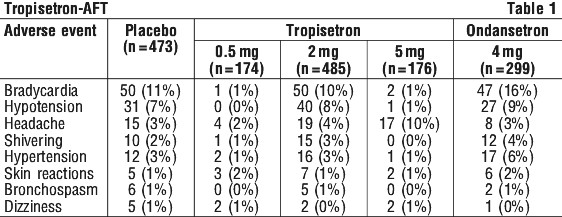
The following adverse reactions have been observed less than 1% of patients in the clinical trials: syncope, urticaria generalised.
Postmarketing experience. The following adverse reactions have been reported during postapproval use of tropisetron. Because these reports are from a population of uncertain size and are subject to confounding factors, it is not possible to reliably estimate their frequency or establish a causal relationship to drug exposure.
The following adverse reactions have been rarely observed: rash, erythema and anaphylactic reactions/ shock. In very rare instances, collapse and cardiovascular arrest have been reported. Some may have been caused by the concomitant chemotherapy or the underlying disease.
Reporting suspected adverse effects. Reporting suspected adverse reactions after registration of the medicinal product is important. It allows continued monitoring of the benefit-risk balance of the medicinal product. Healthcare professionals are asked to report any suspected adverse reactions at www.tga.gov.au/reporting-problems.
4.9 Overdose
Symptoms. At very high repeated doses, visual hallucinations and, in patients with pre-existing hypertension, an increase in blood pressure, have been observed.
Treatment. Symptomatic treatment with frequent monitoring of vital signs and close observation of the patient is indicated.
For information on the management of overdose, contact the Poisons Information Centre on 13 11 26 (Australia).
5 Pharmacological Properties
5.1 Pharmacodynamic Properties
Mechanism of action. Tropisetron is a highly potent and selective competitive antagonist of the 5-HT3 receptor, a subclass of serotonin receptors located on peripheral neurons and within the CNS. Surgery and treatment with certain substances, including some chemotherapeutic agents, may trigger the release of serotonin (5-HT) from enterochromaffin-like cells in the visceral mucosa and initiate the emesis reflex and its accompanying feeling of nausea. Tropisetron selectively blocks the excitation of the presynaptic 5-HT3 receptors of the peripheral neurons in this reflex, and may exert additional direct actions within the CNS on 5-HT3 receptors mediating the actions of vagal input to the area postrema. These effects are considered to be the underlying mechanism of action of the antiemetic effect of tropisetron.
Tropisetron-AFT has a 24 hour duration of action which allows once a day administration. In studies where tropisetron has been administered over multiple chemotherapy cycles, treatment has remained effective.
Tropisetron prevents nausea and vomiting induced by cancer chemotherapy or surgery without causing extrapyramidal side-effects.
Clinical trials. Use in postoperative nausea and vomiting. The use of tropisetron in the treatment and prevention of postoperative nausea and vomiting (PONV) is supported by the results from three prospective, double blind, placebo controlled trials conducted in adult patients. All three studies had one primary endpoint (the proportion of patients without emetic episodes over a 24 hour postoperative period, irrespective of rescue treatment received) and two secondary endpoints (the proportion of patients without nausea or rescue treatment over a 24 hour period). As patients could receive rescue treatment for nausea and remain free of emetic episodes or receive rescue treatment for vomiting while remaining free of nausea, the rescue treatment endpoint was thus a reflection of a combined response. In the treatment study, only patients who experienced PONV within 2 hours of recovering from anaesthesia were included.
In two of the studies, a 0.5, 2 or 5 mg I.V. dose of tropisetron was compared with placebo in the prevention of PONV in women undergoing abdominal and gynaecological surgery (n = 385), and for the treatment of PONV in men and women with established PONV (n = 314). In the study on the prevention of PONV (n = 314), 68%, 74%, 70% and 56% of patients had no emetic episodes in the 0.5 mg, 2 mg, 5 mg and placebo groups respectively. In the treatment study, 52%, 58%, 60% and 29% of patients responded in the 0.5 mg, 2 mg, 5 mg and placebo groups respectively. The results for the secondary endpoints were in line with the primary endpoint of the studies and indicate that the 2 mg dose is optimal both for prevention and treatment of PONV. Tropisetron did not suppress the retching or vomiting associated with the removal of the endotracheal tube.
In the third study, 2 mg I.V. tropisetron, 4 mg I.V. ondansetron and placebo were compared in the prevention of PONV (n = 908). The study was prospectively stratified for sex and type of surgery (abdominal versus nonabdominal surgery). Tropisetron 2 mg and ondansetron 4 mg were shown to have similar efficacy in preventing PONV following abdominal surgery, with response rates of 70 and 72% respectively, compared with 59% for the placebo group. However, in the nonabdominal surgery types tested, the efficacy results for both agents were not significantly different from those of the placebo group.
5.2 Pharmacokinetic Properties
Absorption. The absorption of tropisetron from the gastrointestinal tract is rapid (mean half-life of about 20 minutes) and nearly complete (more than 95%). Due to first-pass metabolism in the liver, the absolute bioavailability of a 5 mg oral dose is 60%. As this metabolism is saturable, the absolute bioavailability increases with the dose (up to 100% at a dose of 45 mg). The peak plasma concentration is attained within three hours. Tropisetron is 71% bound to plasma protein in a nonspecific manner.
Distribution. The volume of distribution is 400-600 L.
Metabolism. The metabolism of tropisetron occurs by hydroxylation at the 5, 6 or 7 positions of its indole ring, followed by a conjugation reaction to the glucuronide or sulphate with excretion in the urine or bile (urine to faeces ratio 5:1). The metabolites have a greatly reduced potency for the 5-HT3 receptor and do not contribute to the pharmacological action of the drug. The metabolism of tropisetron is linked to the genetically determined sparteine/ debrisoquine polymorphism. About 8% of the Caucasian population are known to be poor metabolisers for the sparteine/ debrisoquine pathway. The elimination half-life (beta-phase) is about eight hours in extensive metabolisers; in poor metabolisers this could be extended to 45 hours (see Section 4.4 Special Warnings and Precautions for Use).
Excretion. In extensive metabolisers, about 8% of tropisetron is excreted in the urine as unchanged drug, 70% as metabolites; 15% is excreted in the faeces, almost entirely as metabolites. In poor metabolisers, a greater proportion of unchanged tropisetron is excreted in the urine than in extensive metabolisers.
5.3 Preclinical Safety Data
Genotoxicity. Tropisetron was not mutagenic in standard tests for mutagenicity.
Carcinogenicity. Carcinogenicity studies showed no evidence of a drug related carcinogenic response at doses up to 45 mg/kg/day in the rat and 90 mg/kg/day in the female mouse. In the male mouse, there was a statistically significant increase in the incidence of benign hepatocellular neoplasia at doses of 30 mg/kg/day and above.
6 Pharmaceutical Particulars
6.1 List of Excipients
See Section 2 Qualitative and Quantitative Composition.
6.2 Incompatibilities
Incompatibilities were either not assessed or not identified as part of the registration of this medicine.
6.3 Shelf Life
In Australia, information on the shelf life can be found on the public summary of the Australian Register of Therapeutic Goods (ARTG). The expiry date can be found on the packaging.
6.4 Special Precautions for Storage
Store below 30°C.
Considering the risk of microbial contamination during preparation of the infusion, the solution should be used within eight hours of preparation. Any storage should be at 2-8°C.
6.5 Nature and Contents of Container
2 mg/2 mL. Packs of 1 or 10 ampoules.
5 mg/5 mL. Packs of 1 or 10 ampoules.
6.6 Special Precautions for Disposal
In Australia, any unused medicine or waste material should be disposed of in accordance with local requirements.
6.7 Physicochemical Properties
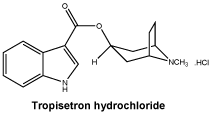
Tropisetron hydrochloride has the chemical name (1R,3r,5S)-8-methyl-8- azabicyclo[3.2.1]oct-3-yl 1H-indole-3-carboxylate hydrochloride. It has the chemical formula C17H20N2O2.HCl with a molecular weight of 320.8. The molecular weight of tropisetron base is 284.4.
Chemical structure.
7 Medicine Schedule (Poisons Standard)
S4.
Date of First Approval
16 November 2012
Date of Revision
23 August 2019
Summary Table of Changes

Reasonable care is taken to provide accurate information at the time of creation. This information is not intended as a substitute for medical advice and should not be exclusively relied on to manage or diagnose a medical condition. The Australian Commission on Safety and Quality in Health Care disclaims all liability (including for negligence) for any loss, damage, injury or any other negative effects resulting from reliance on or use of this information. Read our full disclaimer. This website uses cookies. Read our privacy policy.