
Ultratag RBC
Brand Information
| Brand name | Ultratag RBC |
| Active ingredient | Technetium (99mTc)-labelled red blood cells |
| Schedule | Unscheduled |
Consumer Medicine Information (CMI) leaflet
Please read this leaflet carefully before you start using the Ultratag RBC.
Summary CMI
Ultratag™ RBC
Consumer Medicine Information (CMI) summary
The full CMI on the next page has more details. If you are worried about using this medicine, speak to your doctor, nurse, or nuclear medicine specialist.
1. Why am I using Ultratag™ RBC?
Ultratag™ RBC contains the active ingredient stannous chloride dihydrate. Ultratag™ RBC is used in medical scans to perform heart function studies as well as for detection of stomach/intestinal bleeding sites.
For more information, see Section 1. Why am I using Ultratag™ RBC? in the full CMI.
2. What should I know before I use Ultratag™ RBC?
Do not use if you have ever had an allergic reaction to Ultratag™ RBC or any of the ingredients listed in Section 7. Product Details.
Talk to your doctor if you have any other medical conditions, take any other medicines, or are pregnant or plan to become pregnant or are breastfeeding.
For more information, see Section 2. What should I know before I use Ultratag™ RBC? in the full CMI.
3. What if I am taking other medicines?
There are no known medications that interfere with Ultratag™ RBC or affect how it works.
4. How do I use Ultratag™ RBC?
- Ultratag™ RBC is only prepared and given by a doctor, nurse, nuclear medicine specialist, or qualified staff and they will decide how much you will be given.
- A sample of your blood is collected prior to medical imaging.
- Your blood is mixed with the contents of the Ultratag™ RBC kit (Reaction Vial, Syringe I, and Syringe II) and a radioactive solution that is then injected into your vein.
More instructions can be found in Section 4. How do I use Ultratag™ RBC? in the full CMI.
5. What should I know while using Ultratag™ RBC?
| Things you should do |
|
| Things you should not do |
|
For more information, see Section 5. What should I know while using Ultratag™ RBC? in the full CMI.
6. Are there any side effects?
There are no known side effects for Ultratag™ RBC.
If you think that you are experiencing side effects, see Section 6. Are there any side effects? in the full CMI for what to do.
Full CMI
Ultratag™ RBC
Active ingredient(s): stannous chloride dihydrate
Consumer Medicine Information (CMI)
This leaflet provides important information about using Ultratag™ RBC. You should also speak to your doctor, nurse, or nuclear medicine specialist if you would like further information or if you have any concerns or questions about using Ultratag™ RBC.
Where to find information in this leaflet:
1. Why am I using Ultratag™ RBC?
2. What should I know before I use Ultratag™ RBC?
3. What if I am taking other medicines?
4. How do I use Ultratag™ RBC?
5. What should I know while using Ultratag™ RBC?
6. Are there any side effects?
7. Product details
1. Why am I using Ultratag™ RBC?
Ultratag™ RBC contains the active ingredient stannous chloride dihydrate.
Ultratag™ RBC is a radiopharmaceutical agent. After sample of your blood is collected, it is mixed with the contents of the kit (Reaction Vial, Syringe I, and Syringe II) and a radioactive solution to become radioactive medication that this then injected back into your body for medical imaging.
Ultratag™ RBC is used in medical scans to perform heart function studies and as well as detection of stomach/intestinal bleeding sites.
After injection, the medication is attached to red blood cells as they move throughout the body and emits a small amount of radiation that is detected by a specialized camera to generate an image that is reviewed by a doctor or nuclear medicine specialist.
2. What should I know before I use Ultratag™ RBC?
Warnings
Do not use Ultratag™ RBC if:
- you are allergic to stannous chloride dihydrate, or any of the ingredients listed in Section 7. Product Details.
Always check the ingredients to make sure you can use this medicine.
Check with your doctor if you:
- have any other medical conditions
- take any medicines for any other condition
During treatment, you may be at risk of developing certain side effects. It is important you understand these risks and how to monitor for them. See additional information under Section 6. Are there any side effects?
Pregnancy and breastfeeding
Check with your doctor if you are pregnant or intend to become pregnant. Ultratag™ RBC is not recommended for use during pregnancy.
If there is a need to consider Ultratag™ RBC during your pregnancy, your doctor will discuss the benefits and risks of giving it to you.
Talk to your doctor if you are breastfeeding or intend to breastfeed. Ultratag™ RBC is not recommended while you are breastfeeding.
If you are breastfeeding, formula feedings should be substituted for breast feeding for 24 hours following the administration of Ultratag™ RBC. Breast milk produced within that time should be discarded.
3. What if I am taking other medicines?
Tell your doctor, nurse, or nuclear medicine specialist if you are taking any other medicines, including any medicines, vitamins or supplements that you buy without a prescription from your pharmacy, supermarket or health food shop.
There are no known medications that interfere with Ultratag™ RBC or affect how it works.
Check with your doctor, nurse, or nuclear medicine specialist if you are not sure about what medicines, vitamins or supplements you are taking and if these affect Ultratag™ RBC.
4. How do I use Ultratag™ RBC?
How much to take / use
- Your doctor will decide how much you will be given.
This depends on your condition and other factors, such as weight.
When to take / use Ultratag™ RBC
- Ultratag™ RBC will be after a blood sample is obtained and given prior to imaging.
How to take / use Ultratag™ RBC
- Ultratag™ RBC is only given by a doctor, nurse, nuclear medicine specialist, or qualified staff with specific training in the safe use and handling of radiopharmaceuticals.
- The injection is prepared by adding the following to the Reaction Vial: your blood sample, the contents of Syringe I, Syringe II and a radioactive solution, sodium pertechnetate (Tc 99m).
- After the solution sets for 20 minutes, a portion of the vial contents are removed and given as an injection into a vein.
5. What should I know while using Ultratag™ RBC?
Things you should do
- Empty bladder immediately prior to examination
- Drink plenty of fluids and empty bladder as often as possible for 4 to 6 hours after examination, this is to minimize the radiation dose to the bladder
Remind any doctor, dentist or pharmacist you visit that you were recently given Ultratag™ RBC if it occurred in the past three days.
Things you should not do
- Do not take other medicines unless advised by your doctor.
6. Are there any side effects?
There are no known side effects associated with the use of Ultratag™ RBC.
If you feel like you are experiencing a side effect, tell your doctor or nurse straight away, or go straight to the Emergency Department at your nearest hospital.
Tell your doctor, nurse, or nuclear medicine specialist if you notice anything else that may be making you feel unwell.
Other side effects not listed here may occur in some people.
Reporting side effects
After you have received medical advice for any side effects you experience, you can report side effects to the Therapeutic Goods Administration online at www.tga.gov.au/reporting-problems. By reporting side effects, you can help provide more information on the safety of this medicine.
7. Product details
This medicine is only available with a doctor's prescription.
What Ultratag™ RBC contains
| Active ingredient (main ingredient) | Reaction Vial:
|
| Other ingredients (inactive ingredients) | Reaction Vial:
|
| Potential allergens | None known |
Do not take this medicine if you are allergic to any of these ingredients.
What Ultratag™ RBC looks like
Ultratag™ RBC is a kit that contains three items:
- Reaction Vial: a glass containing free-dried white powder
- Syringe I: 0.6 mL of clear sodium hypochlorite solution
- Syringe II: 1 mL of a clear citrate dextrose solution.
All kit items are combined with the patient's red blood cells and a radioactive solution, sodium pertechnetate (Tc 99m), to produce a solution that is injected into the patient. (Aust R 47860)
Who distributes Ultratag™ RBC
Landauer Radiopharmaceuticals Pty Ltd
Level 3/69 Phillip Street
Parramatta NSW 2150
Australia
Contact Number: (02) 8651 4000
Manufactured by Curium US LLC
Made in USA

This leaflet was prepared in December 2025.
Brand Information
| Brand name | Ultratag RBC |
| Active ingredient | Technetium (99mTc)-labelled red blood cells |
| Schedule | Unscheduled |
MIMS Revision Date: 01 March 2023
1 Name of Medicine
Stannous chloride dihydrate.
2 Qualitative and Quantitative Composition
Ultratag RBC Kit for the preparation of technetium Tc 99m-labelled red blood cells, a diagnostic radiopharmaceutical agent.
Ultratag RBC is a sterile, non-pyrogenic, diagnostic kit for the in vitro preparation of technetium Tc 99m-labelled red blood cells.
Each kit consists of three separate non-radioactive components. A reaction vial containing the active ingredient stannous chloride dihydrate, the contents of the vial are lyophilised and stored under argon. There are two syringes containing diluent solutions for reconstitution.
For the full list of excipients, see Section 6.1 List of Excipients.
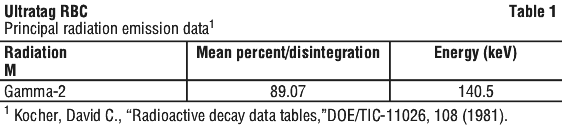
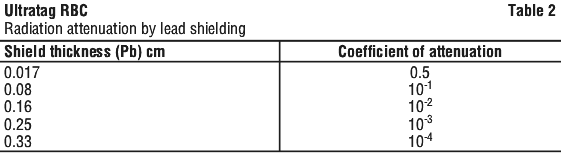
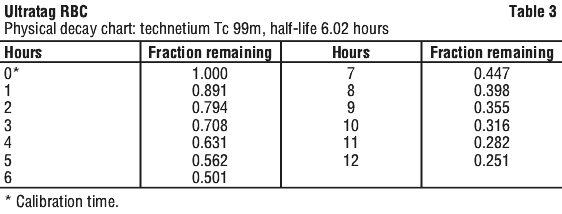
Physical characteristics. Technetium Tc 99m decays by isomeric transition with a physical half-life of 6.02 hours.1 The principal photon that is useful for detection and imaging is listed in Table 1.
3 Pharmaceutical Form
Reaction vial. Powder for injection.
White lyophilised powder.
Syringe I. Diluent, clear colourless liquid.
Syringe II. Diluent, clear colourless liquid.
4 Clinical Particulars
4.1 Therapeutic Indications
Technetium Tc 99m-labelled red blood cells are used for blood pool imaging, including cardiac first pass and gated equilibrium imaging and for detection of sites of gastrointestinal bleeding.
4.2 Dose and Method of Administration
Dosage. The suggested dose range of technetium Tc 99m-labelled red blood cells in the average patient (70 kg) is 370 MBq (10 mCi) to 740 MBq (20 mCi).
The patient dose should be measured by a suitable radioactivity calibration system immediately prior to administration.
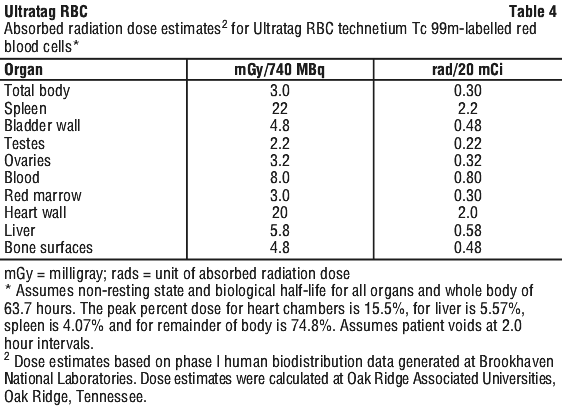
Radiation dosimetry. The estimated radiation doses to an average adult (70 kg) from an intravenous injection of a maximum dose of 740 megabecquerel (MBq) (20 millicurie [mCi]) of technetium Tc 99m-labelled red blood cells are shown in Table 4.
These radiation absorbed dose values were calculated using the medical internal radiation dose (MIRD) committee schema.
Method of administration. The instructions for preparation must be carefully followed for preparing Technetium Tc 99m-labelled red blood cells using Ultratag RBC.
Parenteral products should be inspected visually for particulate matter and discolouration prior to administration, whenever solution and container permit. Aseptic procedures and a shielded syringe should be employed in preparing and withdrawing doses for administration to patients. The user should wear waterproof gloves during the administration procedure.
It is recommended that the labelled red blood cells be administered within 30 minutes of preparation or as soon as possible thereafter.
2. Using a large-bore (19 to 21 gauge) needle, transfer 1.0 to 3.0 mL of anticoagulated whole blood to the reaction vial and gently mix to dissolve the lyophilised material. Allow to react for five minutes.
3. Add contents of syringe I, mix by gently inverting four to five times.
4. Add the contents of syringe II to the reaction vial. Mix by gently inverting four to five times.
5. Place the vial in a lead shield fitted with a lead cap and having a minimum wall thickness of 3 mm. Add 370 to 3700 MBq (10 to 100 mCi) sodium pertechnetate Tc 99m (in a volume of up to 3 mL) to the reaction vial. The avoidance of long technetium Tc 99m in-growth times and the use of fresh sodium pertechnetate Tc 99m generator eluate is recommended.
6. Mix by gently inverting reaction vial four to five times. Allow to react for 20 minutes with occasional mixing.
7. Technetium Tc 99m-labelled red blood cells should be injected within 30 minutes of preparation or as soon as possible thereafter.
8. If desired, assay labelling efficiency immediately prior to injection. Typical labelling efficiency is greater than 95%.
9. Mix gently prior to withdrawal of patient dose. Aseptically transfer the technetium Tc 99m-labelled red blood cells to a syringe for administration to the patient. Use largest bore needle compatible with patient administration to prevent hemolysis.
10. Assay the technetium Tc 99m-labelled red blood cell patient dose in a suitable calibrator and complete the radioassay information label. Affix the radioassay information label to the shield.
Note 1. The kit does not contain an anticoagulant. Therefore, a syringe treated with ACD or heparin must be used for drawing the patient's blood. The amount of ACD should not exceed 0.15 mL of ACD per mL of blood. The recommended amount of heparin is 10 to 15 units per mL of blood. Improperly anticoagulated blood will be unsuitable for reinjection.
Note 2. If desired, the labelling yield determination can be carried out as follows:
Transfer 0.2 mL of the technetium Tc 99m-labelled red blood cells to a centrifuge tube containing 2 mL of 0.9% NaCl. Centrifuge for five minutes and carefully pipet off the diluted plasma. Measure the radioactivity in the plasma and red blood cells separately in a suitable counter.
Calculate labelling efficiency as follows:

4.3 Contraindications
None known.
4.4 Special Warnings and Precautions for Use
The components of the kit are sterile and nonpyrogenic. It is essential that the user follow the directions carefully and adhere to strict aseptic procedures during preparation.
The contents of the kit are intended only for use in the preparation of technetium Tc 99m-labelled red blood cells and are not to be administered directly to the patient.
The contents of this kit are not radioactive. After sodium pertechnetate Tc 99m is added, however, adequate shielding of the final preparation must be maintained.
Technetium Tc 99m-labelled red blood cells must be handled with care to ensure minimum radiation exposure to the patient, consistent with proper patient management, and to ensure minimum radiation exposure to occupational workers.
The labelled red blood cells must be reinjected only into the patient from whom the blood was drawn.
Nuclear medicine procedures involving withdrawal and reinjection of blood have the potential for transmission of blood borne pathogens. Procedures should be implemented to avoid administration errors and viral contamination of personnel during blood product labelling. A system of checks similar to the ones used for administering blood transfusions should be routine.
It is recommended that the labelled red blood cells be administered within 30 minutes of preparation or as soon as possible thereafter. A small study showed that technetium Tc 99m-labelled red blood cells prepared with Ultratag RBC have equivalent in vivo labelling efficiency when administered both immediately after preparation (5 patients studied) and at 6 hours after preparation (6 patients studied) with a 24-hour labelling efficiency averaging 97% for both groups.
Radiopharmaceuticals should be used only by physicians who are qualified by specific training in the safe use and handling of radionuclides and whose experience and training have been approved by the appropriate government agency authorised to license the use of radionuclides.
Use in the elderly. There is no special safety or dosage information available for use in the elderly.
Paediatric use. Safety and efficacy in paediatric patients have not been established.
Effects on laboratory test. This information is not available.
4.5 Interactions with Other Medicines and Other Forms of Interactions
Clinical trials were conducted with a variety of prescription and nonprescription medications and showed no significant effect on the in vitro labelling efficiency of Ultratag RBC. Unlike stannous pyrophosphate red blood cell kits, heparinised patients (11) showed minimal interference with Ultratag RBC labelling efficiency (95% with heparin, 97% without heparin).
4.6 Fertility, Pregnancy and Lactation
Effects on fertility. This information is not available.
Use in pregnancy. Animal reproduction studies have not been conducted with technetium Tc 99m-labelled red blood cells. It is also not known whether this medicine can cause foetal harm when administered to a pregnant woman or can affect reproductive capacity. Technetium Tc 99m-labelled red blood cells should be administered to a pregnant woman only if clearly needed. Ideally, examinations using radiopharmaceuticals, especially those elective in nature, of a woman of childbearing capability should be performed during the first few (approximately 10) days following the onset of menses.
Use in lactation. Technetium Tc 99m is excreted in human milk during lactation, therefore, formula feedings should be substituted for breast feeding.
4.7 Effects on Ability to Drive and Use Machines
The effects on ability to drive and use machines were not assessed as part of its registration.
4.8 Adverse Effects (Undesirable Effects)
None known.
Reporting suspected adverse effects. Reporting suspected adverse reactions after registration of the medicinal product is important. It allows continued monitoring of the benefits-risk balance of the medicinal product. Healthcare professionals are asked to report any suspected adverse reactions at www.tga.gov.au/reporting-problems.
4.9 Overdose
In the event of the accidental administration of an overdose of the radiopharmaceutical very little supportive treatment can be undertaken since its elimination is entirely dependent on the normal haemolytic process. Forced diuresis and frequent bladder voiding are recommended in the case of overdose with Tc 99m pertechnetate.
For information on the management of overdose, contact the Poisons Information Centre on 131126 (Australia).
5 Pharmacological Properties
5.1 Pharmacodynamic Properties
Mechanism of action. No data available.
General. In vitro Tc 99m red blood cell labelling is accomplished by adding 1.0 to 3.0 milliliters of autologous whole blood, anticoagulated with heparin or anticoagulant citrate dextrose solution (ACD), to the reaction vial. A portion of the stannous ion in the reaction vial diffuses across the red blood cell membrane and accumulates intracellularly. The in vitro Tc 99m red blood cell labelling efficiency can decrease in the presence of excess ACD. Excess ACD apparently impairs the diffusion of stannous ion across the red blood cell membrane. Therefore, the ACD concentration used for blood collection should not exceed 0.15 mL ACD per mL of blood. Sodium hypochlorite is then added to the reaction vial to oxidise the extracellular stannous ion. Since the hypochlorite does not cross the red blood cell membrane, the oxidation of stannous ion is selective for the extracellular tin. A citric acid, sodium citrate and dextrose solution is then added to the reaction vial to sequester any residual extracellular stannous ion, rendering it more readily available for oxidation by sodium hypochlorite.
Radioactive labelling of the red blood cells is completed by addition of sodium pertechnetate Tc 99m to the oxidised reaction vial. The pertechnetate Tc 99m diffuses across the red blood cell membrane and is reduced by the intracellular stannous ion. The reduced technetium Tc 99m cannot diffuse out of the red blood cell. The red blood cell labelling is essentially complete within 20 minutes of sodium pertechnetate Tc 99m addition to the reaction vial. Red blood cell labelling efficiency of ≥ 95% is typically obtained using this in vitro labelling procedure. In vitro Tc 99m red blood cell labelling efficiency can decrease when excessive amounts of Tc 99m are allowed to accumulate in the sodium pertechnetate Tc 99m generator eluate; in this situation, efficiency decreases even further if excess (i.e. > 0.15 mL per mL of blood) ACD buffer is used. Therefore, long Tc 99m in-growth times are to be avoided; the use of fresh (≤ 24 hour in-growth time) sodium pertechnetate Tc 99m generator eluate is recommended. After the labelling procedure is completed, the technetium Tc 99m-labelled red blood cells are then reinjected intravenously into the patient for gamma scintigraphic imaging.
Clinical trials. No data available.
5.2 Pharmacokinetic Properties
Distribution. Following intravenous injection, the technetium Tc 99m-labelled red blood cells distribute within the blood pool with an estimated volume of distribution of approximately 5.6% of body weight. The technetium Tc 99m is well retained in the blood pool with an estimated biological half-life of approximately 29 hours. Of the total technetium Tc 99m retained in the whole blood pool 24 hours after administration, 95% remains bound to the red blood cells.
5.3 Preclinical Safety Data
Genotoxicity. No data available.
Carcinogenicity. No long term animal studies have been performed to evaluate carcinogenic or mutagenic potential or to determine the effects on male or female fertility.
6 Pharmaceutical Particulars
6.1 List of Excipients
Reaction vial. Glucose, sodium citrate dihydrate.
Syringe I. Sodium hypochlorite, water for injections.
Syringe II. Citric acid monohydrate, glucose, sodium citrate dihydrate, water for injections.
6.2 Incompatibilities
Incompatibilities were either not assessed or not identified as part of the registration of this medicine.
6.3 Shelf Life
Before reconstitution. 15 months from date of manufacture.
After reconstitution. Inject within 30 minutes of preparation where possible. Use within 6 hours of preparation.
6.4 Special Precautions for Storage
Before reconstitution. Kit. Stored below 25°C. Protect from light. Do not freeze.
Reaction vial. Stored below 25°C. Do not freeze.
Syringe I. Stored below 25°C. Protect from light. Do not freeze.
Syringe II. Stored below 25°C. Do not freeze.
After reconstitution. Stored below 25°C. Do not freeze.
6.5 Nature and Contents of Container
Each pack contains 5 kits.
Each kit contains: 1 x reaction glass vial; 1 x glass syringe I; 1 x glass syringe II.
6.6 Special Precautions for Disposal
In Australia, any unused medicine or waste material should be disposed of in accordance with local requirements.
6.7 Physicochemical Properties
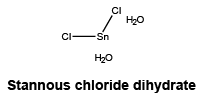
Chemical structure. Stannous chloride dihydrate has the following structural formula:
7 Medicine Schedule (Poisons Standard)
Not scheduled. Not considered by committee.
Date of First Approval
02 February 1994
Date of Revision
20 January 2023
Summary Table of Changes

Reasonable care is taken to provide accurate information at the time of creation. This information is not intended as a substitute for medical advice and should not be exclusively relied on to manage or diagnose a medical condition. The Australian Commission on Safety and Quality in Health Care disclaims all liability (including for negligence) for any loss, damage, injury or any other negative effects resulting from reliance on or use of this information. Read our full disclaimer. This website uses cookies. Read our privacy policy.