
Ventolin Obstetric Injection
Brand Information
| Brand name | Ventolin Obstetric Injection |
| Active ingredient | Salbutamol |
| Schedule | S4 |
Consumer Medicine Information (CMI) leaflet
Please read this leaflet carefully before you start using the Ventolin Obstetric Injection.
Summary CMI
VENTOLIN OBSTETRIC INJECTION
Consumer Medicine Information (CMI) summary
The full CMI on the next page has more details. If you are worried about using this medicine, speak to your doctor or pharmacist.
1. Why am I being given VENTOLIN OBSTETRIC INJECTION?
VENTOLIN OBSTETRIC INJECTION contains the active ingredient salbutamol sulfate. VENTOLIN OBSTETRIC INJECTION is used to stop contractions of premature labour between weeks 24 and 33 of pregnancy.
For more information, see Section 1. Why am I being given VENTOLIN OBSTETRIC INJECTION? in the full CMI.
2. What should I know before I am given VENTOLIN OBSTETRIC INJECTION?
Do not use if you have ever had an allergic reaction to salbutamol sulfate or any of the ingredients listed at the end of the CMI.
Talk to your doctor if you have any other medical conditions, take any other medicines, or have any other medical problem due to your pregnancy.
For more information, see Section 2. What should I know before I am given VENTOLIN OBSTETRIC INJECTION? in the full CMI.
3. What if I am taking other medicines?
Some medicines may interfere with VENTOLIN OBSTETRIC INJECTION and affect how it works.
A list of these medicines is in Section 3. What if I am taking other medicines? in the full CMI.
4. How is VENTOLIN OBSTETRIC INJECTION given?
- VENTOLIN OBSTERIC INJECTION must only be given by a doctor or physician who is experienced in giving tocolytic agents (which are used to treat premature labour).
More instructions can be found in Section 4. How is VENTOLIN OBSTETRIC INJECTION given? in the full CMI.
5. What should I know when being given VENTOLIN OBSTETRIC INJECTION?
| Things you should do |
|
| Looking after your medicine |
|
For more information, see Section 5. What should I know when being given VENTOLIN OBSTETRIC INJECTION? in the full CMI.
6. Are there any side effects?
Less serious side effects which have been reported include 'shakiness' of muscles, awareness of heartbeat, increased heartbeat, irregular heartbeat, anxious or tense feeling, headache, increased blood flood to extremities, and high blood pressure. Serious side effects include skin rash, angioedema (sudden swelling under the skin), faint or dizzy feeling, 'warm' feeling, allergic reaction, fluid collecting in lungs, reduction of blood flow to the heart, acidosis and affected blood sugar or potassium levels. Your unborn child may have an increased heartbeat or low blood sugar or lack of bowel movement. For more information, including what to do if you have any side effects, see Section 6. Are there any side effects? in the full CMI.
Full CMI
VENTOLIN OBSTETRIC INJECTION
Active ingredient: salbutamol sulfate
Consumer Medicine Information (CMI)
This leaflet provides important information about being given VENTOLIN OBSTETRIC INJECTION. You should also speak to your doctor if you would like further information or if you have any concerns or questions about being given VENTOLIN OBSTETRIC INJECTION.
Where to find information in this leaflet:
1. Why am I being given VENTOLIN OBSTETRIC INJECTION?
2. What should I know before I am given VENTOLIN OBSTETRIC INJECTION?
3. What if I am taking other medicines?
4. How is VENTOLIN OBSTETRIC INJECTION given?
5. What should I know when being given VENTOLIN OBSTETRIC INJECTION?
6. Are there any side effects?
7. Product details
1. Why am I being given VENTOLIN OBSTETRIC INJECTION?
VENTOLIN OBSTETRIC INJECTION contains the active ingredient salbutamol sulfate.
VENTOLIN OBSTETRIC INJECTION is used to stop contractions of premature labour between weeks 24 and 33 of pregnancy.
VENTOLIN OBSTETRIC INJECTION relaxes the muscles in the uterus and stops contractions due to labour during this stage of pregnancy.
VENTOLIN OBSTETRIC INJECTION may not be as effective if your 'waters break' or the neck of the uterus has widened.
This medicine is not addictive.
2. What should I know before I am given VENTOLIN OBSTETRIC INJECTION?
Warnings
You should not receive VENTOLIN OBSTETRIC INJECTION if:
- you are allergic to salbutamol sulfate, or any of the ingredients listed at the end of this leaflet.
- you are less than 24 weeks pregnant.
- you have any problem where it would not be safe to prolong the pregnancy.
- you have asthma.
- you have high calcium levels.
- you have a thyroid problem associated with pregnancy.
- you had or are having treatment for high blood pressure, including high blood pressure associated with pregnancy.
- you have pre-existing heart disease or rapid heartbeats.
- you have any bowel problems.
- you have a kidney problem.
- you have diabetes.
- you have eye problems due to the condition known as glaucoma.
- you have, or have had, bleeding from the vagina.
- your ‘waters break’ – you have had a ‘show’ or fluid leaking from the vagina.
- you are aware of any problem with your unborn child.
- you are having more than one baby.
- the expiry date printed on the pack has passed, or if the packaging is torn or shows signs of tampering.
Always check the ingredients to make sure you can use this medicine.
Check with your doctor if you:
- take any medicines for any other condition.
- are allergic (hypersensitive) to foods, dyes, preservatives or any other medicines.
- have had to stop taking this or any other asthma medicine for any reason.
- have had to stop taking this or any other medicine for treating labour in pregnancy.
- have been diagnosed with, or are being treated for, a thyroid problem.
- have been diagnosed with, or are being treated for, heart problems.
- have been diagnosed with, or are being treated for, a liver problem.
- are aware of any condition that may cause low blood potassium.
- you suffer from anxiety or panic attacks.
- have any other medical condition due to your pregnancy.
During treatment, you may be at risk of developing certain side effects. It is important you understand these risks and how to monitor for them. See additional information under Section 6. Are there any side effects?
3. What if I am taking other medicines?
Tell your doctor if you are taking any other medicines, including any medicines, vitamins or supplements that you buy without a prescription from your pharmacy, supermarket or health food shop.
Some medicines may interfere with VENTOLIN OBSTETRIC INJECTION and affect how it works.
Check with your doctor if you are not sure about what medicines, vitamins or supplements you are taking and if these affect VENTOLIN OBSTETRIC INJECTION.
4. How is VENTOLIN OBSTETRIC INJECTION given?
A doctor or nurse will give VENTOLIN OBSTETRIC INJECTION as an injection.
If you have any concerns about how this medicine is to be given, talk to your doctor.
How it is given
- VENTOLIN OBSTETRIC INJECTION must only be given by a doctor or healthcare professional who is experienced in giving tocolytic agents (which are used to treat premature labour).
- The liquid in VENTOLIN OBSTETRIC INJECTION is diluted before use and is given by infusion (sometimes called a 'drip') into a vein. Often a special pump is used to deliver the medicine slowly into the vein.
- Do not try to use VENTOLIN OBSTETRIC INJECTION on your own.
How long it is given
VENTOLIN OBSTETRIC INJECTION should not be given for more than 48 hours at a time.
If you are given too much VENTOLIN OBSTETRIC INJECTION (overdose)
If you think that you have been given too much VENTOLIN OBSTETRIC INJECTION, you may need urgent medical attention.
Symptoms of an overdose may include:
- increased heart rate.
- significant muscle tremors.
- increased rate of breathing due to increased acid in the blood.
You should immediately:
- phone the Poisons Information Centre
(by calling 13 11 26 in Australia), or - contact your doctor, or
- go to the Emergency Department at your nearest hospital.
You should do this even if there are no signs of discomfort or poisoning.
5. What should I know while being given VENTOLIN OBSTETRIC INJECTION?
Things you must do
- Remind any doctor you visit that you are being given VENTOLIN OBSTERIC INJECTION, especially if you are about to be started on any new medicine.
- If you are going to have surgery, tell the surgeon or anaesthetist that you are using this medicine. It may affect other medicines used during the surgery.
- Keep all of your doctor's appointments so that your progress can be checked.
- Discuss your pregnancy and breastfeeding with your doctor.
- Discuss your asthma management with your doctor. It is important that asthma is managed well during pregnancy and you should not stop your asthma medication without asking your doctor.
Please see Section 6. Are there any side effects? for more instances in which you should contact your doctor.
Things you should not do
- Do not use VENTOLIN OBSTETRIC INJECTION to treat any other complaints unless your doctor says to.
Looking after your medicine
VENTOLIN OBSTETRIC INJECTION will be given to you in a hospital or clinic and the healthcare professionals will be responsible for its storage. It should be stored below 30°C away from moisture, heat, or sunlight.
6. Are there any side effects?
All medicines can have side effects. If you do experience any side effects, most of them are minor and temporary. However, some side effects may need medical attention.
Do not be alarmed by the following list of side effects. You may not experience any of them.
See the information below and, if you need to, ask your doctor or pharmacist if you have any further questions about side effects.
Less serious side effects
| Less serious side effects | What to do |
Musculoskeletal and connective tissue disorders:
| Speak to your doctor if you have any of these less serious side effects and they worry you. |
Serious side effects
| Serious side effects | What to do |
Allergic reactions:
| Call your doctor straight away, or go straight to the Emergency Department at your nearest hospital if you notice any of these serious side effects. |
Tell your doctor if you notice anything else that may be making you feel unwell.
Other side effects not listed in this document may occur in some people.
Reporting side effects
After you have received medical advice for any side effects you experience, you can report side effects to the Therapeutic Goods Administration online at www.tga.gov.au/reporting-problems. By reporting side effects, you can help provide more information on the safety of this medicine.
Always make sure you speak to your doctor before you decide to stop taking any of your medicines.
7. Product details
This medicine is only available with a doctor's prescription.
What VENTOLIN OBSTETRIC INJECTION contains
| Active ingredient | salbutamol sulfate |
| Other ingredients | sodium chloride water for injections sulfuric acid |
You should not be given this medicine if you are allergic to any of these ingredients.
What VENTOLIN OBSTETRIC INJECTION looks like
VENTOLIN OBSTETRIC INJECTION liquid is either colourless or pale straw coloured, stored in clear glass ampoules. Each ampoule of VENTOLIN OBSTETRIC INJECTION contains 5 mL of liquid and provides 5 mg of salbutamol sulfate. There are 5 ampoules in a box (AUST R 12528).
Who distributes VENTOLIN OBSTETRIC INJECTION
GlaxoSmithKline Australia Pty Ltd
Level 4, 436 Johnston Street,
Abbotsford, Victoria, 3067
Phone: 1800 033 109
www.gsk.com.au
Trademarks are owned by or licensed to the GSK group of companies.
©2025 GSK group of companies or its licensor.
This leaflet was prepared on 16 July 2025.
Version 3.0
Brand Information
| Brand name | Ventolin Obstetric Injection |
| Active ingredient | Salbutamol |
| Schedule | S4 |
MIMS Revision Date: 01 April 2021
1 Name of Medicine
Salbutamol sulfate.
2 Qualitative and Quantitative Composition
Ampoules of 5 mL containing salbutamol sulfate equivalent to 5 mg (1 mg/mL) salbutamol BP in a sterile isotonic solution.
List of excipients with known effect. For the full list of excipients, see Section 6.1 List of Excipients.
3 Pharmaceutical Form
Concentrated injection.
4 Clinical Particulars
4.1 Therapeutic Indications
For the management of uncomplicated premature labour. To arrest labour between 24 and 33 weeks of gestation in patients with no medical or obstetric contraindication to tocolytic therapy.
4.2 Dose and Method of Administration
For intravenous infusion only. For obstetric use only - dilute before use.
Treatment with Ventolin Obstetric Injection should only be initiated by obstetricians/physicians experienced in the use of tocolytic agents. Ideally, it should be carried out in facilities adequately equipped to perform continuous monitoring of maternal and foetal health status.
Ventolin Obstetric Injection should not be administered in the same syringe or infusion as any other medication.
Infusion. Use of an infusion pump will facilitate accurate adjustment and control of salbutamol infusion.
The infusion should be administered as early as possible after the diagnosis of premature labour, and after evaluation of the patient to rule out contraindications to the use of salbutamol (see Section 4.3 Contraindications). This should include an adequate assessment of the patient's cardiovascular status with continuous ECG monitoring throughout treatment (see Section 4.4 Special Warnings and Precautions for Use).
In premature labour infusion rates of 10-50 micrograms per minute are usually adequate to control uterine contractions. The infusion rate required varies according to the strength and frequency of contractions. A starting dose of 10 micrograms per minute is recommended, increasing the rate at 10 minute intervals until there is evidence of patient response shown by a diminution in strength, frequency or duration of contractions. Thereafter the infusion rate may be increased slowly until contractions cease. Careful attention should be given to cardiorespiratory function, including increases in pulse rate and changes in blood pressure, electrolytes, glucose and lactate levels and fluid balance monitoring. The maternal pulse rate should be monitored and the infusion rate adjusted to avoid maternal heart rates in excess of 120 beats per minute. Treatment should be discontinued should signs of pulmonary oedema or myocardial ischaemia develop (see Section 4.4 Special Warnings and Precautions for Use; Section 4.8 Adverse Effects (Undesirable Effects)).
Once uterine contractions have ceased the infusion rate should be maintained at the same level for 1 hour and then reduced by 50% decrements at 6 hourly intervals. The infusion should be stopped if labour progresses despite treatment.
Duration of treatment should not exceed 48 hours as data show that the main effect of tocolytic therapy is a delay in delivery of up to 48 hours. This delay may be used to implement measures known to improve perinatal health.
Careful control of the level of hydration is essential to avoid the risk of maternal pulmonary oedema (see Section 4.8 Adverse Effects (Undesirable Effects)). The volume of fluid in which the drug is administered should thus be kept to a minimum.
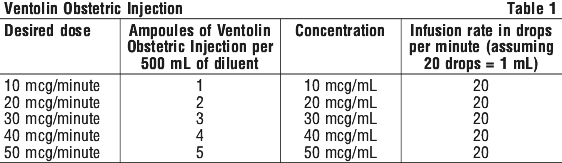
A suitable solution for infusion may be prepared by diluting the contents of ampoules of Ventolin Obstetric Injection (5 mg in 5 mL) in 500 mL of Sodium Chloride Injection BP, Dextrose Injection BP, or Sodium Chloride and Dextrose Injection BP.
A guide to aid in preparation of the infusion (and drip rates for guidance where an infusion pump is not available) is presented in Table 1.
Pharmaceutical precautions. Sodium Chloride Injection BP, Dextrose Injection BP, or Sodium Chloride and Dextrose Injection BP are the only recommended diluents and it is inadvisable to administer Ventolin Obstetric Injection in an infusion containing any other medication.
After dilution, the solution should be used within 24 hours.
Salbutamol is stable for 24 hours at 30°C when 1 mg/mL injection is diluted to 12 microgram/mL in the following solutions: 5% dextrose, 5% dextrose in normal saline, saline/dextrose 0.18%/4.3%.
4.3 Contraindications
Hypersensitivity to any component of the preparation or related sympathomimetic amines.
Salbutamol intravenous infusion, when used in the management of premature labour, is contraindicated in the following conditions: at a gestational age < 24 weeks; intrauterine foetal death, known lethal congenital or lethal chromosomal malformation; any condition of the mother or foetus in which prolongation of the pregnancy is hazardous (e.g. maternal cardiac disease, uncontrolled hypertension, severe pre-eclampsia, active uterine bleeding, premature rupture of the membranes with associated chorioamnionitis, compression of the umbilical cord, foetal acidosis (pH 7.2) or hypoxia (PaO2 18 mmHg), foetal distress; see Section 4.4 Special Warnings and Precautions for Use); in patients with pulmonary hypertension, pre-existing ischaemic heart disease or those patients with significant risk factors for ischaemic heart disease; bronchial asthma; diabetes; uncompensated potassium depletion, hypercalcaemia; maternal hyperthyroidism; ileus; unconsciousness; renal insufficiency; glaucoma; paroxysmal tachycardia.
Non-intravenous formulations of salbutamol must not be used to arrest uncomplicated premature labour or threatened abortion.
4.4 Special Warnings and Precautions for Use
Since salbutamol is a sympathomimetic drug great care should be used in patients with hypertension or with heart disease, especially in patients with tachyarrhythmias, coronary artery disease, or congestive cardiac failure.
Animal studies suggest that cardionecrotic effects may occur with extremely high doses of some sympathomimetics. No instance of such damage has been reported when salbutamol has been used in humans.
Salbutamol should be administered cautiously to patients suffering from thyrotoxicosis.
In common with other beta-adrenoceptor agonists, Ventolin can induce metabolic changes such as hypokalaemia and increased blood glucose levels. The diabetic patient may be unable to compensate for this and the development of ketoacidosis has been reported. Concurrent administration of corticosteroids can exaggerate this effect.
Diabetic patients and those concurrently receiving corticosteroids should be monitored frequently during intravenous infusion of Ventolin so that remedial steps (e.g. an increase in insulin dosage) can be taken to counter any metabolic change occurring. For these patients it may be preferable to dilute Ventolin Obstetric Injection with Sodium Chloride Injection BP, rather than Sodium Chloride and Dextrose Injection BP.
Central nervous system stimulation is an unwanted side effect of sympathomimetic drugs.
Potentially serious hypokalaemia may result from beta-2-agonist therapy, mainly from parenteral and nebulised administration. Particular caution is advised in acute severe asthma, as this effect may be potentiated by concomitant treatment with xanthine derivatives, steroids, diuretics and hypoxia. It is recommended that serum potassium levels are monitored in such situations.
Cardiovascular effects. When Ventolin Obstetric Injection is used cardiovascular effects should be monitored carefully. As experience with prolonged use and with high dosage is limited, caution should be exercised and the patient carefully observed by regular monitoring of clinical signs and ECG status if Ventolin Obstetric Injection administration is deemed necessary.
Hypotension, tachycardia and therefore increased cardiac oxygen demands may occur when Ventolin Obstetric Injection is given to patients with established or latent ischaemic heart disease. Ventolin Obstetric Injection may be dangerous in patients with angina as it may precipitate coronary insufficiency (see Section 4.3 Contraindications).
Disturbances of cardiac rhythm and rate are sometimes seen. Ventolin Obstetric Injection may cause tachycardia but the incidence and severity is less than with some other beta-receptor agonists, e.g. isoxsuprine.
In patients with tachyarrhythmias, the benefit/risk should be weighed prior to therapy and reconsidered at intervals during therapy.
During intravenous infusion of Ventolin Obstetric Injection for premature labour, careful monitoring of maternal pulse rate and blood pressure is recommended in addition to careful observation of foetal heart rate and status of the infant. Monitoring checks should be continuous during general or epidural anaesthesia. It is recommended that such checks should be made at intervals of every 15 minutes. These intervals may then be reduced to every 1-6 hours according to the condition of the foetus (see Section 4.4 Special Warnings and Precautions for Use).
Foetal acidosis should be monitored continuously if Ventolin Obstetric Injection is administered in acute foetal distress. If acid-base balance levels continue to decrease, then therapy should be discontinued and labour allowed to proceed. As well, if foetal hypoxia does not improve during acute foetal distress prior to assisted delivery, then therapy should be discontinued and delivery allowed to proceed. If blood pH rises significantly during infusion, continued infusion for a further 15-30 minutes may be useful (see Section 4.3 Contraindications).
The occurrence of excessive maternal sinus tachycardia from Ventolin Obstetric Injection in healthy subjects require that a careful evaluation be carried out of the clinical status of the patient balanced against the therapeutic effects. Increases in maternal heart rate of the order of 20 to 40 beats per minute usually accompany the infusion. The maternal heart rate should be monitored and not normally allowed to exceed a sustained rate of 120 beats per minute. When sustained maternal heart rate in excess of 120 occurs from administration of Ventolin infusion the dose rate should be reduced or the drug should be discontinued.
The effect of Ventolin Obstetric Injection on maternal blood pressure is greater on diastolic than on systolic pressure. Falls in diastolic pressure are usually within the range of 15 to 25 mmHg. The effect of infusion on foetal heart rate is less marked, but increases of the order of 15 beats per minute may occur.
To prevent hypotension due to aortocaval compression, the patient should lie on her side during an infusion with Ventolin Obstetric Injection.
Since Ventolin Obstetric Injection may cause a fall in blood pressure extreme caution should be used to avoid hypotensive response in patients whose condition is complicated by blood loss with severe anaemia.
Before Ventolin Obstetric Injection is given to any patient with known or suspected heart disease, an adequate assessment of the patient's cardiovascular status should be made by a physician experienced in cardiology.
Tocolysis with salbutamol parenteral preparations is not recommended when membranes have ruptured or the cervix has dilated beyond 4 cm.
As maternal pulmonary oedema and myocardial ischaemia have been reported during or following treatment of premature labour with beta-2 agonists, careful attention should be given to fluid balance and cardiorespiratory function, including ECG, should be monitored. If signs of pulmonary oedema or myocardial ischaemia develop, discontinuation of treatment should be considered (see Section 4.8 Adverse Effects (Undesirable Effects)).
Membrane rupture and cervical dilation. A reduction in the effectiveness of salbutamol should be anticipated if the membrane ruptures or if cervical dilation exceeds 4 cm.
Use in hepatic impairment. Reduction in the dosage may be necessary in the presence of impaired hepatic or renal function, as salbutamol is metabolised in the liver and excreted predominantly in the urine. Toxic effects manifest themselves as tremor and tachycardia. It is not known whether or not salbutamol is dialysed. Continuing strong contractions with evidence of progression of labour despite the highest tolerated dose of Ventolin Obstetric Injection is an indication to discontinue therapy.
Use in renal impairment. See Section 4.4 Special Warnings and Precautions for Use, Use in hepatic impairment.
Use in the elderly. No data available.
Paediatric use. No data available.
Effects on laboratory tests. No data available.
4.5 Interactions with Other Medicines and Other Forms of Interactions
Ventolin should be given only with extreme caution to patients who have already received large doses of sympathomimetics.
In experimental animals, salbutamol potentiates the action of imipramine in preventing noradrenaline-induced hypothermia. Salbutamol has also been found to antagonise the anticonvulsant effect of chlordiazepoxide and to potentiate the tranquillizing effect of chlorpromazine; however the latter effect was not statistically significant. The clinical significance of these drug interactions is not known.
4.6 Fertility, Pregnancy and Lactation
Effects on fertility. There is no information on the effects of salbutamol on human fertility.
Use in pregnancy. (Category A)
The safety of high dosage salbutamol before the twentieth week of pregnancy is not established (see Section 4.3 Contraindications). No teratogenic effects have been observed in rabbits or rats dosed orally throughout pregnancy. Neonatal mortality was increased in rats administered 50 mg/kg/day throughout pregnancy.
During worldwide marketing experience, rare cases of various congenital anomalies, including cleft palate and limb defects have been reported in the offspring of patients being treated with salbutamol.
Use in lactation. No data available.
4.7 Effects on Ability to Drive and Use Machines
The effects of this medicine on a person's ability to drive and use machines were not assessed as part of its registration.
4.8 Adverse Effects (Undesirable Effects)
Maternal effects. Majority of patients. Cardiovascular. Maternal sinus tachycardia, palpitations, increased maternal pulse pressure and increased cardiac output.
More common reactions. Cardiovascular. High doses of beta-adrenergic stimulants can cause peripheral vasodilation with associated hypotension, flushing and headache. Conduction disturbances, such as supraventricular tachycardia and extrasystoles, have been reported with high doses.
Endocrine. Disturbance of carbohydrate metabolism and ketosis (particularly in diabetic patients).
Nervous system. Hand tremors, nervousness, restlessness, headache, emotional upset or anxiety have been reported.
Less common reactions. Nausea, vomiting and dizziness have been reported. Hypersensitivity reactions including anaphylactic shock, angioedema, urticaria, bronchospasm, hypotension and collapse have been reported rarely. There have been very rare reports of muscle cramps and hyperactivity.
Other infrequently reported maternal effects include skin rash, heart murmur, angina, epigastric distress, ileus, bloating, constipation, diarrhoea, dyspnoea, hyperventilation, haemolytic icterus, glycosuria, lactic acidosis, sweating, chills, insomnia, drowsiness and weakness.
Maternal pulmonary oedema has been reported in association with use of beta-agonists, including salbutamol, for the management of premature labour; in some cases this has proved fatal. Predisposing factors include fluid overload, multiple pregnancy, pre-existing cardiac disease, maternal infection and pre-eclampsia. Close monitoring of the patient's state of hydration is essential. If signs of pulmonary oedema develop (e.g. cough, shortness of breath), treatment should be discontinued immediately and diuretic therapy instituted.
Myocardial ischaemia has been uncommonly reported in the management of pre-term labour with salbutamol injection/solution for infusion.
Cardiac arrhythmias (including atrial fibrillation, supraventricular tachycardia and extrasystoles) have been reported. Peripheral vasodilation and a compensatory small increase in heart rate may occur in some patients. Tachycardia may occur in some patients.
Since elevations of blood glucose and depression of serum potassium levels have been reported, close monitoring of these levels is desirable. Attempts to rectify glucose or potassium levels could be dangerous. Such changes are reversible on discontinuing Ventolin Obstetric Injection. In doses above those recommended patients have complained of chest pain. Potentially serious hypokalaemia may result from beta-2-agonist therapy.
Neonatal effects. Foetal tachycardia has been reported after maternal administration by the intravenous route. Infrequently reported symptoms include hypoglycaemia and ileus.
Reporting suspected adverse effects. Reporting suspected adverse reactions after registration of the medicinal product is important. It allows continued monitoring of the benefit-risk balance of the medicinal product. Healthcare professionals are asked to report any suspected adverse reactions at www.tga.gov.au/reporting-problems.
4.9 Overdose
The most common signs and symptoms of overdose with salbutamol are transient beta-agonist pharmacologically mediated events (see Section 4.4 Special Warnings and Precautions for Use; Section 4.8 Adverse Effects (Undesirable Effects)). Salbutamol overdosage is manifest by significant tachycardia and/or skeletal muscle tremor. Consideration should be given to discontinuation of treatment and appropriate symptomatic treatment such as a selective beta-adrenergic receptor blocking agent given by intravenous injection, in patients presenting with cardiac symptoms (e.g. tachycardia, palpitations). Beta-blockers should be used cautiously in patients with a history of bronchospasm.
Hypokalaemia may occur following overdosage with salbutamol. Serum potassium levels should be monitored.
Lactic acidosis has been reported in association with high therapeutic doses as well as overdoses of short-acting beta-agonist therapy, therefore monitoring for elevated serum lactate and consequent metabolic acidosis (particularly if there is persistence or worsening of tachypnea despite resolution of other signs of bronchospasm such as wheezing) may be indicated in the setting of overdose.
Combined use of glucocorticoids and salbutamol may exacerbate the metabolic effects described, resulting in marked elevation of blood glucose and very low serum potassium levels.
For information on the management of overdose, contact the Poisons Information Centre on 13 11 26 (Australia).
5 Pharmacological Properties
5.1 Pharmacodynamic Properties
Mechanism of action. ATP is known to be intimately associated with adrenergic receptors. Beta-2-receptor stimulants have been shown to catalyse the cyclisation of ATP to cyclic AMP by activation of the enzyme adenyl cyclase. High levels of cyclic AMP have been found to inhibit the entry of calcium ions into smooth muscle cells, thus inhibiting contraction of the smooth muscle of the uterus as well as of the bronchial tree. It is believed that similar mechanisms promote insulin release and glycogenolysis. The rise in free fatty acids and the potassium shift are thought to be consequential. Elevated levels of cyclic AMP also prevent allergen-induced release of histamine, SRS-A and other mediators of the allergic response from sensitised mast cells.
Clinical trials. No data available.
5.2 Pharmacokinetic Properties
Salbutamol is a beta-adrenergic stimulant which is more specific for beta-2-adrenoreceptors than isoprenaline. When given by the parenteral route relative specificity decreases with increased dosage.
Stimulation of beta-2-adrenoreceptors causes relaxation of the smooth muscle of the bronchi, uterus and skeletal muscle blood vessels. Salbutamol, when given by the intravenous route, produces uterine relaxation in most instances, but the onset is variable and depends on dosage.
Salbutamol has a variety of metabolic effects mediated by beta-2-receptor stimulation. Intravenous administration of salbutamol causes a marked rise in non-esterified fatty acid levels and also an increase in insulin levels. There is a significant rise in lactate levels and a slight rise in plasma glucose values. The release of insulin is thought to be due to beta-2-receptor stimulation and not due to rises in plasma glucose levels, which are only slight and occur after the insulin rise. Intravenous salbutamol also causes significant falls in plasma potassium levels due to an intracellular shift of potassium associated with increased glucose and insulin levels. With high dosage intravenous administration beta-1-receptor stimulation produces positive inotropic and chronotropic effects on the heart.
Salbutamol is not bound to plasma protein and does not cross the blood brain barrier to any significant extent. Salbutamol administered intravenously has a half-life of 4 to 6 hours. Following a single intravenous injection of salbutamol, 75% of a given dose is excreted in the urine after 24 hours; 27% is recovered as metabolite and the remainder as unchanged salbutamol. The major urinary metabolite of salbutamol has been identified as the 4'-ο-sulfate ester of salbutamol. Salbutamol is known to cross the placental barrier, as evidenced by increases in foetal heart rate.
5.3 Preclinical Safety Data
Genotoxicity. No data available.
Carcinogenicity. No data available.
6 Pharmaceutical Particulars
6.1 List of Excipients
Ventolin Obstetric Injection contains the following excipients: sodium chloride, sulfuric acid and water for injections.
6.2 Incompatibilities
Incompatibilities were either not assessed or not identified as part of the registration of this medicine.
6.3 Shelf Life
In Australia, information on the shelf life can be found on the public summary of the Australian Register of Therapeutic Goods (ARTG). The expiry date can be found on the packaging.
6.4 Special Precautions for Storage
Ventolin Obstetric Injection ampoules should be stored below 30°C and protected from light.
6.5 Nature and Contents of Container
The ampoules are of clear, neutral glass.
6.6 Special Precautions for Disposal
In Australia, any unused medicine or waste material should be disposed of by taking to your local pharmacy.
6.7 Physicochemical Properties
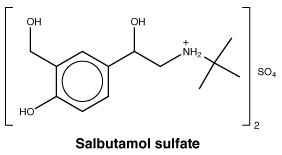
Chemical Name: 1-(4-hydroxy- 3-hydroxymethylphenyl)- 2-(t-butylamino) ethanol sulfate.
Chemical structure.
The solution is colourless, or faintly straw coloured.
CAS number. 51022-70-9.
7 Medicine Schedule (Poisons Standard)
Schedule 4 - Prescription Only Medicine.
Date of First Approval
31 January 1995
Date of Revision
10 February 2021
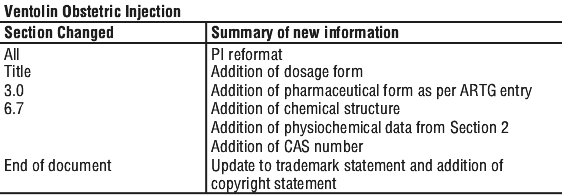
Summary Table of Changes
Reasonable care is taken to provide accurate information at the time of creation. This information is not intended as a substitute for medical advice and should not be exclusively relied on to manage or diagnose a medical condition. The Australian Commission on Safety and Quality in Health Care disclaims all liability (including for negligence) for any loss, damage, injury or any other negative effects resulting from reliance on or use of this information. Read our full disclaimer. This website uses cookies. Read our privacy policy.