
ViruPOS
Brand Information
| Brand name | ViruPOS |
| Active ingredient | Aciclovir |
| Schedule | S4 |
Consumer Medicine Information (CMI) leaflet
Please read this leaflet carefully before you start using the ViruPOS.
Summary CMI
ViruPOS
Consumer Medicine Information (CMI) summary
The full CMI on the next page has more details. If you are worried about using this medicine, speak to your doctor or pharmacist.
1. Why am I using ViruPOS?
ViruPOS contains the active ingredient aciclovir. ViruPOS is used to treat an eye infection called herpes simplex keratitis. This is a viral infection in the eye. It is not used in other infections in the eye such as conjunctivitis. This medicine is available only on prescription.
For more information, see Section 1. Why am I using ViruPOS? in the full CMI.
2. What should I know before I use ViruPOS?
Do not use if you have ever had an allergic reaction to ViruPOS or any of the ingredients listed at the end of the CMI.
Talk to your doctor if you have any other medical conditions, take any other medicines, or are pregnant or plan to become pregnant or are breastfeeding.
For more information, see Section 2. What should I know before I use ViruPOS? in the full CMI.
3. What if I am taking other medicines?
Currently there is no information available if some medicines may interfere with ViruPOS.
4. How do I use ViruPOS?
- ViruPOS is usually applied five times a day – about every four hours while you are awake.
More instructions can be found in Section 4. How do I use ViruPOS? in the full CMI.
5. What should I know while using ViruPOS?
| Things you should do |
|
| Things you should not do |
|
| Driving or using machines |
|
| Looking after your medicine |
|
For more information, see Section 5. What should I know while using ViruPOS? in the full CMI.
6. Are there any side effects?
Tell your doctor or pharmacist as soon as possible if you do not feel well while you are using ViruPOS eye ointment.
For more information, including what to do if you have any side effects, see Section 6. Are there any side effects? in the full CMI.
Full CMI
ViruPOS
Active ingredient: Aciclovir
Consumer Medicine Information (CMI)
This leaflet provides important information about using ViruPOS. You should also speak to your doctor or pharmacist if you would like further information or if you have any concerns or questions about using ViruPOS.
This leaflet answers some common questions about ViruPOS. It does not contain all the available information. It does not take the place of talking to your doctor or pharmacist.
Please read this leaflet before you start using ViruPOS. If you are helping someone else use ViruPOS, please read this leaflet before using it for the first time.
All medicines have risks and benefits. Your doctor has weighed the expected benefits against possible risks of you using ViruPOS. If you have any concerns about using this medicine, ask your doctor or pharmacist.
Keep this leaflet with the medicine. You may need to read it again.
Where to find information in this leaflet:
1. Why am I using ViruPOS?
2. What should I know before I use ViruPOS?
3. What if I am taking other medicines?
4. How do I use ViruPOS?
5. What should I know while using ViruPOS?
6. Are there any side effects?
7. Product details
1. Why am I using ViruPOS?
ViruPOS contains the active ingredient aciclovir.
ViruPOS eye ointment contains an antiviral used to treat an eye infection called herpes simplex keratitis. This is a viral infection in the eye. It is not used in other infections in the eye such as conjunctivitis.
This medicine is available only on prescription.
2. What should I know before I use ViruPOS?
Warnings
Do not use ViruPOS if:
- you have an allergy to ViruPOS eye ointment, acyclovir, valaciclovir or any of the ingredients listed at the end of this leaflet.
- the packaging is torn or shows signs of tampering, or the ointment has changed colour.
- it is past the expiry date printed on the pack.
- you use this medicine after the expiry date has passed, it may not work
- it is more than one month after you first opened the tube of ointment
- Always check the ingredients to make sure you can use this medicine.
If you are not sure whether you should start using ViruPOS eye ointment, contact your doctor.
Do not give this medicine to anyone else. Your doctor has prescribed it specifically for you and your condition only.
Check with your doctor if you:
- have any other medical conditions.
- take any medicines for any other condition.
- you have any allergies to any other medicines or any other substances, such as foods, preservatives or dyes.
- you are pregnant or intend to become pregnant.
- you are breastfeeding or planning to breastfeed.
There is no information on whether ViruPOS affects the ability to drive or operate machinery. If you have blurred vision after applying the ointment, do not drive or operate machinery.
During treatment, you may be at risk of developing certain side effects. It is important you understand these risks and how to monitor for them. See additional information under Section 6. Are there any side effects?
Pregnancy and breastfeeding
Check with your doctor if you are pregnant or intend to become pregnant.
Talk to your doctor if you are breastfeeding or intend to breastfeed.
3. What if I am taking other medicines?
Tell your doctor or pharmacist if you are taking any other medicines, including any medicines, vitamins or supplements that you buy without a prescription from your pharmacy, supermarket or health food shop.
Currently there is no information available if some medicines may interfere with ViruPOS.
4. How do I use ViruPOS?
How much to use
- Follow your doctor's instructions about how and when to use ViruPOS eye ointment.
- ViruPOS eye ointment is usually applied five times a day – about every four hours while you are awake.
- Do not touch the nozzle of the eye ointment or the eye ointment as it comes out of the tube. Wash your hands well with soap and dry them thoroughly before you apply the eye ointment.
- With your finger under the bottom eye lid, pull the skin down gently so that the bottom eye lid comes down creating a little pocket between the eye and the eye lid. Put 10mm (1cm, just under half an inch) of ointment into this pocket. Release the eye lid and blink a couple of times to spread the ointment across the eye.
- Follow the instructions provided when ViruPOS was prescribed, including the number of days it should be used.
When to use ViruPOS
- ViruPOS should be used for at least three days after the eye infection has cleared up
If you forget to use ViruPOS
If you forget a dose of ViruPOS eye ointment use it as soon as you remember, then continue to use approximately every four hours.
It is important not to miss multiple doses of ViruPOS – it needs to be used regularly to work properly.
Do not use a double dose to make up for the dose you missed.
If you use too much ViruPOS
Overdosing with ViruPOS eye ointment when it is applied to the skin is unlikely. If you think that someone has accidentally swallowed ViruPOS, you may need urgent medical attention.
You should immediately:
- phone the Poisons Information Centre
(by calling 13 11 26), or - contact your doctor, or
- go to the Emergency Department at your nearest hospital.
You should do this even if there are no signs of discomfort or poisoning.
5. What should I know while using ViruPOS?
Things you should do
- If the symptoms of your infection do not improve within a few days, or if they become worse, tell your doctor.
- If you develop itching with swelling of the face, a skin rash or difficulty breathing while you are using ViruPOS, do not use any more and contact your doctor immediately.
- If you become pregnant while you are using ViruPOS eye ointment, tell your doctor or pharmacist.
- Throw ViruPOS eye ointment away 4 weeks after opening.
Call your doctor straight away if you:
If you develop itching with swelling of the face, a skin rash or difficulty breathing while you are using ViruPOS eye ointment.
Remind any doctor, dentist or pharmacist you visit that you are using ViruPOS.
Things you should not do
- Do not stop using this medicine suddenly.
- Do not give ViruPOS eye ointment to anyone else, even if they have the same condition as you.
- Do not use ViruPOS eye ointment to treat any other complaints including any other eye infections.
Driving or using machines
Be careful before you drive or use any machines or tools until you know how ViruPOS affects you.
There is no information on whether ViruPOS affects the ability to drive or operate machinery. If you have blurred vision after applying the ointment, do not drive or operate machinery.
Looking after your medicine
- Store all medicines out of the reach of children such as in a locked cupboard.
- Store in a cool dry place where the temperature stays below 25°C.
Follow the instructions in the carton on how to take care of your medicine properly.
Store it in a cool dry place away from moisture, heat or sunlight; for example, do not store it:
- in the bathroom or near a sink, or
- in the car or on window sills.
Keep it where young children cannot reach it.
When to discard your medicine
- Discard tube 4 weeks after opening it.
- If your doctor advises you to stop using ViruPOS eye ointment, the medicine has passed its expiry date, or it is more than 4 weeks after opening, ask your pharmacist what to do with any ointment that is left over.
Getting rid of any unwanted medicine
If you no longer need to use this medicine or it is out of date, take it to any pharmacy for safe disposal.
Do not use this medicine after the expiry date.
6. Are there any side effects?
Tell your doctor or pharmacist as soon as possible if you do not feel well while you are taking Viru-POS eye ointment.
All medicines can have side effects. If you do experience any side effects, most of them are minor and temporary. However, some side effects may need medical attention.
See the information below and, if you need to, ask your doctor or pharmacist if you have any further questions about side effects.
Less serious side effects
| Less serious side effects | What to do |
| Speak to your doctor if you have any of these less serious side effects and they are ongoing or they worry you. |
Serious side effects
| Serious side effects | What to do |
| Call your doctor straight away, or go straight to the Emergency Department at your nearest hospital if you notice any of these serious side effects. |
You may need urgent medical attention. Serious side effects are very rare.
Other side effects reported with ViruPOS eye ointment include:
- Marks on the surface of the eye that look like points or dots. You don't need to stop using ViruPOS and the marks will disappear again.
Some people may get other side effects while using ViruPOS. Ask your doctor or pharmacist if you don't understand anything in this list.
Do not be alarmed by this list of possible side effects. You may not experience any of them.
Tell your doctor or pharmacist if you notice anything else that may be making you feel unwell.
Reporting side effects
After you have received medical advice for any side effects you experience, you can report side effects to the Therapeutic Goods Administration online at www.tga.gov.au/reporting-problems. By reporting side effects, you can help provide more information on the safety of this medicine.
Always make sure you speak to your doctor or pharmacist before you decide to stop taking any of your medicines.
7. Product details
This medicine is only available with a doctor's prescription.
What ViruPOS contains
| Active ingredient (main ingredient) | Aciclovir |
| Other ingredients (inactive ingredients) | White soft paraffin base |
Do not use this medicine if you are allergic to any of these ingredients.
What ViruPOS looks like
ViruPOS eye ointment is a near-white, translucent (allows light through) eye ointment in a 4.5 g white aluminium tube with nozzle and cap. (Aust R 324902).
Who distributes ViruPOS
AFT Pharmaceuticals Pty Ltd
113 Wicks Road
North Ryde
NSW 2113
This leaflet was prepared in August 2025.
Brand Information
| Brand name | ViruPOS |
| Active ingredient | Aciclovir |
| Schedule | S4 |
MIMS Revision Date: 01 May 2021
1 Name of Medicine
Aciclovir.
2 Qualitative and Quantitative Composition
White to pale yellow sterile ointment containing 3 per cent w/w aciclovir in a white soft paraffin base.
For the full list of excipients, see Section 6.1 List of Excipients.
3 Pharmaceutical Form
Eye ointment.
4 Clinical Particulars
4.1 Therapeutic Indications
Treatment of Herpes simplex keratitis.
4.2 Dose and Method of Administration
Adults. 1 cm ribbon of ointment should be placed inside the lower conjunctival sac five times a day at approximately four hourly intervals. Treatment should be continued for 14 days or at least 3 days after healing is completed, whichever is shorter.
Children. As for adults.
For individual patient use only.
4.3 Contraindications
Patients with known hypersensitivity to aciclovir or valaciclovir.
4.4 Special Warnings and Precautions for Use
Identified precautions. Patients should be informed that transient mild stinging immediately following application may occur.
Patients should avoid wearing contact lenses when using ViruPOS eye ointment.
Resistant strains have been isolated in vitro and in animals following treatment with aciclovir. HSV strains resistant in vitro to aciclovir have also been isolated from immunocompromised as well as immuno-competent patients receiving aciclovir for Herpes simplex infections. Therefore, the potential for the development of resistant HSV strains in patients treated with aciclovir should be borne in mind. The relationship between in vitro sensitivity of herpes viruses to aciclovir and clinical response to therapy has yet to be established.
Use in the elderly. No data available.
Paediatric use. No data available.
Effects on laboratory tests. No data available.
4.5 Interactions with Other Medicines and Other Forms of Interactions
No data available.
4.6 Fertility, Pregnancy and Lactation
Effects on fertility. There is no information on the effect of ViruPOS on human female fertility. In a study of 20 male patients with normal sperm count, oral aciclovir administered at doses of up to 1 g per day for up to six months has been shown to have no clinically significant effect on sperm count, motility or morphology.
Use in pregnancy. (Category B3)
Animal studies show that aciclovir crosses the placenta readily. Aciclovir was not teratogenic in the mouse (450 mg/kg/day po), rabbit (50 mg/kg/day, sc and iv) or rat (50 mg/kg/day, sc) when dosed throughout the period of major organogenesis. In additional studies in which rats were given 3 sc doses of 100 mg/kg aciclovir on gestation day 10, fetal abnormalities, such as head and tail anomalies, were reported.
There have been no adequate and well controlled studies concerning the safety of aciclovir in pregnant women. Only small amounts are absorbed following application to the eye. It should not be used during pregnancy unless the benefits to the patient clearly outweigh the potential risks to the foetus.
Use in lactation. Limited human data show that aciclovir does pass into breast milk. Aciclovir should only be administered to nursing mothers if the benefits to the mother outweigh the potential risks to the baby.
4.7 Effects on Ability to Drive and Use Machines
The effects of this medicine on a person's ability to drive and use machines were not assessed as part of its registration.
4.8 Adverse Effects (Undesirable Effects)
Transient mild stinging immediately following administration occurs in a proportion of patients. Superficial punctate keratopathy occurs somewhat more frequently but healing has occurred, without apparent sequelae, following the completion of a course of treatment of dendritic ulcers. Blepharitis has been reported in patients on ViruPOS eye ointment.
Sensitivity reactions have been reported but are uncommon.
The following have also been reported but may be disease-related: mild hyperaemia, discharge, lid oedema and erythema, epithelial microcysts and conjunctivitis.
Post-marketing. There have been very rare reports of immediate hypersensitivity reactions including angiodema with topical aciclovir.
Reporting suspected adverse effects. Reporting suspected adverse reactions after registration of the medicinal product is important. It allows continued monitoring of the benefit-risk balance of the medicinal product. Healthcare professionals are asked to report any suspected adverse reactions at www.tga.gov.au/reporting-problems.
4.9 Overdose
No untoward effects are likely to occur if the entire contents of a tube containing 135 mg of aciclovir were ingested orally.
For information on the management of overdose, contact the Poisons Information Centre on 13 11 26 (Australia).
5 Pharmacological Properties
5.1 Pharmacodynamic Properties
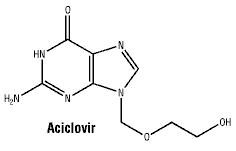
Aciclovir is a synthetic acyclic purine nucleoside analogue. Its chemical name is 9-((2-hydroxyethoxy) methyl) guanine. It is a white crystalline powder. Each gram of ViruPOS eye ointment contains 30 mg of aciclovir in white soft paraffin base (aciclovir 3 per cent).
Mechanism of action. Aciclovir is an antiviral agent which is active in vitro against Herpes simplex virus (HSV) types I and II. However, the relationship between in vitro sensitivity of herpes viruses to aciclovir and clinical response to therapy has yet to be established. Aciclovir needs to be phosphorylated to the active compound, aciclovir triphosphate, in order to become active against the virus. Such conversion is very limited in normal cells and in addition cellular DNA polymerase is not very sensitive to the active compound. However, in infected cells HSV or VZV-coded thymidine kinase facilitates the conversion of aciclovir to aciclovir monophosphate which is then converted to aciclovir triphosphate by cellular enzymes. Aciclovir triphosphate acts as an inhibitor of, and substrate for, the herpes-specified DNA polymerase, preventing further viral DNA synthesis.
Clinical trials. No data available.
5.2 Pharmacokinetic Properties
Aciclovir is absorbed through the corneal epithelium and superficial ocular tissues, and achieves significant concentrations in aqueous humour. Small quantities (2-16% of the applied dose) appear in the urine. In animal studies low levels of aciclovir could be detected in blood after topical application to the eye.
5.3 Preclinical Safety Data
Genotoxicity. No data available.
Carcinogenicity. No data available.
6 Pharmaceutical Particulars
6.1 List of Excipients
Aciclovir and white soft paraffin base.
6.2 Incompatibilities
Incompatibilities were either not assessed or not identified as part of the registration of this medicine.
6.3 Shelf Life
In Australia, information on the shelf life can be found on the public summary of the Australian Register of Therapeutic Goods (ARTG). The expiry date can be found on the packaging.
Once opened, this medicine should not be used after 4 weeks.
6.4 Special Precautions for Storage
Store below 25 °C.
6.5 Nature and Contents of Container
ViruPOS eye ointment is provided in a white aluminium tube with internal epoxy phenol lacquer and white HDPE nozzle with white HDPE cap.
Each tube contains 4.5 g eye ointment.
6.6 Special Precautions for Disposal
In Australia, any unused medicine or waste material should be disposed of by taking to your local pharmacy.
6.7 Physicochemical Properties
Chemical structure.
7 Medicine Schedule (Poisons Standard)
Schedule 4.
Date of First Approval
11 February 2021
Reasonable care is taken to provide accurate information at the time of creation. This information is not intended as a substitute for medical advice and should not be exclusively relied on to manage or diagnose a medical condition. The Australian Commission on Safety and Quality in Health Care disclaims all liability (including for negligence) for any loss, damage, injury or any other negative effects resulting from reliance on or use of this information. Read our full disclaimer. This website uses cookies. Read our privacy policy.