
Voltaren Emulgel
Brand Information
| Brand name | Voltaren Emulgel |
| Active ingredient | Diclofenac diethylamine |
| Schedule | Unscheduled |
No current CMI was found.
Brand Information
| Brand name | Voltaren Emulgel |
| Active ingredient | Diclofenac diethylamine |
| Schedule | Unscheduled |
MIMS Revision Date: 01 December 2023
1 Name of Medicine
Diclofenac diethylamine.
2 Qualitative and Quantitative Composition
Active ingredient: diclofenac diethylamine 11.6 mg/g.
For the full list of excipients, see Section 6.1 List of Excipients.
3 Pharmaceutical Form
Voltaren Emulgel. White to practically white, soft, homogeneous, cream-like gel.
4 Clinical Particulars
4.1 Therapeutic Indications
For the short term (up to 2 weeks) local symptomatic treatment of the following musculoskeletal inflammatory conditions:
acute soft-tissue injuries, including sprains, strains and sports injuries;
localised forms of soft tissue rheumatism such as tendinitis (e.g. tennis elbow) and bursitis.
For the short term (up to 3 weeks) relief of pain in non-serious arthritis (i.e. mild and localised forms of osteoarthritis) of the knees or fingers. Relief of osteoarthritic pain builds up gradually over the first few days of treatment; a significant effect can be expected after one week of application.
4.2 Dose and Method of Administration
Adults and adolescents aged 12 years and over. Voltaren Emulgel is applied locally to the skin 3 or 4 times daily and rubbed in gently. The amount needed depends on the size of the painful site. For example, 2 to 4 g of gel (a quantity ranging in size from a cherry to a walnut) is sufficient to apply to an area of about 400-800 cm2. After application, the hands should be washed, unless they are the site being treated.
Voltaren Emulgel should never be taken by mouth. Voltaren Emulgel may be used with non-occlusive bandages but should not be used with occlusive dressings. The duration of treatment depends on the indication and the response obtained. The gel should not be used for more than 14 days for soft-tissue injuries or soft tissue rheumatism, or 21 days for osteoarthritis pain, unless recommended by a doctor.
When used without medical prescription, patients should consult their doctor or pharmacist if the condition does not improve within 7 days, or if it gets worse.
Use the product with caution near open flames.
Children. Voltaren Emulgel is not recommended for use in children below 12 years of age.
4.3 Contraindications
Known hypersensitivity to diclofenac or to any of the other ingredients in the gel.
Patients in whom attacks of asthma, urticaria, or acute rhinitis are precipitated by aspirin or other non-steroidal anti-inflammatory drugs (NSAIDs).
Last trimester of pregnancy.
4.4 Special Warnings and Precautions for Use
Identified precautions. Systemic side effects. The likelihood of systemic side effects occurring following topical diclofenac is small compared with the frequency of side effects following oral diclofenac. However, the possibility of systemic side effects cannot be excluded, particularly when the gel is applied to relatively large areas of skin or for periods longer than 3 weeks. In case such usage is envisaged, the product information on Voltaren Rapid should be consulted.
Topical side effects. Voltaren Emulgel should be applied only to intact, healthy skin and not to skin wounds, infections, exudative dermatoses or open injuries. It should not be allowed to come into contact with the eyes or mucous membranes and should not be ingested.
Discontinue the treatment if a skin rash develops after applying the product.
Keep out of the sight and reach of children.
Voltaren Emulgel contains propylene glycol and benzyl benzoate, which may cause mild, localised skin reactions in some people.
Patients should be instructed to be cautious when smoking or near naked flames due to risk of severe burns. Voltaren Emulgel contains paraffin which is potentially flammable when it builds up on fabric (clothing, bedding, dressings etc.). Washing clothing and bedding may reduce product build up but not totally remove it.
Use in gastrointestinal disorders. In general, topical NSAIDs should be used with caution in those patients with a history of (or active) gastro-intestinal ulceration or bleeding.
Use in pre-existing asthma. Reactions to NSAIDs such as asthma exacerbations (so-called intolerance to analgesics / analgesics-asthma), Quincke's oedema or urticaria are more frequent in patients with asthma, seasonal allergic rhinitis, swelling of the nasal mucosa (i.e. nasal polyps), chronic obstructive pulmonary diseases or chronic infections of the respiratory tract (especially if linked to allergic rhinitis-like symptoms) than in other patients. Therefore, special precaution is recommended in such patients. This is applicable as well for patients who are allergic to other substances, e.g. with skin reactions, pruritus or urticaria.
Use under dressings. Voltaren Emulgel can be used with non-occlusive bandages but should not be used with occlusive dressing (see Section 5.2 Pharmacokinetic Properties, Absorption).
Use in hepatic impairment. In patients with chronic hepatitis or non-decompensated cirrhosis, the kinetics and metabolism of diclofenac are the same as in patients without liver disease.
Use in renal impairment. In general, topical NSAIDs should be used with caution in those patients with a history of severe renal impairment.
No accumulation of diclofenac and its metabolites is to be expected in patients suffering from renal impairment.
Use in the elderly. No dose adjustment is required for elderly patients.
Paediatric use. Voltaren Emulgel is not recommended for use in children under 12 years of age, as safety and efficacy in this age group have not been established.
Effects on laboratory tests. No data available.
4.5 Interactions with Other Medicines and Other Forms of Interactions
Anticoagulants and antiplatelet agents. The concurrent use of NSAIDs and warfarin has been associated with severe, sometimes fatal, haemorrhage. The exact mechanism of the interaction between NSAIDs and warfarin is unknown, but may involve enhanced bleeding from NSAID-induced gastrointestinal ulceration or an additive effect of anticoagulation by warfarin and inhibition of platelet function by NSAIDs.
There are isolated reports of suspected interaction of topical formulations of diclofenac with oral anticoagulants.
Since systemic absorption of diclofenac from topical application of the gel is very low, such interactions are very unlikely. Systemic reactions are unlikely to occur when the gel is used as recommended. Nevertheless, the possibility of such an interaction should be borne in mind.
4.6 Fertility, Pregnancy and Lactation
Effects on fertility. Diclofenac had no influence on the fertility of parent animals in rats. There was no evidence that diclofenac had a teratogenic potential in mice, rats or rabbits. The prenatal, perinatal and postnatal development of the offspring was not affected.
Use in pregnancy. (Category C)
The use of diclofenac in pregnant women has not been studied; therefore, Voltaren Emulgel should not be used during the first two trimesters of pregnancy or in women who are likely to become pregnant, unless the potential benefit to the mother outweighs the risk to the foetus.
Diclofenac is contraindicated during the third trimester of pregnancy, owing to the possibility of uterine inertia and/or premature closure of the ductus arteriosus.
Animal studies have not shown any direct or indirect harmful effects on pregnancy, embryonal/foetal development, parturition or postnatal development.
Animal studies did see some degree of reproductive toxicity, although this was generally associated with maternal toxicity, with no indication of developmental toxicity.
Use in lactation. It is not known whether topical diclofenac is excreted in breast milk; therefore, Voltaren Emulgel should only be used during breastfeeding if the expected benefit justifies the potential risk to the newborn.
If there are compelling reasons for using it, it should not be applied to the breasts or to large areas of skin, nor should it be used for a prolonged period.
4.7 Effects on Ability to Drive and Use Machines
Cutaneous application of the gel is unlikely to influence on the ability to drive and use machines.
4.8 Adverse Effects (Undesirable Effects)
Reporting suspected adverse effects. Reporting suspected adverse reactions after registration of the medicinal product is important. It allows continued monitoring of the benefit-risk balance of the medicinal product. Healthcare professionals are asked to report any suspected adverse reactions at www.tga.gov.au/reporting-problems.
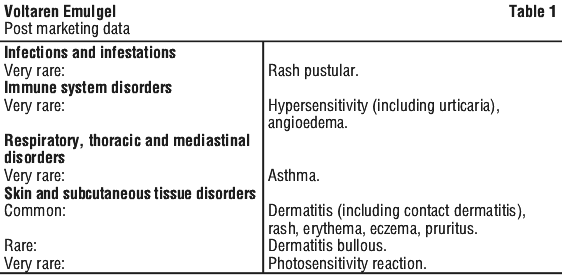
Adverse reactions (Table 1) are ranked under heading of frequency, the most frequent first, using the following convention: common (≥ 1/100, < 1/10); uncommon (≥ 1/1,000, < 1/100); rare (≥ 1/10,000, < 1/1,000); very rare (< 1/10,000), including isolated reports. Within each frequency, adverse effects are presented in order of decreasing seriousness.
4.9 Overdose
For information on the management of overdose, contact the Poisons Information Centre on 13 11 26 (Australia).
Symptoms and signs. The low systemic absorption of topical diclofenac renders overdosage extremely unlikely. However, undesirable effects, similar to those observed following an overdose of Voltaren tablets, can be expected if the gel is inadvertently ingested (1 tube of 100 g contains the equivalent of 1 g diclofenac sodium).
Treatment. In the event of accidental ingestion, resulting in significant systemic side-effects, general therapeutic measures normally adopted to treat poisoning with non-steroidal anti-inflammatory drugs, should be used.
5 Pharmacological Properties
5.1 Pharmacodynamic Properties
Mechanism of action. Pharmacotherapeutic group: Topical products for joint and muscular pain, anti-inflammatory preparations, non-steroids for topical use (ATC code M02A A15).
Diclofenac is a non-steroidal anti-inflammatory drug (NSAID) with pronounced analgesic, anti-inflammatory and antipyretic properties. Inhibition of prostaglandin synthesis is the primary mechanism of action of diclofenac.
Voltaren Emulgel is an anti-inflammatory and analgesic preparation designed for external application.
In inflammation and pain of traumatic or rheumatic origin, Voltaren Emulgel has been shown to relieve pain, reduce oedema, and shorten the time to return of normal function.
Due to an aqueous-alcoholic base, the gel also exerts a soothing and cooling effect.
Clinical trials. No data available.
5.2 Pharmacokinetic Properties
Absorption. When Voltaren Emulgel is applied locally, the active substance is absorbed through the skin. The amount of diclofenac absorbed through intact skin is proportional to the contact time and skin area covered with the gel, and depends on the total topical dose and the hydration of the skin. Absorption amounts to about 6% of the dose of diclofenac after topical application of 2.5 g the gel per 500 cm2 skin, determined by reference to the total renal elimination compared with Voltaren tablets. Occlusion over a period of 10 hours leads to a three-fold increase in the amount of diclofenac absorbed. No information is available on the clinical effects and consequences of use under occlusion.
Distribution. After topical administration of Voltaren Emulgel to hand and knee joints, diclofenac can be measured in plasma, synovial tissue, and synovial fluid. Maximum plasma concentrations of diclofenac after topical administration of Voltaren Emulgel is approximately 100 times lower than after oral administration of the same quantity of diclofenac. Diclofenac is highly bound to serum proteins (99.7%), predominantly to albumin (99.4%).
Metabolism. The biotransformation of diclofenac involves partly glucuronidation of the intact molecule, but mainly by single and multiple hydroxylation and methoxylation, resulting in several phenolic metabolites, most of which are converted to glucuronide conjugates. Two of these phenolic metabolites are biologically active, however, to a much smaller extent than diclofenac. Metabolism of diclofenac following topical and oral administration is similar.
Excretion. The total systemic clearance of diclofenac from plasma is 263 ± 56 mL/min (mean value ± SD). The terminal plasma half-life is 1 to 2 hours. Four of the metabolites, including the two active ones, also have short plasma half-lives of 1-3 hours. One metabolite, 3'-hydroxy-4'-methoxy-diclofenac, has a much longer plasma half-life. However, this metabolite is virtually inactive. Diclofenac and its metabolites are excreted mainly in the urine.
5.3 Preclinical Safety Data
Preclinical data from acute and repeated dose toxicity studies, as well as from genotoxicity, mutagenicity, and carcinogenicity studies with diclofenac revealed no specific hazard for humans at the intended therapeutic doses. The gel was well tolerated in a variety of studies. There was no potential for phototoxicity and Voltaren Emulgel caused no skin sensitisation.
Genotoxicity. Preclinical data from genotoxicity studies with diclofenac revealed no specific hazard for humans at the intended therapeutic doses.
Carcinogenicity. Preclinical data from carcinogenicity studies with diclofenac revealed no specific hazard for humans at the intended therapeutic doses.
6 Pharmaceutical Particulars
6.1 List of Excipients
Voltaren Emulgel. Carbomer 934P, cetomacrogol 1000, coco-caprylate/caprate, diethylamine, isopropyl alcohol, paraffin - liquid, perfume (containing benzyl benzoate), propylene glycol, water - purified.
6.2 Incompatibilities
Incompatibilities were either not assessed or not identified as part of the registration of this medicine.
6.3 Shelf Life
In Australia, information on the shelf life can be found on the public summary of the Australian Register of Therapeutic Goods (ARTG). The expiry date can be found on the packaging.
6.4 Special Precautions for Storage
Voltaren Emulgel. Store below 30°C.
6.5 Nature and Contents of Container
Voltaren Emulgel. Packaged in aluminium laminated tubes (LDPE/aluminium/HDPE) in pack sizes of 20 g, 50 g, 100 g, 150 g and 180 g.
6.6 Special Precautions for Disposal
In Australia, any unused medicine or waste material should be disposed of in accordance with local requirements.
6.7 Physicochemical Properties
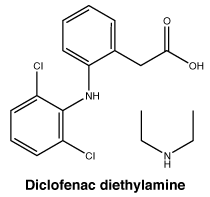
Chemical structure.
7 Medicine Schedule (Poisons Standard)
Unscheduled.
Date of First Approval
21 April 1994
Date of Revision
01 March 2023
Summary Table of Changes

Reasonable care is taken to provide accurate information at the time of creation. This information is not intended as a substitute for medical advice and should not be exclusively relied on to manage or diagnose a medical condition. The Australian Commission on Safety and Quality in Health Care disclaims all liability (including for negligence) for any loss, damage, injury or any other negative effects resulting from reliance on or use of this information. Read our full disclaimer. This website uses cookies. Read our privacy policy.