
Winlevi
Brand Information
| Brand name | Winlevi |
| Active ingredient | Clascoterone |
| Schedule | S4 |
Consumer Medicine Information (CMI) leaflet
Please read this leaflet carefully before you start using the Winlevi.
Summary CMI
WINLEVI®
Consumer Medicine Information (CMI) summary
The full CMI on the next page has more details. If you are worried about using this medicine, speak to your doctor or pharmacist.
▼ This medicine is subject to additional monitoring. This will allow quick identification of new safety information. You can help by reporting any side effects you may get. You can report side effects to your doctor, or directly at Report a problem or side effect.
1. Why am I using WINLEVI?
WINLEVI contains the active ingredient clascoterone. WINLEVI is used on the skin (topical) to treat acne vulgaris in people 12 years of age and older.
For more information, see Section 1. Why am I using WINLEVI? in the full CMI.
2. What should I know before I use WINLEVI?
Do not use if you have ever had an allergic reaction to WINLEVI or any of the ingredients listed at the end of the CMI.
Talk to your doctor or pharmacist if you have any other medical conditions, in particular skin problems, including eczema, cuts or sunburn, if you take any other medicines, or are pregnant or plan to become pregnant or are breastfeeding.
Symptoms of a disorder where the adrenal gland does not make enough of certain hormones have been observed during treatment with WINLEVI. Your healthcare professional may stop your treatment with WINLEVI if you develop any adrenal problems. For more information, see Section 2. What should I know before I use WINLEVI? in the full CMI.
3. What if I am taking other medicines?
No drug interaction studies have been conducted with WINLEVI, therefore, interactions with other drugs have not been established. See section 3. What if I am taking other medicines? in the full CMI.
4. How do I use WINLEVI?
Apply a thin even layer of WINLEVI over the entire area prone to acne, twice a day, in the morning and in the evening, to clean and dry skin. For optimal effectiveness, do not spot treat. More instructions can be found in Section 4. How do I use WINLEVI? in the full CMI.
5. What should I know while using WINLEVI?
| Things you should do |
|
| Things you should not do |
|
| Driving or using machines |
|
| Looking after your medicine |
|
For more information, see Section 5. What should I know while using WINLEVI? in the full CMI.
6. Are there any side effects?
Possible side effects include local skin irritation such as itching, burning, skin redness, peeling, scaling or dryness, inflammation of the nose and throat and headache.
These are not all the possible side effects you may have when taking WINLEVI. If you experience any side effects not listed here, tell your healthcare professional.
For more information, including what to do if you have any side effects, see Section 6. Are there any side effects? in the full CMI.
Full CMI
▼ This medicine is subject to additional monitoring. This will allow quick identification of new safety information. You can help by reporting any side effects you may get. You can report side effects to your doctor, or directly at Report a problem or side effect.
WINLEVI®
Active ingredient: Clascoterone
Consumer Medicine Information (CMI)
This leaflet provides important information about using WINLEVI. You should also speak to your doctor or pharmacist if you would like further information or if you have any concerns or questions about using WINLEVI.
Where to find information in this leaflet:
1. Why am I using WINLEVI?
2. What should I know before I use WINLEVI?
3. What if I am taking other medicines?
4. How do I use WINLEVI?
5. What should I know while using WINLEVI?
6. Are there any side effects?
7. Product details
1. Why am I using WINLEVI?
WINELVI contains the active ingredient clascoterone. WINLEVI is a prescription medicine used on the skin (topical) to treat acne vulgaris in people 12 years of age and older.
WINLEVI belongs to a group of medicines called androgen receptor inhibitors. The exact mechanism of action of WINLEVI for the topical treatment of acne vulgaris is unknown.
2. What should I know before I use WINLEVI?
Warnings
Do not use WINLEVI if:
- you are allergic to clascoterone, or any of the ingredients listed at the end of this leaflet.
Always check the ingredients to make sure you can use this medicine.
Check with your doctor if you:
- have any other medical conditions; in particular skin problems, including eczema, cuts or sunburn
- take any medicines for any other condition.
Other warnings you should know about:
- WINLEVI is to be used on the skin only (topical). Do not use WINLEVI in or on your eyes, mouth, or vagina.
- Avoid getting WINLEVI into your eyes, lips, mouth, corners of the nose, or mucous membranes. If contact with mucous membranes happens, rinse immediately and thoroughly with water.
- Avoid using skin products that may dry or irritate your skin such as:
- medicated or abrasive soaps and cleansers
- soaps, cleansers, and cosmetics that have strong skin drying effects
- products that contain high amounts of alcohol, astringents, spices, or lime. - Do not use WINLEVI for a condition for which it was not prescribed.
- Do not give WINLEVI to other people, even if they have the same symptoms you have. It may harm them.
Symptoms of a disorder where the adrenal gland does not make enough of certain hormones have been observed during treatment with WINLEVI. Your healthcare professional may stop your treatment with WINLEVI if you develop any adrenal problems.
During treatment, you may be at risk of developing certain side effects. It is important you understand these risks and how to monitor them. See additional information under Section 6. Are there any side effects?
Pregnancy and breastfeeding
Check with your doctor if you are pregnant or intend to become pregnant. WINLEVI should not be used during pregnancy.
Talk to your doctor if you are breastfeeding or intend to breastfeed.
It is not known if WINLEVI cream is safe and effective in children under 12 years of age.
3. What if I am taking other medicines?
Tell your doctor or pharmacist if you are taking any other medicines, including any medicines, vitamins or supplements that you buy without a prescription from your pharmacy, supermarket or health food shop.
No drug interaction studies have been conducted with WINLEVI, therefore, interactions with other drugs have not been established.
Check with your doctor or pharmacist if you are not sure about what medicines, vitamins or supplements you are taking and if these affect WINLEVI.
4. How do I use WINLEVI?
How to use WINLEVI:
Use WINLEVI exactly as your healthcare professional tells you to use it.
Before applying WINLEVI, gently wash and dry the entire area of the skin to be treated.
Apply a thin even layer of WINLEVI over the entire area prone to acne, twice a day, in the morning and in the evening. For optimal effectiveness, do not spot treat.
Wash your hands after applying WINLEVI.
If you forget to use WINLEVI
If you forget to apply a dose, the next dose should be applied at the usual time. Apply the same amount you usually would. Do not apply extra.
If you use too much WINLEVI
If you think that you have used too much WINLEVI, you may need urgent medical attention.
You should immediately:
- In Australia: phone the Poisons Information Centre
On 13 11 26
In New Zealand phone the National Poisons Centre on 0800 POISON (0800 764766), or - contact your doctor, or
- go to the Emergency Department at your nearest hospital.
You should do this even if there are no signs of discomfort or poisoning.
5. What should I know while using WINLEVI?
Remind any doctor, dentist or pharmacist you visit that you are using WINLEVI.
Driving or using machines
The effects of WINLEVI on a person's ability to drive and use machines were not assessed as part of its registration.
Looking after your medicine
- Store WINLEVI at room temperature (below 25°C).
- Do not freeze.
Follow the instructions in the carton on how to take care of your medicine properly.
Keep it where young children cannot reach it.
When to discard your medicine
Please return any unused portion to your pharmacist 6 months after the date of dispensing.
Getting rid of any unwanted medicine
If you no longer need to use this medicine or it is out of date, take it to any pharmacy for safe disposal. It is recommended that WINLEVI not be disposed of in household waste or wastewater.
Do not use this medicine after the expiry date.
6. Are there any side effects?
All medicines can have side effects. If you do experience any side effects, most of them are minor and temporary. However, some side effects may need medical attention.
See the information below and, if you need to, ask your doctor or pharmacist if you have any further questions.
Less serious side effects
| Less serious side effects | What to do |
| Common side effect Local skin irritation:
General disorders
Gastrointestinal conditions
| Speak to your doctor or pharmaci st if you have any of these less serious side effects and they worry you. |
Tell your doctor or pharmacist if you notice anything else that may be making you feel unwell.
Other side effects not listed here may occur in some people.
Reporting side effects
After you have received medical advice for any side effects you experience:
Australia: you can report side effects to the Therapeutic Goods Administration online at www.tga.gov.au/reporting-problems.
New Zealand: you can report any suspected adverse reactions via nzphvc.otago.ac.nz/reporting.
Adverse effects can also be reported to customerservice.aus@sunpharma.com, or Australian Toll Free: 1800 726 229, or New Zealand Toll Free: 0800 726 229.
By reporting side effects, you can help provide more information on the safety of this medicine.
7. Product details
This medicine is only available with a doctor's prescription
What WINLEVI contains
| Active ingredient (main ingredient) | Clascoterone |
| Other ingredients (inactive ingredients) |
|
Do not use this medicine if you are allergic to any of these ingredients.
What WINLEVI looks like
WINLEVI is a white to almost white cream.
WINLEVI is supplied in tubes 2 g, 10 g, 30 g and 60 g.
Not all pack sizes may be marketed.
Australian Registration Number:
AUST R 403948
Who distributes WINLEVI
Sun Pharma ANZ Pty Ltd
Macquarie Park
Sydney NSW 2113
Australia.
This leaflet was prepared in April 2024
Brand Information
| Brand name | Winlevi |
| Active ingredient | Clascoterone |
| Schedule | S4 |
▼ This medicinal product is subject to additional monitoring in Australia. This will allow quick identification of new safety information. Healthcare professionals are asked to report any suspected adverse events at www.tga.gov.au/reporting-problems.
MIMS Revision Date: 01 June 2024
1 Name of Medicine
Clascoterone.
2 Qualitative and Quantitative Composition
Each gram of Winlevi cream contains 10 mg of clascoterone.
For the full list of excipients, see Section 6.1.
3 Pharmaceutical Form
White to almost white cream.
4 Clinical Particulars
4.1 Therapeutic Indications
Winlevi (clascoterone) cream is indicated for the topical treatment of acne vulgaris in patients 12 years of age and older.
4.2 Dose and Method of Administration
Recommended dose and administration. Cleanse the entire area to be treated and dry gently. After the skin is dry, apply a thin uniform layer of Winlevi twice per day, in the morning and in the evening, over the entire area prone to acne. It is advised to use Winlevi as instructed by the prescribing healthcare professional. For optimal effectiveness, do not spot treat.
Hands should be washed before and after applying Winlevi cream.
Missed dose. If patients forget to take a dose of Winlevi, they should be instructed to apply the next dose at the usual time. Patients should be instructed to not apply a double dose to make up for forgotten doses.
Dosing considerations. Winlevi is for external use only. Winlevi is not for ophthalmic, oral or vaginal use.
Avoid accidental transfer of Winlevi into eyes, lips, mouth, corners of the nose, or other mucous membranes. If contact with mucous membranes occurs, rinse immediately and thoroughly with water.
This medication should not be applied to cuts, abrasions, eczematous, or sunburned skin.
4.3 Contraindications
Hypersensitivity to the active substance or to any of the excipients listed, see Section 6.1.
4.4 Special Warnings and Precautions for Use
General. Winlevi is for external use only. Not for ophthalmic, oral or vaginal use.
Winlevi should not be applied to cuts, abrasions, eczematous or sunburned skin.
Avoid accidental transfer of Winlevi into eyes, lips, mouth, corners of the nose, or other mucous membranes. If contact with mucous membranes occurs, rinse immediately and thoroughly with water.
Hypothalamic-pituitary-adrenal (HPA) axis suppression. Clascoterone is structurally similar to non-androgen corticosteroids and may exert its efficacy by means other than the AR.
The main metabolite of clascoterone, cortexolone, is an intermediate in the synthesis of glucocorticoids and exhibits weak glucocorticoid properties.
Reversible physiologic hypothalamic-pituitary-adrenal (HPA) axis suppression was observed in two maximal use clinical studies with exposure conditions up to 3 times the recommended Winlevi daily dose for up to 2 weeks. Reversible HPA axis suppression may occur during or after treatment with clascoterone. In both studies, all patients who demonstrated an abnormal HPA axis response returned to normal HPA axis response at follow-up visit, 4 weeks after stopping treatment (see Section 4.4 Special Warnings and Precautions for Use, Paediatric use; Section 5.1 Pharmacodynamic Properties). Conditions which augment systemic absorption include use over large surface areas, prolonged use, and the use of occlusive dressings.
If HPA axis suppression develops, an attempt should be made to withdraw the drug.
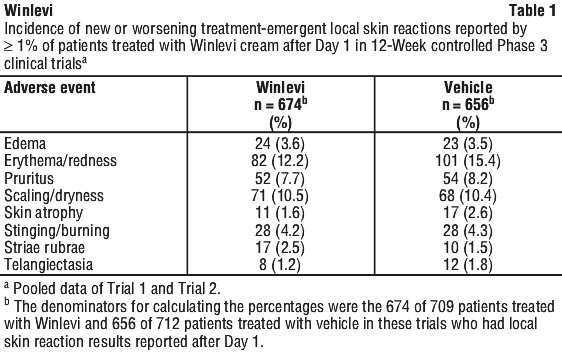
Local skin reactions. Winlevi may induce local irritation (edema, erythema/redness, pruritus, scaling/dryness, skin atrophy, stinging/burning, striae rubrea, telangiectasia). Concomitant use with other potentially irritating topical products (medicated or abrasive soaps and cleansers, soaps and cosmetics that have a strong drying effect and products with high concentrations of alcohol, astringents, spices or lime) should be limited.
Use in the elderly. There are no data available for patients aged older than 65 years as none were included in the clinical programme.
Other reported clinical experience has not identified differences in responses between the elderly and younger patients. In general, dose selection for an elderly patient should be cautious, usually starting at the low end of the dosing range, reflecting the greater frequency of decreased hepatic, renal, or cardiac function, and of concomitant disease or other drug therapy.
Paediatric use. There are insufficient data to recommend the use of Winlevi in children under the age of 12 years. Under maximal use conditions, HPA-axis suppression was seen more frequently in children less than 12 years old (See Section 4.4, Hypothalamic-pituitary-adrenal (HPA) axis suppression).
The safety and efficacy of Winlevi for the topical treatment of acne vulgaris have been established in 641 paediatric patients, aged 12 to 18 years in two identical multicentre, randomised, double-blind, vehicle-controlled, 12-week trials and 2 open-label pharmacokinetic studies (see Section 5.1 Pharmacodynamic Properties, Clinical trials).
In two, maximum use clinical studies, with Winlevi administered at up to 3 times the recommended daily dose, for up to 2 weeks, in 20 adult patients and 22 adolescent patients, HPA axis suppression (as demonstrated by 30 minute post-stimulation serum cortisol level ≤ 497 nmol/L) was observed in 1/20 (5%) adult patients and 2/22 (9%) adolescent patients. These were generally minimal reductions below normal levels.
All subjects returned to normal HPA axis response at follow-up 4 weeks after stopping the treatment. Children may be more susceptible to systemic toxicity when treated with clascoterone (see Section 5.1 Pharmacodynamic Properties).
Effects on laboratory tests. No data available.
4.5 Interactions with Other Medicines and Other Forms of Interactions
No clinical studies evaluating the drug interaction potential of Winlevi have been conducted.
In vitro studies. In vitro findings suggest that clascoterone has no clinically meaningful effect on the PK of drugs metabolised by CYP1A2, 2B6, 2C8, 2C9, 2C19, 2D6, 2E1 and 3A4.
4.6 Fertility, Pregnancy and Lactation
Effects on fertility. In a fertility and early embryonic development study in rats, clascoterone was administered subcutaneously at doses up to 12.5 mg/kg/day from 2 - 4 weeks before mating and throughout mating. Clascoterone increased pre-implantation loss at 12.5 mg/kg/day (estimated 35 times the AUC at a human dose of 6 g of cream per day). Adverse effects on male reproductive organs and testicular sperm counts were also seen at this dose. No effects were noted at doses up to 2.5 mg/kg/day (7 times the AUC at a human dose of 6 g of cream per day).
Use in pregnancy. (Category D)
There are no available data on the use of Winlevi in pregnant women to evaluate for a drug-associated risk of major birth defects, miscarriage, or adverse maternal or fetal outcomes.
Teratogenicity and embryofetal death were seen in animal embryofetal development studies. Clascoterone related fetal malformations (omphalocele, severe dilation of the lateral and third cerebral ventricles; thin skin, small size, and protruding tongue) were noted in rats at subcutaneous doses ≥ 1 mg/kg/day (2.8 times the AUC at a human dose of 6 g of cream per day). A no adverse effect level for teratogenicity was not established in this species. Post-implantation loss and resorptions were increased in rabbits at a subcutaneous dose of 1.5 mg/kg/day (13 times the AUC at a human dose of 6 g of cream per day). No embryofetal developmental toxicity was seen in this species at subcutaneous doses up to 0.4 mg/kg/day (~ 4 times the AUC at a human dose of 6 g of cream per day).
Winlevi should not be used during pregnancy.
Use in lactation. There are no available data regarding the presence of clascoterone or its metabolite in human milk, the effects on the breastfed infant or the effects on milk production. The lack of clinical data during lactation precludes a clear determination of the risk of clascoterone to an infant during lactation. Therefore, the developmental and health benefits of breastfeeding should be considered along with the mother's clinical need for clascoterone and any potential adverse effects on the breastfed child from clascoterone and any underlying maternal condition.
4.7 Effects on Ability to Drive and Use Machines
The effects of Winlevi on a person's ability to drive and use machines were not assessed as part of its registration.
4.8 Adverse Effects (Undesirable Effects)
Clinical trial adverse reactions. Clinical trials are conducted under very specific conditions. The adverse reaction rates observed in the clinical trials, therefore, may not reflect the rates observed in practice and should not be compared to the rates in the clinical trials of another drug. Adverse reaction information from clinical trials may be useful in identifying and approximating rates of adverse drug reactions in real-world use.
Local skin reactions were observed during the 12-week treatment and occurred in a similar percentage of patients treated with vehicle. Local skin reactions reported by ≥ 1% of patients treated with Winlevi are shown in the following table. See Table 1.
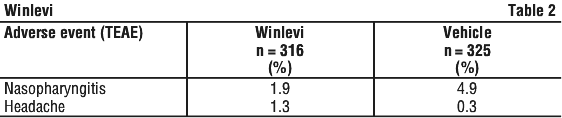
Clinical trial adverse reactions - paediatrics. In patients aged 12 to 18 years of age, TEAEs were reported in 10.8% (34/316) of Winlevi-treated patients and 14.2% (46/325) in vehicle. The only TEAEs reported in ≥ 1% of patients aged 12 to 18 years in the pooled phase 3 studies, are shown in the following table. See Table 2.
Infections and infestations. Bronchitis, peritonsillar abscess.
General disorders and administration site conditions. Application site dryness.
Gastrointestinal conditions. Vomiting.
Hair colour changes.
Less common clinical trial adverse reactions - paediatrics. Treatment-emergent adverse events occurring in < 1% of Winlevi treated patients (with a higher incidence compared to vehicle and occurring in at least 2 patients), aged 12 to 18 years, are presented below. The events are categorized by body system.
Infections and infestations. Respiratory tract infection viral, sinusitis.
Gastrointestinal disorders. Abdominal pain upper.
Reproductive system and breast disorders. Dysmenorrhea.
Abnormal laboratory findings: hematologic, clinical chemistry and other quantitative data. Clinical trial findings. Hyperkalemia. Although clinical laboratory evaluations were not performed in the Phase 3 studies, changes in the clinical laboratory studies in phase 1 and phase 2 studies were identified. Shifts from normal to elevated potassium levels were observed in 3.7% (17/461) of clascoterone-treated patients and 3.9 (4/103) of vehicle-treated patients ages ranging from 12 to 64 (see Section 5.1 Pharmacodynamic Properties).
Reporting suspected adverse effects. Reporting suspected adverse reactions after registration of the medicinal product is important. It allows continued monitoring of the benefit-risk balance of the medicinal product. Healthcare professionals are asked to report any suspected adverse reactions at www.tga.gov.au/reporting-problems.
Adverse effects can also be reported to adverse.events.aus@sunpharma.com or 1800 726 229.
4.9 Overdose
For information on the management of overdose, contact the Poisons Information Centre on 131126 (Australia).
Winlevi is for twice-daily topical use only.
In case of accidental ingestion, appropriate symptomatic measures should be taken. Although no data are available, the active ingredient in Winlevi has anti-androgenic effects, HPA-axis suppression and hyperkalaemia may be seen following accidental oral ingestion.
5 Pharmacological Properties
5.1 Pharmacodynamic Properties
Mechanism of action. Clascoterone is an androgen receptor inhibitor. The exact mechanism of action of Winlevi for the topical treatment of acne vulgaris is unknown.
Hypothalamic-pituitary-adrenal (HPA) axis suppression. HPA axis suppression was evaluated in adult (n=20), adolescent (n=22) and paediatric (n=27, < 12 years of age) patients with acne vulgaris, following twice daily application of Winlevi for 2 weeks, in two maximum use pharmacokinetic studies. HPA axis suppression, indicated by 30-minute post-stimulation serum cortisol level of ≤ 497 nmol/L, was observed in 1/20 (5%) of adult subjects, 2/22 (9%) of adolescent and 2/23 (8.7%) of paediatric patients at Day 14. All patients returned to normal HPA axis function at follow-up 4 weeks after the end of treatment.
Potassium. Shifts from normal to elevated potassium levels were observed in 3.7% (17/461) of clascoterone-treated patients and 3.9 (4/103) of vehicle-treated patients ages ranging from 12 to 64.
Cardiac electrophysiology. At approximately 2 times the systemic exposure observed with the maximum dose, Winlevi does not prolong the QT interval to any clinically relevant extent.
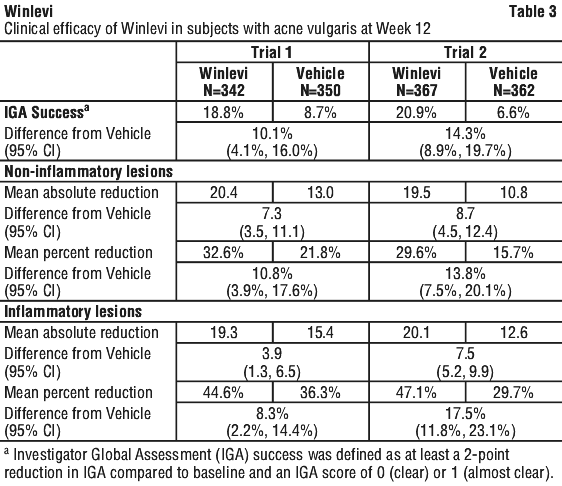
Clinical trials. The safety and efficacy of Winlevi, when applied twice daily for 12 weeks for the treatment of acne vulgaris, were assessed in two identically designed, multicentre, randomised, double-blind, vehicle-controlled clinical trials (Trial 1 and Trial 2) enrolling 1440 patients with facial acne vulgaris. The trials enrolled patients 9 years or older with Investigator's Global Assessment (IGA) of moderate or severe facial acne vulgaris (score of 3 or 4), 30 to 75 inflammatory lesions (papules, pustules and nodules), and 30 to 100 non-inflammatory lesions (open and closed comedones). Patients with more than 2 facial nodules or nodulocystic acne were excluded.
A total of 1421 patients 12 years and older with facial acne vulgaris were enrolled. The treatment groups in each study were well-balanced with similar demographic and baseline characteristics in the intent-to-treat (ITT) population, both within and between Trial 1 and Trial 2. Of these subjects, 641 (45%) were 12 to 17 years of age, and 780 (55%) were 18 years of age or older. In addition, 62% of the patients were female, and 91% were Caucasian. At baseline, patients had a mean inflammatory lesion count of 42.4 and a mean non-inflammatory lesion count of 61.4. Additionally, approximately 83% of patients had an IGA score of 3 ("moderate").
Primary and secondary efficacy endpoints were assessed at Week 12. Co-primary efficacy endpoints included proportion of patients in each treatment group with at least a 2-point reduction in IGA compared to baseline and an IGA score of 0 (clear) or 1 (almost clear) and absolute change from baseline in non-inflammatory lesion count (NILC) and inflammatory lesion count (ILC). Secondary efficacy endpoints included absolute and percent change from baseline in total lesion count (TLC); percent change from baseline in non-inflammatory and inflammatory lesion count. The IGA success rate and mean absolute and percent reduction from baseline in acne lesion count after 12 weeks of treatment, for subjects 12 years of age and older, are presented in the following table. See Table 3.
5.2 Pharmacokinetic Properties
Absorption. Following topical treatment of Winlevi for 2 weeks with a mean dose of approximately 6 grams applied twice daily to adult patients with moderate to severe acne vulgaris (n=20), systemic concentrations of clascoterone were at a steady state by Day 5. On Day 14, the mean ± SD maximum plasma concentration (Cmax) was 4.5 ± 2.9 nanogram/mL, the mean ± SD area under the plasma concentration-time over the dosing interval (AUCτ) was 37.1 ± 22.3 h*nanogram/mL and the mean ± SD average plasma concentration (Cavg) was 3.1 ± 1.9 nanogram/mL.
Distribution. Plasma protein binding of clascoterone is 84% to 89% and is independent of concentrations, in vitro.
Metabolism. Following topical treatment with Winlevi, the plasma concentrations of cortexolone, a possible primary metabolite of clascoterone, were detectable and generally below or near the lower limit of quantitation (0.5 nanogram/mL) in patients ≥ 12 years of age with acne vulgaris.
The in vitro study indicated that incubation of clascoterone with human cryopreserved hepatocytes generated cortexolone as the possible primary metabolite and other metabolites, including conjugated metabolites.
Excretion. The excretion of clascoterone has not been fully characterized in humans.
Paediatrics. In adolescent patients 12 to < 18 years of age (n=22), after 2 weeks of twice daily treatment, with a mean dose of approximately 6 grams of Winlevi per application (or mean dose of approximately 4 grams per application in younger, smaller subjects), steady-state concentrations of clascoterone were achieved by Day 5. Clascoterone systemic exposure in adolescents was similar to those observed in adults (see Section 5.2 Pharmacokinetic Properties, Absorption).
5.3 Preclinical Safety Data
Genotoxicity. Clascoterone was not mutagenic in the Ames reverse mutation assay and was not clastogenic in the in vitro human lymphocyte chromosomal aberration assay. In rats, clascoterone administered via subcutaneous injection did not induce micronuclei in the bone marrow at 500 or 1000 mg/kg but a slight increase in micronuclei occurred in 2 of 5 rats, at 2000 mg/kg at 24 hours. At 48 hours, no increase was noted in any group. Overall, the weight of evidence indicates that clascoterone does not represent a genotoxic risk.
Carcinogenicity. Clascoterone cream (0.1%, 1%, or 5%) was not carcinogenic after daily topical administration in a 2-year carcinogenicity study in rats. An increased incidence of the non-neoplastic finding of atrophy of the skin and subcutis, at the application site, was reported in males and females treated with the 1% and 5% clascoterone cream.
6 Pharmaceutical Particulars
6.1 List of Excipients
Cetyl alcohol, citric acid monohydrate, disodium edetate, dl-alpha-tocopherol, mono- and di-glycerides, liquid paraffin, polysorbate 80, propylene glycol and purified water.
6.2 Incompatibilities
No data available.
6.3 Shelf Life
In Australia, information on the shelf life can be found on the public summary of the Australian Register of Therapeutic Goods (ARTG). The expiry date can be found on the packaging.
6.4 Special Precautions for Storage
Prior to dispensing. Store the product in a refrigerator between 2°C and 8°C. Do not freeze.
Dispensing instructions for the pharmacist. Direct the patient to store the product while in use at room temperature (below 25°C). Do not freeze. Discard the unused product 6 months after the date of dispensing.
6.5 Nature and Contents of Container
Winlevi is supplied in an epoxy-lined aluminum blind-end tube with a polypropylene cap closure.
Winlevi is supplied in tubes of 2 g, 10 g, 30 g and 60 g.
Not all pack sizes may be marketed.
6.6 Special Precautions for Disposal
In Australia, any unused medicine or waste material should be disposed by talking to your local pharmacy.
6.7 Physicochemical Properties
Chemical structure.
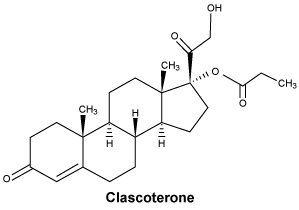
Molecular weight: 402.5.
CAS number. 19608-29-8.
7 Medicine Schedule (Poisons Standard)
S4 - Prescription Only Medicine.
Date of First Approval
12 March 2024
Summary Table of Changes

Reasonable care is taken to provide accurate information at the time of creation. This information is not intended as a substitute for medical advice and should not be exclusively relied on to manage or diagnose a medical condition. The Australian Commission on Safety and Quality in Health Care disclaims all liability (including for negligence) for any loss, damage, injury or any other negative effects resulting from reliance on or use of this information. Read our full disclaimer. This website uses cookies. Read our privacy policy.