
Xalaprost
Brand Information
| Brand name | Xalaprost |
| Active ingredient | Latanoprost |
| Schedule | S4 |
Consumer Medicine Information (CMI) leaflet
Please read this leaflet carefully before you start using the Xalaprost.
Summary CMI
XALAPROST
Consumer Medicine Information (CMI) summary
The full CMI on the next page has more details. If you are worried about using XALAPROST, speak to your doctor or pharmacist.
1. Why am I using XALAPROST?
XALAPROST contains the active ingredient latanoprost. XALAPROST is used to lower raised pressure in the eye in patients with open-angle glaucoma or ocular hypertension. For more information, see Section 1. Why am I using XALAPROST? in the full CMI.
2. What should I know before I use XALAPROST?
Do not use XALAPROST if you have ever had an allergic reaction to latanoprost or any of the ingredients listed at the end of the CMI. Talk to your doctor if you have any other health problems, take any other medicines, are pregnant or breastfeeding, or plan to become pregnant or breastfeed.
For more information, see Section 2. What should I know before I use XALAPROST? in the full CMI.
3. What if I am taking other medicines?
Some medicines may interfere with XALAPROST and affect how it works.
A list of these medicines is in Section 3. What if I am taking other medicines? in the full CMI.
4. How do I use XALAPROST?
- The usual dose of XALAPROST is one drop into the affected eye, or eyes, once daily. Use it until your doctor tells you to stop.
- If you are wearing soft contact lenses, remove them before putting the drops in your eye.
- While pulling down the lower eyelid and looking upwards with your head tilted back, gently squeeze the bottle to administer one drop. Release the eyelid and close your eye, without blinking or rubbing your eye. While your eye is closed, place your index finger against the inside corner of your eye and press against your nose for about two minutes.
More instructions can be found in Section 4. How do I use XALAPROST? in the full CMI.
5. What should I know while using XALAPROST?
| Things you must do |
|
| Things you must not do |
|
| Driving or using machines |
|
| Looking after your medicine |
|
For more information, see Section 5. What should I know while using XALAPROST? in the full CMI.
6. Are there any side effects?
Common side effects of XALAPROST include changes to the eye and the surrounding area (this mainly relates to irritation of the eye and eyelid), headache, muscle/joint pain, and painful/urgent or frequent urination. Serious side effects include breathing difficulties, chest pain, strong/rapid/irregular heartbeats, dizziness, nausea/vomiting, swelling of the face/lips/mouth/tongue/throat, or developing white/cloudy deposits in the front of your eye. For more information, including what to do if you have any side effects, see Section 6. Are there any side effects? in the full CMI
Full CMI
XALAPROST
Active ingredient: latanoprost
Consumer Medicine Information (CMI)
This leaflet provides important information about using XALAPROST. Speak to your doctor or pharmacist if you would like further information or if you have any concerns or questions about using XALAPROST.
Where to find information in this leaflet:
1. Why am I using XALAPROST?
2. What should I know before I use XALAPROST?
3. What if I am taking other medicines?
4. How do I use XALAPROST?
5. What should I know while using XALAPROST?
6. Are there any side effects?
7. Product details
1. Why am I using XALAPROST?
XALAPROST contains the active ingredient latanoprost. XALAPROST belongs to a family of medicines called prostaglandin agonists.
XALAPROST is used to used to lower raised pressure in the eye in patients with open-angle glaucoma or ocular hypertension.
Glaucoma is a condition in which the pressure of fluid in the eye may be high. However, some people with glaucoma may have normal eye pressure.
Glaucoma is usually caused by a buildup of the fluid which flows through the eye. This build up occurs because the fluid drains out of your eye more slowly than it is being pumped in. Since new fluid continues to enter the eye, joining the fluid already there, the pressure continues to rise. This raised pressure may damage the back of the eye resulting in a gradual loss of sight. Damage can progress so slowly that the person is not aware of this gradual loss of sight. Sometimes even normal eye pressure is associated with damage to the back of the eye.
There are usually no symptoms of glaucoma. If glaucoma is not treated it can lead to serious problems, including total blindness.
XALAPROST is used either alone or in combination with other eye medicines to lower raised pressure within your eye.
Although XALAPROST helps control your glaucoma it does not cure it. You must keep using it until your doctor tells you to stop.
Ask your doctor if you have any questions about why XALAPROST has been prescribed for you.
Your doctor may have prescribed it for another reason.
2. What should I know before I use XALAPROST?
Warnings
Do not use XALAPROST if:
- you are allergic to latanoprost, or any of the ingredients listed at the end of this leaflet.
Always check the ingredients to make sure you can use XALAPROST.
Some of the symptoms of an allergic reaction may include:
- skin rash, itching or hives;
- swelling of the face, lips or tongue which may cause difficulty in swallowing or breathing;
- asthma, wheezing or shortness of breath.
- fainting. - the bottle or packaging shows signs of tampering.
- the expiry date on the unopened bottle has passed.
- more than four weeks has passed since opening the bottle.
Check with your doctor if you:
- have any other health problems such as severe asthma, any other types of glaucoma or eye conditions such as macular oedema.
- take any medicines for anything else.
- have had any allergy to any other medicines or any other substances, such as food, preservatives, or dyes.
During treatment, you may be at risk of developing certain side effects. It is important you understand these risks and how to monitor for them. See additional information under Section 6. Are there any side effects?
Pregnancy and breastfeeding
Tell your doctor if you are pregnant or plan to become pregnant.
Your doctor will discuss the possible risks and benefits of using XALAPROST during pregnancy.
XALAPROST may affect your developing baby if you take it during pregnancy.
Tell your doctor if you are breastfeeding or plan to breastfeed.
Your doctor will discuss the possible risks and benefits of using XALAPROST when breastfeeding.
Use in Children
- XALAPROST is not recommended for use in children. The safety and effectiveness of XALAPROST in children have not been established.
XALAPROST is not addictive.
3. What if I am taking other medicines?
Tell your doctor or pharmacist if you are taking any other medicines, including any medicines, vitamins or supplements that you buy without a prescription from your pharmacy, supermarket or health food shop.
Some medicines may interfere with XALAPROST. This may affect how they work and/or cause more side effects. These include:
- eye drops which contain an ingredient called thiomersal.
If using such eye drops as well as XALAPROST, you should wait at least 5 minutes between using these eye drops and XALAPROST.
- other eye drops that contain a prostaglandin.
The use of two or more prostaglandin eye drops at the same time is not recommended.
Check with your doctor or pharmacist if you are not sure about what medicines, vitamins or supplements you are taking and if these affect XALAPROST.
4. How do I use XALAPROST?
How much to use
- The usual dose of XALAPROST is one drop into the affected eye or eyes, once daily.
- Follow the instructions provided and use XALAPROST until your doctor tells you to stop.
When to use XALAPROST
- XALAPROST should be used every day, at about the same time each day, preferably in the evening, unless your doctor tells you otherwise.
Using it at the same time each day will have the best effect on your eye pressure. It will also help you remember when to use it.
How to use XALAPROST
If you are wearing soft contact lenses, remove them before putting the drops in your eye.
The preservative in XALAPROST (benzalkonium chloride) may be deposited in soft contact lenses. You can put your soft contact lenses back into your eyes 15 minutes after you have used XALAPROST.
If using other eye drops in addition to XALAPROST, wait at least 5 minutes before putting any other drops in your eye(s).
Be careful not to touch the dropper tip against your eye, eyelid or anything else.
Touching the dropper tip against something may contaminate the eye drops and give you an eye infection.
You may find it easier to put drops in your eye while you are sitting or lying down.
Instructions:
- Wash your hands well with soap and water.
- Twist off the protective overcap from the bottle.
- Unscrew the inner cap.
- Use your finger to gently pull down the lower eyelid of your affected eye.
- Tilt your head back and look up.
- Place the tip of the bottle close to but not touching your eye. Squeeze the bottle gently so that only one drop goes into your eye, then release the lower eyelid. Close your eye. Do not blink or rub your eye.
- While your eye is closed, place your index finger against the inside corner of your eye and press against your nose for about two minutes. This will help to stop the medicine from draining through the tear duct to the nose and throat, from where it can be absorbed into other parts of your body. Ask your doctor for more specific instructions on this technique.
- Screw the inner cap back on the bottle.
- Wash your hands again with soap and water to remove any residue.
You may feel a slight burning sensation in the eye shortly after using the eye drops.
If this persists, or is very uncomfortable, contact your doctor or pharmacist.
If you are being changed from one eye drop to another, follow your doctor's instructions carefully as to when to stop the old drops and when to start the new drops.
How long to use XALAPROST
Continue using XALAPROST every day for as long as your doctor prescribes.
XALAPROST helps control your condition but does not cure it.
If you forget to use XALAPROST
XALAPROST should be used regularly at the same time each day.
If you miss your dose at the usual time, and it is almost time for your next dose, skip the dose you missed and use your next dose when you are meant to.
If you are not sure whether to skip the dose, talk to your doctor or pharmacist.
Do not use a double dose to make up for the dose you missed.
If you have trouble remembering to use your medicine, ask your pharmacist for some hints.
If you use too much XALAPROST
If you accidentally put several drops in your eye, immediately rinse your eye with warm water.
If you think that you or anyone else may have swallowed XALAPROST, urgent medical attention may be needed.
You must immediately:
- phone the Poisons Information Centre
(by calling 13 11 26) for advice, or - contact your doctor, or
- go to the Emergency Department at your nearest hospital.
Do this even if there are no signs of discomfort or poisoning.
5. What should I know while using XALAPROST?
Things you must do
To make sure XALAPROST is working properly, have your eye pressure checked regularly.
Have your eyes checked regularly for any other changes, including a change in eye colour.
A slow change in eye colour, which may be permanent, has been reported to occur in some patients who use XALAPROST. Your doctor will decide whether you should continue using XALAPROST.
Keep all of your doctor's appointments so that your progress can be checked
Call your doctor straight away if you:
- develop an eye infection, receive an eye injury or have eye surgery.
Your doctor may tell you to use a new container of XALAPROST because of possible contamination of the old one or may advise you to stop your treatment with XALAPROST.
If you are about to be started on any new medicine, tell your doctor and pharmacist that you are using XALAPROST.
- become pregnant while using XALAPROST, tell your doctor immediately.
Tell your doctor, dentist or pharmacist you visit that you are using XALAPROST.
Things you must not do
- Do not stop using XALAPROST suddenly without first talking to your doctor.
If you stop using your eye drops, your eye pressures may rise again and damage to your eye may occur. - Do not give XALAPROST to anyone else, even if they have the same condition as you or their symptoms seem similar.
- Do not use this medicine to treat any other complaints unless your doctor tells you to.
Driving or using machines
Be careful before you drive or use any machines or tools until you know how XALAPROST affects you.
XALAPROST eye drops, like other eye preparations, may cause transient blurred vision. Make sure you know how you react to XALAPROST or that your vision is clear before driving a car or operating machinery.
Looking after your medicine
Store the unopened bottle in its original container in a refrigerator (2°C to 8°C), protected from light. Do not freeze.
After opening, store the bottle in its box, protected from light and in a cool place where the temperature stays below 25°C. You do not need to keep it refrigerated.
Put the top back on the bottle as soon as you are finished using the drops, to avoid contamination of the eye drops.
Follow the instructions on the carton on how to take care of your medicine.
For example, do not store it:
- in the bathroom or near a sink, or
- in the car or on window sills, or
- in the pockets of your clothes.
Heat and dampness can destroy some medicines.
Keep it where young children cannot see or reach it.
A locked cupboard at least one-and a-half meters above the ground is a good place to store medicines.
When to dispose of your medicine
- Discard XALAPROST four weeks after opening. Throw out any remaining solution after four weeks.
Eye drops contain a preservative which helps prevent germs growing in the solution for the first four weeks after opening the bottle. After this time there is a greater risk that the eye drops may become contaminated and cause an eye infection. - If you no longer need to use it
- After the expiry date (if unopened) or four weeks after opening.
- The tamper evident seal has been damaged when you receive it
Getting rid of any unwanted medicine
Take it to any pharmacy for safe disposal.
6. Are there any side effects?
All medicines can have side effects. If you do experience any side effects, most of them are minor and temporary. However, some side effects may need medical attention.
See the information below and, if you need to, ask your doctor or pharmacist if you have any further questions about side effects.
Less serious side effects
| Less serious side effects | What to do |
| Speak to your doctor if you have any of these less serious side effects. |
Serious side effects
| Serious side effects | What to do |
| Call your doctor straight away, or go straight to the Emergency Department at your nearest hospital if you notice any of these serious side effects. |
Tell your doctor or pharmacist if you notice anything else that may be making you feel unwell.
Some people may have side effects that are not listed here.
Reporting side effects
After you have received medical advice for any side effects you experience, you can report side effects to the Therapeutic Goods Administration online at www.tga.gov.au/reporting-problems. By reporting side effects, you can help provide more information on the safety of this medicine.
Always make sure you speak to your doctor or pharmacist before you decide to stop taking any of your medicines.
7. Product details
XALAPROST is only available with a doctor's prescription.
What XALAPROST contains
| Active ingredient (main ingredient) | Latanoprost: 50 microgram/mL (Each drop contains about 1.5 micrograms of latanoprost) |
| Other ingredients (inactive ingredients) | benzalkonium chloride dibasic sodium phosphate hydrochloric acid monobasic sodium phosphate monohydrate sodium chloride sodium hydroxide water for injections |
| Potential allergens | benzalkonium chloride (as preservative) |
Do not use XALAPROST if you are allergic to any of these ingredients.
What XALAPROST looks like
XALAPROST eye drops come in a plastic bottle with a dropper and screw cap inside a protective overcap. The drops are a clear, colourless solution (AUST R 217151).
XALAPROST is available in a 2.5 mL solution in a 5mL bottle
When you first receive your XALAPROST bottle, it will appear half full. This corresponds to 2.5 mL of eye drop solution, giving a minimum of 80 drops. This volume is enough to last 4 weeks if used in both eyes.
Who distributes XALAPROST
Viatris Pty Ltd
Level 1, 30 The Bond
30-34 Hickson Road
Millers Point NSW 2000
www.viatris.com.au
Phone: 1800 274 276
This leaflet was prepared in December 2025.
XALAPROST_cmi\Dec25/00
Brand Information
| Brand name | Xalaprost |
| Active ingredient | Latanoprost |
| Schedule | S4 |
MIMS Revision Date: 01 May 2023
1 Name of Medicine
Latanoprost.
2 Qualitative and Quantitative Composition
Each mL of the Xalaprost eye drop solution contains 50 micrograms of latanoprost as the active ingredient.
Each bottle contains 2.5 mL eye drop solution corresponding to a minimum of 80 drops of solution. One drop contains approximately 1.5 micrograms latanoprost.
For the full list of excipients, see Section 6.1 List of Excipients.
3 Pharmaceutical Form
Eye drops, solution.
The solution is a clear and colourless solution.
4 Clinical Particulars
4.1 Therapeutic Indications
Reduction of elevated intraocular pressure in patients with open angle glaucoma or ocular hypertension.
4.2 Dose and Method of Administration
For individual patient use only.
Recommended dosage for adults (including the elderly). Recommended therapy is one eye drop in the affected eye(s) once daily. Optimal effect is obtained if latanoprost eye drops is administered in the evening. Systemic absorption can be minimised by pressure on the tear duct immediately after application of the eye drop.
If one dose is missed treatment should continue with the next dose as normal.
The dosage of Xalaprost should not exceed once daily since it has been shown that more frequent administration decreases the intraocular pressure lowering effect.
Administration. Latanoprost eye drops is effective as a single drug therapy but can also be used in combination with beta-adrenergic antagonists (timolol), adrenergic agonists (dipivefrine hydrochloride), cholinergic agonists (pilocarpine) and carbonic anhydrase inhibitors (acetazolamide) to achieve an additive effect. In case of combined therapy the eye drop products should be administered with an interval of at least five minutes.
Use with contact lenses. The contact lenses should be removed before instillation of the eye drops and may be reinserted after 15 minutes (see Section 4.4 Special Warnings and Precautions for Use).
4.3 Contraindications
Known hypersensitivity to latanoprost or any of the excipients in Xalaprost.
4.4 Special Warnings and Precautions for Use
Latanoprost may gradually change eye colour by increasing the amount of brown pigment in the iris. Before treatment is instituted, patients should be informed of the possibility of a permanent change in eye colour. Unilateral treatment can result in heterochromia.
This change in eye colour has predominantly been seen in patients with mixed colour irides i.e. blue brown, grey brown, green brown or yellow brown. The highest incidence was found in patients with green brown and yellow brown irides. In patients with homogeneously blue eyes, no change has been observed and in patients with homogenously grey, green or brown eyes, the change has only rarely been seen. The onset of the change is usually within the first eight months of treatment, but may occur later in a small number of patients (see Section 5.1 Pharmacodynamic Properties, Clinical trials).
The colour change is due to increased melanin content in the stromal melanocytes of the iris and not to an increase in the number of melanocytes. Typically, the brown pigmentation around the pupil spreads concentrically towards the periphery in affected eyes, but the entire iris or parts of it may become more brownish. Patients who develop increased iris pigmentation should be examined regularly and, depending on the clinical situation, treatment may be stopped. No further increase in brown iris pigment has been observed after discontinuation of treatment, but the resultant colour change may be permanent. It has not been associated with any symptom or pathological changes in clinical trials of up to 48 months duration.
Naevi or freckles of the iris have not been affected by treatment.
Accumulation of pigment in the trabecular meshwork or elsewhere in the anterior chamber has not been observed in long-term clinical trials.
Eyelid and eyelash changes. Eyelid skin darkening, which may be reversible, has been reported in association with the use of latanoprost.
Latanoprost may gradually change eyelashes and vellus hair in the treated eye; these changes include increased length, thickness, pigmentation and number of lashes or hairs, and misdirected growth of eyelashes. Eyelash changes are reversible upon discontinuation of treatment.
Use with caution in the following circumstances. Macular oedema. Including cystoid macular oedema, has been reported uncommonly during treatment with latanoprost. These reports have mainly occurred in patients with aphakia or pseudophakia with anterior chamber lenses and/or torn posterior lens capsule, or in patients with known risk factors for macular oedema. Caution is recommended when using latanoprost in these patients. Upon discontinuation of latanoprost treatment, visual acuity has improved, in some cases with concurrent treatment with topical steroidal and nonsteroidal anti-inflammatory drugs.
Glaucoma. There is no experience with latanoprost in inflammatory and neovascular glaucoma, inflammatory ocular conditions or congenital glaucoma. There is limited experience with latanoprost in chronic angle closure glaucoma (one 12 week study), open angle glaucoma of pseudophakic patients (4 out of 519 patients enrolled in the long-term safety study were pseudophakic patients) and in pigmentary glaucoma (one 12 month study). Latanoprost has no or little effect on the pupil, but there is no experience in acute attacks of closed angle glaucoma. Latanoprost should be used with caution in these conditions until more experience is obtained.
Use with contact lenses. Xalaprost contains benzalkonium chloride which may be absorbed by contact lenses. The contact lenses should be removed before instillation of the eye drops and may be reinserted after 15 minutes.
Asthma. There is no experience in patients with severe or brittle asthma. Such patients should therefore be treated with caution until there is sufficient experience (see Section 4.8 Adverse Effects (Undesirable Effects)).
Herpetic keratitis. Use with caution in patients with a history of herpetic keratitis, it should be avoided in cases of active herpes simplex keratitis and in patients with a history of recurrent herpetic keratitis specifically associated with prostaglandin analogues.
Use in the elderly. No data available.
Paediatric use. Latanoprost eye drops is not recommended for use in children. Use in children has not been studied.
Effects on laboratory tests. No data available.
4.5 Interactions with Other Medicines and Other Forms of Interactions
Interactions with other medications other than those described in Section 5.1 Pharmacodynamic Properties, Clinical trials, have not been investigated.
There have been reports of paradoxical elevations in IOP (intra-ocular pressure) following the concomitant ophthalmic administration of two prostaglandin analogues. Therefore, the use of two or more prostaglandins, prostaglandin analogues, or prostaglandin derivatives is not recommended.
4.6 Fertility, Pregnancy and Lactation
Effects on fertility. Latanoprost had no effect on male or female fertility studies in rats when administered intravenously with 250 micrograms/kg.
Use in pregnancy. (Category B3)
The safety of latanoprost eye drops for use in human pregnancy has not been established. Reproductive studies have been performed in rats and rabbits and no malformations or structural variations were observed in the fetuses at any doses of latanoprost. In rabbits given latanoprost IV at 5 micrograms/kg/day, a slight increase of litter resorption occurred and at doses of 50 or 300 micrograms/kg/day, total litter resorption (100%) in all animals was recorded. A dose of 1 micrograms/kg/day was well tolerated in rabbits.
In pregnant rats dosed with tritium labelled latanoprost intravenously, the radioactivity was detected in all maternal tissues, placenta and fetus.
Latanoprost eye drops should be used during pregnancy only if the potential benefit justifies the potential risk to the fetus.
Use in lactation. There are limited experimental animal and no human data available on the pharmacokinetics of latanoprost eye drops in lactation. The active substance in latanoprost eye drops and its metabolites may pass into breast milk and latanoprost eye drops should therefore be used with caution in nursing women.
The benefits of treatment with latanoprost eye drops should clearly outweigh the possible risks for use in nursing mothers.
4.7 Effects on Ability to Drive and Use Machines
In common with other eye preparations, installation of eye drops may cause transient blurring of vision. Until this has resolved, patients should not drive or use machines.
4.8 Adverse Effects (Undesirable Effects)
Adverse events occurring at a frequency of > 1% in 6 month comparative trials are presented in Table 1.
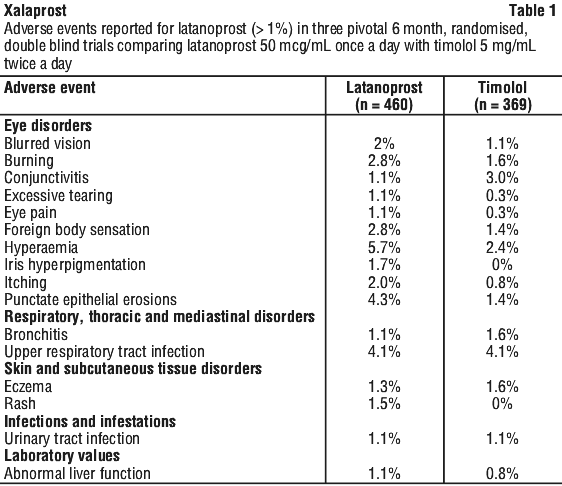
Very common (> 10% patients). Ocular. Increased iris pigmentation; eye irritation (burning, grittiness, itching, stinging and foreign body sensation); eyelash and vellus hair changes (pigmentation, thickening, lengthening, increased number).
Common (1-10% patients). Ocular. Mild to moderate conjunctival hyperaemia; punctate keratitis (mostly without symptoms); blepharitis; eye pain; conjunctivitis; vision blurred; eyelid oedema; localised skin reaction on the eyelids.
Musculoskeletal and connective tissue disorders. Myalgia, arthralgia.
Nervous system disorders. Dizziness; headache.
Skin and subcutaneous tissue disorders. Skin rash.
Uncommon (< 1% patients). Ocular. Iritis/ uveitis; keratitis; macular oedema including cystoid macular oedema, photophobia.
General disorders and administration site conditions. Nonspecific chest pain.
Respiratory, thoracic and mediastinal disorders. Asthma; dyspnoea.
Rare (< 0.1% patients). Ocular. Symptomatic corneal oedema and erosions; periorbital oedema; darkening of the palpebral skin of the eyelids; periorbital and lid changes; resulting in deepening of the eyelid sulcus; trichiasis.
Respiratory, thoracic and mediastinal disorders. Asthma aggravation; acute asthma attacks.
Infections and infestations. Herpetic keratitis.
Additional information for selected adverse reactions. Iris pigmentation changes. Latanoprost eye drops may cause an increase in brown pigmentation of the iris, predominantly in patients with mixed coloured irides (i.e. blue brown, grey brown, green brown, yellow brown). This is due to increased melanin content in the stromal melanocytes of the iris (see Section 4.4 Special Warnings and Precautions for Use).
Macular oedema. Macular oedema has been reported uncommonly during latanoprost eye drop treatment. These reports have mainly occurred in aphakic patients, in pseudophakic patients with torn posterior lens capsule or anterior chamber lens, or in patients with known risk factors for cystoid macular oedema (such as diabetic retinopathy and retinal vein occlusion). An association between the use of latanoprost eye drops and unexplained macular oedema cannot be excluded (see Section 4.4 Special Warnings and Precautions for Use).
Iritis/ uveitis. Cases of iritis/ uveitis have been uncommonly reported. The majority of patients in these cases had concomitant predisposing factors for developing iritis/ uveitis.
Asthma/ dyspnoea. Cases of asthma and dyspnoea have been uncommonly reported. Rare cases of asthma aggravation and acute asthma attacks have also been reported. There is limited experience from patients with asthma, but latanoprost has not been found to affect the pulmonary function when studied in a small number of steroid and nonsteroid treated patients suffering from moderate asthma. There is no experience in patients with severe or brittle asthma and such patients should therefore be treated with caution until there is sufficient experience.
Post-marketing experience. Eye disorders. Pseudopemphigoid of ocular conjunctiva, iris cyst.
Cardiac disorders. Angina, palpitations, angina unstable.
Gastrointestinal disorders. Nausea; vomiting.
Skin and subcutaneous tissue disorders. Pruritus.
Adverse reactions for eyedrops containing phosphate buffers. Cases of corneal calcification have been reported very rarely in association with the use of phosphate containing eye drops in some patients with significantly damaged corneas.
Reporting suspected adverse effects. Reporting suspected adverse reactions after registration of the medicinal product is important. It allows continued monitoring of the benefit-risk balance of the medicinal product. Healthcare professionals are asked to report any suspected adverse reactions at www.tga.gov.au/reporting-problems.
4.9 Overdose
Symptoms. Apart from ocular irritation and conjunctival or episcleral hyperaemia, the ocular effects of latanoprost administered at high doses are not known.
Treatment. If overdosage with Xalaprost occurs, treatment should be symptomatic and supportive. If Xalaprost is accidentally ingested the following information may be useful: one bottle contains 125 micrograms latanoprost. More than 90% is metabolised during the first pass through the liver. Intravenous infusion of 3 micrograms/kg in healthy volunteers induced no symptoms but a dose of 5.5-10 micrograms/kg caused nausea, abdominal pain, dizziness, fatigue, hot flushes and sweating. In patients with bronchial asthma bronchoconstriction was not induced by latanoprost when applied topically on the eyes in a dose of seven times the clinical dose of latanoprost eye drops.
For information on the management of overdose, contact the Poisons Information Centre on 13 11 26 (Australia).
5 Pharmacological Properties
5.1 Pharmacodynamic Properties
Mechanism of action. Latanoprost, a selective prostaglandin F2α analogue, is a selective prostanoid FP receptor agonist which reduces the intraocular pressure by increasing the outflow of aqueous humour. Reduction of the intraocular pressure in man starts about three to four hours after administration and maximum effect is reached after 8 to 12 hours. Pressure reduction is maintained for at least 24 hours.
Studies in animals and man indicate that the main mechanism of action is increased uveoscleral outflow, although some increase in outflow facility (decrease in outflow resistance) has been reported in man.
Clinical trials have shown that latanoprost has no significant effect on the production of aqueous humour. Latanoprost has not been found to have any effect on the blood aqueous barrier.
Latanoprost has no or negligible effects on the intraocular blood circulation when used at the human clinical dose, as studied in monkeys. However, mild to moderate conjunctival or episcleral hyperaemia may occur during topical treatment.
Chronic treatment with latanoprost in monkey eyes which had undergone extracapsular lens extraction did not affect the retinal blood vessels as determined by fluorescein angiography.
Latanoprost has not induced fluorescein leakage in the posterior segment of pseudophakic human eyes during short-term treatment.
Latanoprost in clinical doses has not been found to have any significant pharmacological effects on the cardiovascular or respiratory systems.
Clinical trials. Efficacy. In three pivotal, randomised, double blind, parallel group trials latanoprost 50 micrograms/mL once a day was compared with timolol 5 mg/mL twice a day. Across the three trials, 460 patients received latanoprost and 369 received timolol. At 6 months latanoprost reduced intraocular pressure (IOP) by 27-34% from the untreated baseline of 24.4-25.2 mmHg and timolol reduced IOP by 20-33% from a baseline of 24.1-25.4 mmHg. In one of these three studies, the difference between the reduction in IOP by latanoprost versus timolol was statistically significant (p < 0.001). A meta-analysis of the three trials demonstrated that of the intention to treat population, 61% of latanoprost treated patients, compared with 40% of timolol treated patients, reached a 30% reduction in diurnal IOP after 6 months. No tolerance to the effect of latanoprost was seen after 12 months in these trials.
The pivotal studies have demonstrated that latanoprost is effective as monotherapy. In addition, latanoprost is effective as adjunctive therapy in reduction of IOP.
Short-term (1 or 2 week) studies suggest the effect of latanoprost is additive in combination with adrenergic agonists (dipivefrine hydrochloride), carbonic anhydrase inhibitors (acetazolamide) and at least partly additive with cholinergic agonists (pilocarpine). Although intended primarily as a safety study, IOP reduction was effectively maintained over 48 months in a clinical trial of 356 patients receiving latanoprost as adjunctive therapy to various medications including β-adrenergic antagonists, adrenergic agonists, cholinergic agonists and carbonic anhydrase inhibitors. Out of 519 patients at study start, only 7 patients were withdrawn from the study due to uncontrolled IOP.
Clinical trials involving a fixed combination of latanoprost 50 micrograms/mL and timolol 5 mg/mL given once daily have also been conducted. The mean diurnal IOP lowering effect of the combination was greater than that produced by monotherapy with either latanoprost 50 micrograms/mL once daily or timolol 5 mg/mL bd.
Safety. Long-term safety of latanoprost has been investigated in an open label, multicentre, safety study. This trial enrolled 519 patients, 356 of whom continued for 48 months. Iris pigmentation changes have been observed in patients of the pivotal clinical trials of latanoprost (also see Section 4.4 Special Warnings and Precautions for Use; Section 4.8 Adverse Effects (Undesirable Effects)). The long-term safety study has shown that this change is not associated with any increased risk of clinically significant ocular or systemic effects, nor is it considered to have any long-term consequences.
In those patients experiencing colour change, the time to onset of increased iris pigmentation usually occurred within 8 months of starting treatment. Within 24 months, onset had occurred in almost all of these cases. Onset after 36 months of treatment was very rare. Using iris photography, the increase in iris pigmentation was graded as 'weak' in 75 out of 124 patients (60.5%) during the first year of onset. A weak grading was maintained in 42 of these patients (33.9%) over 48 months of treatment. In those patients showing iris pigmentation progression, there was no apparent increase in iris pigmentation during the fourth year of treatment, indicating a plateau in pigmentation had been reached. A separate safety study has also shown that reintroduction of latanoprost to patients with increased iris pigmentation will not necessarily lead to a further increase in iris pigmentation severity.
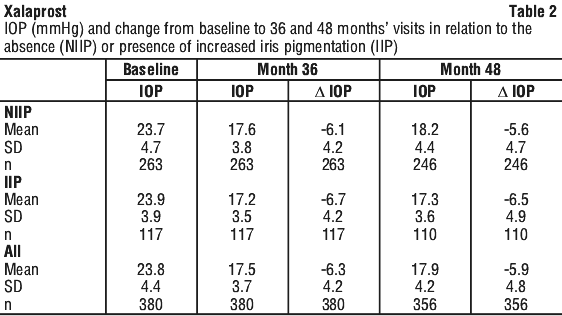
IOP reduction between patients who developed iris pigmentation, and those who did not, was shown to be comparable over 48 months. Table 2 shows the mean IOP and change from baseline in patients experiencing increased iris pigmentation (IIP) and those not experiencing increased iris pigmentation (NIIP).
5.2 Pharmacokinetic Properties
Latanoprost is an isopropyl ester prodrug which is inactive, but after hydrolysis to the acid of latanoprost, becomes biologically active.
Absorption and distribution. The prodrug is well absorbed through the cornea and all drug that enters the aqueous humour is hydrolysed during the passage through the cornea.
Studies in man indicate that the peak concentration in the aqueous humour is reached about two hours after topical administration. After topical application in monkeys latanoprost is distributed primarily in the anterior segment, the conjunctivae and the eye lids. Only minute quantities of the drug reach the posterior segment.
Following an ocular dose of latanoprost, 45% of latanoprost acid is absorbed systemically, with 90% being bound to plasma proteins.
Metabolism. There is practically no metabolism of the acid of latanoprost in the eye. The main metabolism occurs in the liver. Following intravenous administration in man, the half-life in plasma is 17 minutes.
Excretion. The main metabolites, the 1,2-dinor and 1,2,3,4-tetranor metabolites, exert no or only weak biological activity in animal studies and are excreted primarily in the urine.
5.3 Preclinical Safety Data
Genotoxicity. Latanoprost was not mutagenic in gene mutation assays in bacteria and mouse lymphoma L5178Y cells and was negative in studies of unscheduled DNA synthesis. Chromosome aberrations were observed with human lymphocytes in vitro but latanoprost did not induce micronucleus formation in vivo.
Carcinogenicity. Latanoprost was not carcinogenic in either rats or mice when administered by oral gavage at doses up to 170 micrograms/kg/day for 24 and 20 months respectively.
Animal toxicity. The ocular as well as systemic toxicity of latanoprost has been investigated in several animal species. Intravenous acute toxicity studies (2 mg/kg) and oral acute toxicity studies (50 mg/kg) in rats and mice resulted in no mortality. Latanoprost, 2-6 micrograms/kg bodyweight, administered intravenously to unanaesthetised monkeys have been shown to increase the respiration rate probably reflecting bronchoconstriction of short duration.
In animal studies latanoprost has not been found to have sensitising properties.
In the eye no significant toxic effects have been detected with doses of up to 100 micrograms/eye/day in rabbits or monkeys (clinical dose is approximately 1.5 micrograms/eye/day). In monkeys, however, latanoprost has been shown to induce increased pigmentation of the iris. The mechanism of increased pigmentation seems to be stimulation of melanin production in melanocytes of the iris with no proliferative changes observed. The change in iris colour may be permanent.
In chronic ocular toxicity studies, administration of latanoprost at 6 micrograms/eye/day has also been shown to induce increased palpebral fissure. This effect is reversible and occurs at doses above the clinical dose level. The effect has not been seen in humans.
6 Pharmaceutical Particulars
6.1 List of Excipients
The excipients in Xalaprost are benzalkonium chloride (as a preservative), dibasic sodium phosphate, hydrochloric acid, monobasic sodium phosphate monohydrate, sodium chloride, sodium hydroxide, water for injections.
6.2 Incompatibilities
In vitro studies have shown that precipitation occurs when eye drops containing thiomersal are mixed with latanoprost eye drops. If such drugs are used the eye drops should be administered with an interval of at least five minutes.
6.3 Shelf Life
In Australia, information on the shelf life can be found on the public summary of the Australian Register of Therapeutic Goods (ARTG). The expiry date can be found on the packaging.
6.4 Special Precautions for Storage
Before opening. Store at 2°C to 8°C. Protect from light. Do not freeze.
After opening. Store below 25°C. Protect from light. Do not freeze. Discard 4 weeks after opening.
6.5 Nature and Contents of Container
Container type: Bottle (LDPE).
Pack sizes: 1 x 2.5 mL (5 mL bottle).
Australian register of therapeutic goods (ARTG). AUST R 217151 - Xalaprost latanoprost 50 microgram/mL eye drops bottle.
6.6 Special Precautions for Disposal
In Australia, any unused medicine or waste material should be disposed of by taking it to your local pharmacy.
6.7 Physicochemical Properties
Chemical structure.
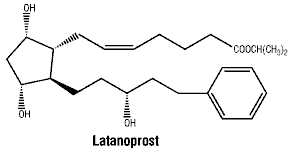
Sixty four isomers of latanoprost are possible, however, for Xalaprost it is purified as a single isomer.
Xalaprost is a sterile, isotonic solution, pH 6.7. Chemical name: isopropyl-(Z)-7[(1R,2R,3R,5S) 3,5-dihydroxy-2-[(3R)-3- hydroxy-5-phenyl-1-pentyl]cyclopentyl]-5-heptenoate.
Molecular formula: C26H40O5.
Molecular weight: 432.58.
CAS number. 130209-82-4.
7 Medicine Schedule (Poisons Standard)
S4 (Prescription Only Medicine).
Date of First Approval
09 September 2014
Date of Revision
23 March 2023
Summary Table of Changes

Reasonable care is taken to provide accurate information at the time of creation. This information is not intended as a substitute for medical advice and should not be exclusively relied on to manage or diagnose a medical condition. The Australian Commission on Safety and Quality in Health Care disclaims all liability (including for negligence) for any loss, damage, injury or any other negative effects resulting from reliance on or use of this information. Read our full disclaimer. This website uses cookies. Read our privacy policy.