
Xylocaine 2% Jelly
Brand Information
| Brand name | Xylocaine 2% Jelly |
| Active ingredient | Lidocaine (lignocaine) hydrochloride |
| Schedule | S2 |
Consumer Medicine Information (CMI) leaflet
Please read this leaflet carefully before you start using the Xylocaine 2% Jelly.
Summary CMI
XYLOCAINE 2% jelly
Consumer Medicine Information (CMI) summary
The full CMI on the next page has more details. If you are worried about using this medicine, speak to your doctor or pharmacist.
1. Why am I using XYLOCAINE 2% jelly?
XYLOCAINE 2% jelly contains the active ingredient lidocaine hydrochloride. XYLOCAINE 2% jelly is used to prevent pain and discomfort during medical tests and procedures.
For more information, see Section 1. Why am I using XYLOCAINE 2% jelly? in the full CMI.
2. What should I know before I use XYLOCAINE 2% jelly?
Do not use if you have ever had an allergic reaction to lidocaine hydrochloride, any other local anaesthetic or substances or any of the ingredients listed at the end of the CMI.
Talk to your doctor if you have any other medical conditions, take any other medicines, or are pregnant or plan to become pregnant or are breastfeeding.
For more information, see Section 2. What should I know before I use XYLOCAINE 2% jelly? in the full CMI.
3. What if I am taking other medicines?
Some medicines may interfere with XYLOCAINE 2% jelly and affect how it works.
A list of these medicines is in Section 3. What if I am taking other medicines? in the full CMI.
4. How XYLOCAINE 2% jelly is given?
- XYLOCAINE 2% jelly will be given to you by your doctor or nurse. More instructions can be found in Section 4. How XYLOCAINE 2% jelly is given? in the full CMI.
5. What should I know while receiving XYLOCAINE 2% jelly?
| Things you should do |
|
| Things you should not do |
|
| Driving or using machines |
|
| Looking after your medicine |
|
For more information, see Section 5. What should I know while receiving XYLOCAINE 2% jelly? in the full CMI.
6. Are there any side effects?
Tell your doctor or pharmacist as soon as possible if you do not feel well while you are using XYLOCAINE 2% jelly.
Some of the mild side effects include sore throat following use in the mouth or throat, skin rash or irritation and drowsiness. Some of the serious side effects include wheezing or difficulty breathing, chest pain, severe rash or itching, increased swea ting, dizziness, confusion, numbness, blurred vision, vomiting, drowsiness and sensations of heat or cold.
For more information, including what to do if you have any side effects, see Section 6. Are there any side effects? in the full CMI.
Full CMI
XYLOCAINE 2% jelly
Active ingredient: lidocaine hydrochloride
Consumer Medicine Information (CMI)
This leaflet provides important information about using XYLOCAINE 2% jelly.
You should also speak to your doctor or pharmacist if you would like further information or if you have any concerns or questions about using XYLOCAINE 2% jelly.
Where to find information in this leaflet:
1. Why am I using XYLOCAINE 2% jelly?
2. What should I know before I use XYLOCAINE 2% jelly?
3. What if I am taking other medicines?
4. How XYLOCAINE 2% jelly is given?
5. What should I know while receiving XYLOCAINE 2% jelly?
6. Are there any side effects?
7. Product details
1. Why am I using XYLOCAINE 2% jelly?
XYLOCAINE 2% jelly contains the active ingredient lidocaine hydrochloride.
XYLOCAINE 2% jelly belongs to a group of medicines called local anaesthetics. It works by making the nerves unable to pass messages to the brain. The jelly also acts as a lubricant.
XYLOCAINE 2% jelly is used to prevent pain and discomfort during medical tests and procedures. Your doctor will explain the tests which will be carried out and the reason for them.
Follow all directions given to you by your doctor carefully.
They may differ from the information contained in this leaflet.
Ask your doctor if you want more information.
Your doctor may prescribe this medicine for another use. XYLOCAINE 2% jelly is not addictive.
2. What should I know before I use XYLOCAINE 2% jelly?
Warnings
Do not use XYLOCAINE 2% jelly if:
- you are allergic to lidocaine hydrochloride, any other local anaesthetics or substances or any of the ingredients listed at the end of this leaflet. If you have an allergic reaction, you may get a skin rash, hayfever, asthma or feel faint.
- the packaging is torn or shows signs of tampering
- the expiry date on the pack has passed.
Check with your doctor if you:
- have or have had any of the following medical conditions:
- epilepsy
- heart problems
- liver problems
- kidney problems
- open wounds or infection where the jelly will be used.
It may not be safe for you to use XYLOCAINE 2% jelly if you have any of these conditions.
During treatment, you may be at risk of developing certain side effects. It is important you understand these risks and how to monitor for them. See additional information under Section 6. Are there any side effects?
Pregnancy and breastfeeding
Do not use XYLOCAINE 2% jelly if you are pregnant or breastfeeding unless your doctor says to do so. Ask your doctor about the risks and benefits involved.
There is no evidence available at the moment to show that being given XYLOCAINE 2% jelly under your doctor's instructions is harmful to unborn babies.
Your baby can take in very small amounts of XYLOCAINE 2% jelly from breast milk if you are breastfeeding. It is unlikely that the amount available to the baby will do any harm.
3. What if I am taking other medicines?
Tell your doctor or pharmacist if you are taking any other medicines, including any medicines, vitamins or supplements that you buy without a prescription from your pharmacy, supermarket or health food shop.
These medicines may affect the way XYLOCAINE 2% jelly works.
Check with your doctor or pharmacist if you are not sure about what medicines, vitamins or supplements you are taking and if these affect XYLOCAINE 2% jelly.
4. How XYLOCAINE 2% jelly is given?
How XYLOCAINE 2% jelly is administered
XYLOCAINE 2% jelly will be given to you by your doctor or nurse. Your doctor or pharmacist may also suggest that you buy it without a prescription.
XYLOCAINE 2% jelly is given before a procedure to prevent discomfort or applied to the end of medical instruments for lubrication.
The maximum dose of jelly is 30 mL (600 mg) in a 12 hour period.
If you use too much XYLOCAINE 2% jelly
If you think that you have used too much XYLOCAINE 2% jelly, you may need urgent medical attention.
You should immediately:
- phone the Poisons Information Centre
(by calling 13 11 26), or - contact your doctor, or
- go to the Emergency Department at your nearest hospital.
You should do this even if there are no signs of discomfort or poisoning.
XYLOCAINE 2% jelly can be absorbed into the blood. Very large amounts of it are needed to give an overdose.
Signs of overdose include dizziness, blurred vision, tremor or nervousness.
5. What should I know while receiving XYLOCAINE 2% jelly?
Things you should do
- Remove any excess jelly as absorption from mucous membranes is relatively high.
- Remind any doctor, dentist or pharmacist you visit that you are using XYLOCAINE 2% jelly.
Things you should not do
Do not eat or drink anything for at least 1 hour after using XYLOCAINE 2% jelly in the mouth or throat area.
You may swallow your food the wrong way or burn or bite your mouth.
Driving or using machines
Be careful driving or operating machinery after you have used or have been given XYLOCAINE 2% jelly.
You may be drowsy and your reflexes may be slow.
Looking after your medicine
- Keep XYLOCAINE 2% jelly in the pack until it is time to use it.
- Store it in a cool dry place where the temperature stays below 25°C.
- Store it away from moisture, heat or sunlight; for example, do not store it:
- in the bathroom or near a sink, or
- in the car or on window sills.
Heat and dampness can destroy some medicines.
Keep it where young children cannot reach it.
Getting rid of any unwanted medicine
Ask your pharmacist what to do with any medicine you have left over if your doctor tells you to stop using it, or you find that the expiry date has passed.
6. Are there any side effects?
Tell your doctor or pharmacist as soon as possible if you do not feel well while you are using XYLOCAINE 2% jelly.
XYLOCAINE 2% jelly will help to relieve pain and discomfort in most people, but it may have unwanted side-effects in a few people.
All medicines can have side effects. If you do experience any side effects, most of them are minor and temporary. However, some side effects may need medical attention.
See the information below and, if you need to, ask your doctor or pharmacist if you have any further questions about side effects.
Less serious side effects
| Less serious side effects | What to do |
| Speak to your doctor if you have any of these mild side effects and they worry you. These are all mild side effects of XYLOCAINE 2% jelly. |
Serious side effects
| Serious side effects | What to do |
| Call your doctor or go straight to the Emergency Department at your nearest hospital if you notice any of these serious side effects. You may need urgent medical attention. Serious side effects are rare. |
XYLOCAINE 2% jelly can pass into the bloodstream, although this is extremely unlikely to happen in high enough amounts from XYLOCAINE 2% jelly to cause any problems. In high doses, serious side effects may occur. These include:
| Call your doctor or go straight to the Emergency Department at your nearest hospital if you notice any of these serious side effects. You may need urgent medical attention. These serious side effects are very rare. |
Tell your doctor or pharmacist if you notice anything else that may be making you feel unwell.
Other side effects not listed here may occur in some people.
Reporting side effects
After you have received medical advice for any side effects you experience, you can report side effects to the Therapeutic Goods Administration online at www.tga.gov.au/reporting-problems. By reporting side effects, you can help provide more information on the safety of this medicine.
Always make sure you speak to your doctor or pharmacist before you decide to stop taking any of your medicines.
7. Product details
This medicine is available without a doctor's prescription.
It can be purchased at a pharmacy.
What XYLOCAINE 2% jelly contains
| Active ingredient (main ingredient) |
|
| Other ingredients (inactive ingredients) |
|
| Potential allergens |
|
Do not take this medicine if you are allergic to any of these ingredients.
What XYLOCAINE 2% jelly looks like
XYLOCAINE 2% jelly is a clear to almost clear, slightly coloured, highly viscous liquid, packed in a 30 g aluminium tube. The tube is enclosed in a clear blister and includes one single use disposable nozzle. It is supplied for single use only.
XYLOCAINE 2% jelly is sterile, until opened. Australian Registration number: AUST R 12026
Who distributes XYLOCAINE 2% jelly
Aspen Pharmacare Australia Pty Ltd
34-36 Chandos St
St Leonards NSW 2065
Australia
This leaflet was revised in June 2025.
Brand Information
| Brand name | Xylocaine 2% Jelly |
| Active ingredient | Lidocaine (lignocaine) hydrochloride |
| Schedule | S2 |
MIMS Revision Date: 01 September 2024
1 Name of Medicine
Lidocaine.
2 Qualitative and Quantitative Composition
Each gram of Xylocaine 2% Jelly contains lidocaine hydrochloride 21.3 mg (equivalent to lidocaine hydrochloride anhydrous 20 mg).
Excipients with known effect include methyl hydroxybenzoate and propyl hydroxybenzoate. For the full list of excipients, see Section 6.1 List of Excipients.
3 Pharmaceutical Form
Xylocaine 2% Jelly is a topical, sterile, anaesthetic for urological and endoscopic procedures and lubrication of endotracheal tubes and endoscopes.
It is a clear to almost clear, slightly coloured, highly viscous liquid.
4 Clinical Particulars
4.1 Therapeutic Indications
Surface anaesthesia and lubrication:
of the male and female urethra during cystoscopy, catheterisation, exploration by sound and other endourethral operations;
of nasal and pharyngeal cavities in endoscopic procedures such as gastroscopy and bronchoscopy;
during proctoscopy and rectoscopy;
during intubation.
For the relief of pain after circumcision in children.
4.2 Dose and Method of Administration
As with any local anaesthetic, reactions and complications are best averted by employing the minimum effective dosage. Debilitated or elderly patients and children should be given doses commensurate with their age and physical condition.
The dose of topical lidocaine should be taken into consideration in estimating the total dose of lidocaine if parenteral lidocaine is to be administered concomitantly.
The following dosage recommendations should be regarded as a guide. The clinician's experience and knowledge of the patient's physical status are of importance in calculating the required dose. 1 mL of Xylocaine 2% Jelly is approximately equal to 1 g of Xylocaine 2% Jelly.
Urethral anaesthesia. Surface anaesthesia of the male adult urethra. The usual dose required for adequate analgesia in males is 20 mL jelly (= 400 mg lidocaine hydrochloride).
The jelly is instilled slowly into the urethra until it reaches the external sphincter, proximal to the prostate, where a certain resistance is felt. A penile clamp is then applied for several minutes at the corona. The remaining jelly is administered, filling the length of the urethra.
For procedures such as sounding or cystoscopy, a larger quantity of jelly (up to 40 mL) may be required. This amount should be instilled in 3 to 4 portions and anaesthesia allowed to take effect for 5 - 10 minutes before insertion of the instrument.
Surface anaesthesia of the female adult urethra. Instill 5 - 10 mL in small portions to fill the whole urethra. In order to obtain adequate anaesthesia, 3 to 5 minutes should be allowed prior to performing urological procedures.
Endoscopy (upper and lower airways and rectal). Instillation of 10 - 20 mL into the appropriate body cavity is recommended for adequate analgesia, and a small amount should be applied to lubricate the endoscope. When combined with other lidocaine products, the total dose should not exceed 400 mg.
Lubrication for endotracheal intubation. About 2 mL applied to the surface of the tube just prior to insertion. Care should be taken to avoid introducing the product into the lumen of the tube (see Section 4.4 Special Warnings and Precautions for Use).
Children. In children under the age of 12 years, up to 6 mg/kg can be used.
4.3 Contraindications
Known history of hypersensitivity to local anaesthetics of the amide type or other components of the jelly.
Hypersensitivity to methyl and/or propyl hydroxybenzoate or to their metabolite para-aminobenzoic acid.
4.4 Special Warnings and Precautions for Use
Warning. Excessive dosage, or short intervals between doses, can result in high levels of lidocaine or its metabolites and serious adverse effects. Patients should be instructed to strictly adhere to the recommended dosage and administration guidelines (the management of serious adverse reactions may require the use of resuscitative equipment, oxygen and other resuscitative drugs).
The lowest dose that results in effective anaesthesia should be used to avoid high plasma levels and serious adverse effects. Tolerance to elevated blood levels varies with the status of the patient.
Dose reduction. Debilitated, elderly and/or acutely ill patients and children should be given reduced doses commensurate with their age and physical status.
Excessive absorption. Absorption from wound surfaces and mucous membranes is relatively high, especially in the bronchial tree. Because of the possibility of significant systemic absorption, Xylocaine 2% Jelly should be used with caution in patients with traumatised mucosa and/or sepsis in the region of the proposed application.
If the dose or site of administration is likely to result in high blood levels, lidocaine, in common with other local anaesthetics, should be used with caution in patients with epilepsy, impaired cardiac conduction, bradycardia, impaired hepatic function, severe shock and patients with severe renal dysfunction.
Eating and drinking. The use of topical anaesthetic agents in the oral cavity may interfere with swallowing and thus enhance the danger of aspiration of food or drink. For this reason, food or drink should not be ingested within 60 minutes of using local anaesthetics in the mouth or throat area. Numbness of the tongue or buccal mucosa may increase the danger of biting or heat trauma. Food, chewing gum or hot drinks should not be taken while the mouth or throat area is anaesthetised.
Endotracheal tube lubrication. When used for endotracheal tube lubrication, care should be taken to avoid introduction of the jelly into the lumen of the tube. The jelly may dry on the inner surface leaving a residue which tends to clump with flexion, narrowing the lumen. It has been reported rarely that this residue has caused the lumen to occlude.
Antiarrhythmic drugs class III. Patients treated with antiarrhythmic drugs class III (e.g. amiodarone) should be kept under close surveillance and ECG monitoring considered, since cardiac effects may be additive.
Porphyric patients. Xylocaine 2% Jelly is probably porphyrinogenic and should only be used on patients with acute porphyria where there are strong or urgent indications. Appropriate precautions should be taken for all porphyric patients.
Use in hepatic impairment. See Section 4.4 Special Warnings and Precautions for Use, Excessive absorption.
Use in renal impairment. See Section 4.4 Special Warnings and Precautions for Use, Excessive absorption.
Use in the elderly. See Section 4.4 Special Warnings and Precautions for Use, Dose reduction.
Paediatric use. See Section 4.2 Dose and Method of Administration.
Effects on laboratory tests. No data available.
4.5 Interactions with Other Medicines and Other Forms of Interactions
Antiarrhythmic drugs. Lidocaine should be used with caution in patients receiving antiarrhythmic drugs, such as mexiletine, since the toxic effects are additive.
Specific interaction studies with lidocaine and antiarrhythmic drugs class III (e.g. amiodarone) have not been performed, but caution is advised.
Enzyme inducing drugs. Drugs that reduce the clearance of lidocaine (e.g. cimetidine or β-blockers) may cause potentially toxic plasma concentrations when lidocaine is given in repeated high doses over a long time period. Caution should be taken if administered concurrently with lidocaine. However, such interactions should be of no clinical importance following short-term treatment with Xylocaine 2% Jelly at recommended doses.
Phenytoin and other antiepileptic drugs such as phenobarbitone, primidone and carbamazepine, appear to enhance the metabolism of lidocaine but the significance of this effect is not known. Phenytoin and lidocaine have additive cardiac depressant effects.
4.6 Fertility, Pregnancy and Lactation
Effects on fertility. No data available.
Use in pregnancy. (Category A)
Lidocaine crosses the placental barrier and may be taken up by foetal tissues. When used for surface anaesthesia lidocaine blood levels after normal doses are low so little drug is available for placental transfer.
There are, however, no adequate and well-controlled studies in pregnant women. Reproduction studies have been performed in rats at doses up 500 mg/kg/day and have revealed no evidence of harm to the foetus caused by lidocaine.
It is reasonable to assume that a large number of pregnant women and women of childbearing age have used lidocaine. No specific disturbances to the reproduction process have so far been reported.
Use in lactation. Lidocaine enters breast milk, but in such small quantities that there is generally no risk of affecting the child at therapeutic dose levels.
4.7 Effects on Ability to Drive and Use Machines
Depending on the dose, local anaesthetics may have a very mild effect on mental function and may temporarily impair locomotion and coordination.
4.8 Adverse Effects (Undesirable Effects)
Reporting suspected adverse effects. Reporting suspected adverse reactions after registration of the medicinal product is important. It allows continued monitoring of the benefit-risk balance of the medicinal product. Healthcare professionals are asked to report any suspected adverse reactions at www.tga.gov.au/reporting-problems.
Systemic adverse reactions are rare and may result from high plasma levels due to excessive dosage or rapid absorption, or may result from hypersensitivity, idiosyncrasy or reduced tolerance on the part of the patient. Such reactions are systemic in nature and involve the central nervous system and/or the cardiovascular system.
Central nervous system. CNS reactions are excitatory and/or depressant and may be characterised by lightheadedness, nervousness, apprehension, euphoria, confusion, dizziness, drowsiness, tinnitus, blurred vision, vomiting, sensation of heat, cold or numbness, twitching, tremors, convulsions, unconsciousness and possibly respiratory arrest. The excitatory reactions may be brief or may not occur at all, in which case the first manifestations of toxicity may be drowsiness, progressing to unconsciousness and respiratory arrest.
Drowsiness following administration of lidocaine is usually an early sign of a high blood level of the drug and may occur as a result of rapid absorption.
Cardiovascular. Cardiovascular reactions are depressant and may be characterised by hypotension, myocardial depression, bradycardia and possibly cardiac arrest.
Allergic reactions. Allergic reactions may occur as a result of sensitivity either to the local anaesthetic agent or to other ingredients in the formulation. Allergic reactions as a result of sensitivity to lidocaine are rare. The detection of sensitivity by skin testing is of doubtful value.
The extremely rare cases of allergy to local anaesthetic preparations have included bronchospasm, chest pain, dyspnoea, pruritus, rash, rhinitis, increased sweating, urticaria, sleepiness, dizziness, paraesthesia, oedema, and in the most severe instances, anaphylactic shock.
Local reactions. An increased incidence of postoperative 'sore throat' has been reported following endotracheal tube lubrication with Xylocaine 2% Jelly.
There have been rare reports of endotracheal tube occlusion associated with the presence of dried jelly residue in the inner lumen of the tube (see Section 4.4 Special Warnings and Precautions for Use).
4.9 Overdose
For information on the management of overdose, contact the Poisons Information Centre on 13 11 26 (Australia).
Management of local anaesthetic emergencies. The first consideration is prevention, best accomplished by careful and constant monitoring of cardiovascular and respiratory vital signs and the patient's state of consciousness after each local anaesthetic administration. At the first sign of change, oxygen should be administered.
Treatment. If convulsions occur then immediate attention is required for the maintenance of a patent airway and assisted or controlled ventilation with oxygen, via a positive airway pressure delivery system mask. Adequacy of the circulation should then be evaluated, bearing in mind that drugs used to treat convulsions depress the circulation when administered IV.
Should convulsions persist despite adequate respiratory support, and if the status of the circulation permits, appropriate anticonvulsant medication such as an ultrashort acting barbiturate or a benzodiazepine, may be administered IV. The clinician should be familiar with these anticonvulsant drugs prior to use of local anaesthetics.
Dialysis is of negligible value in the treatment of acute overdosage with lidocaine.
5 Pharmacological Properties
5.1 Pharmacodynamic Properties
Mechanism of action. Lidocaine, the active ingredient of Xylocaine 2% Jelly, stabilises the neuronal membrane and prevents the initiation and conduction of nerve impulses, thereby effecting local anaesthetic action.
Xylocaine 2% Jelly provides prompt anaesthesia of mucous membranes and lubrication which reduces friction.
Xylocaine 2% Jelly is ineffective when applied to intact skin.
Its water miscible base, characterised by high viscosity and low surface tension, brings the anaesthetic into intimate and prolonged contact with the tissue giving effective anaesthesia of short duration (approx. 20 - 30 minutes.).
Blood concentrations of lidocaine after instillation in the urethra of doses up to 800 mg are low and well below toxic levels.
Clinical trials. No data available.
5.2 Pharmacokinetic Properties
Absorption. Lidocaine is absorbed following application to mucous membranes, with anaesthesia usually occurring rapidly (within 3 to 5 minutes, depending upon the area of application).
Lidocaine may be absorbed following topical administration to mucous membranes, its rate of absorption and amount of dose absorbed depending upon concentration and total dose administered, the specific site of application and duration of exposure. In general, the rate of absorption occurs most rapidly after intratracheal administration. Lidocaine is well absorbed from the gastrointestinal tract, but little intact drug appears in the circulation because of biotransformation in the liver.
Metabolism. Lidocaine is metabolised rapidly by the liver and metabolites and unchanged drug are excreted by the kidney.
Excessive blood levels may cause changes in cardiac output, total peripheral resistance and mean arterial pressure. These changes may be attributable to a direct depressant effect of the anaesthetic agent on various components of the cardiovascular system.
Biotransformation includes oxidative N-dealkylation, ring hydroxylation, cleavage of the amide linkage and conjugation. The pharmacological / toxicological actions of the metabolites are similar to, but less potent than, those of lidocaine. Approximately 90% of lidocaine is excreted in the form of various metabolites, and less than 10% is excreted unchanged in urine. The primary metabolite in urine is a conjugate of 4-hydroxy-2,6-dimethylaniline.
The plasma binding of lidocaine is dependent on drug concentration, and the fraction bound decreases with increasing concentration. At concentrations of 1 to 4 microgram of free base/mL, 60 to 80% of lidocaine is protein bound. Binding is also dependent on the plasma concentrations of the alpha-1-acid glycoprotein.
Lidocaine crosses the blood-brain and placental barriers, presumably by passive diffusion.
Studies of lidocaine metabolism following IV bolus injection have shown that the elimination half-life is usually 1.5 to 2 hours. The half-life may be prolonged 2-fold or more in patients with liver dysfunction. Renal dysfunction does not affect lidocaine kinetics but may increase the accumulation of metabolites.
Factors such as acidosis and the use of CNS stimulants and depressants affect the CNS levels of lidocaine required to produce overt systemic effects. Objective adverse manifestations become increasingly apparent with increasing venous plasma levels above 6.0 microgram free base/mL. In the rhesus monkey arterial blood levels of 18 to 21 microgram/mL have been shown to be the threshold for convulsive activity.
5.3 Preclinical Safety Data
Genotoxicity. Genotoxicity tests with lidocaine are inconclusive. In genotoxicity studies, a metabolite of lidocaine, 2,6-xylidine, showed evidence of activity in some tests but not in other tests.
Carcinogenicity. This metabolite of lidocaine, 2,6-xylidine, has been shown to have carcinogenic potential (nasal and subcutaneous tumours) in preclinical toxicological studies evaluating chronic exposure.
6 Pharmaceutical Particulars
6.1 List of Excipients
Hypromellose, methyl hydroxybenzoate, propyl hydroxybenzoate, sodium hydroxide, purified water, hydrochloric acid and sodium hydroxide.
6.2 Incompatibilities
Incompatibilities were either not assessed or not identified as part of the registration of this medicine.
6.3 Shelf Life
In Australia, information on the shelf life can be found on the public summary of the Australian Register of Therapeutic Goods (ARTG). The expiry date can be found on the packaging.
6.4 Special Precautions for Storage
Store below 25°C.
6.5 Nature and Contents of Container
Xylocaine 2% Jelly is supplied for single use as a 15 g or 30 g aluminium tube.
(Note: Not all pack sizes are marketed.)
6.6 Special Precautions for Disposal
In Australia, any unused medicine or waste material should be disposed of by taking to your local pharmacy.
6.7 Physicochemical Properties
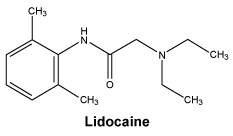
The molecular formula of lidocaine is C14H22N2O. The molecular weight is 234.3.
Chemical structure.
7 Medicine Schedule (Poisons Standard)
S2 - Pharmacy Medicine.
Date of First Approval
13 August 1991
Date of Revision
24 July 2024
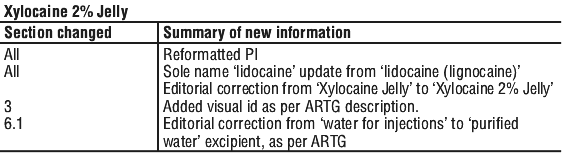
Summary Table of Changes
Reasonable care is taken to provide accurate information at the time of creation. This information is not intended as a substitute for medical advice and should not be exclusively relied on to manage or diagnose a medical condition. The Australian Commission on Safety and Quality in Health Care disclaims all liability (including for negligence) for any loss, damage, injury or any other negative effects resulting from reliance on or use of this information. Read our full disclaimer. This website uses cookies. Read our privacy policy.