
Zovirax Duo
Brand Information
| Brand name | Zovirax Duo |
| Active ingredient | Aciclovir + Hydrocortisone |
| Schedule | S3 |
No current CMI was found.
Brand Information
| Brand name | Zovirax Duo |
| Active ingredient | Aciclovir + Hydrocortisone |
| Schedule | S3 |
MIMS Revision Date: 01 August 2025
1 Name of Medicine
Hydrocortisone and aciclovir.
2 Qualitative and Quantitative Composition
Active ingredients: Hydrocortisone 1% w/w and aciclovir 5% w/w.
Excipients. For the full list of excipients, see Section 6.1 List of Excipients.
3 Pharmaceutical Form
White cream.
4 Clinical Particulars
4.1 Therapeutic Indications
Zovirax Duo is indicated for the treatment of recurrent herpes labialis (cold sores), when applied at the first signs or symptoms of a recurrence, to reduce the progression of cold sore episodes to ulcerative lesions and to shorten the healing time of ulcerative lesions in immunocompetent adults and adolescents (12 years of age and older).
4.2 Dose and Method of Administration
For topical use only.
Adults and adolescents (12 years of age and older). Zovirax Duo should be applied five times daily for 5 days at approximately four hourly intervals omitting the night time application.
Treatment should be initiated as early as possible, immediately after the first signs or symptoms.
A sufficient quantity of the cream should be applied each time to cover the affected area including the outer margin of the lesions, if present.
Treat for 5 days. If lesions are still present after 10 days, users should be advised to consult a doctor.
Users should wash their hands before and after applying the cream and avoid unnecessary rubbing of the lesions or touching them with a towel, to avoid aggravating or transferring the infection.
4.3 Contraindications
Zovirax Duo is contraindicated for use:
in patients with known history of hypersensitivity to aciclovir, valaciclovir, hydrocortisone, or any of the excipients (see Section 6.1 List of Excipients);
in skin lesions caused by any viruses other than herpes simplex, or for fungal, bacterial or parasitic skin infections.
4.4 Special Warnings and Precautions for Use
Identified precautions. For external use only: to be applied to cold sores on the lips and face. It is not recommended for application to mucous membranes (e.g. in the eye, or inside the mouth or nose). Not to be used for genital herpes. Particular care should be taken to avoid contact with the eye.
Visual disturbance may be reported with systemic and topical corticosteroid use. If a patient presents with symptoms such as blurred vision or other visual disturbances, the patient should be considered for referral to an ophthalmologist for evaluation of possible causes which may include cataract, glaucoma or rare diseases such as central serous chorioretinopathy (CSCR) which have been reported after use of systemic and topical corticosteroids.
Patients with particularly severe recurrent herpes labialis should be encouraged to seek medical advice.
Do not use with occlusive dressings, such as plasters or specialised cold sore patches/plasters.
Zovirax Duo is not recommended for use by people who know that they are immunocompromised. Such individuals should be encouraged to consult a doctor concerning the treatment of any infection.
Cold sore sufferers should be advised to avoid transmitting the virus, particularly when active lesions are present (e.g. wash hands before and after application - see Section 4.2 Dose and Method of Administration).
Long-term continuous use should be avoided. Do not use for longer than 5 days.
Contains cetostearyl alcohol, which may cause local skin irritations (e.g. contact dermatitis), and propylene glycol, which may cause skin irritation.
Use in hepatic impairment. No data available.
Use in renal impairment. No data available.
Use in the elderly. No data available.
Paediatric use. Zovirax Duo is not recommended for use in children below 12 years due to a lack of data on safety and efficacy.
Effects on laboratory tests. No data available.
4.5 Interactions with Other Medicines and Other Forms of Interactions
No clinically significant interactions have been identified.
4.6 Fertility, Pregnancy and Lactation
Effects on fertility. There are no data in humans to evaluate the effect of topical Zovirax Duo on fertility.
Use in pregnancy. (Category B3)
The use of Zovirax Duo should be considered only when the potential benefits outweigh the possibility of unknown risks. However, the systemic exposure to aciclovir and hydrocortisone from topical application of the cream is expected to be very low.
Drugs which have been taken by only a limited number of pregnant women and women of childbearing age, without an increase in the frequency of malformation or other direct or indirect harmful effects on the human foetus having been observed. Studies in animals have shown evidence of an increased occurrence of foetal damage, the significance of which is considered uncertain in humans.
Topical administration of corticosteroids to pregnant animals can cause abnormalities of foetal development. However the relevance of this finding to human beings has not been established.
A post-marketing aciclovir pregnancy registry has documented pregnancy outcomes in women exposed to any formulation of aciclovir. The registry findings have not shown an increase in the number of birth defects amongst subjects exposed to aciclovir compared with the general population and any birth defects showed no uniqueness or consistent pattern to suggest a common cause. Systemic exposure to aciclovir from topical application of aciclovir cream is very low.
Systemic administration of aciclovir in internationally accepted standard tests did not produce embryotoxic or teratogenic effects in rabbits, rats or mice.
In a non-standard test in rats, foetal abnormalities were observed but only following such high subcutaneous doses that maternal toxicity was produced. The clinical relevance of these findings is uncertain.
Use in lactation. Aciclovir and hydrocortisone pass into breast milk after systemic administration. However, the dosage received by a nursing infant following maternal use of Zovirax Duo would be insignificant.
4.7 Effects on Ability to Drive and Use Machines
No data available.
4.8 Adverse Effects (Undesirable Effects)
Reporting suspected adverse effects. Reporting suspected adverse reactions after registration of the medicinal product is important. It allows continued monitoring of the benefit-risk balance of the medicinal product. Healthcare professionals are asked to report any suspected adverse reactions at www.tga.gov.au/reporting-problems.
The following convention has been used for the classification of undesirable effects in terms of frequency: very common (≥ 1/10), common (≥ 1/100 and < 1/10), uncommon (≥ 1/1000 and < 1/100), rare (≥ 1/10,000 and < 1/1000) and very rare (< 1/10,000), including isolated reports.
Immune system disorders. Very rare: immediate hypersensitivity reactions including angioedema.
Skin and subcutaneous tissue disorders. Common: drying or flaking of the skin.
Uncommon: transient burning, tingling or stinging (following application of the product).
Itching.
Rare: erythema.
Pigmentation changes.
Contact dermatitis following application has been observed when applied under occlusion in dermal safety studies. Where sensitivity tests have been conducted, the reactive substance was hydrocortisone or a component of the cream base.
Application site reactions including signs and symptoms of inflammation.
Eye disorders. Not known: vision blurred.
Based on post-marketing experience with single active aciclovir, immediate hypersensitivity reactions including angioedema have been identified as a very rare adverse reaction.
4.9 Overdose
No untoward effects would be expected if the entire contents of a 2 g tube of Zovirax Duo were ingested orally, or applied topically due to minimal systemic exposure. In the event of a suspected overdose, patients should seek medical advice.
For information on the management of overdose, contact the Poison Information Centre on 131126 (Australia).
5 Pharmacological Properties
5.1 Pharmacodynamic Properties
Mechanism of action. Aciclovir is an antiviral agent which is highly active in vitro against herpes simplex virus (HSV) types 1 and 2. Toxicity to mammalian cells is low. Aciclovir is phosphorylated after entry into herpes-infected cells to the active compound, aciclovir triphosphate. The first step in this process is dependent on the presence of the HSV-coded enzyme, thymidine kinase. Aciclovir triphosphate acts as an inhibitor of, and substrate for, herpes-specified DNA polymerase, preventing further viral DNA synthesis without affecting normal cellular processes.
Hydrocortisone is a mild corticosteroid that exerts a range of immunomodulatory effects. When applied topically, its primary role is to control various inflammatory skin disorders.
Zovirax Duo, which combines the antiviral activity of aciclovir and the anti-inflammatory action of hydrocortisone, reduces the progression of cold sore episodes into ulcerative lesions, and also shortens lesion healing time. The exact mechanism for this is not fully characterized but is thought to be mediated through clearance of the virus and mitigating the local inflammatory response in the lip, leading to lessening of the signs and symptoms.
Clinical trials. In a double-blind, randomised clinical study, 1443 subjects with recurrent herpes labialis were treated with Zovirax Duo, aciclovir 5% in vehicle cream, or vehicle cream alone. Subjects were instructed to initiate treatment within 1 hour of noticing signs or symptoms. The primary endpoint was prevention of progression of cold sore episodes to ulcerative lesions. Among subjects treated with Zovirax Duo, 58% developed ulcerative lesions (as opposed to non-ulcerative recurrences), compared with 65% in subjects treated with aciclovir in vehicle cream (p = 0.014), and 74% in subjects treated with vehicle cream alone (p < 0.0001). Zovirax Duo, in effect, prevented a further 7% of recurrences progressing to ulcerative lesions, compared to aciclovir in vehicle cream alone. The proportion of subjects with ulcerative lesions was lower the earlier treatment was started and consistently lower in those treated with Zovirax Duo. In those subjects that developed ulcerative lesions, there was no significant difference in the mean episode duration between Zovirax Duo and aciclovir in vehicle cream, but both treatments were significantly better than vehicle cream alone (5.7 days versus 6.5 days, for Zovirax Duo and vehicle cream alone, respectively (p = 0.008)).
All treatments were well tolerated; The proportion of subjects who reported treatment-related adverse reactions in the Zovirax Duo group was low and comparable to subjects in the aciclovir 5% in vehicle cream and vehicle alone groups.
Adolescent patients. An open label safety study in adolescents with recurrent herpes labialis was conducted in 254 subjects between 12-17 years of age. Therapy was applied using the same dosage regimen as in adults, and subjects were followed for adverse events. The safety profile was similar to that observed in adults. Efficacy was not assessed.
5.2 Pharmacokinetic Properties
No clinical pharmacokinetic studies have been performed with Zovirax Duo.
Absorption. Due to limited absorption, the systemic exposure of aciclovir is expected to be low following topical administration of Zovirax Duo.
Glucocorticoids have the ability to penetrate the stratum corneum of the epidermis and affect the deeper cell layers. Usually, only a small proportion of the dose is absorbed, and it is thus not expected to affect the hormonal balance. The systemic effect of glucocorticoids can occur in the event of increased absorption (e.g. when applied on large inflamed areas of skin, or on skin of which the stratum corneum of the epidermis is damaged). Occlusive bandages increase absorption.
5.3 Preclinical Safety Data
Genotoxicity. No data available.
Carcinogenicity. No data available.
6 Pharmaceutical Particulars
6.1 List of Excipients
Propylene glycol, paraffin - soft white, cetostearyl alcohol, paraffin - liquid, poloxamer, isopropyl myristate, sodium lauryl sulphate, citric acid monohydrate, sodium hydroxide, hydrochloric acid and water - purified.
6.2 Incompatibilities
Incompatibilities were either not assessed or not identified as part of the registration of this medicine.
6.3 Shelf Life
In Australia, information on the shelf life can be found on the public summary of the Australian Register of Therapeutic Goods (ARTG). The expiry date can be found on the packaging.
6.4 Special Precautions for Storage
Store below 25°C. Do not refrigerate or freeze.
6.5 Nature and Contents of Container
Tube of 2 g.
6.6 Special Precautions for Disposal
In Australia, any unused medicine or waste material should be disposed of in accordance with local requirements.
6.7 Physicochemical Properties
Chemical structure.
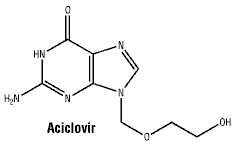
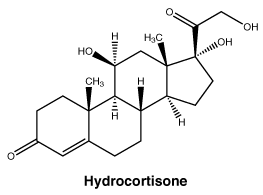
Hydrocortisone. 50-23-7.
Aciclovir: Chemical name: 9-((2-hydroxyethoxy)methyl)-guanine. Molecular formula: C8H11N5O3. MW: 225. It is a white crystalline powder slightly soluble in water and practically insoluble in most organic solvents.
Hydrocortisone: Chemical name: 11β, 17α, 21-trihydroxypregn-4-ene-3, 20-dione. Molecular formula: C21H30O5. MW: 362.5. Hydrocortisone is an odourless, white or almost white crystalline powder. It is practically insoluble in water, sparingly soluble in acetone and in alcohol, slightly soluble in methylene chloride, very slightly soluble in ether.
7 Medicine Schedule (Poisons Standard)
Schedule 3 - Pharmacist Only Medicine.
Date of First Approval
28 October 2016
Date of Revision
01 July 2024
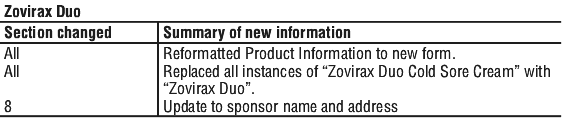
Summary Table of Changes
Reasonable care is taken to provide accurate information at the time of creation. This information is not intended as a substitute for medical advice and should not be exclusively relied on to manage or diagnose a medical condition. The Australian Commission on Safety and Quality in Health Care disclaims all liability (including for negligence) for any loss, damage, injury or any other negative effects resulting from reliance on or use of this information. Read our full disclaimer. This website uses cookies. Read our privacy policy.