2022
Fact sheet
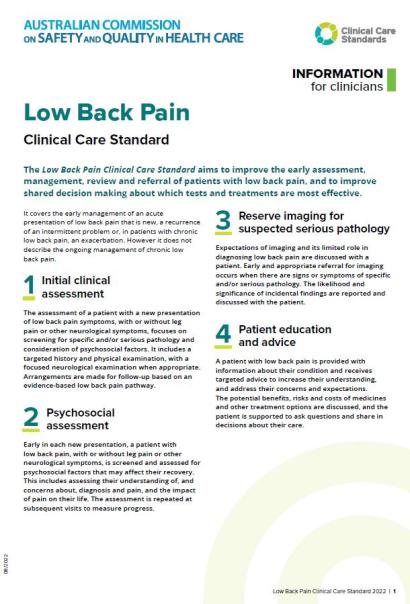
Lists the eight quality statements in the Low Back Pain Clinical Care Standard and describes what each statement means for clinicians assessing and managing people with low back pain.

Lists the eight quality statements in the Low Back Pain Clinical Care Standard and describes what each statement means for clinicians assessing and managing people with low back pain.
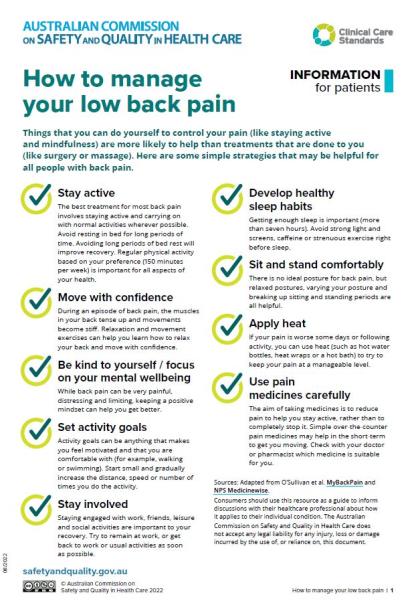
This patient information sheet provides some simple strategies that may be helpful for managing low back pain.
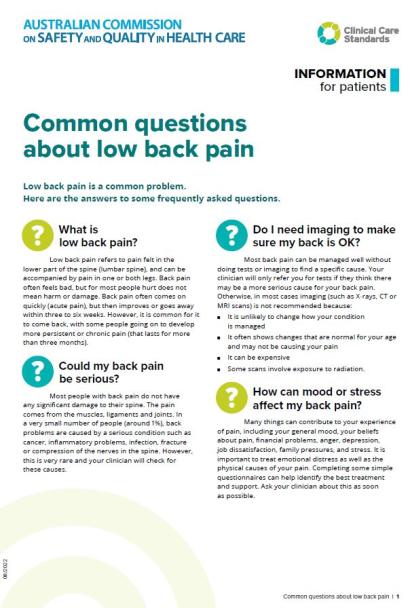
This patient information sheet provides the answers to some frequently asked questions about low back pain.
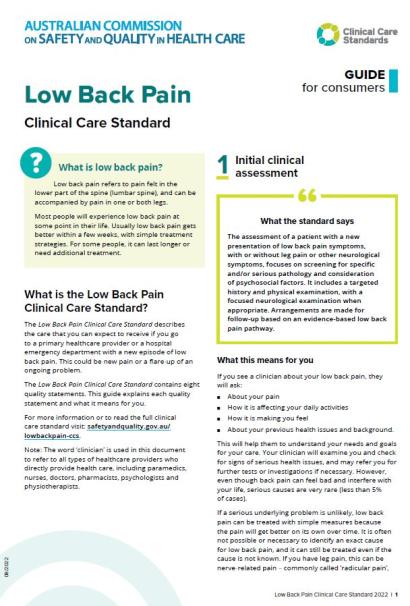
This fact sheet explains what each quality statement means for consumers, and what you can do to have an active role in your care.
The Low Back Pain Clinical Care Standard contains eight quality statements and eleven indicators to improve the early assessment, management, and review and referral of patients with low back pain.

This report summarises contemporary literature on diagnostic imaging patient safety and quality care issues, evidence and strategies to improve patient safety and quality care, unwarranted variation in diagnostic imaging, and national and international standards that underpin diagnostic imaging. It will inform the review of Diagnostic Imaging Accreditation Scheme (DIAS) Standards.
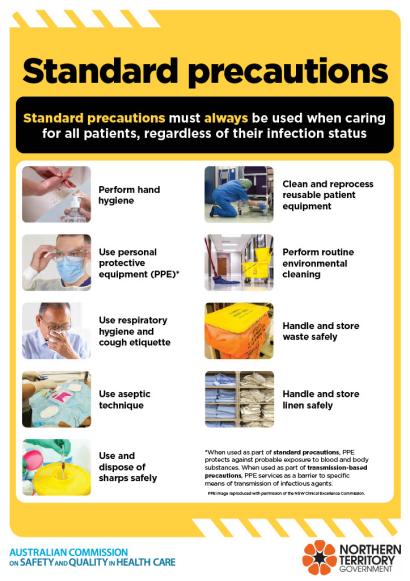
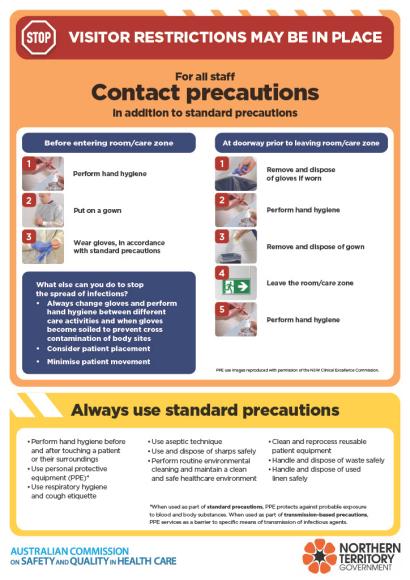
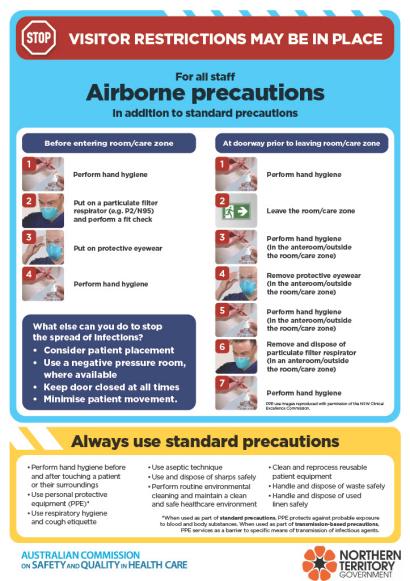
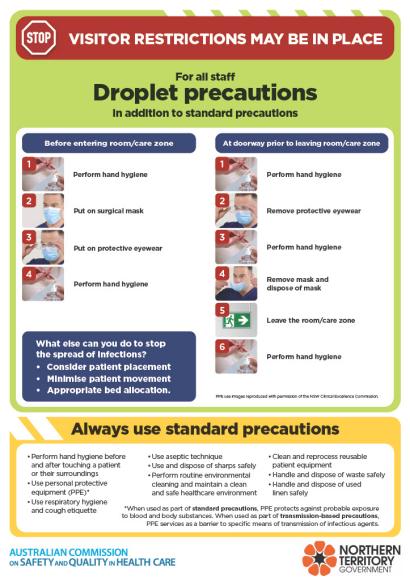
NT co-branded Standard infection control precautions poster.