
Allertine
Brand Information
| Brand name | Allertine |
| Active ingredient | Bilastine, Bilastine |
| Schedule | S2 |
Consumer Medicine Information (CMI) leaflet
Please read this leaflet carefully before you start using the Allertine.
Summary CMI
ALLERTINE® and ALLERTINE® MELTLETS
Consumer Medicine Information (CMI) summary
The full CMI on the next page has more details. If you are worried about taking this medicine, speak to your pharmacist or doctor.
▼ This medicine is new or being used differently. Please report side effects. See the full CMI for further details.
1. Why am I taking ALLERTINE?
ALLERTINE and ALLERTINE MELTLETS (hereafter referred to as ALLERTINE unless otherwise stated) contain the active ingredient bilastine. ALLERTINE is used to relieve the symptoms of hayfever and other forms of allergic rhinitis. It may also be used to treat itchy skin rashes.
For more information, see Section 1. Why am I taking ALLERTINE? in the full CMI.
2. What should I know before I take ALLERTINE?
Do not use if you have ever had an allergic reaction to bilastine or any of the ingredients listed at the end of the CMI.
Talk to your pharmacist or doctor if you have kidney problems or are taking any other regular medicines listed in Section 3. What if I am taking other medicines?.
Talk to your pharmacist or doctor if you are pregnant, likely to become pregnant or are breastfeeding.
For more information, see Section 2. What should I know before I take ALLERTINE? in the full CMI.
3. What if I am taking other medicines?
Some medicines may interfere with ALLERTINE and affect how it works.
A list of these medicines is in Section 3. What if I am taking other medicines? in the full CMI.
4. How do I take ALLERTINE?
ALLERTINE
- Adults and adolescents 12 years & over: Take one tablet daily, as required to manage your symptoms.
- Swallow the tablet with a glass of water, on an empty stomach (at least 1 hour before or 2 hours after meals or fruit juices).
ALLERTINE MELTLETS
- Adults and adolescents 12 years & over: Take one meltlet daily, as required to manage your symptoms, at least 1 hour before or 2 hours after food or fruit juice (particularly grapefruit juice).
- Place the meltlet in your mouth. It will disperse rapidly in saliva and can then be easily swallowed. May be followed by a glass of water if desired.
More instructions can be found in Section 4. How do I take ALLERTINE? in the full CMI.
5. What should I know while taking ALLERTINE?
| Things you should do |
|
| Driving or using machines |
|
| Looking after your medicine |
|
For more information, see Section 5. What should I know while taking ALLERTINE? in the full CMI.
6. Are there any side effects?
The most common side effects of ALLERTINE are headache, sleepiness and stomach pain.
Serious side effects may include difficulty breathing, swelling of face, lips or tongue, sudden or rapidly developing rash or itching of skin or collapsing or losing consciousness.
For more information, including what to do if you have any side effects, see Section 6. Are there any side effects? in the full CMI.
Full CMI
▼ This medicine is subject to additional monitoring. This will allow quick identification of new safety information. You can help by reporting any side effects you may get. You can report side effects to your doctor, or directly at www.tga.gov.au/reporting-problems.
ALLERTINE® and ALLERTINE® MELTLETS
Active ingredient: bilastine
Consumer Medicine Information (CMI)
This leaflet provides important information about taking ALLERTINE and ALLERTINE MELTLETS (hereafter referred to as ALLERTINE unless otherwise stated). You should also speak to your pharmacist or doctor if you would like further information or if you have any concerns or questions about taking ALLERTINE.
Where to find information in this leaflet:
1. Why am I taking ALLERTINE?
2. What should I know before I take ALLERTINE?
3. What if I am taking other medicines?
4. How do I take ALLERTINE?
5. What should I know while taking ALLERTINE?
6. Are there any side effects?
7. Product details
1. Why am I taking ALLERTINE?
ALLERTINE and ALLERTINE MELTLETS contain the active ingredient bilastine. ALLERTINE is one of a group of medicines called non-drowsy antihistamines.
ALLERTINE and ALLERTINE MELTLETS are used to relieve the symptoms of hayfever (sneezing, itchy, runny, blocked nose, red watery and itchy eyes) and other forms of allergic rhinitis. It may also be used to treat itchy skin rashes (hives or urticaria).
2. What should I know before I take ALLERTINE?
Warnings
Do not use ALLERTINE if:
- you are allergic to bilastine, or any of the ingredients listed at the end of this leaflet.
Always check the ingredients to make sure you can use this medicine.
Check with your pharmacist or doctor if you:
- have kidney problems and are also taking other regular medicines listed in Section 3. What if I am taking other medicines?
During treatment, you may be at risk of developing certain side effects. It is important you understand these risks and how to monitor for them. See additional information under Section 6. Are there any side effects?
Pregnancy and breastfeeding
Check with your pharmacist or doctor if you are pregnant or likely to become pregnant.
Talk to your pharmacist or doctor if you are breastfeeding or intend to breastfeed.
Do not take ALLERTINE if you are pregnant or breastfeeding unless your doctor has advised you to.
Use in Children
Do not give ALLERTINE to a child under the age of 12 years.
The safety of ALLERTINE and how well it works has not been studied in children younger than 12 years of age.
3. What if I am taking other medicines?
Tell your pharmacist or doctor if you are taking any other medicines, including any medicines, vitamins or supplements that you buy without a prescription from your pharmacy, supermarket or health food shop.
Some medicines and ALLERTINE may interfere with each other and affect how well each works. These include:
- Diltiazem, a medicine for the treatment of high blood pressure and angina.
- Ciclosporin, a medicine used to reduce the activity of the immune system.
- Ketoconazole, a medicine used to treat fungal infections.
- Erythromycin, a medicine used to treat a wide variety of bacterial infections.
Check with your pharmacist or doctor if you are not sure about what medicines, vitamins or supplements you are taking and if these affect ALLERTINE.
4. How do I take ALLERTINE?
Follow the instructions provided with the medicine. Check with your pharmacist or doctor if you are unsure.
How much to take
Adults and adolescents 12 years & over: Take one tablet or one meltlet (20 mg bilastine) daily, as required to manage your symptoms.
ALLERTINE
- Swallow the tablet with a glass of water.
- If you have difficulty swallowing, the tablet may be halved along the score line.
ALLERTINE MELTLETS
Place the meltlet in your mouth. It will dissolve rapidly in saliva and can then be easily swallowed. May be followed by a glass of water if desired.
When to take ALLERTINE
Take ALLERTINE on an empty stomach, at least 1 hour before or 2 hours after food or fruit juice (particularly grapefruit juice).
Food and fruit juice can interfere with the absorption of ALLERTINE by the body.
How long to take ALLERTINE
ALLERTINE helps control your condition, but it does not cure it. You can stop taking ALLERTINE when you know you are no longer exposed to your hayfever/ allergy triggers, or you know you have obtained sufficient relief from your symptoms. ALLERTINE can be restarted if your symptoms recur or are expected to recur.
If you take too much ALLERTINE
If you think that you have taken too much ALLERTINE, you may need urgent medical attention.
You should immediately:
- phone the Poisons Information Centre
(by calling 13 11 26 in Australia), or - contact your doctor, or
- go to the Emergency Department at your nearest hospital.
You should do this even if there are no signs of discomfort or poisoning.
5. What should I know while taking ALLERTINE?
Things you should do
- Discuss any side effects that concern you with your pharmacist or doctor.
- If you are started on a new medicine, remind your doctor or pharmacist that you are taking ALLERTINE.
- If your symptoms persist or appear to worsen, do not take extra tablets. Check with your pharmacist or doctor for advice.
- Tell your pharmacist or doctor immediately if you become pregnant while you are taking this medicine.
Driving or using machines
It has been demonstrated that bilastine does not affect adult driving performance. However, the response from each patient to the medicine may be different. Therefore, as for any new medicine, you should check how this medicine affects you, before driving or operating machinery.
Looking after your medicine
- Keep your medicine where the temperature stays below 30°C.
- Keep your medicine in the original pack until it is time to take.
Follow the instructions on the carton on how to take care of your medicine properly.
Store it in a cool dry place away from moisture, heat or sunlight; for example, do not store it:
- in the bathroom or near a sink, or
- in the car or on window sills.
Keep it where young children cannot reach it.
Getting rid of any unwanted medicine
If you no longer need to use this medicine or it is out of date, take it to any pharmacy for safe disposal.
Do not use this medicine after the expiry date.
6. Are there any side effects?
All medicines can have side effects. If you do experience any side effects, most of them are minor and temporary. However, some side effects may need medical attention.
See the information below and, if you need to, ask your pharmacist or doctor if you have any further questions.
Do not be alarmed by the following list of side effects. You may not experience any of them. Similar side effects were seen in patients taking ‘dummy’ or placebo tablets during the clinical studies.
Less serious side effects
| Less serious side effects | What to do |
| COMMON: General body-related:
Stomach and bowel-related:
| Speak to your pharmacist or doctor if you have any of these less serious side effects and they worry you. |
Serious side effects
| Serious side effects | What to do |
Allergic reaction-related:
| Call your doctor straight away, or go straight to the Emergency Department at your nearest hospital if you notice any of these serious side effects. |
Tell your pharmacist or doctor if you notice anything else that may be making you feel unwell.
Other side effects not listed here may occur in some people.
Reporting side effects
After you have received medical advice for any side effects you experience, you can report side effects to the Therapeutic Goods Administration online at www.tga.gov.au/reporting-problems. By reporting side effects, you can help provide more information on the safety of this medicine.
7. Product details
This medicine is available over-the-counter without a doctor's prescription.
What ALLERTINE contains
| Active ingredient (main ingredient) | Each tablet or meltlet contains 20 mg of bilastine. |
| Other ingredients (inactive ingredients) | ALLERTINE
|
Do not take this medicine if you are allergic to any of these ingredients.
ALLERTINE MELTLETS contain sucralose.
ALLERTINE/ALLERTINE MELTLETS do not contain tartrazine or any other azo dyes.
What ALLERTINE looks like
ALLERTINE is a white, oval, biconvex and scored tablet
(AUST R 387574).
ALLERTINE MELTLETS are a white, round and flat orally disintegrating tablet engraved with "20" on one side
(AUST R 480827).
Available in blister packs of 2, 4, 10, 20, 30, 40, 50, 60, 70, 80, 90 or 100 tablets.
Not all pack sizes may be supplied.
Who distributes ALLERTINE
A. Menarini Australia Pty. Ltd.,
Sydney, Australia
Medical Information: 1800 644 542
For further information or the most up-to-date version of this leaflet visit www.allertine.com.au
® Trademark
[vD05-0]
This leaflet was prepared in September 2026.
Brand Information
| Brand name | Allertine |
| Active ingredient | Bilastine, Bilastine |
| Schedule | S2 |
▼ This medicinal product is subject to additional monitoring in Australia. This will allow quick identification of new safety information. Healthcare professionals are asked to report any suspected adverse events at www.tga.gov.au/reporting-problems.
MIMS Revision Date: 01 November 2026
1 Name of Medicine
Bilastine.
2 Qualitative and Quantitative Composition
Tablets. Each tablet contains 20 mg of bilastine.
Orally disintegrating tablets. Each orally disintegrating tablet contains 10 mg of bilastine, or 20 mg of bilastine.
Oral solution. Each mL contains 2.5 mg of bilastine.
Excipient with known effect. Each orally disintegrating tablet contains sucralose. The oral solution contains methyl hydroxybenzoate, propyl hydroxybenzoate and sucralose.
For the full list of excipients, see Section 6.1 List of Excipients.
3 Pharmaceutical Form
Tablets. Oval, biconvex, scored white tablets. The score line allows for splitting of the tablet to facilitate the ease of swallowing.
Orally disintegrating tablets.20 mg orally disintegrating tablets. Round, flat, white orally disintegrating tablets engraved with "20" on one side and 8 mm of diameter.
10 mg orally disintegrating tablets. Round, slightly biconvex, white and of 8 mm diameter.
Oral solution. Clear, colourless, slightly viscous aqueous solution of pH 3.0 - 4.0, without precipitate.
4 Clinical Particulars
4.1 Therapeutic Indications
Allertine 20 mg tablets and Allertine Meltlets 20 mg orally disintegrating tablets are indicated in adults and adolescents (12 years of age and over) for the symptomatic treatment of allergic rhinoconjunctivitis (AR - both seasonal allergic rhinitis (SAR) and perennial allergic rhinitis (PAR)) and/or urticaria.
Allertine Kids Meltlets 10 mg orally disintegrating tablets and Allertine Kids Oral Liquid 2.5 mg/mL oral solution are indicated for the symptomatic treatment of allergic rhinoconjunctivitis and/or urticaria in children aged 6-11 years with a body weight of at least 20 kg.
4.2 Dose and Method of Administration
For allergic rhinoconjunctivitis the treatment should be limited to the period of exposure to allergens. For seasonal allergic rhinitis treatment could be discontinued after the symptoms have resolved and reinitiated upon their reappearance. In perennial allergic rhinitis continued treatment may be proposed to the patients during the allergen exposure periods. For urticaria the duration of treatment depends on the type, duration and course of the complaints, and the treatment could be discontinued after the symptoms have resolved and reinitiated upon their reappearance.
Adults and adolescents (12-17 years of age). Take a 20 mg tablet or a 20 mg orally disintegrating tablet once daily for the relief of symptoms of allergic rhinoconjunctivitis (SAR and PAR) and urticaria.
Children (6-11 years of age weighing at least 20 kg). Take a 10 mg orally disintegrating tablet or 4 mL of oral solution once daily for the relief of symptoms of allergic rhinoconjunctivitis (SAR and PAR) and urticaria.
Renal impairment. No dosage adjustment is required in renal impairment in adults or in the elderly. The safety and efficacy of bilastine in renally impaired children have not been established. Studies conducted in adults in special risk groups (renally impaired patients) indicate that it is not necessary to adjust the dose of bilastine in adults (see Section 5.2 Pharmacokinetic Properties).
Hepatic impairment. No dosage adjustment is required in hepatic impairment in adults or in the elderly. The safety and efficacy of bilastine in hepatically impaired children have not been established. There is no clinical experience in either adult or paediatric patients with hepatic impairment. However, since bilastine is not metabolised and is eliminated as unchanged in urine and faeces, hepatic impairment is not expected to increase systemic exposure above the safety margin in adult patients. Therefore, no dosage adjustment is required in adult patients with hepatic impairment (see Section 5.2 Pharmacokinetic Properties).
Method of administration. Tablets. The 20 mg tablets should be swallowed whole, with a glass of water.
Orally disintegrating tablets. The 10 mg or 20 mg orally disintegrating tablets should be placed in the mouth where it disperses rapidly in saliva, so it can be easily swallowed. Alternatively, the 10 mg or 20 mg orally disintegrating tablets may be dispersed in a teaspoon of water before administration. Grapefruit juice or any other fruit juices should not be used for dispersion (see Section 4.5 Interactions with Other Medicines and Other Forms of Interactions). May be followed by a glass of water if desired.
Oral solution. The oral solution is provided in a bottle with a child-proof cap and must be opened as follows: press the plastic screw-cap downwards and simultaneously turn anti-clockwise. This is accompanied by a measuring cup for dosage with a mark of 4 mL equivalent to 10 mg bilastine per dosing. The cap should be tightened after use to engage child resistant closure.
All presentations of Allertine should be taken at least 1 hour before or 2 hours after intake of food or fruit juice (see Section 4.5 Interactions with Other Medicines and Other Forms of Interactions).
4.3 Contraindications
Hypersensitivity to bilastine or to any of the excipients (see Section 6.1 List of Excipients).
4.4 Special Warnings and Precautions for Use
Use in hepatic impairment. The safety and efficacy of bilastine in hepatically impaired children have not been established. There is no clinical experience in both adult and paediatric patients with hepatic impairment. There is no clinical experience in adult patients with hepatic impairment. No dosage adjustment is required in patients with hepatic impairment (see Section 5.2 Pharmacokinetic Properties) since bilastine is not metabolised and is eliminated unchanged in urine and faeces. Hepatic impairment is not expected to increase systemic exposure above the safety margin.
Use in renal impairment. The safety and efficacy of bilastine in renally impaired children have not been established. No dosage adjustment is required in patients with renal impairment (see Section 5.2 Pharmacokinetic Properties).
In patients with moderate or severe renal impairment, co-administration of bilastine with P-glycoprotein inhibitors such as cyclosporine or diltiazem should be approached with caution as elevated bilastine plasma levels and higher incidence of adverse reactions such as dizziness, headache and nausea may occur (see Section 4.5 Interactions with Other Medicines and Other Forms of Interactions).
Use in the elderly. No dosage adjustment is required in elderly patients (see Section 5.1 Pharmacodynamic Properties; Section 5.2 Pharmacokinetic Properties). Data from phase 2, 3 and post-authorisation studies found no difference in efficacy or safety in elderly patients over 65 years of age compared to younger adults.
Paediatric use. No difference in efficacy and safety was observed in clinical trials with Allertine in adolescents 12 to 17 years compared to the adult population.
In a double blind, placebo-controlled safety and tolerability study children aged from 6 to 12 years dosed with 10 mg bilastine have demonstrated a safety profile consistent with that seen in adults and adolescents receiving 20 mg bilastine (see Section 5.2 Pharmacokinetic Properties).
There is currently no data on the use of bilastine in children aged 2 years or under for allergic rhinoconjunctivitis or urticaria. There is little clinical experience in children aged 2 to 5 years, therefore Allertine should not be used in these age groups.
Allertine oral solution contains methyl hydroxybenzoate and propyl hydroxybenzoate, which may cause allergic reactions (possibly delayed).
Effects on laboratory tests. No data available.
4.5 Interactions with Other Medicines and Other Forms of Interactions
Interaction studies have only been performed in adults and are summarised below.
Interaction with food. Food reduces the oral bioavailability of bilastine 20 mg tablets and 20 mg orally disintegrating tablets by 25% to 30%, and that of the 10 mg orally disintegrating tablets and the oral solution by 20%; although it is not certain if this interaction is clinically significant particularly when food has a low-fat content (see Section 5.2 Pharmacokinetic Properties).
Interactions mediated by transporters or CYP450. In vitro and in vivo studies have shown that bilastine is a substrate of P-gp and OATP1A2. Bilastine does not appear to be a substrate of the transporter BCRP or renal transporters OCT2, OAT1 and OAT3. Based on in vitro studies, bilastine is not expected to inhibit the following transporters in the systemic circulation: P-gp, MRP2, BCRP, BSEP, OATP1B1, OATP1B3, OATP2B1, OAT1, OAT3, OCT1, OCT2, and NTCP.
Bilastine did not induce or inhibit activity of CYP450 isoenzymes in in vitro studies.
Interaction with grapefruit juice. Concomitant intake of bilastine 20 mg tablets or 20 mg orally disintegrating tablets and grapefruit juice decreased bilastine bioavailability by 30%. This effect may also apply to other fruit juices. The mechanism for this interaction is an inhibition of OATP1A2, an uptake transporter for which bilastine is a substrate. Medicinal products that are substrates or inhibitors of OATP1A2, such as ritonavir or rifampicin, may likewise have the potential to decrease plasma concentrations of bilastine.
Interaction with ketoconazole or erythromycin. Concomitant intake of bilastine 20 mg with ketoconazole or erythromycin increased bilastine AUC 2-fold and Cmax 2-3 fold, but these changes do not appear to affect the safety profile of bilastine and ketoconazole or erythromycin, respectively. These changes can be explained by interaction with intestinal efflux transporters since bilastine is a substrate for P-gp and is not metabolised (see Section 5.2 Pharmacokinetic Properties).
Other medicinal products that are substrates or inhibitors of P-gp, such as ciclosporin, may likewise have the potential to increase plasma concentrations of bilastine.
Importantly, no clinically relevant prolongation of the QTc interval or any other cardiovascular effect has been observed in interaction studies with ketoconazole and erythromycin, or when repeat doses of bilastine 200 mg daily (i.e. 10 times the therapeutic dose) are taken.
Interaction with diltiazem. Concomitant intake of bilastine 20 mg and diltiazem 60 mg increased Cmax of bilastine by 50%, but it does not appear to affect the safety profile of Allertine. This effect can be explained by interaction with intestinal efflux transporters (see Section 5.2 Pharmacokinetic Properties).
Interaction with lorazepam. Concomitant intake of bilastine 20 mg and lorazepam 3 mg for 8 days did not potentiate the CNS depressant effects of lorazepam.
Interaction with alcohol. No differences were observed in psychomotor performance after intake of alcohol with either bilastine 20 mg or placebo.
Paediatric population. While interaction studies were performed in adults, similar effects are expected in adolescents 12 to 17 years of age.
No interaction studies have been performed in children with the Allertine oral solution nor the orally disintegrating tablets. As there is no clinical experience regarding the interaction of bilastine with other medicinal products, food or fruit juices in children, the results obtained in adult interactions studies should be taken into consideration when prescribing bilastine to children. There are no clinical data in children to state whether changes to the AUC or Cmax due to interactions affect the safety profile of bilastine.
4.6 Fertility, Pregnancy and Lactation
Effects on fertility. There are limited clinical data available. In a fertility study in rats, bilastine administered orally up to 1000 mg/kg/day did not induce any effect on female or male reproductive organs. Mating, fertility and pregnancy indices were not affected. A reduction in sperm motility and abnormal sperm morphology were observed in dogs treated with bilastine for 52 weeks with oral doses of 800 mg/kg/day (approximately 380 times the clinical exposure based on AUC), with no effects at 125 mg/kg/day (approximately 130 times the clinical exposure based on AUC).
Use in pregnancy. (Category B3)
There are limited data available on the use of bilastine in pregnant women.
Bilastine was studied for effects on embryofetal development in pregnant rats and rabbits given oral doses of 75, 275 and 1,000 mg/kg/day and 30, 110 and 400 mg/kg/day respectively, during organogenesis. In rabbits, an increased incidence of skeletal variations (incomplete ossification of cranial bones, sternebrae and limbs) were observed at a maternotoxic dose of 400 mg/kg/day (approximately 250 times the clinical exposure based on AUC), with no effects on embryofetal development at 110 mg/kg/day (approximately 40 times the clinical exposure based on AUC). Bilastine had no effect on pre- and postnatal development of rats treated with oral doses up to 1,000 mg/kg/day. As a precautionary measure, it is preferable to avoid the use of Allertine/Allertine Meltlets during pregnancy.
Use in lactation. The excretion of bilastine in milk has not been studied in humans. Available pharmacokinetic data in rats administered a single oral dose (20 mg/kg) has identified excretion of bilastine in milk. Concentrations of bilastine in milk were about half of those in maternal plasma. The relevance of those results for humans is unknown.
A decision on whether to use Allertine/Allertine Meltlets should be made taking into account the benefit of breast-feeding to the child and the benefit of Allertine/Allertine Meltlets therapy to the mother.
4.7 Effects on Ability to Drive and Use Machines
The CNS safety profile and incidence of somnolence of bilastine 20 mg at the recommended dose was similar to placebo in clinical trials. Higher doses of bilastine up to 40 mg once daily did not affect psychomotor performance in clinical trials or driving performance in a standard driving test.
Although Allertine/Allertine Meltlets is no more likely than placebo to cause sedation and/or decreased mental alertness, individual response should be determined before driving or using machines.
4.8 Adverse Effects (Undesirable Effects)
Summary of safety profile in adults and adolescent patients (12 to 17 years of age). The incidence of adverse events in adults and adolescent patients suffering from allergic rhinoconjunctivitis or chronic idiopathic urticaria treated with Allertine 20 mg in clinical trials was comparable with the incidence in patients receiving placebo (12.7% versus 12.8%).
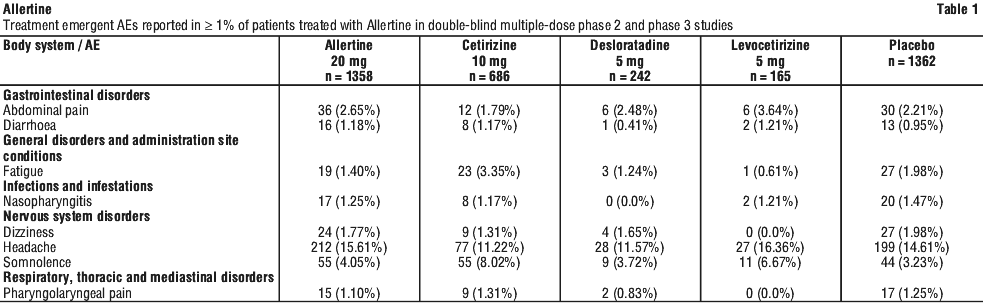
Phase 2 and 3 clinical trials performed during the clinical development included 2599 patients treated with single or multiple doses of bilastine, up to 40 mg. Of these trials, double-blind multiple-dose trials included 1358 patients who received 20 mg (Allertine), 1362 who received placebo, and 1093 who received active control. Adverse events most commonly reported for Allertine were headache, somnolence and abdominal pain (see Table 1). These adverse events occurred with a frequency comparable to that for placebo.
Tabulated summary of adverse events in adults and adolescents. Adverse events with a frequency of very common (≥ 1/10) and common (≥ 1/100 to < 1/10) related to Allertine 20 mg during the clinical development in double-blind multiple-dose phase 2 and 3 studies (n = 1358) are tabulated in Table 1. Adverse events with a frequency less than 1% (< 1/100) have not been included in Table 1.
Infections and infestations. Oral herpes.
Metabolism and nutrition disorders. Increased appetite.
Psychiatric disorders. Anxiety, insomnia.
Ear and labyrinth disorders. Tinnitus, vertigo.
Cardiac disorders. Right bundle branch block, sinus arrhythmia, electrocardiogram QT prolonged, other ECG abnormalities.
Respiratory, thoracic and mediastinal disorders. Dyspnoea, nasal discomfort, nasal dryness.
Gastrointestinal disorders. Upper abdominal pain, nausea, stomach discomfort, dry mouth, dyspepsia, gastritis.
Skin and subcutaneous tissue disorders. Pruritus.
General disorders and administration site conditions. Thirst, improved pre-existing condition, pyrexia, asthenia.
Investigations. Increased gamma-glutamyltransferase, alanine aminotransferase increased, aspartate aminotransferase increased, blood creatinine increased, blood triglycerides increased, increased weight.
Although ECG abnormalities and other cardiac disorders were reported during clinical trials of bilastine, the incidences were not significantly different from those reported when taking placebo (also see Section 4.5 Interactions with Other Medicines and Other Forms of Interactions; Section 4.9 Overdose).
Adolescent population. During the clinical development of Allertine 20 mg the frequency, type and severity of adverse reactions in adolescents (12 years to 17 years) were the same as seen in adults. The safety information collected in this population (adolescents) during post-marketing surveillance has confirmed clinical trial findings.
Post-marketing experience in adults and adolescents. Information collected during post-marketing surveillance confirmed the Allertine 20 mg safety profile observed during clinical development.
Palpitations, tachycardia, hypersensitivity reactions (such as anaphylaxis, angioedema, dyspnoea, rash, localised oedema/local swelling, and erythema), vomiting and electrocardiogram QT prolonged have been observed during the Allertine 20 mg post-marketing period.
Summary of safety profile in paediatric population. The percentage of children (2-11 years) which reported adverse events after treatment with bilastine 10 mg for allergic rhinoconjunctivitis or chronic idiopathic urticaria in a 12-week controlled clinical trial was comparable with patients receiving placebo (68.5% versus 67.5%).
The related adverse events most commonly reported in 291 children (2-11 years) receiving bilastine 10 mg during clinical trials were headache, allergic conjunctivitis, rhinitis and abdominal pain. These related adverse events occurred with a comparable frequency in 249 patients receiving placebo.
Post-marketing experience in paediatric population. The information collected during post-marketing surveillance confirms the safety profile observed during the clinical development.
Reporting suspected adverse effects. Reporting suspected adverse reactions after registration of the medicinal product is important. It allows continued monitoring of the benefit-risk balance of the medicinal product. Health professionals are asked to report any suspected adverse reactions at www.tga.gov.au/reporting-problems.
4.9 Overdose
For information on the management of overdose, contact the Poison Information Centre on 13 11 26 (Australia).
There are no data for overdose in children.
Information regarding acute overdose of bilastine is based on experience from clinical trials conducted during the development and post-marketing surveillance. In clinical trials, after administration of bilastine at doses 10 to 11 times the therapeutic dose (220 mg as single dose or 200 mg/day for 7 days) to healthy volunteers, frequency of treatment emergent adverse events was two times higher than with placebo, with dizziness, headache and nausea most frequently reported. No serious adverse events and no significant prolongation in the QTc interval were reported.
Critical evaluation of bilastine's multiple dose (100 mg x 4 days) effect on ventricular repolarization by a "thorough QT/QTc cross-over study" involving 30 healthy volunteers did not show significant QTc prolongation.
There is no known specific antidote to bilastine. In the event of overdose, symptomatic and supportive treatment is recommended.
5 Pharmacological Properties
5.1 Pharmacodynamic Properties
Mechanism of action. Bilastine is a non-sedating, long-acting histamine antagonist with selective peripheral H1 receptor antagonist affinity and no affinity for muscarinic receptors. Single doses of bilastine 20 mg demonstrated sustained inhibition of histamine-induced wheal and flare skin reactions for 24 hours. Duration of activity in AR as measured by efficacy at 22-26 hours post-dose was at least 26 hours for Allertine. This end of the dosing period efficacy was also significantly greater for Allertine than for the active comparator fexofenadine (p=0.0012). Allertine also demonstrated a fast 1 hour onset of action equivalent to other non-sedating antihistamines (cetirizine, fexofenadine).
Clinical trials. The efficacy and safety studies were conducted with the tablet formulation Allertine, to which Allertine Meltlets have been shown to be bioequivalent.
Allergic rhinoconjunctivitis (SAR and PAR). The efficacy of bilastine has been studied in adults and adolescents. According to guidelines, the proved efficacy in adults and adolescents can be extrapolated to children, having demonstrated that the systemic exposure with 10 mg bilastine in children from 6 to 11 years with a body weight of at least 20 kg is equivalent to the exposure in adults with 20 mg bilastine (see Section 5.2 Pharmacokinetic Properties). The extrapolation from adult and adolescent data is deemed appropriate for this product as the pathophysiology of allergic rhinoconjunctivitis and urticaria is the same for all age groups.
In a 12-week controlled clinical trial with children aged 2-11 years (total 509 children, 260 treated with bilastine 10 mg: 58 at age 2 to < 6 years, 105 at age 6 to < 9 years and 97 at 9 to < 12 years and 249 treated with placebo: 58 at age 2 to < 6 years, 95 at age 6 to < 9 years and 96 at 9 to < 12 years), at the recommended paediatric dose of 10 mg once daily, the safety profile of bilastine (n = 260) was similar to placebo (n = 249), with adverse drug reactions seen in 5.8% and 8.0% of patients taking bilastine 10 mg and placebo, respectively. Both bilastine 10 mg and placebo showed a slight decrease in somnolence and sedation scores on the Paediatric Sleep Questionnaire during this study, with no statistically significant differences between treatment groups. In these children aged 2 to 11 years, no significant differences in QTc were observed following 10 mg bilastine daily compared with placebo. Quality of Life questionnaires specific for children with allergic rhinoconjunctivitis or chronic urticaria showed a general increase in scores over 12 weeks with no statistically significant difference between the bilastine and placebo arms. The total population of 509 children encompassed: 479 subjects with allergic rhinoconjunctivitis and 30 subjects diagnosed with chronic urticaria. 260 children received bilastine, 252 (96.9%) for allergic rhinoconjunctivitis and 8 (3.1%) for chronic urticaria. In analogy, 249 children received placebo, 227 (91 .2%) for allergic rhinoconjunctivitis and 22 (8.8%) for chronic urticaria.
In clinical trials with adults and adolescents (12-17 years) with AR (SAR and PAR), Allertine 20 mg once daily for 14-28 days demonstrated effective relief of nasal (sneezing, nasal discharge, nasal itching and nasal congestion) and non-nasal symptoms (ocular redness and tearing ± itching of ears, palate and/or eyes) symptoms. Bilastine effectively controlled symptoms for 24 hours. The primary efficacy measurement was mean reduction in total symptom scores (TSS), with mean reductions in sum of nasal symptom scores (NSS) and/or sum of non-nasal symptom scores (NNSS) included as secondary measures. Given SAR and PAR are considered pharmacodynamically comparable conditions that differ principally in symptom duration with many PAR patients having concomitant SAR, efficacy and safety data are considered for AR as a whole.
In study #1003, Allertine 20 mg once daily was compared to the active comparator desloratadine 5 mg once daily and placebo in 720 SAR patients for 14 days. Allertine had comparable efficacy to desloratadine from day 1, with mean reductions in TSS significantly greater than that for placebo (p < 0.001) over the study period. In addition, the percentage reduction of NSS (p=0.001) and NNSS (p=0.003) from baseline to day 14 was significantly greater with Allertine compared to placebo, supporting the efficacy of bilastine for the range of AR symptoms. No differences were observed when comparing the efficacy of Allertine with the active comparator. Allertine also demonstrated an excellent safety profile with an adverse events profile equivalent to that for placebo (28.3% vs 25.3%, p=0.199).
In study #1704, 683 SAR patients were treated with Allertine 20 mg, placebo or the active comparator cetirizine 10 mg, once daily for 14 days. Mean reductions in TSS at 14 days were significantly greater with Allertine and cetirizine compared to placebo (p < 0.001). Allertine also significantly decreased both NSS (p < 0.001) and NNSS (p < 0.001) compared to placebo. After 14 treatment days, the reported mean TSS at the end of the dose period (prior to the next morning dose) was compared to that measured the prior evening. As no difference in TSS was observed between these time points for Allertine (p=0.2032) while a significant difference was observed for placebo (p < 0.0001), there is strong evidence of Allertine's sustained 24-hour efficacy and duration of action. In addition, Allertine demonstrated a favourable safety profile, with an incidence of adverse events similar to that of placebo (14.5% vs 19.5% respectively), and superior adverse events profile to that of cetirizine 10 mg (overall incidence 24.7% vs 36.0% respectively, p=0.031).
In study #1503, 650 patients with PAR were randomised to Allertine 20 mg, the active comparator cetirizine 10 mg or placebo, once daily for 28 days. Due to regional differences in the response, no significant differences in mean reduction of TSS across treatment groups were observed. However, when the data was reanalysed by excluding a region with very high placebo response, both Allertine and cetirizine significantly reduced TSS compared to placebo over the 28-day treatment period (p=0.039). The 28-day double-blind phase was followed by an additional 12 month open-label safety extension in 513 patients receiving Allertine. A trend in mean reduction of NSS and NNSS were observed throughout the 12 months follow-up, although there were no comparison groups. There were no significant differences in overall adverse events incidence with Allertine compared to cetirizine or placebo. No serious adverse reactions were reported with Allertine.
Urticaria. In clinical study #2006, 522 adults suffering from Chronic Idiopathic Urticaria (CIU) with a documented history of symptoms for at least 6 weeks were treated with either Allertine 20 mg, the active comparator levocetirizine 5 mg or placebo once daily for 28 days. Efficacy was defined as mean reduction in TSS (which is comprised of number and size of wheals as well as itching intensity and discomfort due to urticaria) at 4 weeks. Both Allertine and levocetirizine significantly reduced TSS compared to placebo (p < 0.001), with similar secondary quality of life outcomes reported for both active treatments. Results obtained for the secondary efficacy variables were consistent with those reported for the primary efficacy variable and in general, efficacy of both Allertine and levocetirizine were superior to placebo with high statistical significance. Similarly, Allertine demonstrated a favourable safety profile, with similar incidence of adverse events to that for levocetirizine (overall incidence 35.8% vs 37.0% respectively, p=0.319).
5.2 Pharmacokinetic Properties
The pharmacokinetic properties were studied on the tablet formulation Allertine.
Two pharmacokinetic studies were carried out in healthy volunteers to compare Allertine Meltlets and Allertine, which have demonstrated the bioequivalence of the two formulations.
Absorption. Bilastine is rapidly absorbed after oral administration with a time to maximum plasma concentration of around 1.3 hours. No accumulation has been observed. Mean bilastine oral bioavailability is 61%.
The effect of food on bioavailability of bilastine was investigated in two phase 1 studies. The first assessed the influence of a high fat meal on bioavailability compared to a fasted state. The second study compared bioavailability after a high-fat meal, a standard (low-fat) meal and in a fasted state. It appears that high-fat and standard low-fat meals significantly reduce the oral bioavailability of bilastine by 30% and 25% respectively (see Section 4.2 Dose and Method of Administration; Section 4.5 Interactions with Other Medicines and Other Forms of Interactions, Interaction with grapefruit juice). Nevertheless, as the low-fat meal studied included orange juice and the apparent bioavailability reduction with low-fat meals and with juices is similar, it is possible that low-fat meal interactions are not clinically significant.
Distribution. At therapeutic doses bilastine is 84-90% bound to plasma proteins.
Metabolism. Metabolism of bilastine was limited in animal species and humans. Minimal to no metabolism of bilastine by animal or human microsomes or hepatocytes. No metabolism was detected in Caco-2 cells, with and without induction of CYP1A1 and CYP3A4, indicating the absence of intestinal metabolism.
Excretion. In a mass balance study performed in healthy volunteers, after administration of a single dose of 20 mg 14C-bilastine, almost 95% of the administered dose was recovered in urine (28.3%) and faeces (66.5%) as unchanged bilastine, confirming that bilastine is not significantly metabolised in humans. The mean elimination half-life in healthy volunteers was 14.5 h.
Linearity. Bilastine presents linear pharmacokinetics in the dose range studied (5 to 220 mg), with a low inter-individual variability.
Patients with renal impairment. The effects of bilastine in patients with renal impairment have been studied in adults.
In a study in subjects with renal impairment the mean (SD) AUC0-∞ increased from 737.4 (± 260.8) nanogram.hr/mL in subjects without impairment (GFR: > 80 mL/min/1.73 m2) to: 967.4 (± 140.2) nanogram.hr/mL in subjects with mild impairment (GFR: 50 - 80 mL/min/1.73 m2), 1384.2 (± 263.2) nanogram.hr/mL in subjects with moderate impairment (GFR: 30 - < 50 mL/min/1.73 m2), and 1708.5 (± 699.0) nanogram.hr/mL in subjects with severe impairment (GFR: < 30 mL/min/1.73 m2). Mean (SD) half-life of bilastine was 9.3 h (± 2.8) in subjects without impairment, 15.1 h (± 7.7) in subjects with mild impairment, 10.5 h (± 2.3) in subjects with moderate impairment and 18.4 h (± 11.4) in subjects with severe impairment. Urinary excretion of bilastine was essentially complete after 48-72 h in all subjects. These pharmacokinetic changes are not expected to have a clinically relevant influence on the safety of bilastine, since bilastine plasma levels in patients with renal impairment are still within the safety range of bilastine.
Patients with hepatic impairment. There are no pharmacokinetic data in subjects with hepatic impairment. Bilastine is not metabolised in humans. Since the results of the renal impairment study indicate renal elimination to be a major contributor in the elimination, biliary excretion is expected to be only marginally involved in the elimination of bilastine. Changes in liver function are not expected to have a clinically relevant influence on bilastine pharmacokinetics.
Elderly patients. There are limited pharmacokinetic data for subjects older than 65 years which shows no statistically significant differences in pharmacokinetics compared to adults aged between 18 and 35 years.
Paediatric population. No pharmacokinetic data are available in adolescents (12 years to 17 years) as the extrapolation from adult data was deemed appropriate for this product.
Pharmacokinetic data in children were obtained in a Phase II pharmacokinetic study including 31 children aged 4 to 11 years with allergic rhinoconjunctivitis or chronic urticaria, administered once daily with bilastine 10 mg orally disintegrating tablet. This formulation has been shown to be bioequivalent to bilastine 2.5 mg/mL oral solution. Pharmacokinetic analysis of plasma concentration data showed that the paediatric dose of bilastine 10 mg once daily results in systemic exposure equivalent to that seen after a 20 mg dose in adults and adolescents, being the mean AUC value 1014 nanogram*hr/mL for children 6 to 11 years. These results were largely below the safety threshold based on data from 80 mg once daily dose in adults in accordance to the drug safety profile. These results confirmed the choice of bilastine 10 mg taken orally once daily as the appropriate therapeutic dose for the paediatric population in the age range 6 to 11 years with a body weight of at least 20 kg.
5.3 Preclinical Safety Data
Genotoxicity. Bilastine was not mutagenic in a bacterial reverse mutation assay (Ames test) using S. typhimurium, or clastogenic in human lymphocytes in vitro. Systemic exposure to bilastine did not induce chromosomal aberrations in an in vivo micronucleus assay conducted in mice.
Carcinogenicity. Bilastine was not carcinogenic to mice or rats when administered orally for 2-years in the diet at dose levels up to 2000 mg/kg/day in mice and 1200 mg/kg/day in rats (greater than 100 times the clinical exposure based on AUC).
6 Pharmaceutical Particulars
6.1 List of Excipients
Tablets. Microcrystalline cellulose, sodium starch glycollate type A, colloidal anhydrous silica, magnesium stearate.
Orally disintegrating tablets. Mannitol, croscarmellose sodium, sodium stearylfumarate, sucralose, Luctadry red grape 29665A (PI No. 146208).
Oral solution. Betadex, hyetellose, methyl hydroxybenzoate, propyl hydroxybenzoate, sucralose, Soless raspberry colourless 0616 (PI No. 148236), hydrochloric acid, sodium hydroxide, purified water.
6.2 Incompatibilities
Not applicable.
6.3 Shelf Life
In Australia, information on the shelf life can be found on the public summary of the Australian Register of Therapeutic Goods (ARTG). The expiry date can be found on the packaging.
Oral solution. Discard the oral solution 6 months after first opening.
6.4 Special Precautions for Storage
This medicine does not require any special storage conditions.
6.5 Nature and Contents of Container
Tablets. PVC-PVAC-Al blister packs containing 4, 10, 20, 30, 40, 50, 60, 70, 80, 90 or 100 tablets.
Orally disintegrating tablets. 20 mg orally disintegrating tablets: Al/Al perforated unit-dose blister packs containing 2, 4, 10, 20, 30, 40, 50, 60, 70, 80, 90 or 100 orally disintegrating tablets*.
10 mg orally disintegrating tablets: OPA/Al/PVC/Al blister packs containing 4, 10, 20, 30, 40, 50, 60, 70, 80, 90 or 100 orally disintegrating tablets*.
Oral solution. Amber glass bottle (Type III glass), sealed with a polypropylene cap, with child-proof closure and LDPE liner. Packs include a 25 mL polypropylene cup for dosage graduated at 4 mL. Each bottle contains 120 mL oral solution.
* Not all pack sizes may be marketed.
6.6 Special Precautions for Disposal
Other handling. In Australia, any unused medicine or waste material should be disposed of by taking to your local pharmacy.
6.7 Physicochemical Properties
Chemical structure.
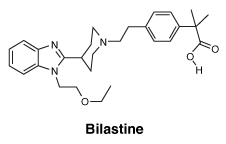
Molecular formula: C28H37N3O3.
Molecular weight: 463.61 g/mol.
AAN: Bilastine.
CAS number. 202189-78-4.
7 Medicine Schedule (Poisons Standard)
Bilastine 20 mg tablets and 20 mg orally disintegrating tablets - Schedule 2 (Pharmacy Medicine).
Bilastine 10 mg orally disintegrating tablets - Schedule 3 (Pharmacist Only Medicine)
Bilastine 2.5 mg/mL oral solution - Schedule 3 (Pharmacist Only Medicine).
Date of Revision
20 August 2026
Summary Table of Changes

Reasonable care is taken to provide accurate information at the time of creation. This information is not intended as a substitute for medical advice and should not be exclusively relied on to manage or diagnose a medical condition. The Australian Commission on Safety and Quality in Health Care disclaims all liability (including for negligence) for any loss, damage, injury or any other negative effects resulting from reliance on or use of this information. Read our full disclaimer. This website uses cookies. Read our privacy policy.