
Coregas Medical Oxygen
Brand Information
| Brand name | Coregas Medical Oxygen |
| Active ingredient | Oxygen |
| Schedule | Unscheduled |
Consumer Medicine Information (CMI) leaflet
Please read this leaflet carefully before you start using the Coregas Medical Oxygen.
Summary CMI
COREGAS Pty Ltd MEDICAL OXYGEN 100%v/v gas in gas cylinder Medicinal Gas
Consumer Medicine Information (CMI) summary
WARNING: Oxygen strongly supports combustion (including some materials which do not normally burn in air). Do not smoke, avoid open flames and contact with oils, greases and tarry substances.
The full CMI on the next page has more details. If you are worried about using Medical Oxygen, speak to your doctor, dentist, nurse or pharmacist.
1. Why am I having Coregas Pty Ltd Medical Oxygen?
Coregas Pty Ltd Medical Oxygen contains the active ingredient Oxygen. Medical Oxygen is used to help breathing when your lungs are not getting enough oxygen, and it is also used for mixing with anaesthetic gases. For more information, see Section 1. in the full CMI.
2. What should I know before I have Coregas Pty Ltd Medical Oxygen?
- Do not use this if you smoke and plan to keep smoking
- Only use this if your doctor or dentist has said it is OK for you to use it
Talk to your doctor or dentist if you have any other medical conditions, or are pregnant or planning to become pregnant or are breastfeeding or planning to breastfeed.
For more information, see Section 2. in the full CMI.
3. What if I am taking other medicines?
Tell your doctor or dentist if you are taking any other medicines, especially bleomycin or amiodarone.
See Section 3. in the full CMI.
4. How do I have Coregas Pty Ltd Medical Oxygen?
You will receive Medical Oxygen via a mask or nasal prongs (tubes). Your doctor or dentist will decide how much you can have.
More instructions can be found in Section 4. in the full CMI.
5. What should I know while having Coregas Pty Ltd Medical Oxygen?
| Things you should do |
|
| Things you must not do |
|
| Looking after your medicine |
|
For more information, see Section 5. in the full CMI.
6. Are there any side effects?
People may get a sore chest after coughing or breathing hard.
For a list of more serious side effects, and for information about what to do if you get them, see Section 6 in the full CMI.
Full CMI
1. Why am I having Coregas Pty Ltd Medical Oxygen?
Coregas Pty Ltd Medical Oxygen contains the active ingredient oxygen. It is a medical gas.
Medical Oxygen is used to help breathing when your lungs are not getting enough oxygen, and it is also used for mixing with anaesthetic gases.
2. What should I know before I have Coregas Pty Ltd Medical Oxygen?
Warnings
Do not have Medical Oxygen if:
- You smoke and plan to keep smoking.
Check with your doctor or dentist if you:
- Have any other medical conditions
- Take any medicines for any other condition
Only use it if your doctor or dentist has said it is OK.
During treatment, you may be at risk of developing certain side effects. It is important you understand these risks and how to monitor for them. See additional information under Section 6. Are there any side effects?
Pregnancy and breastfeeding
Tell your doctor or dentist if:
- you are pregnant or planning to become pregnant
or
- you are breastfeeding or planning to breastfeed.
If you are pregnant you will be given the lowest amount of Medical Oxygen for the shortest possible time.
Oxygen does not affect breastfeeding
Elderly people
- Older people may need less oxygen, and the amount they use will be increased very gradually.
Babies
- Newborns, especially premature babies, will be closely monitored by medical staff.
3. What if I am taking other medicines?
Tell your doctor, dentist or pharmacist if you are taking any other medicines, including any medicines, vitamins or supplements that you buy without a prescription from your pharmacy, supermarket or health food shop.
Especially tell them if you are taking bleomycin (for cancer) or amiodarone (for heart problems).
4. How do I have Coregas Pty Ltd Medical Oxygen?
How much to have
Your doctor or dentist will decide how much you can have
- The concentration of Oxygen for adults and children is normally between 21% and 100%
- The concentration of Oxygen for newborn babies should not be more than 40%
- The concentration of Oxygen for the elderly should be not more than 30%
Follow the instructions provided and use Medical Oxygen until your doctor or dentist tells you to stop. They will monitor your or your child's treatment and change the amount if needed.
How you will have Coregas Pty Ltd Medical Oxygen
You will receive Medical Oxygen via a mask or nasal prongs (tubes).
- The gas cylinder will be set up for you - follow carefully any instructions you are given
If you have had too much Medical Oxygen
If you think that you have had too much Medical Oxygen, you may need urgent medical attention and the amount of Oxygen you are having will be reduced or stopped. This may be the case if you suddenly feel dizzy, have fits or pass out.
You must immediately:
- Tell your doctor, dentist, nurse or pharmacist, or
- Go to the Emergency Department at your nearest hospital, or
- Phone the Poisons Information Centre
(by calling 13 11 26).
5. What should I know while having Coregas Pty Ltd Medical Oxygen?
Things you should do
Call your doctor, dentist or nurse straight away if you:
- Feel that you are not receiving enough oxygen
- Hear a hissing sound coming from the cylinder
Remind any doctor, dentist, nurse or pharmacist who may be treating you that you are using Medical Oxygen.
Things you must not do
- Never smoke or stand near open flames, sparks or high heat while having medical oxygen
- Do not touch any part of the cylinder or equipment with oils or grease, and make sure your skin is clean and free from oils and grease (this includes not using oil-based moisturisers or creams on your face or nose.
- Do not use this product if the cylinder is damaged or the tamper evident seal has been removed.
Driving or using machines
Be careful before you drive or use any machines or tools until you know how Medical Oxygen affects you.
Your doctor or dentist will assess you and decide whether you can drive or operate machines after using Medical Oxygen.
Drinking alcohol
Tell your doctor if you drink alcohol.
Looking after your medicine
- Store under cover, preferably inside in a well-ventilated area; keep it dry and clean and don't let the area get too hot or too cold
- Make sure that it is not near any other gas cylinders or anything that may burn (including oils, greases, tars and plastics)
- Make sure that there are no open flames or open lights nearby, no strong heat or anything that gives off sparks
- Check that the cylinder is secured so that it won't fall over
- Only move it with the most appropriate trolley or handling device
- Use the cylinder with the earliest filling date first.
Keep it where children cannot see or reach it.
Getting rid of any unwanted Medical Oxygen
The cylinder will be returned to Coregas.
Do not keep the cylinder after its expiry date.
6. Are there any side effects?
All medicines can have side effects. If you do have any side effects, most of these will be minor and temporary. However, some side effects may need medical attention.
Read the information below and speak to your doctor or pharmacist if you have any comments or questions about side effects.
Less serious side effects
| Less serious side effects | What to do |
| Speak to your doctor or dentist if you have any of these side effects and they worry you. |
Serious side effects
| Serious side effects | What to do |
"Pulmonary effects" such as:
"Central nervous system" effects such as:
In premature babies, sight problems and blindness may occur after they have been given very high concentrations of Oxygen Effects on your blood that make you:
| Call the doctor, dentist or nurse straight away if you are already in hospital, otherwise go straight to the Emergency Department at your nearest hospital. |
Tell your doctor, dentist, nurse or pharmacist if you feel unwell in any other way.
Other side effects not listed here may occur in some people.
Reporting side effects
After you have received medical advice for any side effects you have, you can report these side effects to the Therapeutic Goods Administration online at www.tga.gov.au/reporting-problems.
By reporting side effects, you can help provide more information on the safety of this medicine.
Always make sure you speak to your doctor or pharmacist before you decide to stop taking any of your medicines.
7. Product details
This medicine is normally supplied for use in hospitals or dental surgeries or delivered to your home for use there.
What Coregas Pty Ltd Medical Oxygen contains
| Active ingredient (main ingredient) | Oxygen gas |
| Other ingredients (inactive ingredients) | None |
| Potential allergens | None |
Do not have this medicine if you are allergic to Medical Oxygen.
What Coregas Pty Ltd Medical Oxygen looks like
Coregas Pty Ltd Medical Oxygen has no smell or colour.
The cylinders are all white. They are made of either steel or aluminium and sealed with a Pin Index valve outlet and, for the C, D and E size cylinders, a Pin Index valve or an integrated valve regulator.
They may be available in the following pack sizes:
| Container Size | Water volume (L) | Maximum Fill Pressure (bar) | Fill volume (m³) |
| B | 1.4 | 200 | 0.283 |
| C*** | 2.8 | 250 | 0.257-0.687 |
| D*** | 9.5 | 200 | 1.9 |
| E*** | 23 | 200 | 3.45-4.3 |
| G | 50 | 200 | 10 |
| 6 pack* | 300 | 200 | 60 |
| 12 pack** | 600 Litres | 200 | 120 |
* 6 Packs (bundles) of 6 x 50 L Size G cylinders
** 12 Packs (bundles) of 12 x 50 L Size G cylinders
***Cylinders may have either pin index valve or integrated valve regulator fitted
(Not all pack sizes or presentations may be available)
Who distributes Coregas Pty Ltd Medical Oxygen?
Coregas Pty Ltd
66 Loftus Road
Yennora NSW 2161
Australia
Email: Customer.services@coregas.com
Phone: 1800807203
Website: www.coregas.com.au/healthcare
Aust R 34472.
This leaflet was revised in March 2022.
For the Healthcare Professional
Instructions for use/handling
- Care is needed in the handling and use of Medical Oxygen gas cylinders.
- Refer to the respective S.D.S and the “caution” section of the product label.
- Refer to manufacturer for cleaning guidelines.
- For Liquid Medical Oxygen, the extreme cold can lead to “cold burns”/ destruction of tissue.
Preparation for use with Pin Index Valves
- Cylinder valves should be opened momentarily prior to use to blow any foreign matter out of the outlet.
- Ensure that the connecting face on the yoke, manifold or regulator is clean and the sealing washer or ‘O’ ring where fitted is in good condition.
- Cylinder valves must be opened slowly.
- Only the appropriate regulator should be used for the particular gas concerned.
- Cylinder valves and any associated equipment must never be lubricated and must be kept free from oil and grease.
Preparation for use with Integrated Regulator Valves
- Connect oxygen tubing to “fir tree” outlet on top of the integrated regulator valve.
- Connect oxygen equipment to sleeve index on the side of the integrated valve regulator.
- Open the integrated regulator valve slowly.
- Select desired flow rate on top of integrated regulator valve.
Leaks
- Should leaks occur, this will usually be evident by a hissing noise.
- Leaks can be found by brushing the suspected area with an approved leak test solution.
- There are no user serviceable parts associated with these valves, do not attempt to correct any problems with leakage from any part of the valve itself. Label any faulty containers appropriately and return them to Coregas for repair.
- Sealing or jointing compounds must never be used to cure a leak.
- Never use excessive force when connecting equipment to cylinders.
Handling of Cylinders
- Cylinders should be handled with care and not knocked violently or allowed to fall.
- Cylinders should only be moved with the appropriate size and type of trolley.
- When in use cylinders should be firmly secured to a suitable cylinder support.
- Cylinders containing liquefiable gas must always be used vertically with the valve uppermost.
- Medical gases must only be used for medicinal purposes
- Smoking and naked lights must not be allowed within the vicinity of cylinders or pipeline outlets.
- After use cylinder valves should be closed using moderate force only and the pressure in the regulator or tailpipe released.
- When empty the cylinder valve must be closed.
- Immediately return empty cylinders to the empty cylinder store for return to Coregas.
Storing of cylinders
Storage should be according to the appropriate Australian Standards.
Cylinders should be kept out of the reach of children.
Oxygen is enhancing combustion (including some materials which do not normally burn in air). High pressure Oxygen can lead to oxidation / fire / explosion when getting in contact with oils, greases, tarry substances and many plastics (spontaneous combustion).
The normal precautions required in the storage of medical gas cylinders as described below are applicable.
- Cylinders should be stored under cover, preferably inside, kept dry and clean and not subjected to extremes of heat or cold.
- Cylinders should not be stored near stocks of combustible materials or near sources of heat.
- Warning notices prohibiting smoking and naked lights must be posted clearly.
- Emergency services should be advised of the location of the cylinder store.
- Medical cylinders containing different gases should be segregated and identified within the store.
- Full and empty cylinders should be stored separately. Full cylinders should be used in strict rotation.
- Cylinders must not be repainted, have any markings obscured or labels removed.
- D size cylinders and larger should be stored vertically. C size cylinders can be stored horizontally.
- Precautions should be taken to protect cylinders from theft.
This leaflet was revised in March 2022
Brand Information
| Brand name | Coregas Medical Oxygen |
| Active ingredient | Oxygen |
| Schedule | Unscheduled |
MIMS Revision Date: 01 May 2022
Oxygen strongly supports combustion (including some materials, which do not normally burn in air). Smoking is prohibited when medical oxygen is in use, and no naked flame is allowed. There is a high risk of spontaneous combustion if oxygen comes into contact with oils, greases and tarry substances. See Section 4.4 Special Warnings and Precautions for Use; Section 6.4 Special Precautions for Storage.
1 Name of Medicine
Oxygen.
2 Qualitative and Quantitative Composition
Oxygen 100%.
3 Pharmaceutical Form
Medical gas.
Colourless, odourless gas.
4 Clinical Particulars
4.1 Therapeutic Indications
Hypoxia of any cause.
As diluent for gaseous and volatile anaesthetic agents.
4.2 Dose and Method of Administration
Standard texts and clinical protocols should be consulted for the oxygen requirements specific to the underlying condition and the clinical status of the individual patient. It is essential to monitor ventilation, arterial oxygen saturation, and the clinical effect of the treatment.
The dose (FiO2) must be adjusted according to each patient's individual needs, taking into account the risk of oxygen toxicity.
The general recommendation is to use the lowest dose necessary to achieve the desired result of treatment.
In patients with chronic respiratory disorders with hypercapnia, there is a risk of reduced respiratory drive with high oxygen concentrations.
Oxygen treatment must be continuously evaluated.
Coregas Pty Ltd Medical Oxygen 100% should not be used for hyperbaric oxygen treatment.
Use in adults and children. For respiratory use at concentrations of greater than 21%.
Use in neonates. Treatment of neonates with oxygen may be required but must be strictly monitored, so that the oxygen concentration may be reduced when the patient's condition allows. For neonates (full-term and preterm) the appropriate institutional protocols, based on full clinical assessment, should be followed. The lowest effective concentrations should be sought in order to achieve an adequate oxygenation appropriate for neonates.
When administering oxygen to neonates the inspired concentration of oxygen should not exceed 40% (see Section 4.8 Adverse Effects (Undesirable Effects)).
Use in the elderly. When giving oxygen to elderly chronic bronchitis patients the inspired concentration of oxygen should only be raised by 1% increments and should not exceed 30%.
Instructions for use/handling. Care is needed in the handling and use of medical oxygen gas cylinders.
Refer to the respective S.D.S and the "caution" section of the product label. Refer to manufacturer for cleaning guidelines.
For liquid medical oxygen, the extreme cold can lead to "cold burns"/ destruction of tissue.
Preparation for use with pin index valves. 1. Cylinder valves should be opened momentarily prior to use to blow any foreign matter out of the outlet.
2. Ensure that the connecting face on the yoke, manifold or regulator is clean and the sealing washer or 'O' ring where fitted is in good condition.
3. Cylinder valves must be opened slowly.
4. Only the appropriate regulator should be used for the particular gas concerned.
5. Cylinder valves and any associated equipment must never be lubricated and must be kept free from oil and grease.
Preparation for use with integrated regulator valves. 1. Connect oxygen tubing to "fir tree" outlet on top of the integrated regulator valve.
2. Connect oxygen equipment to sleeve index on the side of the integrated valve regulator.
3. Open the integrated regulator valve slowly.
4. Select desired flow rate on top of integrated regulator valve.
Leaks. 1. Should leaks occur this will usually be evident by a hissing noise.
2. Leaks can be found by brushing the suspected area with an approved leak test solution.
3. There are no user serviceable parts associated with these valves, do not attempt to correct any problems with leakage from any part of the valve itself. Label any faulty containers appropriately and return them to Coregas for repair.
4. Sealing or jointing compounds must never be used to cure a leak.
5. Never use excessive force when connecting equipment to cylinders.
Handling of cylinders. 1. Cylinders should be handled with care and not knocked violently or allowed to fall.
2. Cylinders should only be moved with the appropriate size and type of trolley.
3. When in use cylinders should be firmly secured to a suitable cylinder support.
4. Cylinders containing liquefiable gas must always be used vertically with the valve uppermost.
5. Medical gases must only be used for medicinal purposes.
6. Smoking and naked lights must not be allowed within the vicinity of cylinders or pipeline outlets.
7. After use cylinder valves should be closed using moderate force only and the pressure in the regulator or tailpipe released.
8. When empty, the cylinder valve must be closed.
9. Immediately return empty cylinders to the empty cylinder store for return to Coregas.
4.3 Contraindications
There is no formal contraindication to normobaric oxygen therapy.
Due to the increased risk of fire, patients should not smoke during oxygen therapy. See Section 4.4 Special Warnings and Precautions for Use.
4.4 Special Warnings and Precautions for Use
Liquid oxygen can lead to severe "cold burns" or destruction of tissue.
Use of gas cylinders. Warning. Oxygen aids and increases combustion.
Oxygen strongly supports combustion. Smoking is prohibited and no naked flame is allowed.
Oxygen in contact with oils, greases and tarry substances creates a highly dangerous environment due to the risk of spontaneous combustion.
Electrical equipment capable of sparking or generating extreme heat should not be used in the vicinity of patients receiving oxygen.
Check the following before use.
Oxygen cylinders must be fitted with an appropriate and lawfully supplied pressure-reducing device dedicated to use with medical oxygen and complying with Australian Standards (see Section 4.2 Dose and Method of Administration).
Medical oxygen is stored in high pressure gas cylinders at ambient temperature. Care is needed in the handling and use of compressed medical oxygen gas cylinders.
Under no circumstances should oils or grease be used to lubricate any part of the compressed gas medical oxygen cylinder or the associated equipment used to deliver the gas to the patient. Cylinders must not be exposed to extremes of temperature.
Always ensure hands are clean and free from any oils or grease.
See Section 4.2 Dose and Method of Administration; Section 6.4 Special Precautions for Storage. Additional information is contained in the Material Safety Data Sheet for Coregas Pty Ltd Medical Oxygen from Coregas Pty Ltd.
Administration of oxygen. Oxygen therapy may affect the level of consciousness in a patient with hypercapnia and reduced respiratory drive. (See Section 4.2 Dose and Method of Administration.)
Oxygen toxicity may occur with prolonged exposure to high inspired oxygen levels. High oxygen concentrations should be given for the shortest possible time required to achieve the required clinical outcome, and reduced as soon as possible to the lowest concentrations needed to prevent or treat hypoxia.
The response to oxygen varies depending on the underlying disorder, cause of hypoxia, and clinical status of the individual patient. The clinician should consider all relevant factors in selecting the inspired oxygen concentration, flow rate, and duration of therapy, taking into account the risk of oxygen toxicity. The general recommendation is that the lowest dose - FiO2 - to achieve the desired result of therapy, a safe PaO2 must be the aim. Careful monitoring of oxygen therapy is required, with repeated clinical assessment and monitoring of inhaled oxygen concentration (FiO2) and checks of arterial oxygenation, as clinically appropriate.
Use in the elderly. Use in the elderly is determined by clinical assessment and course of the illness. See Section 4.2 Dose and Method of Administration.
Paediatric use. Special care must be observed when administering oxygen to neonates. Preterm infants are more susceptible to the direct and indirect potentially toxic effects of oxygen exposure, including retinopathy of prematurity. Clinical protocols appropriate to the condition and age of the infant should be followed, including advice for appropriate arterial oxygen saturation monitoring. Ongoing monitoring is required to achieve the targeted arterial saturation using the lowest possible inspired oxygen levels. See Section 4.2 Dose and Method of Administration.
Effects on laboratory tests. Not applicable.
4.5 Interactions with Other Medicines and Other Forms of Interactions
High oxygen fraction may further the damages caused by lung toxic agents.
Bleomycin. Potentially fatal pulmonary toxicity can develop in patients treated with bleomycin who are exposed to conventional oxygen concentrations during anaesthesia. It is recommended that oxygen concentration in bleomycin-treated patients should where possible be limited, with use of low concentrations, and avoidance of pulmonary interstitial oedema by careful choice and monitoring of fluid replacement (see bleomycin product information).
Amiodarone. High dose oxygen may increase the risks of amiodarone-induced post-operative adult respiratory distress syndrome (see amiodarone product information).
4.6 Fertility, Pregnancy and Lactation
Effects on fertility. Not applicable.
Use in pregnancy. (Category A)
Oxygen does not adversely affect pregnancy.
When oxygen is used in pregnancy as clinically required, to treat intercurrent illness and avoid hypoxia, at the lowest concentration for the shortest possible time.
Hyperbaric oxygen treatment during gestation in mice, rats, hamsters and rabbits led to increased resorptions and foetal abnormalities, and decreased foetal body weights.
Category A does not relate to hyperbaric oxygen treatment and specialist literature should be consulted.
Pregnant women should not be exposed to hyperbaric oxygen.
Use in lactation. Oxygen does not adversely affect lactation, when used at the lowest concentration for the shortest amount of time.
4.7 Effects on Ability to Drive and Use Machines
The effects of this medicine on a person's ability to drive and use machines were not assessed as part of its registration. Patients who require continuous oxygen support will require individual assessment, taking their entire medical situation into account for evaluating their ability to drive or operate machinery. Also see Section 4.4 Special Warnings and Precautions for Use.
4.8 Adverse Effects (Undesirable Effects)
Oxygen toxicity depends upon both inspired partial pressure of oxygen (a function of concentration and barometric pressure) and duration of exposure, the safe duration decreasing as the pressure increases. Symptoms of pulmonary toxicity are cough, substernal chest pain, mild dyspnoea, malaise, nausea, or transient paresthesia, substernal distress, atelectasis, decrease in vital capacity and acute respiratory distress syndrome. Pulmonary toxicity occurs before CNS toxicity; at higher pressures, the reverse applies. Symptoms of CNS toxicity include nausea, mood changes, vertigo, twitching, convulsions and loss of consciousness.
Adverse effects of oxygen exposure as described in standard texts include:
Eye disorders. Retinopathy of prematurity, tunnel vision, myopia with hyperbaric oxygen.
Retrolental fibroplasia may occur in premature infants exposed to oxygen at concentrations greater than 40%.
ENT. Mucosal dryness and irritation, ear or sinus trauma, tympanic membrane rupture with hyperbaric oxygen.
CNS disorders. Drowsiness/carbon dioxide narcosis if given in high concentrations to patients with reduced sensitivity to carbon dioxide tension in arterial blood; effects of hyperbaric oxygen toxicity include vertigo, convulsions, loss of consciousness.
Convulsions and other central nervous system (CNS) effects may occur at two atmospheres or more, after a few hours exposure to pure oxygen. At higher pressures more rapid onset of CNS symptoms will occur.
Respiratory. Chest tightness, dry cough, pain on inspiration; decreased vital capacity; pneumonitis; atelectasis bronchopulmonary dysplasia in neonates; carbon dioxide retention when given in high concentrations to patients with reduced sensitivity to arterial CO2 tension. Pneumothorax or air embolism has been reported with hyperbaric oxygen.
Gastrointestinal. Nausea.
General. Haemolysis of red blood cells; lipid peroxidation and cell membrane damage due to chemical toxicity in any metabolising cells.
Patients may experience retrosternal soreness associated with coughing and breathing difficulties after breathing pure oxygen at atmospheric pressure for several hours. This retrosternal soreness is exacerbated by smoking and exposure to cold air.
Reporting suspected adverse effects. Reporting suspected adverse reactions after registration of the medicinal product is important. It allows continued monitoring of the benefit-risk balance of the medicinal product.
Healthcare professionals are asked to report any suspected adverse reactions at www.tga.gov.au/reporting-problems.
4.9 Overdose
Symptoms. In oxygen intoxication there may be pulmonary symptoms of chest tightness, dry cough, and pain on inspiration. Care must be taken where symptoms cannot present (e.g. intensive care) since the onset of objective evidence for pulmonary oxygen toxicity occurs late in its development (see Section 4.8 Adverse Effects (Undesirable Effects)).
At two or more atmospheres pressure users may experience central nervous system toxicity including dizziness, convulsions and loss of consciousness after only 2-3 hours of exposure to pure oxygen.
Treatment. The mainstay of treatment is supportive and symptomatic care.
Oxygen intake should be reduced or preferably stopped for a period of time and the effects will be reversed. Oxygen therapy can be restarted if desired.
For information on the management of overdose, contact the Poisons Information Centre on 13 11 26 (Australia).
5 Pharmacological Properties
5.1 Pharmacodynamic Properties
Mechanism of action. None stated.
Clinical trials. Not applicable.
5.2 Pharmacokinetic Properties
Absorption. The uptake of oxygen by the blood in the lungs and discharge to the tissues is determined by the oxygen dissociation curve.
Distribution. The characteristic sigmoid shape ensures that, at tensions between 40 and 15 mmHg, the oxygen carried in the blood from the lungs can be readily given up to the tissues.
The uptake from the lungs is rapid because blood flow through the capillaries, where exchange takes place, occurs in about 0.5 seconds. The uptake of oxygen is favoured by the simultaneous loss of carbon dioxide which is then excreted in the expired air. Conversely the entry of carbon dioxide into the blood from the tissues facilitates oxygen transfer to the cells.
5.3 Preclinical Safety Data
Genotoxicity. Not applicable.
Carcinogenicity. Not applicable.
6 Pharmaceutical Particulars
6.1 List of Excipients
None stated.
6.2 Incompatibilities
Incompatibilities were either not assessed or not identified as part of the registration of this medicine.
6.3 Shelf Life
Shelf life is according to appropriate Australian Standards.
6.4 Special Precautions for Storage
Storage. Storage is according to the appropriate Australian Standards.
Cylinders should be kept out of the reach of children.
Oxygen is enhancing combustion (including some materials which do not normally burn in air). High pressure oxygen can lead to oxidation/ fire/ explosion when getting in contact with oils, greases, tarry substances and many plastics (spontaneous combustion).
The normal precautions required in the storage of medical gas cylinders as described below are applicable.
Cylinders should be stored under cover in a well-ventilated area, preferably inside, kept dry and clean and not subjected to extremes of heat or cold.
Cylinders should not be stored near stocks of combustible materials or near sources of heat.
Warning notices prohibiting smoking and naked lights must be posted clearly.
Emergency services should be advised of the location of the cylinder store.
Medical cylinders containing different gases should be segregated and identified within the store.
Full and empty cylinders should be stored separately. Full cylinders should be used in strict rotation so that cylinders with the earliest filling date are used first.
Cylinders must not be repainted, have any markings obscured or labels removed.
D size cylinders and larger should be stored vertically. C size cylinders can be stored horizontally.
Precautions should be taken to protect cylinders from theft.
In addition to the above, for liquid oxygen:
Personal protective equipment in the form of a face shield, long shirts/ trousers or overalls, isolated gauntlets and safety boots must be worn.
Handling and instructions for use. Warning. Medical oxygen increases burning and the risk of fire. Do not use medical oxygen if:
a. You are smoking; b. You are near open flames.
Cylinders must be fitted with an appropriate pressure-reducing device; see Section 4.2 Dose and Method of Administration. Consult the information provided by Coregas Pty Ltd about operating procedures for the cylinders.
Do not use medical oxygen if the cylinder is damaged or has the tamper evident plastic seal removed. All personnel handling medical oxygen should have adequate knowledge of:
Properties of the gas.
Correct operating procedures for the cylinder.
Precautions and actions to be taken in the event of an emergency.
Under no circumstances should oils or grease be used to lubricate any part of the compressed gas medical oxygen cylinder or the associated equipment used to deliver the gas to the patient. Always ensure hands are clean and free from any oils or grease.
Where moisturising preparations are required for use with a facemask or in nasal passages etc., avoid using oil-based creams. If in doubt, check with the manufacturer to ensure that the product of choice is suitable for use with oxygen.
When compressed medical oxygen cylinders are in use, ensure that they are:
Only used for medicinal purposes.
Only moved with the appropriate size and type of trolley or handling device.
Handled with care and not knocked violently or allowed to fall.
Firmly secured to a suitable cylinder support when in use.
Not used in the vicinity of persons smoking or near naked lights.
6.5 Nature and Contents of Container
Gaseous medical oxygen is supplied in gas cylinders with a pin index valve suitable for the filling pressure applied for the product. Size C, D and E cylinders may also be supplied with an alternative integrated regulator valve.
The cylinders for gaseous medical oxygen may be constructed of either steel or aluminium.
Liquid medical oxygen (cryogenic liquid), is supplied for storage and transport purposes in bulk containers: - flasks, tanks/tankers/seatainers.
The flasks, tanks/tankers/seatainers used for liquid medical oxygen are made of steel and are vacuum insulated suitable for the cryogenic nature of the content and fitted with withdrawal valves.
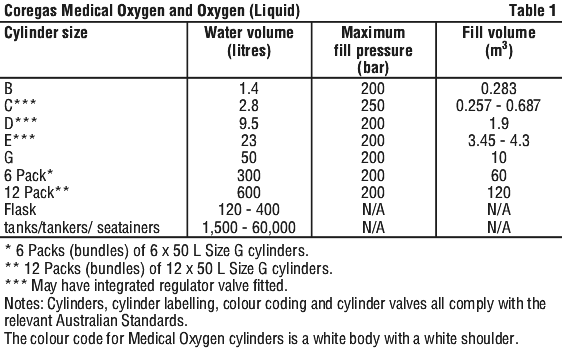
The types of cylinders normally used are specified in Table 1 (note: water capacity is nominal):
Medical oxygen (liquid) AUST R. 199515.
6.6 Special Precautions for Disposal
Immediately return empty cylinders to the empty cylinder store for return to Coregas.
6.7 Physicochemical Properties
Oxygen is a colourless, odourless gas with a boiling point of -183.1°C (at 101.325 kPa) and a density of 1.355 kg/m3 (at 15°C and 101.325 kPa).
Oxygen is present in the atmosphere at 21% and is an absolute necessity for life.
Chemical structure. O = O.
CAS number. 7782-44-7.
7 Medicine Schedule (Poisons Standard)
Unscheduled.
Date of Revision
22 March 2022
Summary Table of Changes

Reasonable care is taken to provide accurate information at the time of creation. This information is not intended as a substitute for medical advice and should not be exclusively relied on to manage or diagnose a medical condition. The Australian Commission on Safety and Quality in Health Care disclaims all liability (including for negligence) for any loss, damage, injury or any other negative effects resulting from reliance on or use of this information. Read our full disclaimer. This website uses cookies. Read our privacy policy.