
Technescan MAG3
Brand Information
| Brand name | Technescan MAG3 |
| Active ingredient | Technetium (99mTc) mertiatide |
| Schedule | Unscheduled |
Consumer Medicine Information (CMI) leaflet
Please read this leaflet carefully before you start using the Technescan MAG3.
Summary CMI
Technescan MAG3™
Consumer Medicine Information (CMI) summary
The full CMI on the next page has more details. If you are worried about using this medicine, speak to your doctor, nurse, or nuclear medicine specialist.
1. Why am I using Technescan MAG3™?
Technescan MAG3™ contains the active ingredient betiatide. Technescan MAG3™ is used during medical scans to see how well the kidneys and urinary system are working and to identify any problems or abnormalities.
For more information, see Section 1. Why am I using Technescan MAG3™? in the full CMI.
2. What should I know before I use Technescan MAG3™?
Do not use if you have ever had an allergic reaction to Technescan MAG3™ or any of the ingredients listed in Section 7. Product Details.
Talk to your doctor if you have any other medical conditions, take any other medicines, or are pregnant or plan to become pregnant or are breastfeeding.
For more information, see Section 2. What should I know before I use Technescan MAG3™? in the full CMI.
3. What if I am taking other medicines?
There are no known medications that interfere with Technescan MAG3™ or affect how it works.
4. How do I use Technescan MAG3™?
- Technescan MAG3™ is only given by a doctor, nurse, nuclear medicine specialist, or qualified staff with specific training in the safe use and handling of radiopharmaceuticals and will decide how much you will be given.
- Technescan MAG3™ is given as an injection into a vein prior to imaging.
More instructions can be found in Section 4. How do I use Technescan MAG3™? in the full CMI.
5. What should I know while using Technescan MAG3™?
| Things you should do |
|
For more information, see Section 5. What should I know while using Technescan MAG3™? in the full CMI.
6. Are there any side effects?
Serious side effects may include wheezing, difficulty breathing, increased heart rate, high blood pressure, and seizure.
Less serious side effects, including what to do if you have any side effects, are stated in Section 6. Are there any side effects? in the full CMI.
Full CMI
Technescan MAG3™
Active ingredient: betiatide
Consumer Medicine Information (CMI)
This leaflet provides important information about using Technescan MAG3™. You should also speak to your doctor, nurse, or nuclear medicine specialist if you would like further information or if you have any concerns or questions about using Technescan MAG3™.
Where to find information in this leaflet:
1. Why am I using Technescan MAG3™?
2. What should I know before I use Technescan MAG3™?
3. What if I am taking other medicines?
4. How do I use Technescan MAG3™?
5. What should I know while using Technescan MAG3™?
6. Are there any side effects?
7. Product details
1. Why am I using Technescan MAG3™?
Technescan MAG3™ contains the active ingredient betiatide.
Technescan MAG3™ is a radiopharmaceutical agent. Upon dissolving the vial contents with a radioactive solution, it becomes radioactive medication for medical imaging.
Technescan MAG3™ is used during medical scans to see how well the kidneys and urinary system are working and to identify any problems or abnormalities in both adults and children 30 day or older.
After injection, the medication travels to the kidneys and urinary system and emits a small amount of radiation that is detected by a specialized camera to generate an image that is reviewed by a doctor or nuclear medicine specialist.
2. What should I know before I use Technescan MAG3™?
Warnings
Do not use Technescan MAG3™ if:
- you are allergic to betiatide, or any of the ingredients listed in Section 7. Product Details.
Always check the ingredients to make sure you can use this medicine.
Check with your doctor if you:
- have any other medical conditions
- take any medicines for any other condition
During treatment, you may be at risk of developing certain side effects. It is important you understand these risks and how to monitor for them. See additional information under Section 6. Are there any side effects?
Pregnancy and breastfeeding
Check with your doctor if you are pregnant or intend to become pregnant. Technescan MAG3™ is not recommended for use during pregnancy.
If there is a need to consider Technescan MAG3™ during your pregnancy, your doctor will discuss the benefits and risks of giving it to you.
Talk to your doctor if you are breastfeeding or intend to breastfeed. Technescan MAG3™ is not recommended while you are breastfeeding.
If you are breastfeeding, formula feedings should be substituted for breast feeding for 24 hours following the administration of Technescan MAG3™. Breast milk produced within that time should be discarded.
3. What if I am taking other medicines?
Tell your doctor, nurse, or nuclear medicine specialist if you are taking any other medicines, including any medicines, vitamins or supplements that you buy without a prescription from your pharmacy, supermarket or health food shop.
There are no known medications that interfere with Technescan MAG3™ or affect how it works.
Check with your doctor, nurse, or nuclear medicine specialist if you are not sure about what medicines, vitamins or supplements you are taking and if these affect Technescan MAG3™.
4. How do I use Technescan MAG3™?
How much to take / use
- Your doctor will decide how much you will be given.
This depends on your condition and other factors, such as age and weight.
When to take / use Technescan MAG3™
- Technescan MAG3™ will be given prior to imaging.
How to take / use Technescan MAG3™
- Technescan MAG3™ is only given by a doctor, nurse, nuclear medicine specialist, or qualified staff with specific training in the safe use and handling of radiopharmaceuticals.
- The contents of the vial are dissolved with a radioactive solution, additive-free sodium pertechnetate (Tc 99m), to produce the liquid that will be given to you.
- Technescan MAG3™ is given as an injection into a vein.
5. What should I know while using Technescan MAG3™?
Things you should do
- Increase fluid intake
- Empty your bladder as often as possible for 6 hours after being given the medication
Remind any doctor, dentist or pharmacist you visit that you were recently given Technescan MAG3™ if it occurred in the past three days.
Things you should not do
- Do not take other medicines unless advised by your doctor
6. Are there any side effects?
All medicines can have side effects. If you do experience any side effects, most of them are minor and temporary. However, some side effects may need medical attention.
See the information below and, if you need to, ask your doctor, nurse, or nuclear medicine specialist if you have any further questions about side effects.
Less serious side effects
| Less serious side effects | What to do |
Whole-Body:
| Speak to your doctor or nurse if you have any of these less serious side effects and they worry you. |
Serious side effects
| Serious side effects | What to do |
Breathing/Respiratory:
| Tell your doctor or nurse straight away or go straight to the Emergency Department at your nearest hospital if you notice any of these serious side effects. |
Tell your doctor, nurse, or nuclear medicine specialist if you notice anything else that may be making you feel unwell.
Other side effects not listed here may occur in some people.
Reporting side effects
After you have received medical advice for any side effects you experience, you can report side effects to the Therapeutic Goods Administration online at www.tga.gov.au/reporting-problems. By reporting side effects, you can help provide more information on the safety of this medicine.
Always make sure you speak to your doctor, pharmacist, nurse, or nuclear medicine specialist before you decide to stop taking any of your medicines.
7. Product details
This medicine is only available with a doctor's prescription.
What Technescan MAG3™ contains
| Active ingredient (main ingredient) | Betiatide |
| Other ingredients (inactive ingredients) | Lactose monohydrate Sodium tartrate dihydrate Stannous chloride dihydrate |
| Potential allergens | None known |
Do not take this medicine if you are allergic to any of these ingredients.
What Technescan MAG3™ looks like
Technescan MAG3™ is a white freeze-dried powder in a glass vial. It is dissolved with a radioactive solution, additive-free sodium pertechnetate (Tc 99m), to produce the liquid that is injected. (Aust R 10013)
Who distributes Technescan MAG3™
Landauer Radiopharmaceuticals Pty Ltd
Level 3/69 Phillip Street
Parramatta NSW 2150
Australia
Contact Number: (02) 8651 4000
Manufactured by Curium US LLC
Made in USA

This leaflet was prepared in December 2025.
Brand Information
| Brand name | Technescan MAG3 |
| Active ingredient | Technetium (99mTc) mertiatide |
| Schedule | Unscheduled |
MIMS Revision Date: 01 March 2020
1 Name of Medicine
Betiatide.
2 Qualitative and Quantitative Composition
Technescan MAG3 is a kit for the preparation of technetium Tc99m mertiatide, a diagnostic radiopharmaceutical agent.
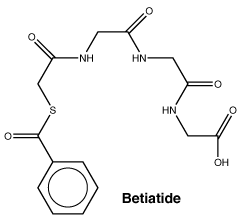
Technescan MAG3 is supplied as a sterile, non-pyrogenic, lyophilised powder, packaged under argon. Each vial contains betiatide (N-[N-[N-[(benzoylthio) acetyl] glycyl]glycyl]glycine). After reconstitution with sterile sodium pertechnetate Tc99m injection, the technetium Tc99m mertiatide (disodium[N-[N-[N-(mercaptoacetyl)glycyl]glycyl] glycinato (2-)-N,N’,N”,S’]oxotechnetate (2-)) which when formed is suitable for intravenous administration.
Each vial contains 1 mg betiatide. The pH of the reconstituted drug is between 5.0 and 6.0. No bacteriostatic preservative is present. Betiatide is light sensitive and must be protected from light.
For the full list of excipients, see Section 6.1 List of Excipients.
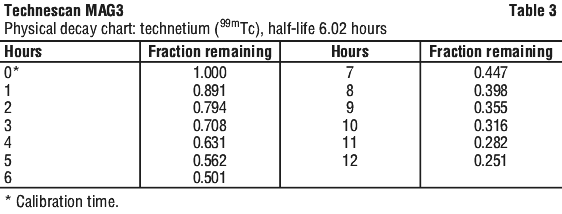
Physical characteristics. Technetium Tc99m decays by isomeric transition with a physical half-life of 6.02 hours.1 The principal photon that is useful for detection and imaging is listed in Table 1.

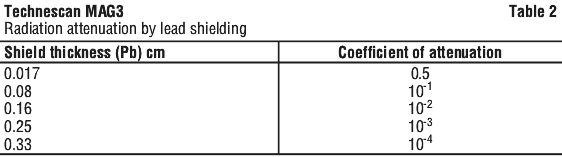
3 Pharmaceutical Form
Powder for injection.
Technescan MAG3 is a white lyophilised powder in a glass vial intended for intravenous injection.
4 Clinical Particulars
4.1 Therapeutic Indications
Technetium Tc99m mertiatide is a renal imaging agent for use in the diagnosis of congenital and acquired abnormalities, renal failure, urinary tract obstruction, and calculi in adults and paediatric patients (see Section 4.4, Paediatric use). It is a diagnostic aid in providing renal function, split function, renal angiograms, and renogram curves for whole kidney and renal cortex.
4.2 Dose and Method of Administration
Dosage. The suggested dose range employed in the average adult patient (70 kg) for renal function and imaging studies is 185 megabecquerel (MBq) (5 millicurie [mCi]) to 370 MBq (10 mCi).
In paediatric patients the recommended dose range is 2.6 MBq/kg (70 microCi/kg) to 5.2 MBq/kg (140 microCi/kg) with a minimum dose of 37 MBq (1 mCi).
The patient dose should be measured by a suitable radioactivity calibration system immediately prior to administration.
Parenteral products should be inspected visually for particulate matter and discolouration prior to administration.
Aseptic procedures and a shielded syringe should be employed in withdrawing doses for administration to patients. The user should wear waterproof gloves during the administration procedure.
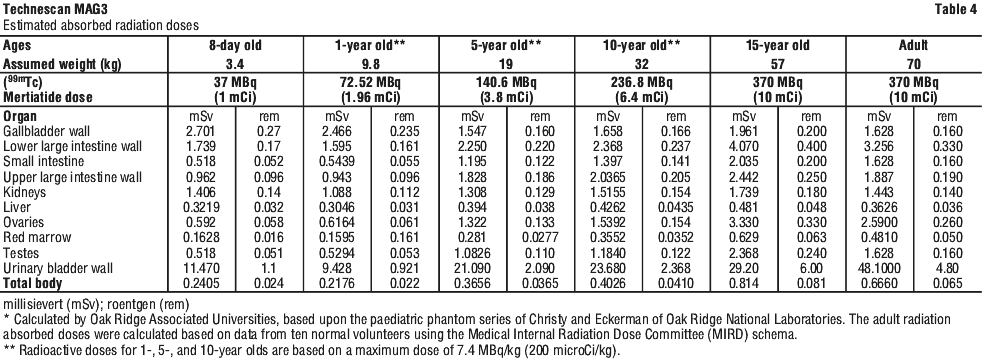
Radiation dosimetry. The estimated absorbed radiation doses from an intravenous administration of technetium Tc99m mertiatide are presented in Table 4.
Procedural precautions and notes. 1. Solutions of sodium pertechnetate Tc99m which contain oxidising agents (i.e. sodium hypochlorite or hydrogen peroxide) should not be used.
Note. Do not use Tc99m eluate more than 6 hours after its elution from the generator.
2. All transfers and vial stopper entries must be done using aseptic technique.
3. The water bath used for heating the contents of the reaction vial must be at a continuous rolling boil during the heating step of the preparation procedure. The vial should be in direct contact with the rolling boil water of the bath, and the level of the bath must be at least even with the level of the contents of the vial.
4. The temperature of a lead incubation shield should be allowed to reach the temperature of the water bath before incubating the reaction vial. The shield should be designed so that water flows through the interior of the shield.
Note 1. Wear waterproof gloves during the entire preparation procedure and during subsequent patient dose withdrawals from the reaction vial.
Note 2. Make all transfers of sodium pertechnetate Tc99m solution during the preparation procedure with an adequately shielded syringe.
Note 3. Keep the radioactive preparation in the lead shield described below (with cap in place) during the useful life of the radioactive preparation. Maintain adequate shielding during the life of the product and use a shielded, sterile syringe for withdrawing and injecting the preparation.
Procedure for the preparation of technetium Tc99m mertiatide. 1. Prepare a rolling boil water bath containing a vial shield with openings cut in it to allow the water to circulate through the shield. The openings should be oriented to prevent radiation leakage.
2. Place the reaction vial in a lead dispensing shield fitted with a lid and with a minimum wall thickness of 1/8 (one eighth) inch.
3. Swab the rubber stopper of the reaction vial with an appropriate antiseptic. Insert a filter-containing venting needle (provided) through the vial stopper. Inject 4 to 10 mL of sodium pertechnetate Tc99m solution containing 740 MBq (20 mCi) to 3.70 gigabecquerels (GBq) (100 mCi) into the vial. If required, use nonbacteriostatic normal saline to dilute the sodium pertechnetate Tc99m solution to the desired concentration prior to addition to the vial.
Note. Make sure the water bath is at boiling temperature before adding sodium pertechnetate Tc99m to the reaction vial.
4. Immediately following the addition of sodium pertechnetate Tc99m solution to the reaction vial, withdraw the syringe plunger to a volume of 2 mL, thus removing 2 mL of argon gas and adding 2 mL of filtered air to the vial. The air is required to oxidise excess stannous ion. Remove both needles from the vial.
Note. The addition of 2 mL air is required to prevent the progressive formation of technetium Tc99m labelled impurities.
5. Invert the reaction vial several times to obtain complete mixing.
6. Immediately transfer the reaction vial to the water bath. Place it inside the lead shield which has been equilibrated to the temperature of the boiling water bath. Allow the reaction vial to incubate for 10 minutes.
Note. The reaction vial must be placed in the boiling water bath within 5 minutes of the addition of sodium pertechnetate Tc99m solution.
7. Remove the reaction vial from the boiling water bath and place in the lead dispensing shield. Allow the contents of the vial to cool for approximately 15 minutes to reach body temperature. Using proper shielding, the vial contents should be visually inspected. The solution should be clear and free of particulate matter. If not, the preparation should not be used.
8. Assay the reaction vial using a suitable radioactivity calibration system. Record the date, time, total technetium Tc99m activity, volume, and technetium Tc99m concentration on the radioassay information label and affix the label to the lead dispensing shield.
9. The radiochemical purity of the reconstituted solution must be checked prior to administration to the patient. If the radiochemical purity is less than 90%, the product must not be used.
10. Store the reaction vial containing the technetium Tc99m mertiatide below 30°C and protect from light until use. The technetium Tc99m mertiatide preparation must be used within 6 (six) hours of preparation.
Method of administration. Required materials. Waters Sep-Pak C18 cartridges, part #51910, 200 proof ethanol;
0.9% Sodium Chloride Injection, USP 0.001 N hydrochloric acid*;
1:1 ethanol/saline solution**;
Disposable syringes: 10 mL, no needle required;
1 mL, with needle;
Disposable culture tubes or vials, minimum 15 mL capacity;
Ion chamber for measurement of radioactive samples.
*May be prepared by diluting 1 mL of 0.10 N hydrochloric acid to 100 mL with Water for Injection, USP, or by other appropriate dilution of more concentrated hydrochloric acid. For example, 0.1 mL of 36% (~11.6 N) hydrochloric acid diluted to a total volume of 1,150 mL.
**Prepared by mixing equal volumes of the 200 proof ethanol and 0.9% Sodium Chloride Injection, USP.
Preparation of Sep-Pak cartridge. 1. Using a 10 mL syringe, push 10 mL of 200 proof ethanol through the Sep-Pak cartridge. Discard the eluate.
2. Similarly, flush the cartridge with 10 mL of the 0.001 N hydrochloric acid. Discard the eluate.
3. Drain the cartridge by pushing 5 mL of air through the cartridge with the syringe. Discard the eluate.
Sample analysis. 1. Apply 0.1 mL of the technetium Tc99m mertiatide preparation to the head of the cartridge through the longer end of the cartridge using a 1 mL syringe with needle.
Note. The cartridge and all solutions eluted from it will be radioactive after this step.
2. With a disposable 10 mL syringe, slowly push 10 mL of 0.001 N hydrochloric acid through the cartridge. Collect this fraction in a culture tube or vial for counting.
3. Similarly, elute the cartridge with 10 mL of the 1:1 ethanol/saline solution. Be sure that this solution is pushed through the cartridge slowly so that the elution occurs in a drop-wise manner. Collect this 10 mL fraction in a second culture tube or vial for counting.
4. Place the Sep-Pak cartridge in a third culture tube or vial for counting.
Counting. 1. Assay the activity of the first sample elution in an ion chamber. This fraction contains the hydrophilic impurities (free pertechnetate, technetium tartrate, etc.) and a fraction of reduced-hydrolysed technetium.
2. Assay the activity of the second elution. This fraction contains the technetium Tc99m mertiatide complex.
3. Assay the activity of the Sep-Pak cartridge in the third culture tube or vial. This component contains the remaining reduced-hydrolysed technetium and non-elutable impurities.
Calculations.



4.3 Contraindications
None known.
4.4 Special Warnings and Precautions for Use
The contents of this kit are not radioactive. However, after sodium pertechnetate Tc99m is added, adequate shielding of the final preparation must be maintained.
Contents of the reaction vial are intended only for use in the preparation of technetium Tc99m mertiatide and are not to be administered directly to the patient.
To help reduce the radiation dose to the bladder, as well as other target organs, the patient should increase his or her fluid intake (unless medically contraindicated) and void as often as possible after the injection of technetium Tc99m mertiatide for six (6) hours after the imaging procedure.
Technetium Tc99m mertiatide should not be used more than six (6) hours after preparation.
The components of the kit are sterile and non-pyrogenic. It is essential that the user follow the directions carefully and use aseptic procedures normally employed in making additions and withdrawals from sterile, non-pyrogenic containers during the addition of pertechnetate solution and the withdrawal of doses for patient administration.
The technetium Tc99m labelling reactions involved in preparing Technescan MAG3 depend on maintaining the stannous ion in the reduced state. Any oxidant present in the sodium pertechnetate Tc99m may adversely affect the quality of the radiopharmaceutical, therefore, sodium pertechnetate Tc99m containing oxidants should not be employed.
As in the use of any other radioactive material, care should be taken to ensure minimum radiation exposure to the patient and to occupational workers.
Radiopharmaceuticals should be used only by physicians who are qualified by specific training in the safe use and handling of radionuclides.
Use in the elderly. There is no special safety or dosage information available for use in the elderly.
Paediatric use. Safety and effectiveness in paediatric patients under the age of 30 days have not been established.
Effects on laboratory test. This information is not available.
4.5 Interactions with Other Medicines and Other Forms of Interactions
This information is not available.
4.6 Fertility, Pregnancy and Lactation
Effects on fertility. No long term animal studies have been performed to evaluate carcinogenic or mutagenic potential, or whether this drug affects fertility in males or females.
Use in pregnancy. Animal reproduction studies have not been conducted with technetium Tc99m mertiatide. It is also not known whether this medicine can cause foetal harm when administered to a pregnant woman or can affect reproduction capacity. Technetium Tc99m mertiatide should be given to a pregnant woman only if clearly needed.
Use in lactation. Technetium Tc99m is excreted in human milk during lactation. Therefore, formula feedings should be substituted for breast feeding.
4.7 Effects on Ability to Drive and Use Machines
The effects of this medicine on a person’s ability to drive and use machines were not assessed as part of its registration.
4.8 Adverse Effects (Undesirable Effects)
Body as a whole. Shaking, chills, fever.
Cardiovascular. Tachycardia, hypertension.
Digestive. Nausea, vomiting.
Nervous system. Seizure.
Respiratory system. Wheezing, dyspnoea.
Skin and appendages. Itching, rash.
Reporting suspected adverse effects. Reporting suspected adverse reactions after registration of the medicinal product is important. It allows continued monitoring of the benefit-risk balance of the medicinal product. Healthcare professionals are asked to report any suspected adverse reactions at www.tga.gov.au/reporting-problems.
4.9 Overdose
The risk of an excessive technetium Tc99m mertiatide dose is largely theoretical and most likely to be due to excessive radiation exposure. In such circumstances the radiation to the body (kidney, bladder and gallbladder) can be reduced by forced diuresis and frequent bladder voiding.
For information on the management of overdose, contact Poisons Information Centre on 131126 (Australia).
5 Pharmacological Properties
5.1 Pharmacodynamic Properties
Mechanism of action. This information is not available.
Clinical trials. No data available.
5.2 Pharmacokinetic Properties
Absorption. In both healthy subjects and patients with renal impairment, the plasma concentration-time profile showed a biexponential decline.
Distribution. Following intravenous injection of technetium Tc99m mertiatide, the appearance, concentration, and excretion of the tracer in the kidney can be monitored to assess renal function. Following intravenous injection of technetium Tc99m mertiatide in normal volunteers, 89% of the tracer was plasma protein bound. In healthy subjects with normal renal function (mean serum creatinine 1.2 mg/dL) technetium Tc99m mertiatide was rapidly cleared from the blood. The plasma clearance was approximately 0.3 liters/minute and the amount of technetium Tc99m mertiatide excreted in the urine in three hours was nearly 90% of the dose.
Metabolism. This information is not available.
Excretion. Although technetium Tc99m mertiatide is highly plasma protein bound following intravenous injection, the protein binding is reversible and the tracer is rapidly excreted by the kidneys via active tubular secretion and glomerular filtration.
In a study performed in three patients with renal impairment (serum creatinine greater than 6.3 mg/dL), there was decreased blood clearance and a decrease in the amount excreted in the urine over three hours. In these patients, 78% of the tracer was plasma protein bound after intravenous injection. The mean plasma clearance of technetium Tc99m mertiatide was 0.03 liters/minute and 21.3% was excreted in three hours on average.
5.3 Preclinical Safety Data
No long term animal studies have been performed to evaluate carcinogenic or mutagenic potential, or whether Tc99m-labelled technetium MAG3 (technetium Tc99m mertiatide) affects fertility in males or females.
6 Pharmaceutical Particulars
6.1 List of Excipients
Lactose monohydrate, sodium tartrate dihydrate, stannous chloride dihydrate.
6.2 Incompatibilities
Incompatibilities were either not assessed or not identified as part of the registration of this medicine.
6.3 Shelf Life
Before reconstitution. 12 months from date of manufacture.
After reconstitution. Must be used within six (6) hours of preparation.
6.4 Special Precautions for Storage
Before reconstitution. Store between 15 to 25°C. Protect from light until use.
After reconstitution. Store between 15 to 25°C.
6.5 Nature and Contents of Container
Glass vial.
Packs contain 5 vials.
6.6 Special Precautions for Disposal
In Australia, any unused medicine or waste material should be disposed of in accordance with local requirements.
6.7 Physicochemical Properties
Chemical structure. Betiatide and technetium Tc99m mertiatide have the following structural formulas:
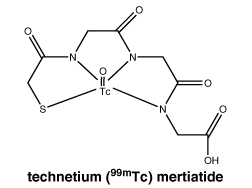
CAS number for technetium Tc99m mertiatide: 125224-05-7.
7 Medicine Schedule (Poisons Standard)
Unscheduled.
Date of First Approval
12 June 1991
Date of Revision
13 January 2020
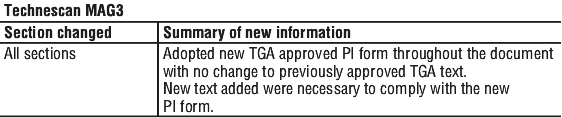
Summary Table of Changes
Reasonable care is taken to provide accurate information at the time of creation. This information is not intended as a substitute for medical advice and should not be exclusively relied on to manage or diagnose a medical condition. The Australian Commission on Safety and Quality in Health Care disclaims all liability (including for negligence) for any loss, damage, injury or any other negative effects resulting from reliance on or use of this information. Read our full disclaimer. This website uses cookies. Read our privacy policy.