
Tinasil
Brand Information
| Brand name | Tinasil |
| Active ingredient | Terbinafine |
| Schedule | S4 |
Consumer Medicine Information (CMI) leaflet
Please read this leaflet carefully before you start using the Tinasil.
Summary CMI
TINASIL®
Consumer Medicine Information (CMI) summary
The full CMI on the next page has more details. If you are worried about taking this medicine, speak to your doctor or pharmacist.
1. Why am I taking TINASIL?
TINASIL contains the active ingredient Terbinafine hydrochloride. TINASIL is used to treat fungal infections of fingernails and toenails, as well as ringworm (tinea) infections occurring in the groin and body, and tinea infections of the feet (athelete's foot).
For more information, see Section 1. Why am I taking TINASIL? in the full CMI.
2. What should I know before I take TINASIL?
Do not take if you have ever had an allergic reaction to TINASIL or any of the ingredients listed at the end of the CMI.
Talk to your doctor if you have any other medical conditions, take any other medicines, or are pregnant or plan to become pregnant or are breastfeeding.
For more information, see Section 2. What should I know before I take TINASIL? in the full CMI.
3. What if I am taking other medicines?
Some medicines may interfere with TINASIL and affect how it works.
A list of these medicines is in Section 3. What if I am taking other medicines? in the full CMI.
4. How do I take TINASIL?
- Your doctor will advise you on the appropriate dose.
- For skin infections: take 250 mg TINASIL once a day.
- For fungal infection of finger and toenails: take 250 mg TINASIL once a day.
- If your fungal infection does not improve, your doctor will review and determine if an alternative antifungal therapy is needed.
More instructions can be found in Section 4. How do I take TINASIL? in the full CMI.
5. What should I know while taking TINASIL?
| Things you should do |
|
| Things you should not do |
|
| Driving or using machines |
|
| Looking after your medicine |
|
For more information, see Section 5. What should I know while taking TINASIL? in the full CMI.
6. Are there any side effects?
Common side effects include low appetite, headache, dizziness, weakness, vomiting, rash, hives, feeling sick, yellowing of the skin and eyes, light-coloured stools, dark coloured urine, indigestion.
For more information, including what to do if you have any side effects, see Section 6. Are there any side effects? in the full CMI.
Full CMI
TINASIL®
Active ingredient(s): Terbinafine hydrochloride
Consumer Medicine Information (CMI)
This leaflet provides important information about taking TINASIL. You should also speak to your doctor or pharmacist if you would like further information or if you have any concerns or questions about taking TINASIL.
Where to find information in this leaflet:
1. Why am I taking TINASIL?
2. What should I know before I take TINASIL?
3. What if I am taking other medicines?
4. How do I take TINASIL?
5. What should I know while taking TINASIL?
6. Are there any side effects?
7. Product details
1. Why am I taking TINASIL?
TINASIL contains the active ingredient Terbinafine hydrochloride. TINASIL belongs to a group of medications called antifungals.
TINASIL tablets are used to treat:
- fungal infections of fingernails and toenails (Onychomycosis)
- tinea (ringworm) infections of the groin and body
- tinea infections of the feet, commonly called "athlete's foot"
These infections are caused by a group of fungi called dermatophytes.
Terbinafine, the active ingredient in TINASIL tablets, works by killing the dermatophytes.
Ask your doctor if you have any questions about why this medicine has been prescribed for you.
Your doctor may have prescribed it for another reason.
2. What should I know before I take TINASIL?
Warnings
Do not take TINASIL if:
- you have ever had an allergic reaction to:
- terbinafine, the active ingredient, or to any of the other ingredients listed at the end of this leaflet.
- any other medicines, foods, preservatives or dyes.
Your doctor will want to know if you are prone to allergies.
Some of the symptoms of an allergic reaction may include:
- shortness of breath
- wheezing or difficulty breathing
- swelling of the face, lips, tongue or other parts of the body
- rash, itching or hives on the skin. - you have or ever had a problem with your kidneys or liver
TINASIL is not recommended if you currently have a liver problem because it may make the problem worse. If you had a liver problem in the past and your liver is functioning normally now, your doctor may prescribe TINASIL tablets but may want to check your liver function before and during treatment with this medicine. Your doctor might take blood tests to monitor your liver function. In case of abnormal test results they may ask you to stop taking TINASIL. - the expiry date printed on the pack has passed or if the packaging is torn or shows signs of tampering
Check with your doctor if you:
- are pregnant or plan to become pregnant
- are breastfeeding
- if you have other medical conditions including if you have liver problems or any symptoms such as feeling sick, loss of appetite, weakness, vomiting, pain in the right upper park of tummy or yellowing of skin or eyes, dark urine or pale stools
- have any skin problems such as rash, red skin, blistering of the lips, eyes or mouth, skin peeling, fever (possible signs of serious skin reactions), rash due to high level of a specific type of white blood cells (eosinophilia), serious skin reactions (such as Stevens-Johnson syndrome, a serious disorder of the skin with symptoms such as blisters, weakness, fever or toxic epidermal necrolysis)
- have or experience thickened patches of red/silver skin (psoriasis) or facial rash, joint pain, muscle disorder, fever (cutaneous and systemic lupus erythematosus).
- have any problems related to your blood (e.g. unusual bleeding, bruising or frequent infections)
- have or develop unexplained bleeding or blood clots.
If you are not sure whether you should start taking TINASIL tablets, talk to your doctor or pharmacist.
During treatment, you may be at risk of developing certain side effects. It is important you understand these risks and how to monitor for them. See additional information under Section 6. Are there any side effects?
Pregnancy and breastfeeding
TINASIL is not recommended during pregnancy. Your doctor will advise you regarding the possible risks and benefits of using TINASIL during pregnancy. There is no experience with use of TINASIL tablets during pregnancy. If your doctor thinks it is necessary for you to take it, he/she will discuss with you the benefits and risks involved. Talk to your doctor if you are breastfeeding or intend to breastfeed.
Do not use TINASIL during breastfeeding as terbinafine hydrochloride passes in breast milk. There is a possibility that your baby could be affected.
Laboratory tests
Your doctor might do routine blood tests, liver function test before and during TINASIL.
3. What if I am taking other medicines?
Tell your doctor or pharmacist if you are taking any other medicines, including any medicines, vitamins or supplements that you buy without a prescription from your pharmacy, supermarket or health food shop.
Some medicines may interfere with TINASIL and affect how it works.
Tell your do doctor or pharmacist if you take any of the following:
- warfarin, a drug used to prevent blood clots
- oral contraceptives (birth control pills). You may have problems, such as bleeding between periods, while you are taking TINASIL tablets.
- some medicines used to treat an irregular heartbeat, heart problems, high blood pressure and migraines (e.g. metoprolol)
- caffeine
- drugs used to treat depression and other mental problems (e.g. tricyclic antidepressants: desipramine, selective serotonin reuptake inhibitors (SSRIs), antiarrhythmics Class 1A, 1B, and 1C, and monoamine oxidase inhibitors (MAOIs) Type B)
- cyclosporin, a medicine used to prevent organ transplant rejection or treat certain problems with the immune system
- drugs used for treatment of cough e.g. dextromethorphan
- some medicines for Parkinson's disease
Medicines that may increase the effect of TINASIL include:
- cimetidine or other similar medicines used to treat stomach ulcers
- other antifungal medicines such as fluconazole, ketoconazole
Medicines that may reduce the effect of TINASIL include:
- rifampicin or other similar antibiotics used to treat infections.
Check with your doctor or pharmacist if you are not sure about what medicines, vitamins or supplements you are taking and if these affect TINASIL.
4. How do I take TINASIL?
How much to take
- Follow your doctor's instructions on how many TINASIL tablets to take.
- The usual dose of TINASIL is one tablet (250 mg) each day. If you have kidney problems, the dose may be reduced to one-half a tablet each day.
When to take TINASIL
- Take TINASIL at about the same time each day.
Taking your tablet at the same time each day will have the best effect. It will also help you remember when to take it.
How to take TINASIL
- Swallow the tablet with a full glass of water.
- If your doctor has advised that you take half a tablet, you may divide the tablet in half along the breakline.
- If you find that TINASIL upsets your stomach, try taking it immediately after a light meal.
How long to take it
- The length of your treatment will depend on the type of infection you have, what part of the body is affected and how well you respond to treatment. Your doctor will advise you regarding the duration of treatment.
- Fungal skin infections (tinea):
If you have a tinea infection of the feet (Athlete's foot), you will usually take TINASIL tablets for 2 to 6 weeks.
If you have a tinea infection of the body or groin, you will usually take the tablets for 2 to 4 weeks.
The signs and symptoms of infection may last for several weeks after the fungi (dermatophytes) have been killed. - Fungal nail infections:
Fungal nail infections usually take longer to heal than fungal skin infections. You will usually take the tablets for anywhere from 6 weeks to 3 months. But, if you have a nail infection of the big toe or your nails grow very slowly, you may need to take the tablets for up to 6 months.
It may take several months after you stop taking TINASIL for your nail to look completely normal. That is because the deformed part of the nail has to grow out and be replaced by a healthy nail.
If your fungal infection does not improve. Your doctor will review and determine if an alternative antifungal therapy is needed.
If you forget to take TINASIL
If it is almost time for your next dose (within 4 hours), skip the dose you missed and take your next dose when you are meant to.
Otherwise, take it as soon as you remember, and then go back to taking your medicine as you would normally.
Do not take a double dose to make up for the dose you missed.
This may increase the chance of you getting an unwanted side effect.
If you are not sure what to do, ask your doctor or pharmacist.
If you have trouble remembering when to take your medicine, ask your pharmacist for some hints.
If you take too much TINASIL
If you think that you or anyone else has taken too much TINASIL, urgent medical attention may be needed.
You should immediately:
- phone the Poisons Information Centre
(by calling 13 11 26) for advice, or - contact your doctor, or
- go to the Emergency Department at your nearest hospital.
You should do this even if there are no signs of discomfort or poisoning.
Some of the symptoms of an overdose may include headache, nausea (feeling sick), stomach pain and dizziness.
5. What should I know while taking TINASIL?
Things you should do
- Make sure to take your tablet every day and continue taking it until your doctor tells you to stop.
This will ensure that all of the infection is gone and will lessen the chance of the infection coming back once you stop taking the tablets. - Make sure to have any blood tests done that are ordered by your doctor.
Any effects of TINASIL on your liver, kidneys or blood can be detected by blood tests. - Keep the infected areas dry and cool and change clothing which is in direct contact with the infected areas every day.
Call your doctor straight away if you notice any of the following:
- any signs of an allergic reaction
- fever
- sore throat
- mouth ulcers
- "flu-like" symptoms (chills, aching joints, swollen glands, lack of energy)
- any other signs of infection, apart from the fungal infection you are being treated for
- become pregnant
- have any problems with your liver, kidney or blood
- experience multiple blood clots
Remind your doctor and pharmacist that you are about to be started on any new medicine.
Remind any doctor, dentist or pharmacist you visit that you are taking TINASIL.
Things you should not do
- Do not stop taking this medicine suddenly.
- Do not use TINASIL in children.
- Do not give TINASIL to anyone else, even if they have the same condition as you.
- Do not take TINASIL tablets to treat any other complaints unless your doctor tells you to.
Driving or using machines
Be careful before you drive or operate any machines or tools until you know how TINASIL affects you.
TINASIL may cause dizziness, tiredness, sleepiness or light-headedness in some people. If you have any of these symptoms, do not drive, use machines, or do anything else that could be dangerous.
Looking after your medicine
- Keep your tablets in the original container until it is time to take them.
- Store below 25°C.
Follow the instructions in the carton on how to take care of your medicine properly.
Store it in a cool dry place away from moisture, heat or sunlight; for example, do not store it:
- in the bathroom or near a sink, or
- in the car or on window sills.
Heat and dampness can destroy some medicines.
Keep it where young children cannot reach it.
A locked cupboard at least one-and a-half metres above the ground is a good place to store medicines.
Getting rid of any unwanted medicine
If you no longer need to take this medicine or it is out of date, take it to any pharmacy for safe disposal.
Do not take this medicine after the expiry date.
6. Are there any side effects?
All medicines can have side effects. If you do experience any side effects, most of them are minor and temporary. However, some side effects may need medical attention.
See the information below and, if you need to, ask your doctor or pharmacist if you have any further questions about side effects.
Less serious side effects
| Less serious side effects | What to do |
General problems:
| Speak to your doctor if you have any of these less serious side effects and they worry you. |
Serious side effects
| Serious side effects | What to do |
General problems:
| Call your doctor straight away, or go straight to the Emergency Department at your nearest hospital if you notice any of these serious side effects. |
Tell your doctor or pharmacist if you notice anything else that may be making you feel unwell.
Other side effects not listed here may occur in some people.
Reporting side effects
After you have received medical advice for any side effects you experience, you can report side effects to the Therapeutic Goods Administration online at www.tga.gov.au/reporting-problems. By reporting side effects, you can help provide more information on the safety of this medicine.
Always make sure you speak to your doctor or pharmacist before you decide to stop taking any of your medicines.
7. Product details
This medicine is only available with a doctor's prescription.
What TINASIL contains
| Active ingredient (main ingredient) | Terbinafine (as the hydrochloride salt) 250 mg |
| Other ingredients (inactive ingredients) |
|
Do not take this medicine if you are allergic to any of these ingredients.
What TINASIL looks like
TINASIL tablets are round, white to off-white tablets marked with "TF" over a breakline over "250" on one side and "G" on the other side (AUST R 104493).
TINASIL tablets are supplied in blister packs containing 42 tablets.
Who distributes TINASIL
Alphapharm Pty Ltd trading as Viatris
Level 1, 30 The Bond
30-34 Hickson Road
Millers Point NSW 2000
www.viatris.com.au
Phone: 1800 274 276
This leaflet was prepared in February 2026.
TINASIL® is a Viatris company trade mark
TINASIL_cmi\Feb26/00
Brand Information
| Brand name | Tinasil |
| Active ingredient | Terbinafine |
| Schedule | S4 |
MIMS Revision Date: 01 April 2026
1 Name of Medicine
Terbinafine hydrochloride.
2 Qualitative and Quantitative Composition
Each Tinasil tablet contains terbinafine hydrochloride equivalent to 250 mg of terbinafine base as the active ingredient.
For the full list of excipients, see Section 6.1 List of Excipients.
3 Pharmaceutical Form
Tinasil tablets are white to off-white, round, uncoated, scored, biconvex tablets with "TF/250" ("TF" over breakline over "250") on one side and "G" on the other side.
4 Clinical Particulars
4.1 Therapeutic Indications
Treatment in adults of ringworm (tinea corporis, tinea cruris and tinea pedis) due to infection caused by dermatophytes such as Trichophyton (e.g. T. rubrum, T. mentagrophytes, T. verrucosum, T. violaceum), Microsporum canis and Epidermophyton floccosum, where oral therapy is considered appropriate owing to the site, severity or extent of the infection, and the infection is not responsive to topical therapy.
Onychomycosis in adults (fungal infection of the nail) caused by dermatophyte fungi.
4.2 Dose and Method of Administration
Adults. Skin infections. 250 mg once a day.
Onychomycosis. 250 mg once a day.
Administration. Tinasil tablets should be taken orally. The bioavailability of terbinafine is not affected by a light meal.
Duration of treatment. The duration of treatment varies according to the indication and the severity of the infection.
Skin infections. Likely durations of treatment are as follows.
Tinea pedis (interdigital, plantar/ moccasin type): 2 to 6 weeks.
Tinea corporis or Tinea cruris: 2 to 4 weeks.
Complete resolution of the signs and symptoms of infection may not occur until several weeks after mycological cure.
Onychomycosis. For most patients the duration for successful treatment is between 6 weeks and 3 months.
Infections of finger and toenails (other than big toe) usually respond to the shorter duration of treatment, particularly in patients of younger age with a normal rate of nail outgrowth. In patients with slow nail growth, treatment for up to 3 months is usually adequate. However, infections in the big toe, or if nail growth is very poor, treatment for up to 6 months may be necessary.
Optimal clinical effect is seen some months after mycological cure and cessation of treatment. This is related to the period required for outgrowth of healthy nail tissue.
4.3 Contraindications
Hypersensitivity to terbinafine or to any of the excipients in the formulation.
Severe, chronic or active hepatic disease (see Section 4.4 Special Warnings and Precautions for Use).
4.4 Special Warnings and Precautions for Use
Use in hepatic impairment. Terbinafine tablets are contraindicated for patients with chronic or active hepatic disease. Before prescribing terbinafine tablets, liver function tests should be performed since hepatotoxicity may occur in patients with and without pre-existing liver disease. Therefore, periodic monitoring (after 4-6 weeks of treatment) of liver function tests is recommended. Terbinafine should be immediately discontinued in case of elevation of liver function tests. Very rare cases of liver failure (some leading to liver transplant or death) have been reported with the use of terbinafine tablets. In the majority of hepatic failure cases, the patients had underlying systemic conditions (see Section 4.8 Adverse Effects (Undesirable Effects)). Patients prescribed terbinafine tablets should be warned to report immediately any symptoms of persistent nausea, anorexia, fatigue, vomiting, right upper abdominal pain or jaundice, dark urine or pale stools. Patients with these symptoms should discontinue taking oral terbinafine and the patient's hepatic function should be immediately evaluated.
Use in renal impairment. The use of terbinafine tablets in patients with impaired renal function (creatinine clearance less than 50 mL/min or serum creatinine of more than 300 micromol/L) has not been adequately studied and therefore is not recommended.
Effect on vision. During high dose studies in monkeys, refractile irregularities were observed in the retina at doses that were 30 to 60 times the human dose (nontoxic effect level 50 mg/kg). The clinical relevance of this observation is unknown. However, the ocular effects in monkeys were not confirmed in humans in the placebo controlled trials, where the incidence of ophthalmic abnormalities was lower in the terbinafine tablet treated patients (1.1%) compared with those who received placebo (1.5%).
Effect on blood. Patients taking terbinafine are at risk of developing agranulocytosis, thrombocytopenia, pancytopenia and neutropenia, which are very rarely associated with terbinafine. The problem usually resolves within a few days to a week of withdrawal of terbinafine. Patients taking terbinafine should be advised to report symptoms of infections. Prescribers should examine the patient to determine the correct aetiology of any blood dyscrasias that occur in patients treated with terbinafine, and consideration should be given to a possible change in medication regimen, including discontinuation of treatment with terbinafine.
Cases of thrombotic thrombocytopenic purpura (TTP), some fatal, have been reported with terbinafine. Discontinue terbinafine if clinical symptoms and laboratory findings consistent with TTP occur. The findings of unexplained thrombocytopenia and anaemia should prompt further evaluation and consideration of the diagnosis of TTP.
Dermatological effects. Serious skin reactions (e.g. Stevens-Johnson syndrome, toxic epidermal necrolysis, drug rash with eosinophilia and systemic symptoms) have been very rarely reported in patients taking terbinafine. If progressive skin rash occurs, treatment with terbinafine should be discontinued.
Terbinafine should be used with caution in patients with pre-existing psoriasis or lupus erythematosus as precipitation and exacerbation of psoriasis and cutaneous and systemic lupus erythematosus have been reported in a postmarketing setting.
Drug resistance. Drug resistance has been reported with the use of terbinafine in dermatophytes, especially Trichophyton species. Prescribers should take into consideration the local prevalence of drug resistance and if an alternate treatment should be considered.
Use in the elderly. There is no evidence to suggest that elderly patients require different dosages or experience side effects different from those in younger patients. When using terbinafine in this age group, the possibility of impairment of liver or kidney function should be considered (see Section 4.4 Special Warnings and Precautions for Use).
Paediatric use. There is no experience with terbinafine in children and its use cannot be recommended. Terbinafine should be kept out of reach of children.
Effects on laboratory tests. Transient decreases in absolute lymphocyte counts (ALC). Transient decreases in absolute lymphocyte counts (ALC) have been observed in controlled clinical trials. In placebo controlled trials, 8/465 terbinafine treated patients (1.7%) and 3/137 placebo treated patients (2.2%) had decreases in ALC to below 1000/mm3 on two or more occasions. The clinical significance of this observation is unknown. However, in patients with known or suspected immunodeficiency, physicians should consider monitoring complete blood counts in individuals using terbinafine for greater than six weeks.
Effect on lipids. In chronic toxicity studies in rats, oral terbinafine, at a dose of 309 mg/kg per day, increased serum cholesterol levels. This effect was more marked in female than in male rats. Effects on triglycerides levels were not consistent among the various studies. In monkeys a daily dose of 300 mg/kg increased triglyceride levels and chylomicron concentrations. In a small clinical study, a daily dose of 250 mg for 8 weeks did not result in detectable changes in the plasma lipid profile. In other clinical trials there was no evidence of a significant change in the plasma lipid profile of patients.
4.5 Interactions with Other Medicines and Other Forms of Interactions
The plasma clearance of terbinafine may be accelerated by drugs which induce metabolism and may be inhibited by drugs which inhibit cytochrome P450. Where coadministration of such agents is necessary, the dosage of terbinafine may need to be adjusted accordingly.
There have been spontaneous reports of increase or decrease in prothrombin time in patients taking oral terbinafine and warfarin concomitantly. However, a causal relationship between terbinafine tablets and these changes has not been established.
Cautious use of terbinafine is advised in women taking oral contraceptives since a few cases of menstrual disorders have been reported in patients taking this drug combination, although the incidence of these disorders remains within the background incidence of patients taking oral contraceptives alone.
The following medicinal products may increase the effect or plasma concentration of terbinafine. Cimetidine. Decreased the clearance of terbinafine by 33%.
Fluconazole. Significantly increased the Cmax and AUC of terbinafine, due to inhibition of both CYP2C9 and CYP3A4 enzymes. Similar increase in exposure may occur when other drugs which inhibit both CYP2C9 and CYP3A4, such as ketoconazole and amiodarone, are concomitantly administered with terbinafine.
The following medicinal products may decrease the effect or plasma concentration of terbinafine. Rifampicin. Increased the clearance of terbinafine by 100%.
Effect of terbinafine on other medicinal products. In vitro and in vivo studies showed negligible potential for interaction with the drugs that are metabolised via the CYP450 system except those with CYP2D6 mediated metabolism (see below).
Terbinafine does not interfere with the clearance of antipyrine or digoxin. Terbinafine clearance is unaffected by ciclosporin.
There was no effect of terbinafine on the pharmacokinetics of fluconazole. Further there was no clinically relevant interaction between terbinafine and the potential comedications cotrimoxazole (trimethoprim and sulfamethoxazole), zidovudine or theophylline.
Terbinafine may increase the effect or plasma concentration of the following medicinal products. Compounds predominantly metabolised by CYP2D6. Terbinafine inhibits the CYP2D6 mediated metabolism, therefore, patients receiving concomitant treatment with drugs predominantly metabolised by this enzyme, such as tricyclic antidepressants (TCAs, e.g. desipramine), beta-blockers, selective serotonin reuptake inhibitors (SSRIs), antiarrhythmics class 1A, 1B and 1C and monoamine oxidase inhibitors (MAOIs) type B, should be followed, especially if the coadministered drug has a narrow therapeutic window.
In studies in healthy subjects characterised as extensive metabolisers of dextromethorphan (antitussive drug and CYP2D6 probe substrate), terbinafine significantly increased the dextromethorphan/ dextrorphan metabolic ratio in urine. Thus, terbinafine may convert extensive CYP2D6 metabolisers to poor metaboliser status.
Caffeine. Terbinafine decreases the clearance of caffeine administered intravenously by 19%.
Terbinafine may decrease the effect or plasma concentration of the following medicinal products. Ciclosporin. Terbinafine increases the clearance of ciclosporin by 15%.
4.6 Fertility, Pregnancy and Lactation
Effects on fertility. No data available.
Use in pregnancy. (Category B1)
Fetal toxicity and fertility studies in animals suggest no adverse effects.
Since clinical experience in pregnant women is not available, terbinafine should not be used during pregnancy unless the potential benefits outweigh any potential risks.
Use in lactation. Terbinafine is excreted in breast milk. Therefore, mothers receiving oral treatment with terbinafine should not breastfeed.
4.7 Effects on Ability to Drive and Use Machines
No studies on the effects of terbinafine treatment on the ability to drive and use machines have been performed. Patients who experience dizziness as an undesirable effect should avoid driving vehicles or using machines.
4.8 Adverse Effects (Undesirable Effects)
In general terbinafine is well tolerated. In clinical trials, adverse events occurred in 10.4% of patients taking terbinafine and 5.6% of patients taking placebo. Most adverse events were mild to moderate in severity and of a short duration.
Adverse drug reactions from clinical trials experience are listed by MedDRA system organ class. Within each system organ class, the adverse drug reactions are ranked under heading by frequency, with the most frequent reactions first. The frequency category for each adverse drug reaction is based on the following convention (CIOMS III): very common (≥ 1/10); common (≥ 1/100 to < 1/10); uncommon (≥ 1/1000 to < 1/100); rare (≥ 1/10,000 to < 1/1000); very rare (< 1/10,000).
Gastrointestinal disorders. Very common: nausea, vomiting, flatulence, mild abdominal discomfort, abdominal cramps, anorexia, diarrhoea, dyspepsia/ gastritis, belching, abdominal distension, decreased appetite.
Immune system disorders. Very rare: anaphylactoid reactions (including angioedema), cutaneous and systemic lupus erythematosus.
Psychiatric disorders. Common: depression.
Very rare: anxiety.
Skin and subcutaneous tissue disorders. Very common: urticaria, rash.
Common: pruritus, erythema.
Uncommon: photosensitivity reactions.
Very rare: psoriasiform eruptions or exacerbation of psoriasis, Stevens-Johnson syndrome, toxic epidermal necrolysis, erythema multiforme, acute generalised exanthematous pustulosis, toxic skin eruption, dermatitis exfoliative, dermatitis bullous, alopecia. In the event of an allergic or severe skin reaction, terbinafine treatment should be discontinued.
Musculoskeletal and connective tissue disorders. Very common: musculoskeletal reactions (arthralgia, myalgia).
Hepatobiliary disorders. Rare: transient increases in liver enzymes, hepatobiliary dysfunction, cholestatic jaundice, liver failure (some leading to death or liver transplant). In the majority of liver failure cases, the patients had underlying systemic conditions (see Section 4.3 Contraindications).
Blood and lymphatic system disorders. Uncommon: anaemia.
Very rare: haematological disorders such as neutropenia, agranulocytosis, pancytopenia and thrombocytopenia.
Nervous system disorders. Very common: headache.
Common: dysgeusia1 including ageusia1, dizziness, tiredness/ fatigue.
Uncommon: paraesthesia and hypoaesthesia.
Very rare: sedation, lightheadedness, chest pain.
Eye disorders. Common: visual impairment.
Ear and labyrinth disorders. Uncommon: tinnitus.
General disorders. Uncommon: pyrexia.
Investigations. Uncommon: weight decreased2.
1Hypogeusia, including ageusia, which usually recover within several weeks after discontinuation of the drug. Isolated cases of prolonged hypogeusia have been reported.
2Weight decreased secondary to dysgeusia.
Effect on laboratory tests. Transient increases in serum urea, serum creatinine, and liver enzymes.
Transient decreases in haematocrit, haemoglobin, and leucocytes.
Other adverse drug reactions from postmarketing spontaneous reports. The following adverse drug reactions have been derived from postmarketing experience with terbinafine via spontaneous case reports and literature cases. Because these reactions are reported voluntarily from a population of uncertain size, it is not possible to reliably estimate their frequency which is therefore categorised as not known. Adverse drug reactions are listed according to system organ classes in MedDRA.
Blood and lymphatic system disorders. Thrombotic thrombocytopenic purpura.
Immune system disorders. Anaphylactic reaction, serum sickness-like reaction.
Psychiatric disorders. Anxiety and depressive symptoms secondary to taste disturbances.
Ear and labyrinth disorders. Hypoacusis, impaired hearing.
Eye disorders. Vision blurred, visual acuity reduced.
Vascular disorders. Vasculitis.
Nervous system disorders. Anosmia including permanent anosmia, hyposmia.
Skin and subcutaneous tissue disorders. Drug rash with eosinophilia and systemic symptoms.
Gastrointestinal disorders. Pancreatitis.
Musculoskeletal and connective tissue disorders. Rhabdomyolysis.
General disorders and administration site conditions. Influenza-like illness.
Investigations. Blood creatine phosphokinase increased.
Reporting suspected adverse effects. Reporting suspected adverse reactions after registration of the medicinal product is important. It allows continued monitoring of the benefit-risk balance of the medicinal product. Healthcare professionals are asked to report any suspected adverse reactions at www.tga.gov.au/safety/reporting-problems.
4.9 Overdose
A few cases of overdosage (up to 5 g) have been reported.
Signs and symptoms. Studies in animals suggest that in a high dose situation, such as accidental overdose, central nervous symptoms (CNS) may appear. The relevance of those effects to man is unknown. However, these effects can be monitored.
Central nervous system. Headache and dizziness.
Gastrointestinal system. Nausea and epigastric pain.
Treatment. For information on the management of overdose, contact the Poisons Information Centre on 13 11 26 (Australia).
The recommended treatment of overdosage consists in eliminating the drug, primarily by the administration of activated charcoal, and giving symptomatic supportive therapy, if needed. Activated charcoal may reduce absorption of the drug if given within one or two hours after ingestion. In patients who are not fully conscious or have impaired gag reflex, consideration should be given to administering activated charcoal via a nasogastric tube, once the airway is protected.
5 Pharmacological Properties
5.1 Pharmacodynamic Properties
Pharmacotherapeutic group: oral antifungal agent. ATC code: D01BA02.
Terbinafine is an allylamine with antifungal activity mainly against dermatophytes, including Trichophyton (e.g. T. rubrum, T. mentagrophytes, T. verrucosum, T. violaceum), Microsporum canis, and Epidermophyton floccosum.
Mechanism of action. Terbinafine interferes specifically with fungal sterol biosynthesis at an early step. This leads to a deficiency in ergosterol and to an intracellular accumulation of squalene, resulting in fungal cell death. Terbinafine acts by inhibition of squalene epoxidase in the fungal cell membrane. The enzyme squalene epoxidase is not linked to the cytochrome P450 system.
When given orally, the drug concentrates in skin and nails at levels associated with antifungal activity.
Drug resistance. The potential terbinafine resistance in dermatophytes may be associated with mutations in erg1, the target gene for squalene epoxidase/monooxygenase (SQLE). There have been reports of some Trichophyton isolates (such as T. mentagrophytes, T. indotinae, T. rubrum, T. interdigitale) with reduced susceptibility to terbinafine, suggesting a potential for development of drug resistance (see Section 4.4 Special Warnings and Precautions for Use). The clinical significance of this observation is not fully understood.
Clinical trials. No data available.
5.2 Pharmacokinetic Properties
Absorption. Following oral administration, terbinafine is well absorbed (> 70%) and the bioavailability of terbinafine hydrochloride tablets as a result of first-pass metabolism is approximately 40%. A single oral dose of 250 mg terbinafine results in peak plasma concentration (Cmax) of 0.83 microgram/mL within two hours of administration. The absorption half-life is 0.8 hours and the distribution half-life is 4.6 hours.
An increase in the AUC of terbinafine of less than 20% is observed when terbinafine tablets are administered with food. At steady-state, in comparison to a single dose, peak concentration of terbinafine is 25% higher and plasma AUC increases by a factor of 2.5. The increase in plasma AUC is consistent with an effective half-life of ~ 36 hours.
Distribution. Terbinafine binds strongly to plasma proteins (99%). It concentrates in the lipophilic stratum corneum. Terbinafine is also secreted in sebum, thus achieving high concentrations in hair follicles, hair and sebum rich skins. There is also evidence from animal studies that terbinafine is distributed into the nail plate in the first few weeks after commencing therapy.
Animal studies also indicate that terbinafine accumulates in all lipophilic tissues including the retinal and choroid tissues. In studies conducted so far, no ophthalmological abnormalities attributable to terbinafine tablets have been reported in humans.
Metabolism. Terbinafine is extensively metabolised in the body. Biotransformation results in metabolites with no antifungal activity.
Excretion. Terbinafine and its metabolites are excreted predominantly in the urine. No age dependent changes in pharmacokinetics have been observed. In patients with renal impairment (creatinine clearance ≤ 50 mL/min) or with pre-existing liver disease, the clearance of terbinafine is decreased by approximately 50% compared to normal volunteers.
5.3 Preclinical Safety Data
Genotoxicity. No data available.
Carcinogenicity. In a 2 year rat carcinogenicity study, small but significant increases in hepatocellular carcinomas, adenomas and combined tumours were seen in males at a dietary dose of 69 mg/kg per day. No increase in hepatic tumours was seen in female rats at a dietary dose of 97 mg/kg per day.
6 Pharmaceutical Particulars
6.1 List of Excipients
Tinasil tablets contain the following inactive excipients: magnesium stearate, purified talc, colloidal anhydrous silica, microcrystalline cellulose, povidone and croscarmellose sodium.
6.2 Incompatibilities
Incompatibilities were either not assessed or not identified as part of the registration of this medicine.
6.3 Shelf Life
In Australia, information on the shelf life can be found on the public summary of the Australian Register of Therapeutic Goods (ARTG). The expiry date can be found on the packaging.
6.4 Special Precautions for Storage
Store below 25°C.
6.5 Nature and Contents of Container
Container type: PVC/Al.
Pack sizes: 28 and 42 tablets (blister packs).
Some strengths, pack sizes and/or pack types may not be marketed.
Australian register of therapeutic goods (ARTG). AUST R 104493 - Tinasil terbinafine 250 mg (as hydrochloride) tablet blister pack.
6.6 Special Precautions for Disposal
In Australia, any unused medicine or waste material should be disposed of in accordance with local requirements.
6.7 Physicochemical Properties
Terbinafine hydrochloride is a white or almost white powder. It is very slightly or slightly soluble in water, freely soluble in anhydrous ethanol and in methanol, slightly soluble in acetone.
Chemical structure.
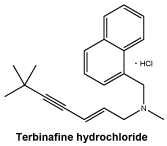
Molecular formula: C21H26ClN.
Molecular weight: 327.9.
CAS number. 78628-80-5.
7 Medicine Schedule (Poisons Standard)
S4 (Prescription Only Medicine).
Date of First Approval
23 July 2004
Date of Revision
12 February 2026
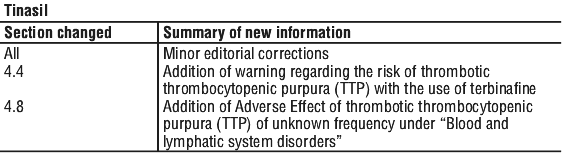
Summary Table of Changes
Reasonable care is taken to provide accurate information at the time of creation. This information is not intended as a substitute for medical advice and should not be exclusively relied on to manage or diagnose a medical condition. The Australian Commission on Safety and Quality in Health Care disclaims all liability (including for negligence) for any loss, damage, injury or any other negative effects resulting from reliance on or use of this information. Read our full disclaimer. This website uses cookies. Read our privacy policy.