2022
Fact sheet
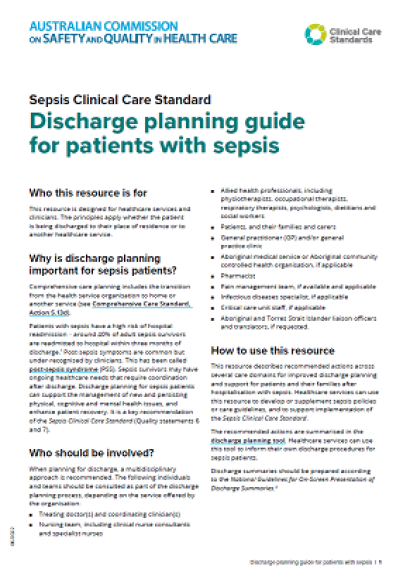
Recommendations for multidisciplinary discharge planning to ensure follow up and support for patients and their families after hospitalisation with sepsis - including a discharge checklist.

Recommendations for multidisciplinary discharge planning to ensure follow up and support for patients and their families after hospitalisation with sepsis - including a discharge checklist.
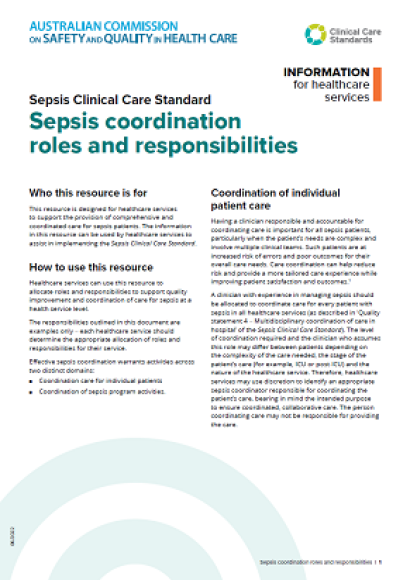
Guidance for healthcare services on allocating roles and responsibilities to support quality improvement and coordination of care for sepsis.
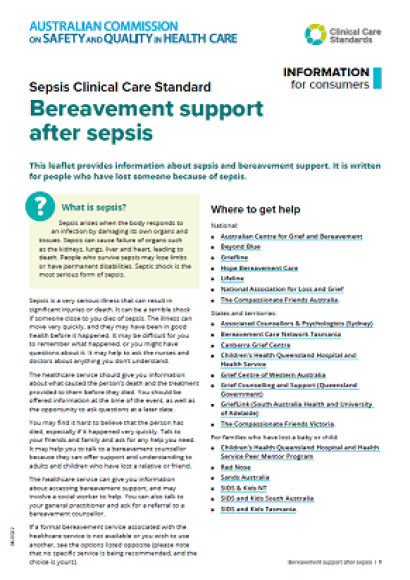
This leaflet provides information on sepsis and bereavement support and is written for people who have lost someone because of sepsis.
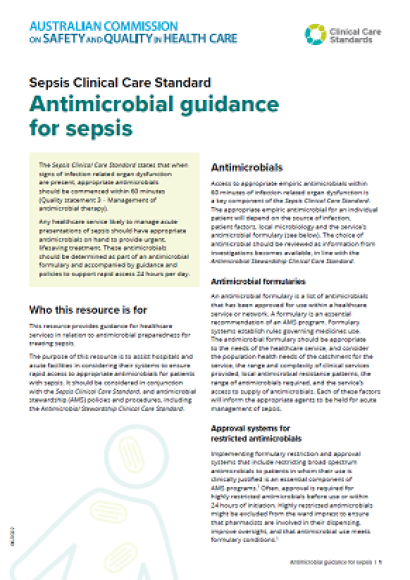
Guidance for hospitals and acute facilities about systems to ensure rapid access to appropriate antimicrobials for patients with sepsis, including use and governance of sepsis boxes.
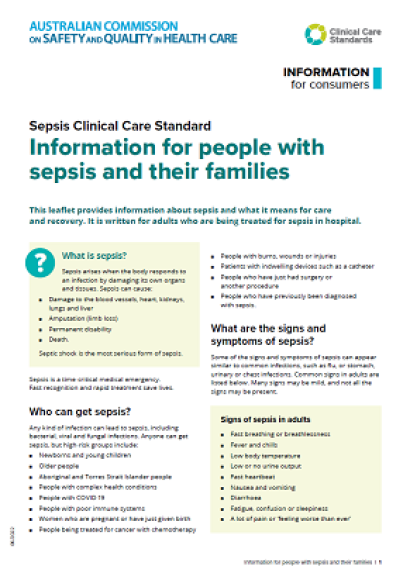
This leaflet provides information about sepsis and what it means for care and recovery. It is written for adults who are being treated for sepsis in hospital.
Developed by consumers for consumer- the Guide explains how to strengthen consumer partnerships at all levels of the health system to support person-centred care and drive positive change.
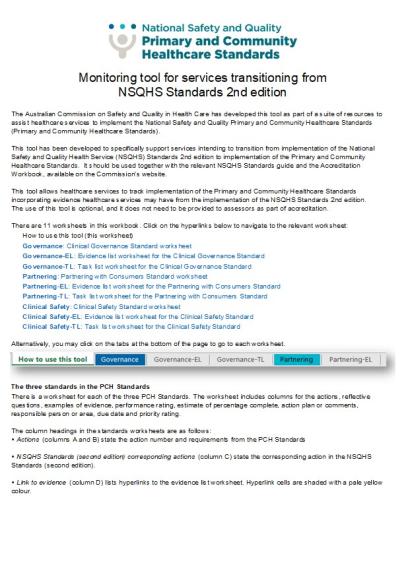
This tool has been developed to specifically support services intending to transition from implementation of the National Safety and Quality Health Service (NSQHS) Standards 2nd edition to implementation of the Primary and Community Healthcare Standards. It should be used together with the relevant NSQHS Standards guide and the Accreditation Workbook, available on the Commission’s website.
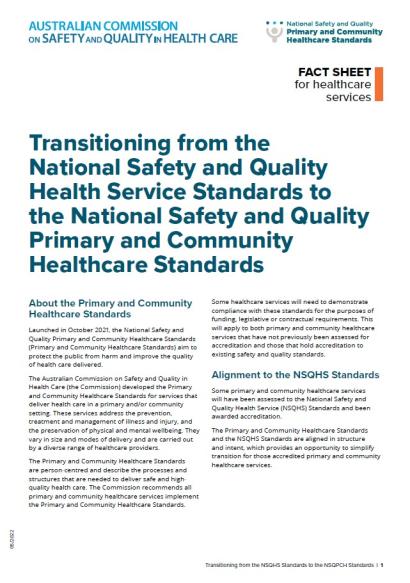
Primary and community healthcare services currently accredited to the NSQHS Standards may consider the Primary and Community Healthcare Standards are more appropriate to their service model.
Number of PBS/RPBS prescriptions dispensed for antipsychotic medicines per 100,000 for people 65 years and over, age and sex standardised, 2016-17 to 2020-21.

Number of PBS/RPBS prescriptions dispensed for opioid medicines per 100,000, all ages, age and sex standardised, 2016-17 to 2020-21.