
2022
Case study
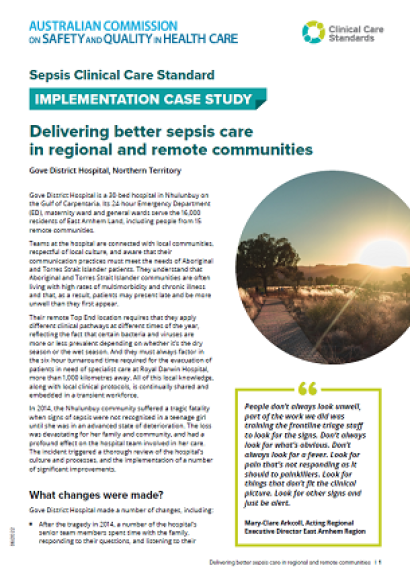
Despite the unique challenges of caring for sepsis in remote parts of Australia, Gove District Hospital - a small regional hospital in NT - has implemented ongoing improvement in sepsis care over several years, contributing to sepsis pathway development for small hospitals statewide. Learn about the significant changes to culture and processes at Gove District Hospital, triggered by the untimely and tragic death from sepsis of a young girl in the Gove community.
2022
Case study
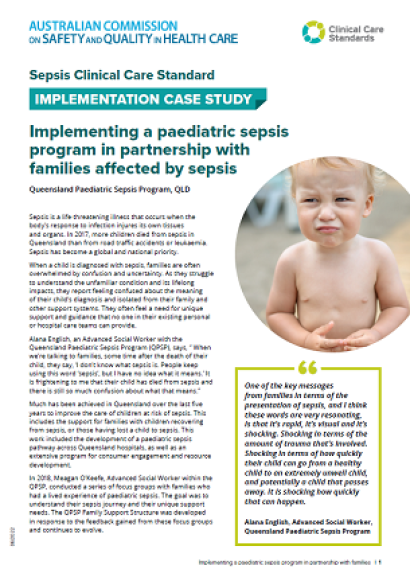
The Queensland Paediatric Sepsis Program (QPSP) has changed how children at risk of sepsis are cared for in Queensland hospitals, and transformed how support is provided to families after an experience of childhood sepsis. Learn more about the QPSP’s initiatives including the QPSP Family Support Structure which was co-designed with consumers, and the state-wide Paediatric Sepsis Pathway and other resources for clinicians.
2022
Case study
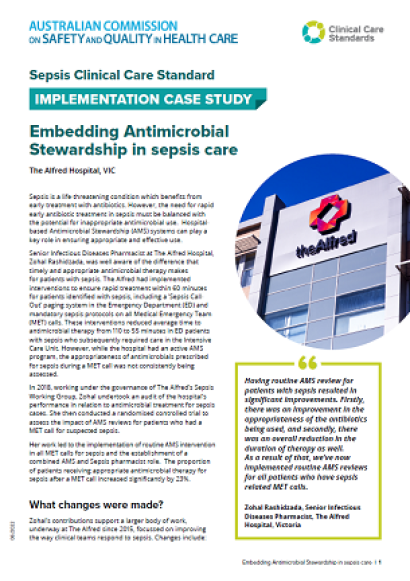
The Alfred Hospital’s substantial program of work has delivered improvements in the timeliness and appropriateness of antimicrobial therapy for sepsis. Learn more about their key initiatives including a randomised controlled trial assessing the impact of antimicrobial stewardship (AMS) reviews following medical emergency team (MET) calls for suspected sepsis, and the creation of a sepsis pharmacist role.
A number of professional associations and health organisations have been consulted during the development of the standard, with advice provided by a multidisciplinary Topic Working Group, and oversight through the National Sepsis Program governanc
2022
Corporate
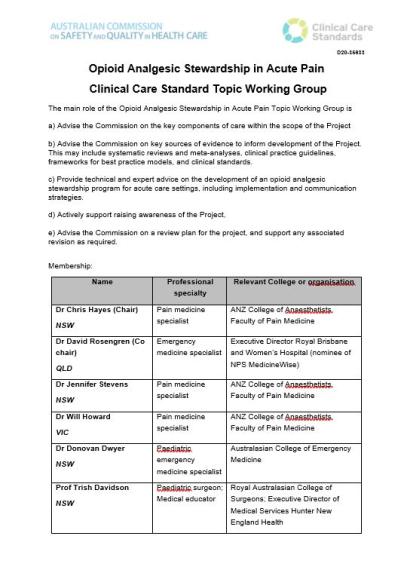
A Topic Working Group was convened to provide advice to the Commission on this project. The group comprised individuals with relevant expertise in pain medicine, emergency medicine, orthopaedic surgery, urological surgery, addiction medicine, emergency nursing, perioperative nursing, general practice, clinical pharmacy, community pharmacy, as well as a consumer representative.
Purpose
Purpose
To ensure that opioid analgesics prescribed for patients with acute pain are effective and appropriate for the patient’s stage of care.