
The Diagnostic Imaging Accreditation Scheme Advisory Committee provides oversight, expertise and consumer input. Members advise on matters to ensure appropriate quality and safety standards are applied to diagnostic imaging.
Making decisions about health is important but sometimes health information can be hard to understand, so making decisions can be difficult. Ask Share Know will help consumers learn about tests, treatment or care.
The MedicineWise mobile application was decommissioned on 10 February 2026.
Co-design is an engagement practice that health services can use to meaningfully engage and partner with patients, their families and carers, and the wider community.
Several resources have been identified which are relevant for improving safe and appropriate use of medicines in people living with diabetes.
Keynote speakers and panellists who presented at the National Medicines Symposium 2025.
The National Medicines Symposium 2025 was held on 22 October and delved into the safe and appropriate use of medicines in people with diabetes.
Organisations that are accredited to the National Safety and Quality Mental Health Standards for Community Managed Organisations (NSQMHCMO Standards) have been independently assessed to ensure they have systems in place to meet the necessary safety and quality requirements.
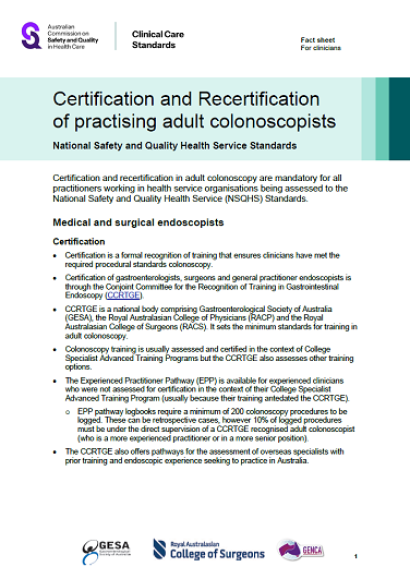
The Commission is committed to supporting healthcare services to provide culturally safe and equitable healthcare to all Australians. See our recommendations on culturally safe care from the Colonoscopy Clinical Care Standard.
Other resources and useful links for clinicians, healthcare services and consumers relevant to the Colonoscopy Clinical Care Standard.
Sepsis is a life-threatening and time-critical condition that occurs when the body’s response to infection causes injury to its own tissues and organs.
The Commission has developed the Medication Management at Transitions of Care Stewardship Framework as part of its commitment to reducing risks of harm associated with transitions of care.
The Colonoscopy Clinical Care Standard (2025) is endorsed by several key professional and consumer organisations.
Measurement and feedback are key to quality improvement. Data can be used to identify areas where services are doing well and areas where improvement is required.
This page answers common questions about Practice Reflections, including their purpose, process and benefits. It provides practical guidance for clinicians and teams on using reflections to support continuous improvement, strengthen patient safety and embed learning in everyday practice.