2020
Fact sheet
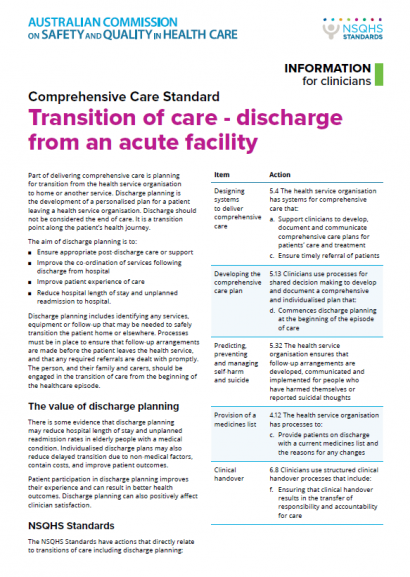
This fact sheet provides information for clinicians to consider when planning for patient discharge.

This fact sheet provides information for clinicians to consider when planning for patient discharge.
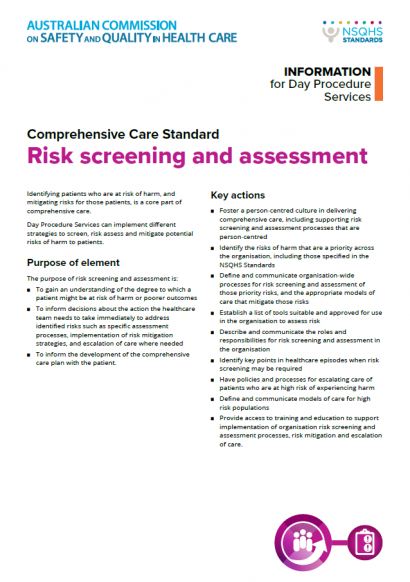
This fact sheet provides information for day procedure services about processes and practices that facilitate comprehensive care suitable to their setting and the patient population.
Number of PBS/RPBS prescriptions dispensed for amoxicillin per 100,000 people of all ages, age and sex standardised, 2017–18
Number of PBS/RPBS prescriptions dispensed for antimicrobial medicines per 100,000 people of all ages, age and sex standardised, 2017–18
Number of PBS/RPBS prescriptions dispensed for amoxicillin-clavulanate per 100,000 people of all ages, age and sex standardised, 2017–18
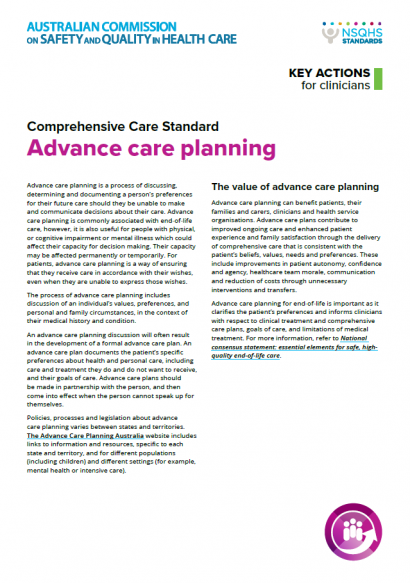
This fact sheet provides important information for clinicians to consider when discussing advance care plans with patients and sets out the actions that directly relate to advance care planning in the NSQHS Standards.
This document provides instructions for APAS contributors on how to build a susceptibility profile for methicillin-resistant Staphylococcus aureus (MRSA), vancomycin-resistant Enterococcus species (VRE), and carbapenem (meropenem) resistant organisms (CROs) by downloading data from OrgTRx into Microsoft Excel.
A formulary is a list of medicines, including antimicrobial agents, that has been approved by an authority for use within an organisation, network or nationally. Formulary systems establish rules governing medicine use.
Clinical governance is a shared responsibility to ensure all patients receive the best care. Pharmacists, members of the treating team and managers share the common goal of optimising patient care. Pharmacists share accountability for the care delivered, the equitable use of resources and building a positive workplace culture. Pharmacists are ideally placed and skilled to minimise the risk to patients when reviewing, compounding and/or dispensing anticancer medicines.