The National Safety and Quality Health Service (NSQHS) Standards support the rights of people with intellectual disability to equitable health care. People with intellectual disability experience significant barriers in accessing safe and quality care evident through a higher mortality rate, increased incidence of preventable illness and more frequent hospital admissions.
In this section, you will find guidance and resources for implementation of the NSQHS Standards, to support healthcare rights and provision of inclusive health care.
Developing and using shared decision making tools can help clinicians to implement shared decision making in clinical practice.
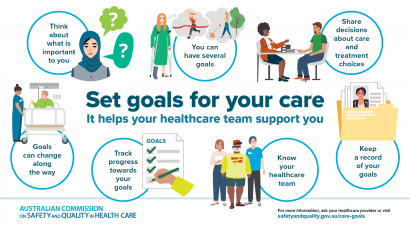
Being actively involved in your health care and working in partnership with your healthcare providers can help ensure that you get the care that is right for you.
Person-centred care must recognise and respect individual needs, beliefs and culture. Understanding the diversity of consumers seen in your organisation can help you design systems that support staff to better meet their needs.
The principles of person-centred care can help to support patient safety. The communication, culture and systems within healthcare organisations all play a role in fostering patient safety.
Staff wellbeing and teamwork can help to support effective person-centred care. Research shows that patient experiences are better when healthcare staff feel they have a good working environment, low emotional exhaustion, and support from their coworkers and managers.
Person-centred care is a way of supporting greater involvement of consumers in health care, which in turn creates better health outcomes. Over the past two decades, person-centred care has become internationally recognised as a dimension of delivering high-quality health care.
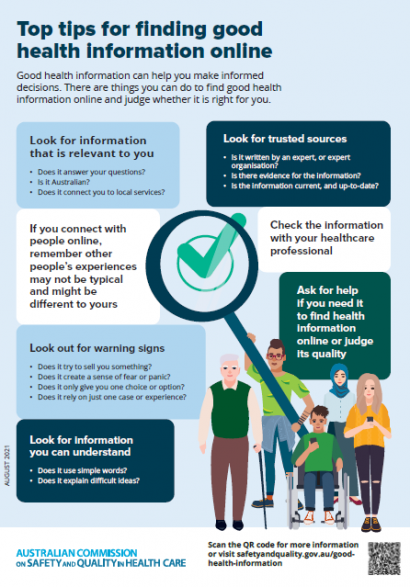
Good health information is important and can help you make informed decisions. These resources contain tips to help consumers find good health information online.