
What I've learned in three decades of helping health services to improve clinical governance
Dr Cathy Balding works with health services around Australia to implement clinical governance systems to achieve high-quality care. Here she describes why health services need to have a clear goal for clinical governance that makes sense to the workforce.
I was part of a team implementing a statewide quality framework in south-west NSW in the late 1980s when I first truly understood the need to find purpose in clinical governance (then called quality assurance).
I had travelled to the regional office at the end of the framework implementation period to be quizzed for the evaluation. I laid out the framework-related documentation from the hospitals across the region on the boardroom table for the chief evaluator to review. He ticked off the quality framework requirements and the evaluation was looking positive. But then he asked me: ‘Where on this table is the evidence that the patients are now better off in this region than they were before the framework was implemented?’
It was a lightbulb moment for me – because I had no answer. I realised that you can do a lot of work and put many things in place in the name of ‘quality’ and still achieve very little – or not know what you’ve achieved.
Many years on, healthcare sector boards and executives all over the country are still having similar conversations.
For the past 15 years I’ve have worked with boards and executives, focusing on implementing quality and clinical governance systems for positive impact at point of care in health, aged care and human services. It’s my privilege to work with boards and executives who want to see material improvement for their efforts and to move beyond compliance to consistently high-quality care.
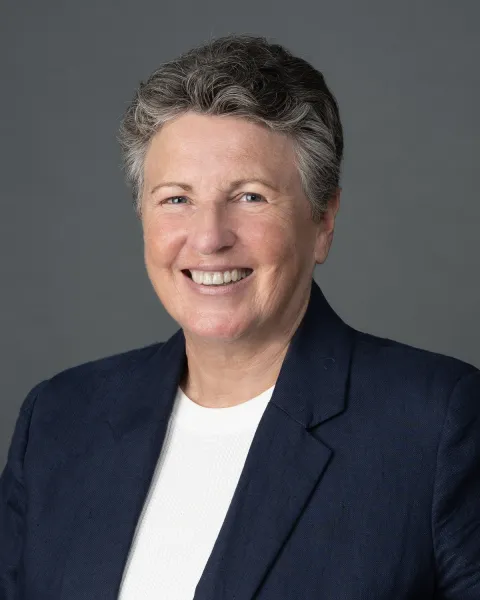
Dr Cathy Balding*,
Board Director, RSL LifeCare, Director, Qualityworks PL
Effective clinical governance should be a key support for staff to create high-quality care – but it only fulfils this potential if it is implemented with this explicit purpose. Too often, clinical governance is implemented as a series of tasks, rather than as an integrated set of systems focused on creating consistently great experiences.
I’ve found that the most useful thing I can do is to help people identify their clinical governance purpose. One way I do this is to ask people to imagine what care they would hope a loved one would experience if they were suddenly admitted to hospital in another country. Their response – no matter who I’m asking – is always consistent: keep them safe, treat them with respect, don’t let them fall through the cracks, provide the right care with the best possible outcome.
This is high quality care with meaning and is at the core of what good clinical governance should achieve. We also discuss our dependence on staff to create this experience and how clinical governance must support them in this – making it easier to create, monitor and improve quality care, not harder.
The first time I ran a workshop that defined high-quality care and showed the connection between clinical governance and making high-quality care an everyday reality, I saw faces light up with understanding and enthusiasm. Since then, I’ve spoken to thousands of people from consumers to board members and clinicians, and the response never varies. People want a meaningful point of care purpose for all the clinical governance and quality ‘doing’. When that purpose is established, they get behind it and put their clinical governance systems to work for their staff and consumers.
For me, that first workshop was the moment I knew that if we help join the dots for people and create that real meaning and purpose for all the activity, together we can create great things.
*Dr Balding is a member of the Commission’s Clinical Governance Advisory Committee