
Cultural safety: at the core of clinical governance
Support for cultural safety at Alice Springs Hospital has improved care.
Ms Justine Swan-Castine, a proud Pertame (Southern Arrernte) woman, was the first Aboriginal Director in the executive team at Alice Springs Hospital, where 84% of patients identify as Aboriginal.
Ms Swan-Castine was appointed as Director of the Aboriginal Engagement and Strategy Unit in March 2024. She led a team dedicated to improving culturally safe care and better health outcomes for the local Aboriginal community who access the hospital.
Her work focused on involving Aboriginal voices in decisions that affect them, from clinical governance and infrastructure to clinical care. Her aim was that all patients and staff felt safe and supported and were aware of their rights.
Under her leadership, the unit improved patient access to traditional healers and bush medicine, increased support for the Aboriginal workforce, produced culturally appropriate patient resources, and developed a health cultural immersion camp for staff.
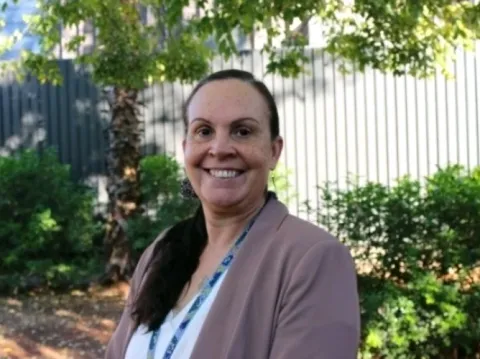
Ms Justine Swan-Castine, former Director, Aboriginal Engagement and Strategy Unit, Alice Springs Hospital
‘I think it’s so important having an Aboriginal person in the executive team to give advice on working with Aboriginal people and patients in a culturally safe way. If we get it right for Aboriginal people, we will get it right for everyone else,’ Ms Swan-Castine says. ‘It’s changed the culture of the whole hospital.’
Changing clinical governance for cultural safety
Ms Swan-Castine has held many roles across multiple fields, including early childhood, youth work, health promotion, finance, human resource management, community services and engagement.
At Alice Springs Hospital, her first job was to redevelop the Aboriginal Cultural Engagement Committee, a staff committee that at the time reported to the Director of Allied health.
Members were told to attend the committee, but sometimes no one would show up. Aboriginal people who reported to the committee often felt culturally unsafe because it was not driven by Aboriginal people, Ms Swan-Castine says.
She redesigned the committee, using an expression of interest to recruit cultural champions with experience in Aboriginal health who were committed to being on the committee. Membership now comprises heads of department, doctors, nurses and Aboriginal staff.
She also changed the committee’s terms of reference to give it a more active role in shaping care for Aboriginal people and as an approval committee to achieve actionable results for the hospital.
The Aboriginal Cultural Engagement Committee provides structural workplace mechanisms to support staff, if they feel culturally unsafe. Part of the committee’s role is to educate staff about cultural safety and how they can speak up if they feel it has been breached.
‘It’s a great committee with members who really want to be there, and are passionate about changes for Aboriginal people,’ Ms Swan-Castine says.
The Aboriginal Engagement and Strategy Unit oversees Aboriginal staff welfare and workforce development and offers a safe space to listen to concerns or challenges.
There is also an Aboriginal Cultural Coordinator and an Aboriginal Communication Specialist who work with staff and educate them about intercultural communication, cultural safety and care.
The heart of the team is the Aboriginal Liaison Officers (ALOs) who provide language interpretation, cultural brokerage and liaison to patients. The ALOs speak at least one language fluently so they can work with patients to ensure they are consenting to treatment and surgery they fully understand. This team is led by the Aboriginal Engagement Manager who advocates strongly for Aboriginal patients and ensures key relationships with stakeholders.
Improved quality of care
Ms Swan-Castine says cultural safety is essential for providing high-quality care. If patients do not feel safe and respected, they are less likely to comply with treatment.
Patients are connected with ALOs as early as possible to make sure they feel safe and that their responsibilities at home are being taken care of. The liaison officers offer access to bush medicine and traditional healers.
For example, 'kwerte-ileme' traditional smoking and cleansing ceremonies are performed regularly at the hospital, where branches are used to sweep the interior of the building and its rooms, followed by an outside smoking ceremony to promote health and wellbeing of NT Health patients, families and staff.
‘This initiative aims to foster a spiritually safe atmosphere for patients, encouraging them to complete their treatments as they feel secure. Additionally, it offers a wonderful opportunity for families and staff to engage, promoting further healing for everyone’s wellbeing,’ Ms Swan-Castine says.
These innovations are starting to make a difference to the quality of care patients receive. One patient with kidney disease was referred to hospital from prison, where he had refused dialysis treatment. ‘He thought he was cursed. But when our cultural coordinator connected him with a traditional healer at the hospital, he decided to start doing his dialysis again,’ Ms Swan-Castine says.