
Patient-reported Indicator Survey (PaRIS)
The Patient-Reported Indicator Surveys (PaRIS) is an OECD-led international initiative to promote person-centred health care. It is the first survey of its kind to assess the outcomes and experiences of patients over 45 years living with chronic conditions receiving care in primary health settings across countries.
PaRIS focuses on two types of patient-reported measures:
- Patient-Reported Experience Measures (PREMS) - Practical aspects of how patients experience their care.
- Patient-Reported Outcome Measures (PROMS) - How patients assess the results of the care they receive.
Australia was one of 19 countries to participate in the inaugural survey in 2023.
Australian National Report
The PaRIS Survey: Australian National Report 2025 provides detailed analysis and information on the Australian results of the survey.
Key survey insights
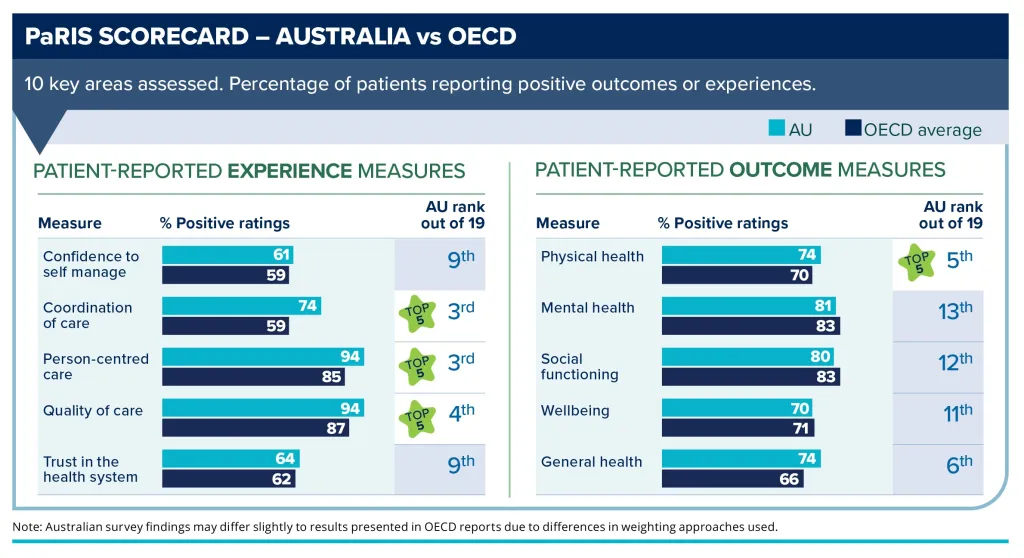
Australia performed well across all 10 health measures - better than or close to OECD average
We were in the top five in quality of care, coordination of care, person-centred care and physical health
There is room for improvement in areas of mental health, wellbeing and social functioning (how well patients perform activities and responsibilities)
You can visit the OECD PaRIS website or email us for more information.
Why PaRIS is important
PaRIS aims to fill a critical information gap in primary health care, by gaining insights into areas such as access to health care and waiting times, quality of life, pain, physical functioning, and psychological wellbeing.
Results from the survey will support local, national, and international learning and continued improvement of the way that healthcare providers deliver care and the primary health care system.
In the long-term, Australia hopes to embed the use of patient-reported measures into the routine clinical care processes of primary healthcare providers, to support and inform improvements in health care. This will help:
- policy makers by providing better information on where to focus quality improvement efforts and prioritise spending
- healthcare providers by giving them a clearer understanding of how to improve the quality of the care they provide; and
- most importantly, patients, by enabling their voices be heard to help shape the way care is delivered in the future.