Behaviours of Concern
Behaviours of concern are a significant and growing focus within the Australian healthcare system. They refer to behaviours often linked to unmet physical, emotional, or environmental needs, particularly among people with cognitive impairment, disability, or mental health conditions.
Understanding and addressing the underlying causes for these behaviours is essential to delivering safe, high-quality care.
This hub supports health professionals and health service organisations to better recognise, respond to and proactively manage behaviours of concern.
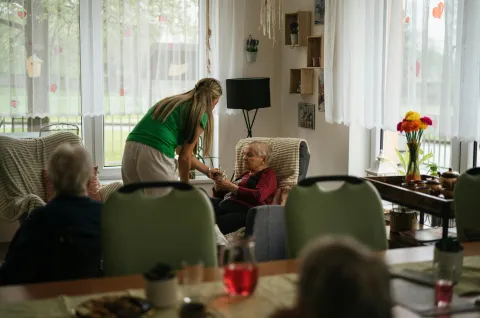
It aims to promote safe, person-centred care and improve outcomes for individuals experiencing these behaviours, while reducing risk to the person, their support system and for the workforce.
Behaviours of concern can be a risk to the safety and wellbeing of the individual exhibiting them or to those around them. While these behaviours can be challenging for the person, their supporters, and the services involved, they may serve a meaningful purpose, such as expressing unmet needs, responding to environmental factors, or at times presenting as unprovoked aggression. Behaviours that cause concern to others may not be a concern to the person who exhibits them.
We have a suite of resources to support health professionals to recognise, prevent and respond to behaviours of concern. Our work highlights that behaviours of concern are frequently linked to underlying issues such as cognitive impairment, delirium, or a deterioration in a person’s mental state.
Our Better Care Everywhere hubs outline what appropriate care looks like across priority clinical topics. In each hub you will find a mix of:
- best practice information on the condition, treatment or procedure
- insights on where and why care may vary from evidence-based practice.
Each hub also includes a practical toolkit to support health professionals and health service organisations address the drivers of low-value care to deliver sustainable, high-quality care.
Other hubs include:
Learn more about the Better Care Everywhere initiative and the six evidence-based actions that underpin the toolkits.
Key statistics:
Up to 80%
of people living with dementia may experience behaviours of concern at some stage
Down 11%
Between 2016–17 and 2020–21 prescribing antipsychotic medications fell by 11%
About 40%
of Australian health care workers report exposure to violence or traumatic events
Best practice quick links
- National Consensus Statement: Essential elements for recognising and responding to deterioration in a person's mental state
- Delirium Clinical Care Standard
- Psychotropic Medicines in Cognitive Disability or Impairment Clinical Care Standard
- Fact sheet: Guiding principles for recognising and responding to behaviours of concern
- Report: Behaviours of Concern resources on dementia, delirium and cognitive impairment
Variation focus area: Antipsychotics, 65 years and over
Our Psychotropic Medicines in Cognitive Disability or Impairment Clinical Care Standard helps reduce the inappropriate use of psychotropic medicines, particularly for managing changed behaviours or behaviours of concern, published in April 2024. The Standard promotes safer, person-centred alternatives by addressing the overreliance on medication and encouraging behavioural, environmental, and communication strategies when managing behaviours of concern.
Antipsychotic medicines for people with severe behavioural and psychological symptoms of dementia (BPSD)
Our Australian Atlas of Healthcare Variation highlights that while antipsychotic medicines can be appropriate for some people with severe BPSD, they are often prescribed outside guideline recommendations and without proper consent, monitoring or dose adjustment. Most prescribing occurs in residential aged care facilities, where around one in five residents receive at least one antipsychotic, despite expert estimates that their use is clinically justified in only about 10% of cases. Concerns remain about their increasing use in the community and potential use as a form of restrictive practice.
Rates of PBS-subsidised antipsychotic medicines dispensing for people aged 65 years and over between 2016–17 and 2020–21:
- fell by 11%, possibly reflecting a wide range of initiatives to reduce inappropriate prescribing in older people with behavioural and psychological symptoms of dementia
- were higher in major cities than in regional areas, and were lowest in remote areas
- increased with socioeconomic disadvantage
- decreased in geographic variation*, from 17-fold to 12-fold.
Between 2013–14 and 2016–17
there was a decrease in geographic variation increase of reporting rates of antipsychotic medicines dispensing is warranted
Why rates vary
Differences in antipsychotic dispensing rates may reflect variations in prescribing practices, access to non-pharmacological supports, and models of care across regions. Higher rates in some jurisdictions may be influenced by factors such as a greater proportion of residential aged care services, including public sector facilities, and higher use of PRN (as‑needed) prescribing. Lower rates in areas like the Northern Territory may be due to data limitations, such as PBS data not capturing medicines supplied through remote Aboriginal health services. It is also unclear whether shifts to private prescribing or increased use of other psychotropic medicines contribute to the variation.
What more can be done?
- Ensure adequate staff levels in aged care facilities to allow staff enough time to use non-pharmacological strategies for BPSD
- Increase involvement of specialist geriatricians, such as through funded positions on Medication Advisory Committees, more visits and telehealth consultations
- Create new funding models for diversional therapists, psychologists and social workers to work in RACFs
- Establish new GP incentive payments that are not linked to practices (GPs who are not part of a practice do not receive Practice Incentive Payments for visits to RACFs)
- Increase engagement with PHNs in education and best practice.
- Improve the role of pharmacists in education, monitoring and de-prescribing
- Increase frequency of pharmacist-conducted medication reviews
- Allow nurse practitioners to conduct medication reviews and nurses to attend 12-week reviews
- Monitor therapeutic substitution for antipsychotic medicines
- Improve communication between prescribers, GPs and consumers to clarify who is responsible for medication review and de-prescribing.
- Enhance environments in RACFs, such as creating wandering areas and reducing excess noise, people and clutter.
- Empower residents and families to ask nurses and doctors about minimising use of antipsychotics and other sedatives
- Strengthen avenues for complaint where best practice is not occurring.
Initiatives that facilitate continuity of care, time for review, patient-centred care and opportunities for a team approach in RACFs may reduce inappropriate prescribing of antipsychotic medicines. An Australian study found rates of dispensing of psychotropic medicines were higher for people with dementia who changed GP when they entered an RACF. The authors concluded that facilitating continuity of GP care for new residents and more structured transfer of GP care may prevent potentially inappropriate initiation of psychotropic medicines.
The Royal Commission recommended the Australian Government should trial and implement a new model of primary care in which general practices may choose to apply to become accredited aged care general practices.
Better Care Everywhere Toolkit: Behaviours of Concern
This toolkit includes resources to help improve the use of behaviours of concern and is designed for health professionals and health service organisations. Resources are organised into six evidence-based actions that address unwarranted clinical variation.
Focus on one strategy to start, or use all six to deliver safer, more consistent and sustainable health care.
Learn more about the six evidenced-based actions in the Better Care Everywhere Toolkit and their role in addressing unwarranted clinical variation.
Better Systems
Better Systems
Better systems mean having the right culture, systems and processes to deliver consistently high-quality and improving care.
Best practice systems provide the right environment for a clear, system-wide approach to minimise unwarranted clinical variation and the potential for low-value care.
Better Insights
Better Insights
Better insights refer to the meaningful use of data to improve the prevention, recognition and management of behaviours of concern across care settings.
Using data to understand where practice varies from evidence-based approaches is critical to improving outcomes, reducing risk, and supporting high-quality, person-centred care.
You can use data and reporting (such as the Australian Atlas of Healthcare Variation – Antipsychotics) to:
- Prompt reflection and review your individual or service-level practices in comparison to national, state and local trends.
- Identify variation and opportunities for improvement, including reducing inappropriate use of restrictive practices or medications.
- Develop targeted quality improvement activities focused on safer, more proactive management of behaviours of concern that benefit individuals, staff and services.
Guidance, tools and resources
Better Practice
Better Practice
Better practice involves the prevention, early recognition and person-centred management of behaviours of concern in line with evidence-based guidance.
Applying best practice can reduce unwarranted variation in care by supporting consistent, safe and appropriate responses, including minimising the use of restrictive practices and inappropriate medications.
Clinical care standards, guidance and supporting resources can help ensure that care is delivered in a way that promotes safety, respects individual needs and preferences, and improves outcomes for people experiencing behaviours of concern.
Guidance, tools and resources
- Delirium Clinical Care Standard
- Psychotropic Medicines in Cognitive Disability or Impairment Clinical Care Standard
- Safe and appropriate use of psychotropic medicines for aged care
- NSQHS Standards user guide for health service organisations providing care for patients with cognitive impairment or at risk of delirium
External
Better Decisions
Better Decisions
Better decisions involve making choices that are person-centred and consider an individual’s values, preferences and circumstances. This includes engaging in shared decision-making, where clinicians, individuals and (where appropriate) carers work together to plan care that best meets the person’s needs and goals.
Effective shared decision-making can help reduce unwarranted variation in care by ensuring individuals and their supporters have access to clear, relevant information about management options for behaviours of concern. This supports informed consideration of the risks and benefits of each approach, enabling safer, more appropriate and personalised care decisions.
Better Monitoring
Better Monitoring
Better monitoring means continually measuring and refining quality improvement activities to improve the quality of care and reduce unwarranted clinical variation.
Measurement is fundamental to providing better care, as meaningful indicators are required to assess the effectiveness of quality improvement initiatives and guide decision-making. By routinely measuring how care is delivered and where it differs, we can see where clinical variation is occurring, but identification of variation is only the first step, further investigation and action at a local level is essential to make sure data on clinical variation leads to better care.
Guidance, tools and resources
Psychotropic Medicines in Cognitive Disability or Impairment CCS Indicators
A set of indicators have been developed to support your local quality improvement activity.
- Use to: Monitor how health service organisations are implementing the care recommended in the Psychotropic Medicines in Cognitive Disability or Impairment Clinical Care Standard.
- Useful for: health service organisations, Safety and Quality Managers, hospital managers, clinicians.
Delirium CCS Indicators
A set of indicators have been developed to support your local quality improvement activity.
- Use to: Monitor how health service organisations are implementing the care recommended in the Delirium Clinical Care Standard.
- Useful for: health service organisations, Safety and Quality Managers, hospital managers, clinicians.
Better Networks
Better Networks
Better networks mean bringing people together with common interests and goals to learn, share and support efforts to reduce unwarranted clinical variation. Through these networks, clinicians can collaborate and apply shared learnings to promote stewardship of resources and reduce duplication of work.
Networks can address unwarranted clinical variation by providing a platform for sharing evidence, experiences and best practice. This supports the standardisation of care and ensures patients receive consistent and high-quality care regardless of where they are being treated.
Explore more hubs

Chronic obstructive pulmonary disease (COPD)

Colonoscopy

Heavy menstrual bleeding