
Shared decision-making
Our aim is to help health professionals engage in shared decision-making conversations with patients, so that treatment and care decisions reflect both the best available clinical evidence and what matters most to the person receiving care.
What is shared decision-making?
Shared decision-making in health care is a process where a health professional and a patient (as well as a patients support person) make decisions together based on the best available clinical evidence and the patient's own values, preferences and circumstances.
It's most relevant when there is more than one reasonable option for patients, including the option of doing nothing, and where the right choice can depend on what matters to the individual patient.
Shared decision-making is related to informed consent, but they are not the same thing. Informed consent means a patient agrees to a treatment or procedure after being given the necessary information. Shared decision-making is the discussion that happens beforehand, where the patient and clinician talk through the options and decide together on the approach that best matches the patient's preferences and values.
Tools such as Ask Share Know help guide critical conversations between patients and health professionals, as well as support shared decision-making and improve patient outcomes and experiences.
We also have information for consumers on how to be involved in decisions about your care.
Why is shared decision making important?
Shared decision-making is a national safety and quality priority in Australia. It is embedded in two of the National Safety and Quality Health Service (NSQHS) Standards which apply to all accredited hospitals, day procedure services and dental services in Australia. It is also a core principle of the Australian Charter of Healthcare Rights, which describes patients’ right to be included in decisions about their own care.
There is a strong and growing evidence base for shared decision-making. Research consistently shows that patients who take part in shared decision-making have improved knowledge of their options, more accurate expectations of outcomes, greater confidence in their decisions, and are more likely to choose care that is consistent with their own values.
Shared decision-making also has a role in reducing low-value care, for example, by helping health professionals and patients jointly weigh up options where the evidence for a particular test or treatment is uncertain or marginal.
How are we helping health professionals?
To help you find what is relevant to your role, resources on this page are grouped into five sections:
- Guiding foundations: the what and why of shared decision-making.
- Training and communication skills: the how, including risk communication and consultation structure.
- Patient decision aids and question prompts: practical tools to use before, during and after consultations.
- First Nations: culturally safe shared decision-making resources and frameworks.
- Measurement and quality improvement: validated tools to evaluate whether shared decision-making is happening in practice.
Guiding foundations
This section explains what shared decision-making is, why it matters. It is a useful starting point for clinicians new to shared decision-making, health service managers, and educators building training programs.
Guiding foundations resources
-
Three-talk model
The three-talk model is a widely used framework for shared decision-making. Co-developed with Australian researchers, its practical approach underpins many shared decision-making training programs and resources.
-
Shared decision-making, uncertainty and low-value care
Provides guidance on using shared decision-making in consultations, including simple tools for situations involving clinical uncertainty and low-value care. Covers the three-talk model and the Ask Share Know model.
-
From words to action
The most current national analysis of the shared decision-making landscape in Australia, identifying urgent implementation priorities.
-
Shared decision making for clinicians
A practical Australian primer on the evidence base for shared decision-making, common misconceptions, and how to incorporate shared decision-making into everyday practice.
-
International Shared Decision-Making Society
A global professional society for shared decision-making researchers, clinicians and advocates, providing access to conferences, publications and international collaboration opportunities.
-
Australian Shared Decision-Making Special Interest Group
A national network of Australian researchers, clinicians and advocates. Useful for staying current with shared decision-making developments in Australia.
Training and communication skills
Practical training resources to help clinicians develop and refine shared decision-making consultation skills, including communicating risk, checking patient understanding, and structuring shared conversations.
Training and communication skills resources
-
Risk communication e-Learning module
A free two-hour online module helping clinicians develop skills in communicating the benefits and risks of treatment options.
-
Care planning
Health professionals play an important role in helping patients identify their care goals. They should create a supportive environment where patients feel comfortable discussing their wishes, preferences and expectations.
-
Identifying goals of care
The goal setting guide and fact sheet provide tips and tools that can be used by health professionals to collaboratively identify and set goals with patients.
-
Communicating for safety
Communicating for safety involves the accurate and timely exchange of information about a person's care between health professionals, multidisciplinary teams, and patients and their support people.
-
Health literacy
Health literacy is a person’s ability to find, understand and use health information to make informed decisions. Strong health literacy supports effective partnerships and communication between patients and health professionals.
-
Teach-back
Teach-back is a simple, yet effective communication tool used to check understanding. Using teach-back allows you to check if someone understands you.
-
Care Companion toolkit
Co-designed shared decision-making resources by Queensland Health for clinicians and patients facing serious health decisions, including structured conversation guides and training videos.
-
Shared decision-making community of practice
A practical resource and learning hub by Safer Care Victoria and La Trobe Centre for Health Communication.
-
Shared decision-making short videos for clinicians
Short practical videos from the Institute for Evidence-Based Healthcare at Bond University demonstrating shared decision-making in action, including example consultations related to acute respiratory infection using decision aids.
-
Consultation skills toolbox
A toolbox by General Practice Supervisors Australia providing resources for GP supervisors and medical educators, including instructional videos on consultation models, serious health decisions, and managing challenging consultations in practice.
-
Shared decision-making video about high-risk surgery
A short video by Peter MacCallum Cancer Centre showing how shared decision-making supports decision-making about major surgery.
-
Communicating evidence in health care courses
Free e-learning courses for risk and evidence communication that are designed to help healthcare professionals and students develop practical skills in communicating risk, evidence, and healthcare decisions clearly and effectively.

Patient decision aids and question prompts
Decision aids and question prompts are the practical tools that support shared decision-making conversations in consultations. This section includes both condition-specific aids and generic tools usable across a wide range of situations, for use by clinicians with patients, or by patients independently.
Patient decision aids and question prompts resources
-
Decision support tools
A collection of condition-specific decision aids to support shared decision-making conversations across a range of common treatment decisions.
-
Question builder
A free Australian web-based tool that helps patients prepare questions before appointments, supporting them to initiate shared decision-making conversations with their clinician.
-
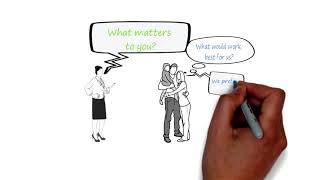
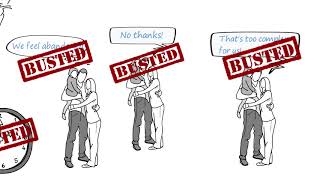
Ask Share Know
Uses three simple questions to guide critical conversations between patients and clinicians, supporting shared decision making and improving patient outcomes and experience.
-
Shared decision-making prompt guide
A simple communication prompt developed to help health professionals familiarise themselves with the shared decision-making process.
-
Communicating risk statistics Iconarray
An open-access tool that creates visual representations of probability to help patients understand benefits and harms. It shows outcomes using simple graphics, such as how many people out of 100 are affected.
-
Ottawa decision aid inventory
The most comprehensive library globally of validated patient decision aids, covering hundreds of conditions and regularly updated.
-
Ottawa personal decision guide
A generic decision-making tool helping patients identify their needs, plan next steps, and track progress.
First Nations
Effective shared decision making with Aboriginal and Torres Strait Islander patients requires cultural safety, trust, and a holistic approach to health decision making that extends beyond the standard clinical consultation model.
First Nations resources
-
Finding Your Way
A NSW Agency for Clinical Innovation culturally adapted shared decision-making resource developed by and for First Nations people in Australia.
-
Heart Health Yarning Tool
Supports health professionals to make shared decisions about heart health checks with Aboriginal and Torres Strait Islander people.
-
Clinical Yarning eLearning program
Free eLearning, training and resources by Western Australian Centre for Rural Health to helps clinicians improve communication with Aboriginal patients using the Clinical Yarning model.
-
Yarning with Aboriginal Patients (SHAPE)
A practical clinical resource by WA Primary Health Alliance on yarning approaches in consultations with Aboriginal patients, including communication style and shared planning guides.
-
Communicating with Aboriginal and Torres Strait Islander People
A Queensland Health guide for clinicians on culturally respectful communication with Aboriginal and Torres Strait Islander patients, directly supporting shared decision-making conversations.
-
WellMob wellbeing resources
Online platform providing digital social and emotional wellbeing resources created by and for First Nations peoples. Supports health workers, educators and communities, complementing shared decision-making in primary and community care.
-
Example Charter for Aboriginal and Torres Strait Islander people
Developed by the Northern Sydney Local Health District (NSLHD) Consumer and Patient Experience Unit in partnership with the NSLHD Aboriginal and Torres Strait Islander Health Service.
Measurement and quality improvement
The tools below range from short patient-reported measures completed after a single consultation, to observer-rated tools used in clinical training, audit and supervision.
Measurement and quality improvement resources
-
NSQHS Standards User Guide
Provides guidance on measuring and evaluating consumer partnerships, supporting the development of monitoring and evaluation plans for the Partnering with Consumers Standard, including shared decision-making activities and outcomes.
-
CollaboRATE (patient-reported measure)
A validated, three-item patient-reported measure of the shared decision-making process, used immediately after a consultation.
-
Observer OPTION-5 (observer-rated measure)
A validated, observer-rated measure of shared decision-making, supported by peer-reviewed evidence demonstrating good reliability and validity.
-
The SURE test
A brief, four-question tool based on the Ottawa Personal Decision Guide, used to assess a patient's level of decisional conflict.