Atlas Focus Report: Osteoarthritis of the knee
Publication date: 12 November 2026
This Australian Atlas of Healthcare Variation report examines trends and variation in the use of MBS-subsidised knee imaging, hospitalisations for knee arthroscopy and hospitalisations for knee replacement surgery, for people aged 45 years and over. The findings from this report may help identify potentially inappropriate care.
Key actions to improve care
Improve clinician and consumer understanding that imaging is not usually required to diagnose knee osteoarthritis
Increase access, and GP referrals, to first-line care before surgical care for knee osteoarthritis
Report summary
Findings for national rates of indicators are shown below.
Knee imaging
Between 2019–20 and 2023–24, national rates of MBS-subsidised imaging among people aged 45 years and over increased by:
- 83% for computed tomography (CT)
- 26% for ultrasound
- 10% for X-ray
- 6% for magnetic resonance imaging (MRI).†
†Imaging data in this report do not include services paid for out-of-pocket by patients, which may have increased following MBS restrictions introduced in 2018 to limit the ability of general practitioners to request knee MRIs for patients aged 50 years and over.
Knee arthroscopy
Hospitalisation rates for knee arthroscopy among people aged 45 years and over:
- fell by 50% between 2014–15 and 2023–24
- showed 12-fold geographic variation in 2023–24.
Knee replacement
Hospitalisation rates for knee replacement among people aged 45 years and over:
- increased by 17% between 2014–15 and 2023–24
- showed six-fold geographic variation in 2023–24.
Dashboard



About knee osteoarthritis
Osteoarthritis is a chronic whole-joint disease that results in pain, varying degrees of functional limitation and reduced quality of life. Knee osteoarthritis involves inflammation of one or both knee joints. The primary symptoms are knee pain, swelling, and stiffness.1 Structural changes do not correlate well with symptoms, and they may or may not be seen on imaging.2
How common is it?
About 1.9 million Australians were estimated to have knee osteoarthritis in 2019 and the prevalence is rising.3 Although younger people can be affected, the prevalence rises steeply after the age of 45 years.
Uncomplicated knee osteoarthritis
Uncomplicated knee osteoarthritis is not accompanied by true mechanical locking, septic arthritis, or inflammatory arthropathy.1
Diagnosis
Knee osteoarthritis can be accurately diagnosed with a clinical assessment in most cases.1 Imaging has a limited role because the findings do not correlate well with symptoms.2 For example, a person with minimal changes on a scan can have substantial pain, while someone with more structural changes seen on imaging can have less severe symptoms.2
Despite the long-standing evidence of the imperfect correlation between structural changes and symptoms in knee osteoarthritis, there are concerns that structural changes seen on imaging are still being used to guide diagnosis and management in isolation.
Imaging may be required if symptoms are atypical and alternative diagnoses are being explored or if planning surgery.2
Read more about imaging for knee osteoarthritis in the clinical commentary
Management
Effective first-line approaches are important for patients at all stages of knee osteoarthritis, and include:
- education
- self-management
- physical activity
and, if needed:
- weight management
- medicines for pain relief, as per Therapeutic Guidelines or locally endorsed evidence-based guidelines.4
The experience of pain in osteoarthritis is influenced by many factors, some of which are modifiable by changes to activity levels, weight, sleep, or stress management.1 Medicines may be combined with self-management strategies to reduce pain.1
Exercise programs that increase physical activity levels and muscle strength can reduce associated pain and disability.4-6 If a person is living with excess weight, losing a moderate amount of weight can improve their symptoms and physical capability.4 In some cases, weight loss may reduce the need for knee replacement.7, 8
Figure 1: Outline of diagnosis and management steps in knee osteoarthritis
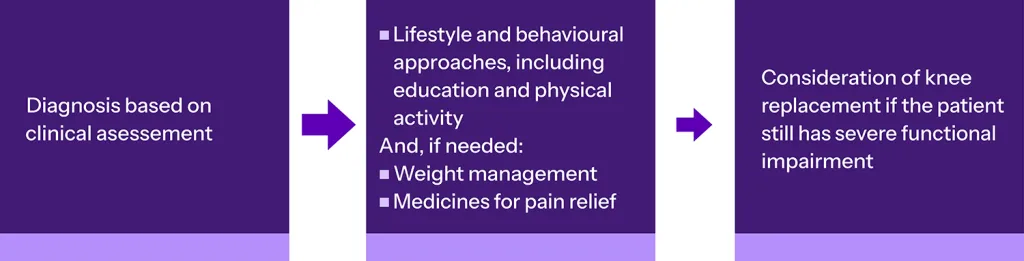
- Imaging is not usually required to diagnose knee osteoarthritis; X-ray is the most appropriate initial imaging modality if the patient has atypical features or if alternative diagnoses are suspected
- Arthroscopy has shown no benefit for uncomplicated knee osteoarthritis (i.e. patient does not have true mechanical locking, septic arthritis, or inflammatory arthropathy)
Source: Osteoarthritis of the Knee Clinical Care Standard1
Underuse of first-line approaches
Many patients with knee osteoarthritis have not trialled first-line management before being referred for orthopaedic care.9 Inappropriate imaging and barriers to accessing recommended first-line care are likely contributing factors.10-12Because age-related changes such as meniscal lesions are common in asymptomatic people over 40 years of age, knee imaging findings may lead to unnecessary concern and trigger inappropriate care such as further tests, specialists’ referrals and surgery.13, 14
Knee replacement surgery for osteoarthritis should be reserved for those with severe functional impairment despite optimal first-line management (Figure 1).1 However, an Australian study found only half of patients referred for orthopaedic assessment had a prior referral for exercise and about one-third had a prior referral for weight management, despite the patient group living with obesity or overweight, on average.9 The same study found that while most of the referrals for orthopaedic assessment appeared appropriate, some patients had milder levels of clinical severity and may not have required referral for orthopaedic assessment.9
Patients with new knee complaints presenting to Australian general practitioners have substantially higher rates of referral to surgeons than to physiotherapists.15, 16 For example, a study of Victorian GP patients aged 45 years and over with non-traumatic knee complaints found that referrals to surgeons were twice as common as referrals to allied health practitioners (24% and 14% of patients, respectively) within a year of the first consultation.16
Referrals to orthopaedic surgeons are often made soon after diagnosis of knee issues in people aged 45 years of age and over.16 GPs may refer patients for surgical care before trialling first-line care for people with knee osteoarthritis for a number of reasons, including:
- lack of a clear first-line management model for people with knee osteoarthritis
- private physiotherapy often involves gap payments, and patients may be able to access public hospital physiotherapy programs after referral for surgery
- long waiting times to see rheumatologists
- long waiting times for elective surgery in the public system.11, 12
Explore the clinical commentary to read more about:
Intra-articular injections
Intra-articular injections are not recommended for knee osteoarthritis, except corticosteroid injections for adjunctive, short-term pain relief for people with persistent pain and functional impairment despite first-line analgesia.17 There is strong evidence that intra-articular knee injections of hyaluronic acid, or its derivatives, do not provide a clinically significant benefit for knee osteoarthritis and are associated with an increased risk of serious adverse effects.18 Despite this, bulk-billed ultrasound or CT scans for image-guided intra-articular injections of hyaluronic acid derivatives are being offered by some imaging services for knee osteoarthritis.19
MBS items for interventional radiology are not included in the data for this report because knee procedures cannot be analysed separately from those for other joints. Introducing a specific MBS item number for guided intra-articular injections of the knee would allow for more accurate monitoring.
Clinical Commentary
Knee imaging
Knee osteoarthritis can be accurately diagnosed with a clinical assessment, and imaging is not usually required.1 Decisions about initial management should be guided by the patient’s symptoms and function.1
Magnetic resonance imaging (MRI), computed tomography (CT) and ultrasound are not appropriate investigations to diagnose knee osteoarthritis.1 Imaging may be required if symptoms are atypical and alternative diagnoses are being explored, with X-ray being the preferred first-line imaging modality in these cases.1
Why is this important?
Structural changes, including degenerative meniscal lesions, may be seen on imaging whether people have pain and symptoms or not and therefore should not guide initial management decisions.1, 14, 20, 21 Imaging findings may also lead to unnecessary concern and trigger inappropriate care such as further tests, specialists’ referrals and surgery.13 Reducing overuse of imaging may minimise subsequent low-value care (such as arthroscopy for uncomplicated osteoarthritis) and associated unnecessary carbon emissions.
What this report examines
This report examines the number of Medicare Benefits Schedule (MBS) subsidised knee imaging services per 100,000 people, aged 45 years and over, for:
- CT
- ultrasound
- MRI
- X-ray.
The report presents trend data and visualisations for:
- Australia and its states and territories
- remoteness and socioeconomic disadvantage (status) levels
- local areas (SA3s)
- requester type
- age range.
What did we find?
MBS-subsidised CT of the knee, people aged 45 years and over, between 2019–20 and 2023–24
| National trends |
|
|---|---|
| State and territory trends |
|
| Remoteness |
|
| Socioeconomic disadvantage |
|
| Requester type |
|
| Age range |
|
*Percentages of requester type do not add to 100% because in some cases no requester was listed for the record, or a GP or specialist requester type could not be assigned
MBS-subsidised ultrasound of the knee, people aged 45 years and over, between 2019–20 and 2023–24
| National trends |
|
|---|---|
| State and territory trends |
|
| Remoteness |
|
| Socioeconomic disadvantage |
|
| Co-requested X-rays and ultrasounds |
|
| Requester type |
|
| Age range |
|
* Percentages of requester type do not add to 100% because in some cases no requester was listed for the record, or a GP or specialist requester type could not be assigned
MBS-subsidised magnetic resonance imaging (MRI) of the knee, people aged 45 years and over, between 2019–20 and 2023–24†
| National trends |
|
|---|---|
| State and territory trends |
|
| Remoteness |
|
| Socioeconomic disadvantage |
|
| Requester type |
|
| Age range |
|
†Imaging data in this report do not include services paid for out-of-pocket by patients, which may have risen following MBS restrictions introduced in 2018 to limit the ability of GPs to request knee MRIs for patients 50 years and over.22 Note that the data includes GP requested MRI scans for patients aged 45 to 49 years of age.
* Percentages of requester type do not add to 100% because in some cases no requester was listed for the record, or a GP or specialist requester type could not be assigned
MBS-subsidised X-ray of the knee, people aged 45 years and over, between 2019–20 and 2023–24
| National trends |
|
|---|---|
| State and territory trends |
|
| Remoteness |
|
| Socioeconomic disadvantage |
|
| Requester type |
|
| Age range |
|
*Percentages of requester type do not add to 100% because in some cases no requester was listed for the record, or a GP or specialist requester type could not be assigned
What could explain the data?
The increase in rates of knee ultrasound and CT scans in people aged 45 years and over is concerning, as these modalities do not add useful information to clinical assessment for the management of knee pain.1 An MBS restriction to limit the ability of GPs to request knee MRIs for patients 50 years and over was introduced in 2018.22 A proportion of the increase in ultrasound and CT requests may be taking the place of MRI, if GPs feel they need to request imaging to confirm suspected osteoarthritis.
Numbers of non-MBS subsidised knee MRIs paid for by patients out-of-pocket may also have increased as a response to the MBS restriction on non-specialist referrals, but these are not captured in the data used for this report.13
Reasons health professionals may order imaging for diagnosing knee osteoarthritis, despite the absence of atypical symptoms or suspicion of alternative diagnoses, include:
- fear of missing pathology23
- patient expectations of imaging11
- time pressure and the lengthy explanation required to explain to patients why imaging is not required
- habit of ordering imaging24
- lack of confidence in diagnosing knee osteoarthritis without imaging25
- lack of knowledge about recommended practice.24
Lower rates of imaging outside major cities are likely to reflect reduced access to imaging services.26 In some cases, CT scans may be ordered by orthopaedic surgeons for 3D implant planning prior to knee replacements if using robotic-assisted protocols. Variation in CT rates may in part reflect differences in surgical protocols. Despite the significantly higher costs of robotic-assisted knee replacement, an Australian trial found no difference in patient outcomes compared with knee replacement using older technology, computer-assisted surgery.27
What more can be done?
Potential strategies for reducing inappropriate use of imaging for knee osteoarthritis include:
Health system
- providing education for clinicians and consumers on appropriate imaging for people with knee osteoarthritis and the lack of correlation between imaging findings and symptoms
- providing resources to aid clinicians’ explanation of the role of imaging to consumers
- increasing remuneration to allow for the longer GP consultation times needed to undertake comprehensive assessment and explain why imaging is not needed
- regulating information provided to consumers to ensure appropriate informed consent for treatments promoted for osteoarthritis, particularly those with little benefit and significant expense, including some imaging-guided injections
- introducing specific MBS item numbers for guided intra-articular injections by joint to allow for more accurate monitoring
Research organisations
- investigating causes of rising rates of knee CT and ultrasound scans
- investigating patterns of multiple CT scans for guided intra-articular knee injections
Healthcare services
- implementing the Osteoarthritis of the Knee Clinical Care Standard and monitoring progress in indicators
- monitoring the appropriateness of imaging requests for knee osteoarthritis
- investigating causes of rising rates of knee CT and ultrasound scans
- establishing policies and processes to minimise inappropriate imaging for suspected knee osteoarthritis, which should
- provide guidance on appropriate clinical diagnosis
- require documentation of the indications for imaging of knee pain and related symptoms
- recommend commencing with X-ray in the first instance if imaging is required
Clinicians
- engaging in education and feedback about appropriate use of imaging for knee osteoarthritis28
- providing information to patients about appropriate use of imaging to diagnose knee osteoarthritis11
- providing a clear rationale on referrals for imaging for suspected knee osteoarthritis, describing why imaging is required
Consumers
- asking questions about the reason, the risks and the benefits of imaging for knee osteoarthritis if it is recommended
Radiology services
Reducing inappropriate referrals is the most effective way to reduce inappropriate imaging. However, radiology services could support appropriate practice by:
- including key clinically relevant information in reports, in line with the RANZCR Clinical Radiology Written Report Guidelines, and clearly reporting likely diagnoses in the summary sentence; for example, ‘suggestive of knee osteoarthritis’, if appropriate1
- using the term ‘meniscal lesions’ in place of ‘meniscal tears’ if appropriate, to reduce assumptions of the need for surgical repair for degenerative changes.
Topic Expert Group
| Dr Phoebe Holdenson Kimura (Chair) | General Practitioner, Clinical Advisor, Australian Commission on Safety and Quality in Health Care |
|---|---|
| Professor Rachelle Buchbinder | Rheumatologist, Head, Musculoskeletal Health Unit and Wiser Healthcare Group, School of Public Health and Preventive Medicine, Monash University; and Malvern Rheumatology |
| Dr Sally Dooley | General Practitioner, Carlton Medical Centre, Melbourne |
| Professor David Hunter | Florance and Cope Chair of Rheumatology, University of Sydney |
| Dr Warren Perera | Senior Staff Radiologist, St Vincent’s Hospital, Melbourne |
| A/Professor Tom Sutherland | Clinical Director, United Radiology, Melbourne |
| Adjunct Professor Christopher Vertullo | Orthopaedic Surgeon, Gold Coast; Adjunct Professor, Griffith and Bond Universities |
Knee arthroscopy
Arthroscopy is keyhole surgery with a small camera. It is not part of guideline-recommended care for uncomplicated knee osteoarthritis (i.e. a patient without mechanical locking, septic arthritis, or inflammatory arthropathy).1
Why is this important?
Arthroscopy provides little or no clinically significant benefit in pain or function and is not indicated as a primary treatment in the management of uncomplicated knee osteoarthritis.1, 29 Concerns have also been raised that arthroscopy and arthroscopic partial meniscectomy cause worsening of osteoarthritis and hasten the need for knee replacement.29, 30
Meniscal changes, such as lesions identified by imaging, do not warrant arthroscopy because structural changes do not correlate well with symptoms. Arthroscopy may be indicated if the patient has an alternate diagnosis such as true mechanical locking, septic arthritis, or inflammatory arthropathy requiring synovectomy.1
Unnecessary procedures expose patients to risks, waste health resources and create additional carbon emissions. Although adverse outcomes are rare after knee arthroscopy, they can be serious.31
What this report examines
This report examines hospitalisations for knee arthroscopy in people aged 45 years and over, between 2014–15 and 2023–24.
The report presents trend data and visualisations for:
- Australia and its states and territories
- remoteness, socioeconomic status levels, First Nations status and patient funding status
- age ranges (45–64 years of age, 65 years of age and over)
- local areas (SA3s) and Primary Health Networks (PHNs).
What did we find?
Knee arthroscopy hospitalisations, people aged 45 years and over, between 2014–15 and 2023–24
| National trends |
|
|---|---|
| State and territory trends |
|
| Remoteness |
|
| Socioeconomic disadvantage |
|
| First Nations status |
|
| Patient funding status |
|
| Age range |
|
What could explain the data?
Evidence of a lack of benefit of arthroscopy for uncomplicated knee osteoarthritis, and subsequent guideline, policy and reimbursement changes, are likely to have contributed to falling rates of arthroscopy in Australia in recent years. In 2014, the Australian Orthopaedic Association issued a statement that arthroscopic debridement and/or lavage is not indicated as a primary treatment in the management of uncomplicated knee osteoarthritis.32 Rates of arthroscopy decreased nationally by 48% between 2014–15 and 2019–20, and then by another 4% between 2019–20 and 2023–24, giving an overall decrease of 50% between 2014–15 and 2023–24 (Figure 2).
In light of the 2015 Atlas report, the Commission released the Osteoarthritis of the Knee Clinical Care Standard in 2017 (updated in 2024) and referred the findings to the Medicare Benefits Schedule (MBS) Review Taskforce.1 In 2021, changes to the MBS limited the use of knee arthroscopy for uncomplicated osteoarthritis.33
Figure 2: National knee arthroscopy hospitalisation rate, people aged 45 years and over, between 2014–15 and 2023–24National knee arthroscopy hospitalisation rate, people aged 45 years and over, between 2014–15 and 2023–24
The hospitalisation data used in this report do not allow analysis of the indications for arthroscopy, so it is unclear what proportion of the procedures are potentially inappropriate. However, the substantial variation in arthroscopy rates is not explained by obvious differences in patient need and therefore may reflect potential overuse in some areas as well as underuse or lack of access in others. System level reasons for variation in arthroscopy rates may include the availability of orthopaedic surgeons.
The high proportion of knee arthroscopy procedures performed for privately-funded patients compared with publicly-funded patients may reflect differences in models of care. Reduced availability of knee arthroscopy in public settings may also have led additional patients to seek it in private settings.
Reasons some surgeons may continue to use knee arthroscopy for patients with uncomplicated osteoarthritis include:
- belief that arthroscopy improves outcomes and delays the need for knee replacement13
- desire to meet patient expectations34
- limited other options for treatment34
- lack of awareness of evidence or guidelines34
- lack of awareness about potential harms29, 30
- fee for service model35
- entrenched practice prior to publication of evidence for efficacy35
- belief that a patient will go to another surgeon for the procedure if they don’t offer it.35
Other factors driving continued use of knee arthroscopy for uncomplicated osteoarthritis may include:
- referrers’ lack of awareness of the evidence or reluctance to override the surgeon’s opinion13
- limited access and referrals to rheumatologists and physiotherapists
- requests for MRI and results showing meniscal lesions, resulting in referral for arthroscopy.
What more can be done?
Potential strategies for reducing inappropriate use of arthroscopy for knee osteoarthritis include:
Health system
- increasing accessibility of first-line, recommended care through financial and other resourcing36, 37
- aligning hospital knee arthroscopy billing codes to updated MBS codes, including notes to emphasise appropriate indications and allow more detailed analysis of use33
- changing fee-for-service models35
- regulating information provided to consumers to ensure appropriate informed consent for arthroscopy, if promoted for uncomplicated osteoarthritis
Research organisations
- investigating reasons for large geographic variation in the rate of arthroscopy
Healthcare services
- requiring approval from department head, or a second opinion from another surgeon, for arthroscopy in patients over 50 years of age in public hospitals38,13, 35
- monitoring and investigating variation in rates of knee arthroscopy within the healthcare service and in comparison with areas that have similar demographic profiles
Quality collaboratives
- monitoring and acting to reduce inappropriate use of arthroscopy.35
Knee replacement
Knee replacement (also known as knee arthroplasty) is a surgical procedure that removes parts of the bones forming the knee joint and replaces them with an artificial joint. Osteoarthritis is the most common reason for knee replacement surgery.39
Why is this important?
Knee replacement surgery for osteoarthritis should be reserved for those with severe pain and/or functional impairment despite optimal first-line management, such as lifestyle changes and weight management.1 This is because many people with knee osteoarthritis can reduce their pain and improve mobility without surgery and the associated recovery period, potential complications and costs.40, 41
Patients and referrers face barriers to optimal use of first-line approaches before knee replacement surgery and many patients referred for knee replacement surgery in Australia have not had an adequate trial of first-line management (see Underuse of first-line approaches). An analysis of the number of people undergoing knee replacement in Australia, compared with the estimated number of people with severe knee osteoarthritis, concluded that people with moderate knee osteoarthritis are likely to also be undergoing surgery.42
Australians have a smaller improvement in self-reported pain and function from having a knee replacement, compared with patients in the United Kingdom and Ireland.43 For example, the pre- to post-surgery change in Oxford Knee Score in Australia was 14 points, compared with 19 points in the United Kingdom, in 2024.43 Australia's rate of knee replacement was also the fifth highest among OECD countries in 2024.44 Note that international comparisons are influenced by health system models; differences in knee replacement rates and pre- to post-surgery changes may reflect differences in access to privately-funded surgery.
What this report examines
This report examines hospitalisations for knee replacement in people aged 45 years and over, between 2014–15 and 2023–24.
The report presents trend data and visualisations for:
- Australia and its states and territories
- remoteness, socioeconomic status levels, First Nations status and patient funding status
- age ranges (45–64 years of age, 65 years of age and over)
- local areas (SA3s) and Primary Health Networks (PHNs).
What did we find?
Knee replacement hospitalisations, people aged 45 years and over, between 2014–15 and 2023–24
| National trends |
|
|---|---|
| State and territory trends |
|
| Remoteness |
|
| Socioeconomic disadvantage |
|
| First Nations status |
|
| Patient funding status |
|
| Age range |
|
What could explain the data?
Factors that may have influenced rates of knee replacements include:
- rates of osteoarthritis3, which are related to obesity levels13 and population ageing13 (note that the data is age-standardised)
- improvements in knee replacement revision rates over time45,46
- models of care in some areas that include multidisciplinary care and review of surgical waiting lists
- policy changes in some areas to reduce public hospital surgery waiting lists
- differences in availability of orthopaedic surgery services between areas
- lack of a clear pathway for referral to first-line treatment in some areas
- inadequate funding of allied health programs and lack of availability of allied health practitioners1147-49
- possible reduction in access to publicly-funded services in some areas, which may have prompted patients to seek care in the private system
- fee for service model
- referral of patients with less severe osteoarthritis for orthopaedic care in some areas.
What more can be done?
Potential strategies for increasing use of first-line care before surgical care for people with knee osteoarthritis include:
Health system
- introducing new funding models (public and private) that support exercise and/or weight loss and coordinated care programs for osteoarthritis, such as an MBS item for GP-initiated multidisciplinary osteoarthritis management pathway48, 50, 51
- including clear eligibility of obesity management in chronic disease management Medicare items51
- introducing triage of patients with knee osteoarthritis by advanced practice physiotherapists in hospital clinics11
- providing clinician education about benefits of first-line interventions50, 52
- changing impairment discourse to participatory discourse from clinicians, media, social media, health institutions and public policy; for example, by avoiding terms like ‘wear and tear’ and using positive terms to communicate the benefits of being active (see Effective communication for knee osteoarthritis)1
- conducting further research to determine whether a subgroup of patients have a favourable risk–benefit profile for use of weight loss medication, if lifestyle approaches fail.51, 53, 54
Clinicians
- providing consumer education to explain osteoarthritis as a multifactorial condition where pain is influenced by sleep, mood, and stress rather than structural abnormalities alone
- educating consumers about benefits of weight bearing exercise and negative consequences of avoiding activity52 and avoiding language that causes fear and discourages activity (e.g. ‘bone-on-bone’ and ‘wear and tear’) to participatory discourse.11, 48
Examples of Australian initiatives to support multidisciplinary care
In Australia, there are several government initiatives to support multidisciplinary models of care for patients with knee osteoarthritis. Examples include:
- GP Chronic Condition Management Plans, Australian Government
- Osteoarthritis Hip and Knee Service, Department of Health, Victoria
- Orthopaedic Physiotherapy Screening Clinic and Multidisciplinary Service, Queensland Health
- Osteoarthritis Chronic Care Program, Agency for Clinical Innovation, NSW
- GLA:D (Good Life with osteoArthritis: Denmark), ACT.
Improving care for Aboriginal and Torres Strait Islander peoples
Aboriginal and Torres Strait Islander peoples are about 1.5 times more likely than non‑Indigenous people to have osteoarthritis.55 In both rural and urban areas, Aboriginal and Torres Strait Islander peoples experience difficulties accessing culturally appropriate health services near home and are 50% less likely to access primary care management of knee osteoarthritis than other Australians.56
Aboriginal and Torres Strait Islander patients with severe osteoarthritis receive similar benefits from joint replacement surgery as non‑Indigenous patients.57 While still lower than the rate for other Australians in 2023–24, the greater increase in knee replacement rates among Aboriginal and Torres Strait Islander patients since 2014–15 has reduced the gap. In 2014–15, the rate of knee replacement for First Nations people was about half the rate for Other Australians, compared with 2023–24, when rates were more similar (566 per 100,000 people and 623 per 100,000 people).
Significant environmental, economic, and social inequalities contribute to poorer health outcomes for Aboriginal and Torres Strait Islander peoples at a population level, compared with non-Indigenous people.58 These factors also influence the development, progression, and effectiveness of self‑management of osteoarthritis.
Further investigation is needed to understand the variation in the prevalence of osteoarthritis between Aboriginal and Torres Strait Islander peoples and the non‑Indigenous population. This includes investigation of risk factors, the related impact of access to health care, and contribution of any cultural beliefs about joint replacement surgery.
This evidence of variation underscores the need for integrated multidisciplinary care that is culturally sensitive and person-centric.59
Improving cultural safety and equity
Particular consideration should be given to the points below when providing osteoarthritis care for Aboriginal and Torres Strait Islander peoples:
- taking a collaborative approach to planning treatment and management of knee osteoarthritis to ensure that interventions are suitably tailored to the individual’s personal needs and preferences for care
- supporting people to self‑report their Aboriginal and Torres Strait Islander status and ensure appropriate systems and processes are in place to promote self‑identification
- engaging interpreter services, cultural translators, Aboriginal and Torres Strait Islander Health Workers, and Aboriginal and Torres Strait Islander Health Practitioners when this will assist the patient
- engaging Aboriginal and Torres Strait Islander Health Workers and Aboriginal and Torres Strait Islander Health Practitioners as part of a patient’s multidisciplinary team
- encouraging the inclusion of a carer, family member or friend in all aspects of care, including decision making and management planning
- providing flexible service delivery to optimise attendance and help develop trust with individual Aboriginal and Torres Strait Islander people and communities.
About the data
Tools and resources
Clinicians and Healthcare Services
- Osteoarthritis of the Knee Clinical Care Standard - Fact sheet for clinicians
- Information for healthcare services - Osteoarthritis of the Knee Clinical Care Standard
- Effective communication for self-management - Osteoarthritis of the Knee
- Quick guide for GPs - Osteoarthritis of the knee
- Quick guide for physiotherapists - Osteoarthritis of the Knee Clinical Care Standard
- Better Care Everywhere: Medico-legal risks module
Consumers
- Consumer Guide – Osteoarthritis of the Knee Clinical Care Standard
- Action Plan for Consumers - Managing Knee Osteoarthritis
See the Osteoarthritis of the Knee Clinical Care Standard Resource Hub for links to more information sources and tools
References
- Australian Commission on Safety and Quality in Health Care. Osteoarthritis of the Knee Clinical Care Standard. Sydney: ACSQHC; 2024. Available from safetyandquality.gov.au/oak-ccs.
- National Institute for Health and Care Excellence. Osteoarthritis in over 16s: diagnosis and management. NICE, UK; 2022. Available from https://www.nice.org.uk/guidance/ng226.
- Ackerman IN, Buchbinder R, March L. Global Burden of Disease Study 2019: an opportunity to understand the growing prevalence and impact of hip, knee, hand and other osteoarthritis in Australia. Intern Med J. 2023;53(10):1875-82.
- Royal Australian College of General Practitioners. Guideline for the management of knee and hip osteoarthritis. 2nd edition. East Melbourne: RACGP; 2018.
- Fransen M, McConnell S, Harmer AR, et al. Exercise for osteoarthritis of the knee: a Cochrane systematic review. Br J Sports Med. 2015;49(24):1554-7.
- Holden MA, Hattle M, Runhaar J, et al. Moderators of the effect of therapeutic exercise for knee and hip osteoarthritis: a systematic review and individual participant data meta-analysis. Lancet Rheumatol. 2023;5(7):e386-e400.
- Dowsey MM, Brown WA, Cochrane A, et al. Effect of Bariatric Surgery on Risk of Complications After Total Knee Arthroplasty: A Randomized Clinical Trial. JAMA Netw Open. 2022;5(4):e226722.
- Jin X, Gibson A, Gale J, et al. Does weight loss reduce the incidence of total knee and hip replacement for osteoarthritis? A prospective cohort study among older adults with overweight or obesity. Osteoarthritis Cartilage. 2020;28: S419.
- Low J, De Oliveira Silva D, Ezzat AM, et al. Who is waiting to see the surgeon? sociodemographic, clinical characteristics and previous osteoarthritis care of people with knee osteoarthritis referred to public hospitals in Victoria, Australia. Osteoarthr Cartil Open. 2026;8(3):100818.
- Oo WM, Linklater J. Prevalence of osteoarthritis-related imaging abnormalities in asymptomatic healthy adults. Osteoarthritis Cartilage. 2024;32(10):1181-3.
- Gibbs AJ, Barton CJ, Taylor NF, et al. General practitioners experience multi-level barriers to implementing recommended care for hip and knee osteoarthritis: a qualitative study. BMC Prim Care. 2024;25(1):423.
- Gibbs AJ, Wallis JA, Taylor NF, et al. Osteoarthritis management care pathways are complex and inefficient: A qualitative study of physiotherapist perspectives from specialised osteoarthritis services. Musculoskeletal Care. 2022;20(4):860-72.
- Smith L, Barratt A, Buchbinder R, et al. Trends in knee magnetic resonance imaging, arthroscopies and joint replacements in older Australians: still too much low-value care? ANZ J Surg. 2020;90(5):833-9.
- Culvenor AG, Oiestad BE, Hart HF, et al. Prevalence of knee osteoarthritis features on magnetic resonance imaging in asymptomatic uninjured adults: a systematic review and meta-analysis. Br J Sports Med. 2019;53(20):1268-78.
- Bennell K, Bayram C, Harrison C, et al. Trends in management of hip and knee osteoarthritis in general practice in Australia over an 11-year window: a nationwide cross-sectional survey. The Lancet Regional Health - Western Pacific. 2021;12:100187-.
- Haas R, Gorelik A, O'Connor DA, et al. Referral Patterns for People With Musculoskeletal Complaints in General Practice: An Analysis From an Australian Primary Care Database. Arthritis Care Res (Hoboken). 2024;76(6):889-94.
- Therapeutic Guidelines. Osteoarthritis [Internet] Melbourne: Therapeutic Guidelines Limited; 2024 December [accessed 8 Sep 2026]. Available from www.tg.org.au.
- Pereira TV, Juni P, Saadat P, et al. Viscosupplementation for knee osteoarthritis: systematic review and meta-analysis. BMJ. 2022;378:e069722.
- Pisaniello HL, Goh S, Buchbinder R. Intra-articular hyaluronic acid (viscosupplementation) for osteoarthritis: is it effective? Aust Prescr. 2026. Available from https://doi.org/10.18773/austprescr.2026.005;49:16-21.
- Englund M, Guermazi A, Gale D, et al. Incidental meniscal findings on knee MRI in middle-aged and elderly persons. N Engl J Med. 2008;359(11):1108-15.
- Guermazi A, Niu J, Hayashi D, et al. Prevalence of abnormalities in knees detected by MRI in adults without knee osteoarthritis: population based observational study (Framingham Osteoarthritis Study). BMJ. 2012;345:e5339.
- Department of Health. Medicare Benefits Schedule Fact Sheet: Changes to Medicare funded knee imaging services. Canberra: Australian Government; 2018 [Accessed 28 Apr 2026]. Available from: http://www.medicareforall.health.gov.au/internet/mbsonline/publishing.nsf/Content/60A8DAF1EB33AE01CA25833600064D44/$File/Factsheet%20-%20Knee%20Imaging.pdf.
- Department of Health and Aged Care. Reducing overuse of diagnostic imaging: project report. Canberra: Australian Government; 2022.
- Egerton T, Diamond LE, Buchbinder R, et al. A systematic review and evidence synthesis of qualitative studies to identify primary care clinicians' barriers and enablers to the management of osteoarthritis. Osteoarthritis Cartilage. 2017;25(5):625-38.
- Egerton T, Nelligan RK, Setchell J, et al. General practitioners' views on managing knee osteoarthritis: a thematic analysis of factors influencing clinical practice guideline implementation in primary care. BMC Rheumatol. 2018;2:30.
- Senate Community Affairs References Committee. Availability and accessibility of diagnostic imaging equipment around Australia. Canberra: Commonwealth of Australia; 2018.
- MacDessi SJ, Wernecke GC, Ghadirinejad K, et al. Robotic-assisted surgery and functional alignment in total knee arthroplasty: the RASKAL registry-nested 2 x 2 factorial randomized trial. Bone Joint J. 2026;108-B:622-33.
- NSW Health. Evidence brief - Demand management in radiology. NSW Health; 2024.
- O'Connor D, Johnston RV, Brignardello-Petersen R, et al. Arthroscopic surgery for degenerative knee disease (osteoarthritis including degenerative meniscal tears). Cochrane Database Syst Rev. 2022;3(3):CD014328.
- Kalske R, Sihvonen R, Paavola M, et al. Arthroscopic Partial Meniscectomy for Degenerative Tear - 10-Year Outcomes. N Engl J Med. 2026;394(17):1757-9.
- Abram SGF, Judge A, Beard DJ, et al. Adverse outcomes after arthroscopic partial meniscectomy: a study of 700 000 procedures in the national Hospital Episode Statistics database for England. Lancet. 2018;392(10160):2194-202.
- Australian Orthopaedic Association. Position statement from the Australian Knee Society on arthroscopic surgery of the knee, with particular reference to the presence of osteoarthritis. Sydney: AOA; 2014.
- MBS Online. Changes to MBS Items for Orthopaedic Knee Surgery. Canberra: Australian Government Department of Health; 2021. Available from https://www.mbsonline.gov.au/internet/mbsonline/publishing.nsf/Content/F3E1DA9A21343EA6CA258646007893F7/$File/Factsheet-Knee%20.pdf.
- Barlow T, Plant CE. Why we still perform arthroscopy in knee osteoarthritis: a multi-methods study. BMC Musculoskelet Disord. 2015;16:85.
- Berlin NL, Skolarus TA, Kerr EA, et al. Too Much Surgery: Overcoming Barriers to Deimplementation of Low-value Surgery. Ann Surg. 2020;271(6):1020-2.
- Ramirez MM, Fillipo R, Allen KD, et al. Use of Implementation Strategies to Promote the Uptake of Knee Osteoarthritis Practice Guidelines and Improve Patient Outcomes: A Systematic Review. Arthritis Care Res (Hoboken). 2024;76(9):1246-59.
- Orchard JW. Knee osteoarthritis in Australia: A 20-year case study of funding-system failure with poor outcomes. JSAMS Plus. 2022;1:100009.
- Chen HY, Harris IA, Sutherland K, et al. A controlled before-after study to evaluate the effect of a clinician led policy to reduce knee arthroscopy in NSW. BMC Musculoskelet Disord. 2018;19(1):148.
- Lewis PL, Gill DR, McAuliffe MJ, et al. Demographics of Hip, Knee and Shoulder Arthroplasty Supplementary Report in Hip, Knee & Shoulder Arthroplasty: 2025 Annual Report, Australian Orthopaedic Association National Joint Replacement Registry. Adelaide: AOA; 2025. Available from https://aoanjrr.sahmri.com/annual-reports-2025/supplementary.
- Raposo F, Ramos M, Cruz A. Effects of exercise on knee osteoarthritis: A systematic review. Musculoskeletal Care. 2021;19(4):399-435.
- Panunzi S, Maltese S, De Gaetano A, et al. Comparative efficacy of different weight loss treatments on knee osteoarthritis: A network meta-analysis. Obes Rev. 2021;22(8):e13230.
- Ackerman IN, Skou ST, Roos EM, et al. Implementing a national first-line management program for moderate-severe knee osteoarthritis in Australia: A budget impact analysis focusing on knee replacement avoidance. Osteoarthr Cartil Open. 2020;2(3):100070.
- World Health Organization. Health at a Glance 2025: OECD Indicators. Paris: OECD Publishing; 2025.
- OECD Data Explorer. Surgical procedures dataset, knee replacement (including the revision of knee replacement) indicator, inpatient, 2024, cases per 100,000 persons. Paris: OECD; 2026. Available from https://data-explorer.oecd.org/s/591 (accessed 1 September 2026).
- Australian Orthopaedic Association National Joint Replacement Registry. Annual Report 2016. Adelaide: AOA; (Accessed 2026 Aug 30). Available from: https://aoanjrr.sahmri.com/annual-reports-2016.
- Lewis PL, Gill DR, McAuliffe MJ, et al. Hip, Knee and Shoulder Arthroplasty: 2025 Annual Report, Australian Orthopaedic Association National Joint Replacement Registry Adelaide: AOA; 2025. Available from: https://doi.org/10.25310/MXFR3061.
- Wallis JA, Ackerman IN, Brusco NK, et al. Barriers and enablers to uptake of a contemporary guideline-based management program for hip and knee osteoarthritis: A qualitative study. Osteoarthr Cartil Open. 2020;2(4):100095.
- Sutton L, Jose K, Betzold A, et al. Understanding the management of osteoarthritis: A qualitative study of GPs and orthopaedic surgeons in Tasmania, Australia. Osteoarthr Cartil Open. 2021;3(4):100218.
- Australian Institute of Health and Welfare. Health workforce. Canberra: AIHW, Australian Government; 2024. Available from https://www.aihw.gov.au/reports/workforce/health-workforce (accessed 20 April 2026).
- Eyles JP, Hunter DJ, Briggs AM, et al. National Osteoarthritis Strategy brief report: Living well with osteoarthritis. Aust J Gen Pract. 2020;49(7):438-42.
- Bi B, Gurney T, Kondalsamy Chennakesavan S. Adult obesity management in Australia: How can we bridge the gap between guidelines and current general practice? Aust J Gen Pract. 2025;54(4):171-8.
- Bunzli S, O'Brien P, Ayton D, et al. Misconceptions and the Acceptance of Evidence-based Nonsurgical Interventions for Knee Osteoarthritis. A Qualitative Study. Clin Orthop Relat Res. 2019;477(9):1975-83.
- Felson DT, Stokes AC. Obesity, Weight Loss, and Knee Osteoarthritis: The Role of Glucagon-Like Peptide-1 Receptor Agonists. Ann Intern Med. 2025;178(11):1657-8.
- Yuan S, Hunter DJ. Precision weight management in people with knee osteoarthritis and overweight or obesity. Nat Rev Rheumatol. 2025;21(3):129-30.
- Lin IB, Bunzli S, Mak DB, et al. Unmet Needs of Aboriginal Australians With Musculoskeletal Pain: A Mixed-Method Systematic Review. Arthritis Care Res (Hoboken). 2018;70(9):1335-47.
- Brand CA, Harrison C, Tropea J, et al. Management of osteoarthritis in general practice in Australia. Arthritis Care Res (Hoboken). 2014;66(4):551-8.
- O'Brien P, Thuraisingam S, Bunzli S, et al. Total joint replacement may be a valuable treatment for Aboriginal and Torres Strait Islander people with osteoarthritis, but uptake is low. ANZ J Surg. 2022;92(10):2676-82.
- Australian Institute of Health and Welfare. Australia’s health 2024: in brief, catalogue number AUS 249. Canberra: AIHW; 2024.
- O'Brien P, Prehn R, Green C, et al. Understanding the Impact and Tackling the Burden of Osteoarthritis for Aboriginal and Torres Strait Islander People. Arthritis Care Res (Hoboken). 2023;75(1):125-35.